
initiate a print-on-demand business today
Launch your empire
Trying to determine between sublimation vs screen printing? Both are popular printing methods used in apparel, home decor, and promotional products, but they labor differently.
In this article, we’ll break down how sublimation printing and screen printing labor, compare their pros and cons, and aid you determine which method fits your brand in 2025.
Disclaimer
This post may contain affiliate links, which means we may earn a commission if you formulate a purchase through those links. This comes at no additional cost to you.
Key takeaways
Sublimation printing delivers vibrant, full-coverage designs by embedding dye into polyester blends or coated materials – ideal for tiny-batch, high-detail products.
Screen printing uses stencils and ink to generate bold graphics on a wide range of materials, including cotton, paper, and plastic.
Sublimation is best for all-over prints and photorealistic designs, while screen printing excels in large-scale production with simple, graphic-heavy artwork.
Sublimation offers low setup costs and eco-amiable benefits, whereas screen printing becomes more cost-effective with high volumes.
With Klothing, you can market products using either printing process – no inventory, equipment, or upfront investment required.
Sublimation printing vs screen printing explained
Sublimation and screen printing are both excellent methods for creating custom products. Let’s walk through how each method works, what materials they require, and what makes them stand out.
Sublimation printing
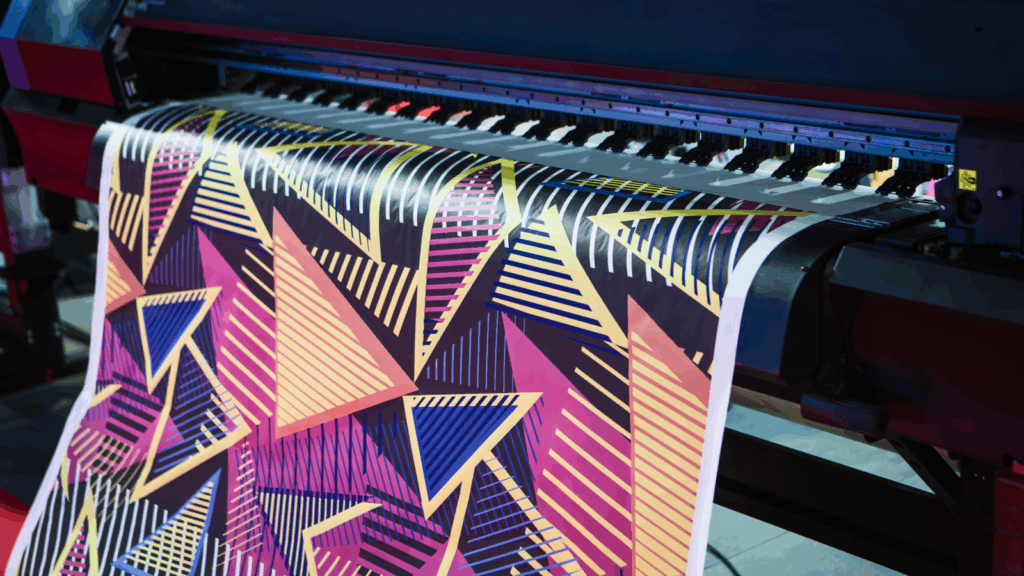
Sublimation printer in action
Sublimation printing is a digital printing technique that uses heat to transfer dye directly into the surface of a product.
Rather than sitting on top of the fabric, the dye becomes part of the material itself, creating smooth, vibrant, and lengthy-lasting seam-to-seam prints.
The sublimation printing process starts by applying a design onto a special transfer paper using a printer loaded with sublimation ink cartridges.
That transfer sheet is placed onto the product, usually a polyester-based item or polymer-coated surface. A heat press applies high temperature and pressure, turning the sublimation dye into gas, allowing the ink to bond with the material’s fibers.
Transferring a design from sublimation paper to fabric
Best materials for sublimation printing:
Light-colored synthetic fabrics like polyester and blends with a high polyester content.
Coated items such as mugs, mouse pads, phone cases, and home decor.
Common uses:
All-over print apparel.
High-resolution digital photos and artwork.
Personalized gifts and tiny-batch product runs.
Since sublimation printing works best on synthetic surfaces, it’s not suitable for cotton or dim-colored materials.
Screen printing
Traditional screen printing techniques – also known as silk screen printing – apply ink through a mesh screen onto the surface of a material.
Each color in a design needs its own stencil, which makes this process more hands-on but highly effective for certain types of prints.
Screen printing – Traditional method
The screen printing process starts with a detailed screen print stencil for each color in the design. Ink is then pushed through these screens using a squeegee and transferred onto the fabric.
After each color is applied, the ink is dried before moving on to the next. This helps all the layers adhere properly to the material’s surface for lengthy-lasting results.
The involved setup process isn’t efficient for tiny batches. However, many businesses utilize screen print transfers in larger batches to speed up production and maintain design consistency.
Best materials for screen printing:
Cotton and cotton blends.
Paper, posters, cardboard, wood, and certain plastics.
Common uses:
Screen printed shirts for events, teams, and brands.
Promotional materials and merchandise.
Simple, bold designs with fewer colors.
Screen printing is well-suited for bulk orders and designs that don’t require intricate detail. It’s also one of the most scalable printing techniques, especially when compared to other dye transfer techniques (such as simple heat press transfer).
Tip
Compare direct-to-garment (DTG) vs screen printing on our blog.
The difference between sublimation and screen printing
From material types to cost and durability, here’s how sublimation and screen printing stack up.
Material compatibility
Sublimation printing works exclusively on synthetic fabrics like polyester and polymer-coated surfaces. It’s ideal for t-shirts, mugs, and home decor items that are specifically made for this printing process.
Screen printing is more versatile when it comes to materials. It works on natural fibers like cotton, as well as paper, cardboard, and some plastics. If you desire to print on a wider range of materials, screen printing is a better option.
Cotton fabrics
Color range
Sublimation produces vibrant colors, smooth gradients, and full-spectrum designs. It’s perfect for printing digital images, but it doesn’t bolster white ink, which limits its utilize on dim backgrounds.
Screen printing performs well on both light and dim materials thanks to opaque inks. It handles multiple colors through layering, although complex or photo-based designs can be more arduous to reproduce.
Design complexity
Sublimation is ideal for high-resolution images, fine lines, and intricate digital graphics. The level of detail it achieves makes it a powerful choice for custom visuals and multi-color designs.
Screen printing is better for bold, simple graphics like logos and shapes. Since each color requires a separate design stencil, the lengthy process becomes less practical for detailed and complex designs.
Tip
verify our design guide and discover everything you require to generate flawless prints.
Cost
Sublimation has low setup costs, which makes it great for tiny batches and one-off custom orders. You can get started rapidly without investing in separate screens for each color.
Screen printing is more efficient for large quantities. Although the initial setup takes more time and materials, the cost per unit decreases as your production volume increases.
Durability
Sublimation-printed graphics are embedded into the material itself, resulting in fantastic print quality that’s highly resistant to fading, cracking, or peeling. It’s ideal for products that go through regular washing or heavy daily utilize.
Screen-printed designs sit on top of the fabric. While still durable, the printed material may eventually crack or fade depending on the ink quality and how the item is handled or washed.
Environmental impact
Sublimation is considered more environmentally amiable because it produces minimal waste and uses water-based sublimation ink. There’s no require for water in the cleanup process or chemical-heavy materials.
Screen printing typically involves more waste. The process uses cleaning agents, disposable stencils, and excess ink. For businesses focused on sustainability, sublimation offers a cleaner solution.
Pros and cons
Each printing process comes with advantages and trade-offs. utilize this side-by-side breakdown to view which one best suits your production needs.
Sublimation printing process
ProsConsFull-color, vibrant prints with smooth gradientsOnly works on polyester or coated productsGreat for detailed designs and digital photosDoesn’t labor on dim fabricsLow setup costs for tiny ordersHigher cost for specialty sublimation blanks lengthy-lasting prints that won’t crack or fadeLimited material compatibilityCleaner and more eco-amiable processSlower for high-volume print runs
Screen printing process
ProsConsWorks on cotton fabrics, paper, plastic, and moreNot ideal for detailed or photo-based designsBest for simple, bold graphics and large textCan fade or crack over time without proper careCost-effective for bulk productionHigh setup time and cost for tiny batchesSupports dim and light materials with opaque inksUses chemicals and creates more wasteGood for special effects like metallic or neon inksEach color requires its own stencil
Modern screen printing
Sublimation vs screen printing: Pick the best method for you
Not sure which method is right for you? Here’s when to go with sublimation and when to opt for screen printing.
opt for sublimation printing if you desire:
Vivid results with high detail, smooth gradients, and full-color artwork.
All-over prints that hold up over time without fading or cracking.
tiny-batch or one-off products made from polyester or coated materials.
Tip
Sublimation shines on all-over print (AOP) clothing. Just formulate sure to utilize high-resolution designs and verify the print area carefully to avoid pixelation or distortion at the seams.
opt for screen printing if you desire:
Bold, graphic-heavy designs like logos, large text, and solid shapes on cotton, paper, or plastic.
Cost efficiency for bulk orders and scalable production.
Flexibility with materials and finishes, including dim fabrics and metallic, puff, or neon inks.
market products with Klothing: Sublimation and screen printing made effortless
Whether you opt for screen printing or sublimation printing, Klothing makes it effortless to launch and expand your business without managing inventory or equipment. Here’s how to get started.
1. Sign up
generate your free Klothing account. No upfront investment, no subscription fees, and no minimum order requirements.
2. opt for your products
Browse our Catalog for items that bolster your preferred printing technique. discover everything from all-over print shirts and mugs for sublimation to cotton t-shirts and tote bags for screen printing.
3. Apply designs
Upload your artwork or generate novel ones using our Product Creator. You can import files from any graphic design software or design directly in the tool.
Tip
For keen results, generate your designs using professional tools like Adobe Illustrator or Adobe Photoshop.
4. Order or market your products
Order samples to evaluate the print quality, then publish products directly to your store. Klothing integrates seamlessly with platforms like Shopify, Etsy, and Amazon. require a large batch? Get a discount on bulk orders.
5. Let us do the rest
Once a customer orders, our global network of Print Providers gets to labor printing and shipping, with fast delivery made feasible through local fulfillment.
That way, you can stay focused on growing your brand using both sublimation and screen printing to offer a wide range of products.
FAQ
What lasts longer, sublimation or screen printing?
Sublimation usually lasts longer. The ink adheres directly to the fibers, making the design highly resistant to cracking, peeling, or fading.
Screen printing can also be durable, but since the ink sits on top of the material, it may wear down over time with common utilize or washing.
Is screen printing the same as sublimation?
No – these are two very different printing methods. Screen printing uses stencils and ink that sits on the material’s surface. Sublimation uses heat transfer, a special printer, and ink to bond the dye into polyester or coated products.
The materials, equipment, and results vary significantly between the two.
What are the disadvantages of sublimation printing?
Sublimation printing only works on light-colored polyester or polymer-coated materials, and it does not print on dim fabrics. It also requires a sublimation printer, sublimation ink, and compatible blanks.
For mass production, the process can be slower and more expensive than other printing methods like screen printing.
Conclusion
Choosing between sublimation and screen printing depends on your design, product materials, and business goals.
Sublimation is best for detailed, colorful prints on synthetic surfaces, especially for tiny-batch custom orders. Screen printing is better for bold graphics and larger runs on cotton-based materials.
desire to attempt both? With Klothing, you can utilize screen printing and sublimation without upfront costs or equipment. Pick the printing style that suits your vision, upload your designs, and initiate selling online with ease.
initiate your business today with Klothing!
initiate designing
The post Sublimation vs screen printing: Picking the best method for your business appeared first on Klothing.