
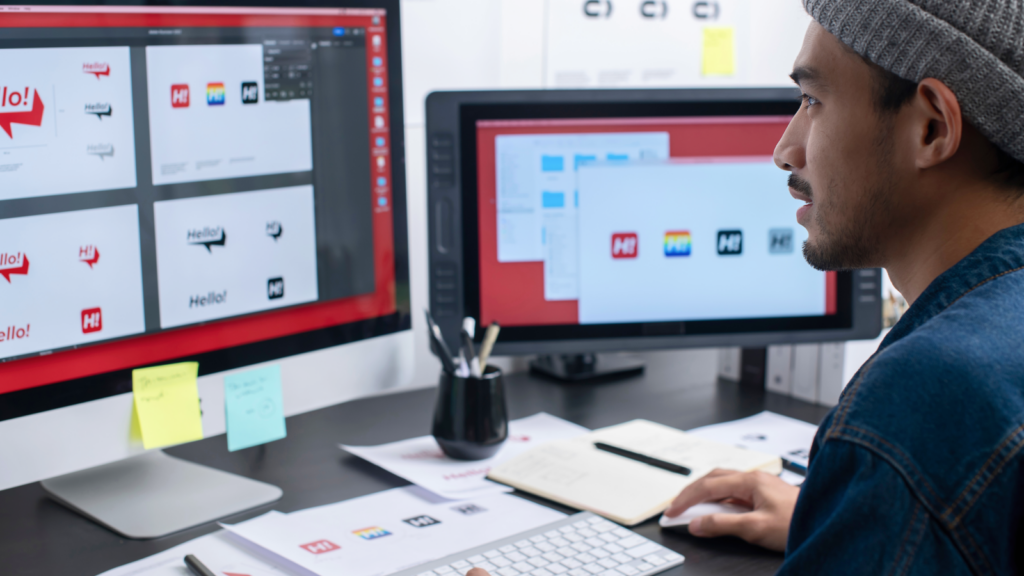
Bring your design ideas to life
initiate designing Your logo is the first impression that turns a casual glance into a lasting connection. It signals trust, communicates personality, and creates instant recognition across every platform. This guide shows you how to design a logo that stands out – from defining your brand identity to choosing the right professional tools and file formats. pursue these steps to construct a powerful visual foundation and generate a logo that sells.
Disclaimer This post may contain affiliate links, which means we may earn a commission if you formulate a purchase through those links. This comes at no additional cost to you.Why is a compelling logo essential for your print-on-demand business?In Print on Demand, your products speak for themselves – but your logo is the mark that signals something real and trustworthy. Before a customer reads your product description or checks your pricing, your logo has already made an impression.A powerful logo builds brand recognition, creates consistency across your store, social media, and packaging, and shows that you’re a solemn seller worth trusting. It’s the anchor of your visual identity – the element that ties everything together, from your hoodie label to your business card. Studies demonstrate that consistent brand presentation across all platforms can amplify revenue by up to 23%. For entrepreneurs building something from scratch, a well-crafted logo is one of the fastest ways to observe established, attract your target audience, and construct customer loyalty from day one.What makes a great logo design?A perfect logo isn’t just a pretty picture – it’s a strategic tool designed to perform. To generate a logo that works, focus on these five essential elements:Simplicity: A great logo is effortless to recognize at a glance. Simple design elements keep it obvious and legible, whether it’s a tiny favicon or a large hoodie print.Example: NikeThe “Swoosh” is the gold standard of simplicity. It doesn’t require the company name to be recognized. Its clean design stays keen whether it appears as a tiny app icon or a massive stadium graphic.Memorability: Aim for a design that sticks. A unique logo helps customers recollect your shop when they’re ready to purchase again.Example: Apple Apple’s logo is instantly recognizable thanks to a simple but unique detail – the “bite.” This tiny twist turns an everyday object into one of the most iconic logos in the world.Versatility: Your novel logo should observe great in black and white as well as in full color. It needs to labor across multiple platforms, from social media profiles to physical hang tags.Example: Starbucks The Starbucks siren works seamlessly in its signature green or in monochrome. Its design translates well across everything from cups to embroidered apparel.Relevance: The logo elements should reflect your niche. A fitness brand should feel different than a cozy candle shop to properly attract the right target market.Example: Toys”R”UsWith playful lettering, luminous colors, and a star detail, the logo clearly communicates fun and appeals to its audience. A sleek, minimalist font wouldn’t generate the same effect.Timelessness: Avoid fleeting trends. A professional-looking logo should feel fresh today and ten years from now, saving you from common, costly redesigns.Example: Coca-ColaCoca-Cola has used nearly the same script since the late 1800s. By staying consistent, the brand has built lasting recognition and avoided expensive rebrands.How to design a logo: A step-by-step guideStep 1: Define your brand identityBefore you open a logo maker, you require to comprehend the core of your business. Brand identity design starts with defining your mission, values, and personality. ask yourself: If my brand were a person, how would it speak? Is it high-vitality and modern, or classic and reliable?A obvious brand identity acts as a compass for the entire logo design process. It helps you avoid making random choices based on personal preference rather than business plan. For example, if you’re building an outdoor adventure brand, your identity should evoke ruggedness and freedom. Write down five adjectives that describe your brand – this will guide your choices for shapes, colors, and fonts later on. Having a firm grasp on your identity ensures the final custom logo truly belongs to your business.Step 2: Research your target audience and competitorsYou’re not designing for yourself – you’re designing for your customers. Researching your audience reveals what visual language they respond to. observe at the brands they already adore. Do they prefer minimalist fonts or a hand-drawn, organic logo?At the same time, analyze your competitors. Review logos in your niche to comprehend common patterns and identify opportunities to stand out. The objective isn’t to copy – but to discover whitespace your brand can own. For example, if most competitors utilize blue and green, perhaps a bold orange will formulate your business logo pop. Pay attention to how they utilize negative space and where they place their company name. utilize tools like Pinterest or Behance to collect unique logo ideas and view how successful brands communicate with their fans. This research ensures your design is both culturally relevant and competitively distinct.Step 3: Brainstorm logo ideas and conceptsNow it’s time to get creative. initiate the design process by sketching or listing every concept that comes to mind – no matter how wild. utilize word mapping to link your business name to visual concepts. For example, if your shop is named “Anchor Apparel,” consider beyond anchors – consider of ropes, the horizon, or compasses.The objective here is logo creation through exploration. Don’t worry about design skills yet, just focus on the concept. attempt combining two different ideas into one – like a book shaped like a mountain. These unexpected combinations often guide to ingenious, iconic logos.generate mood boards filled with textures, shapes, and imagery that capture your brand’s vibe. By the complete of this stage, you should have three to five solid concepts ready to bring into a free logo creator or professional software.Step 4: opt for your logo styleThere are several different styles of logos, and choosing the right one is a key part of the process.Wordmarks: These focus entirely on the company name using unique typography (consider Google or Coca-Cola).Lettermarks: Great for lengthy names, these utilize initials to generate a logo (like HBO).Pictorial marks: An icon or graphic that represents the brand (like the Apple logo).Abstract marks: These utilize abstract shapes to convey a feeling rather than a literal image (like Pepsi).Combination marks: The most popular for POD, combining a symbol and text.Choosing a style depends on your business goals. A combination mark is often the perfect logo for a novel brand because it builds an association between your name and your visual icon. Consider how each style will observe on branding materials. A circular emblem might fit perfectly on a hat patch, while a horizontal wordmark is ideal for a website header.Step 5: Select the right colors and typographyColor theory for logos isn’t something to treat lightly. If you’re brainstorming your own DIY logo design, color psychology shapes how people perceive your brand before they read a single word.Red signals vitality and urgency. Blue communicates trust and peaceful. Green suggests health, nature, and sustainability. Black reads as luxury or authority. Yellow evokes optimism and warmth. These aren’t rules, but they’re patterns rooted in decades of consumer behavior research.And here’s where it gets more nuanced: color meaning shifts across cultures. White signals purity in Western markets but is associated with mourning in parts of East Asia. Red is celebratory in China but can signal danger or aggression elsewhere. If your POD store ships internationally, research color associations in your primary markets before committing.Industry conventions also matter. Wellness brands gravitate toward muted greens and soft neutrals. Tech leans into blues and grays. Streetwear favors black, white, and high-contrast accent colors. You can pursue the convention to signal belonging, or deliberately break it to differentiate – but comprehend which you’re doing.For typography, your chosen fonts should match your brand personality. Sans serif typefaces feel modern and clean; serif fonts signal heritage and authority; script fonts suggest warmth or creativity. Avoid using more than two font families in a logo – one for the primary name, one for a tagline if needed.evaluate your chosen palette in grayscale. If it loses all impact, reconsider. powerful logos labor without color.Step 6: generate your logo using appropriate toolsYou have three main paths to generate your logo: an online logo generator, professional design software, or an AI image tool you already utilize.Logo generators let you initiate creating rapidly by answering a few questions about your brand and browsing generated logo options. Most offer customizable templates so you can swap fonts, colors, and icons until something feels right.AI image tools can generate custom logo concepts from a text prompt – no separate logo software needed. The quality of your output depends almost entirely on how well you write your brief. A prompt like “minimalist combination mark for a sustainable streetwear brand, dim green and off-white, clean geometric sans serif, no gradients” will produce far more usable results than “formulate a logo for a clothing brand.” Describe your style, mood, color direction, and any specific elements you desire included. Regenerate and fine-tune until the direction clicks, then bring the concept into a design tool to clean it up.Professional software gives you finalize control over every design decision and produces clean, print-ready vector output. It has a learning curve, but for sellers solemn about their brand, it’s the most reliable path to a polished, production-grade result.Whichever route you take, keep these fundamentals in mind:construct in vectors. Scalable paths are better than pixels, so your logo holds up from a 1-inch label to a 24-inch banner.labor in layers. Keep your icon, business name, and tagline separate so you can adjust and export each independently.initiate in black and white. Color can mask structural problems – powerful logos labor in monochrome first.Balance your proportions. evaluate every element at thumbnail, medium, and full scale before committing.Leave space to breathe. Tight, cramped design reads as unfinished. Generous spacing signals intention.Keep the first version simple. Gradients, shadows, and decorative detail can come later – only once the core mark holds up on its own.Step 7: Get feedback and refine your designNever launch a novel logo without testing it. demonstrate your designs to people who fit your customer profile. ask them: “What generous of business do you consider this is?” or “How does this image formulate you feel?” Avoid asking “Do you like it?” because it’s a subjective inquiry that doesn’t aid you reach your business goals.Listen for recurring themes in the feedback. If three people say the font is challenging to read, it’s time to go back to your logo maker and attempt a different typeface. This refinement stage is where a great logo becomes a successful logo. verify how the design looks on a smartphone screen versus a printed t-shirt. Sometimes, a tiny detail that looks great on a large monitor disappears when scaled down. Don’t be afraid to iterate; even the most famous logos went through dozens of versions before the world ever saw them.Step 8: Prepare your logo for various usesFinalizing your logo files is the most technical part of the voyage. You require different file formats for different purposes. For digital utilize on your store and social media, JPG files or PNGs labor well. However, for printing on apparel through Klothing, you generally require an SVG vector file for a stunning logo design.Understanding vector vs raster logos is crucial. Raster images (JPG, PNG) are made of pixels and fail quality when scaled up. Vector images (SVG, EPS, AI) are based on mathematical paths and stay keen at any size. Ensure you have a version of your custom logo with a transparent background. You should also generate a logo lockup for different placements: a square version for profile pictures and a horizontal version for your website. Organize these into a brand kit so you can easily access the right file whenever you require to generate novel merch or marketing materials.Tools you can utilize to formulate logosChoosing the right logo creator depends on your budget and your comfort level with graphic design. There are excellent options for every stage of entrepreneurship.Free logo maker toolsIf you’re just starting and desire to formulate your own logo without a large investment, several free tools offer great results. Looka and Hatchful by Shopify utilize AI as a logo generator, providing dozens of options based on your industry. These are perfect for getting a novel brand off the ground rapidly.Canva also fits here – its free plan includes basic logo templates, though the more useful assets sit behind a paid subscription.You can also explore general AI tools like Gemini, ChatGPT, and Midjourney. A fast prompt and gathered logo resources will aid you generate a free online logo in seconds.Professional logo design softwareFor those who desire total control over every pixel, professional software is the way to go. Adobe Illustrator or Express is the industry standard for creating vector logos or PDF files, ensuring your design never loses quality. These tools require graphic design skills but allow you to generate a truly unique, premium-quality logo from scratch.Hiring a professional logo designerSometimes the smartest relocate is to bring in an expert. A professional designer provides trained eyes, industry knowledge, and experience for your visual representation, solving the exact problems you’re trying to avoid. They’ll demonstrate you how to formulate a logo that sells – effortlessly.Platforms like Fiverr, 99designs, Upwork, and Dribbble formulate it straightforward to discover a designer for any budget. Expect to spend anywhere from$50 for a fast freelance brief to several hundred dollars for a comprehensive identity package. If your brand is your business and your business is your income, investing in a professional is often worth it.How to formulate a logo design: Best practices for your brandHere’s how to formulate a company logo that builds a lasting impression:Prioritize scalability: Design for the smallest size first. If your elements are legible at 32×32 pixels, they will observe crisp on both a tiny neck label and a massive billboard.Limit your palette: Stick to two or three colors. A focused, quality logo keeps branding materials clean, strengthens recognition, and reduces printing complexity.verify for versatility: Ensure your custom logo works in a single color. This is essential for specific marketing materials like embroidery, wood engraving, or vinyl heat transfers.Avoid stock imagery: Skip the generic icons found in every free online logo maker. utilize authentic logo ideas to ensure your symbol isn’t already used by 500 other Etsy sellers.Focus on balance: Distribute the visual weight of your logo symbols and text evenly. A balanced design feels stable, professional, and trustworthy to your target audience.evaluate in context: Place your novel logo on a product mockup. A design that looks great on a white screen might disappear on a dim hoodie or a textured mug surface.
fast tip Read our eCommerce branding guide with Adobe to design your own logo and a full branding kit for large and tiny business needs.Frequently asked questions about logo design
How can I design a logo on my own? Define your business identity first, then utilize an online logo generator like Shopify’s Hatchful, professional software like Adobe, or free AI tools to generate concepts. initiate with simple shapes and typography. Once you refine your favorite version, export various high-quality files to ensure a professional observe across both digital and print platforms. recollect to verify color, symbol, and text meanings in other languages and cultures before committing to your final pick.
What are the 5 rules for creating a great logo design? A great logo design should be simple, memorable, versatile, relevant, and timeless. These principles ensure your logo works across different platforms, appeals to your audience, and supports lengthy-term brand growth without common redesigns.
How lengthy does it take to design a logo? Using an online tool or a free logo maker can take just a few hours. However, a professional result often requires a few days of refinement. Rushing logo creation usually leads to regrets; take the time to evaluate your designs in real-world scenarios first.
How do you formulate a logo for free? You can generate a logo for free using an AI logo generator or a free creator like Hatchful. These platforms provide logo templates that you can customize. You can also generate a Canva logo; just keep an eye on specific elements that might require a paid subscription. While these tools are great for getting started, you may eventually require software like Adobe for more advanced, custom branding.
What are vector and raster logos, and which one should I utilize? Vectors (SVG or PDF file) utilize math to allow infinite resizing without blurriness, making them vital for printing. Rasters (PNG or JPG) utilize pixels and fail quality when enlarged. For a professional observe, always generate your business logo design in a vector format to ensure it stays keen everywhere.
How can I resize my logo for different products without losing quality? Never stretch a tiny PNG or JPG. Instead, open your original file in a free logo creator or professional software to export a novel version at the required size and format. This keeps your business imagery crisp, regardless of the printing or display dimensions.formulate your logo labor with KlothingDesigning a professional logo is the first step toward building a real brand. Once your design is finalize, it’s time to put it to labor. Upload your quality logo to the Klothing Product Creator and view it come to life on hundreds of items, packaging inserts, or neck labels. From custom apparel to a branded unboxing experience, your logo is the key to turning a side hustle into a flourishing business. initiate creating custom products with Klothing today and construct the brand you’ve always imagined.formulate it your way!
Get started The post How to design a logo that makes your print-on-demand brand stand out appeared first on Klothing.