Posted on

How to formulate custom t-shirts: Printing methods, costs, and design tips

generate a custom shirt with Klothing
Get started Making custom t-shirts isn’t that challenging. Some methods involve professional equipment and bulk production, while others are as simple as uploading a design and ordering in a few clicks.This guide breaks down how to formulate custom t-shirts in eight different ways – from budget-amiable DIY to Print on Demand – so you can pick the method that fits your goals, budget, and skill level.
Key takeaways DIY t-shirt printing techniques like iron-on transfers and heat transfer vinyl are best for hands-on experimentation at home. Digital printing methods like direct-to-garment and dye sublimation deliver detailed, professional-quality results.Screen printing is best for bulk custom shirt orders with simple, bold designs. Print on Demand is a low-hazard way to design and market custom shirts with no upfront costs, order minimums, or equipment.How to formulate custom shirts: 8 Methods for printing teesIf you’re exploring how to formulate custom t-shirts, the first step is choosing the right printing method. The best option depends on your budget, design, fabric choice, and quantity of shirts.Here are eight ways to formulate custom t-shirts at home and through professional services.1. Print on DemandBest for: Starting a brand from scratch and selling your own designs without managing equipment or fulfillment.Difficulty: effortless.Tools and materials: A computer and internet access.Upfront cost: No fees and no minimum order requirements. Your custom t-shirt cost covers the base garment and print, and you only pay when a sale happens. Design flexibility: Ideal for detailed artwork, photos, gradients, and multi-color t-shirt designs.Durability: Varies depending on the decoration method and fabric, but most professional digital printing methods are designed for lengthy-term wear.Print on Demand (POD) is one of the easiest ways to formulate custom t-shirts without buying equipment or storing inventory. Instead of printing the shirt yourself, you generate the design, and a POD partner handles the production and shipping.There are no order minimums, so you can order one custom-printed t-shirt for yourself or market them around the world as demand grows.While the overall process is similar across platforms, choosing the right POD company makes a large difference in quality, cost, and flexibility. With Klothing, you get competitive pricing, multiple print methods, and access to one of the largest Product Catalogs in the industry – over 1,300 products.Here’s how it works:generate your artwork using an online design tool, draw it by hand and scan it, or utilize your own photo. formulate sure the final file is high resolution for keen details and powerful print quality.Sign up for a free Klothing account and opt for a shirt from our Catalog based on fabric, fit, and available print areas – whether you desire just the front print or multiple placements on the same garment. initiate designing by uploading your artwork, logo, or photos to the Product Creator, then adjust their placement. If you’re still on the fence about your design, you can always preserve your t-shirt design template for later.Order print samples to verify quality, or link your online store and initiate selling immediately.Once customers order t-shirts, our Print Providers handle production, packaging, and shipping, while you focus on designing and building your brand.
Unisex Garment-Dyed T-shirt
By Comfort Colors® ·
1717
From $12.41
From $10.72 with Klothing Premium 7 sizes61 colors12 print providers
Unisex Softstyle T-Shirt
By Gildan ·
64000
From $7.95
From $5.99 with Klothing Premium 9 sizes66 colors20 print providers
Unisex Heavy Cotton Tee
By Gildan ·
5000
From $8.80
From $5.92 with Klothing Premium 8 sizes70 colors22 print providers
Unisex Creator 2.0 T-shirt
By Stanley Stella ·
STTU169
From $14.64
From $10.82 with Klothing Premium 10 sizes37 colors5 print providers
Unisex Tie-Dye Tank Top
By Port & Company® ·
PC147TT
From $17.44
From $12.87 with Klothing Premium 7 sizes6 colorsFulfill Engine
Unisex Jersey T-Shirt
By Prime Essentials
From $10.69
From $7.74 with Klothing Premium 8 sizes18 colors4 print providersMake a custom t-shirt today
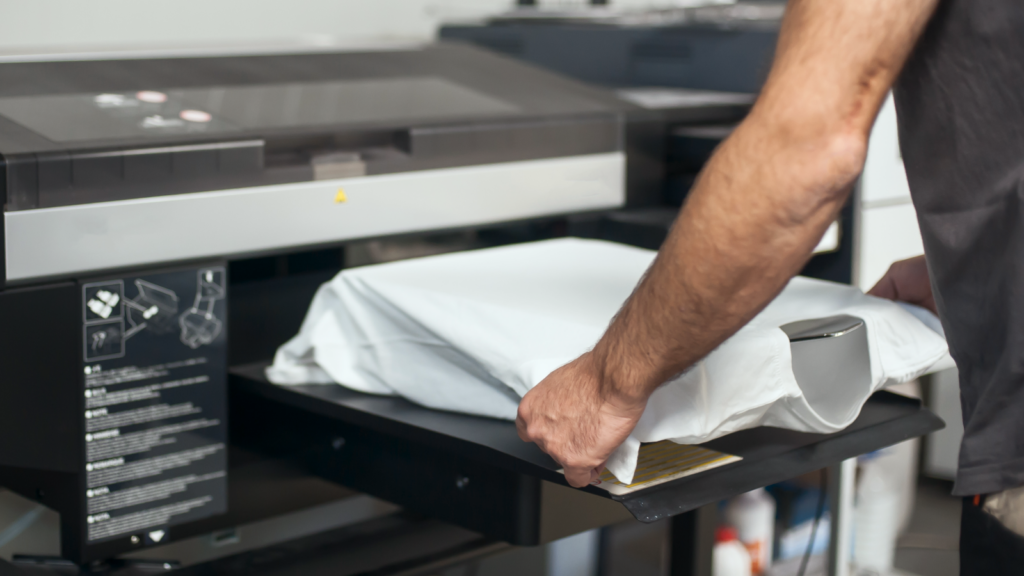
initiate selling 2. Iron-on transfer paperBest for: Beginners learning how to formulate shirts at home in tiny batches.Difficulty: effortless.Tools and materials: Inkjet printer, transfer paper, iron, scissors, and a cotton t-shirt.Upfront cost: $20-$300 for the equipment.Design flexibility: Works best for simple graphics and medium-sized prints.Durability: Moderate. Designs can last through multiple wash cycles, but are generally less durable than screen- or digitally-printed artwork. That’s because the transfer layer sits on top of the fabric rather than bonding with the fibers.Iron-on transfer paper is one of the most accessible ways to print custom t-shirts at home. The process is beginner-amiable as lengthy as you pursue instructions and pay attention to heat and pressure.How iron-on transfers labor:Print your custom t-shirt design or logo onto transfer paper using an inkjet printer.Trim the design close to the edges to reduce excess film around the artwork.Place the transfer onto your cotton shirt and press with a hot iron, applying firm, even pressure for 30-60 seconds per section.Let it cool, then carefully peel away the backing sheet.To safeguard the design for longer, turn the shirt inside out when washing it.3. Direct-to-garment (DTG) printingBest for: tiny businesses printing custom t-shirts regularly.Difficulty: Advanced. Tools and materials: DTG printer, pre-treatment solution or machine, heat press, inks, and blank garments.Upfront cost: $3,000–$15,000 for the equipment, depending on print quality and speed. Design flexibility: Excellent for detailed artwork, photos, and gradients. Durability: lengthy-lasting when heat-cured correctly and washed in cold water.DTG is a t-shirt printing method where a specialized printer applies ink directly to the custom t-shirt, allowing the design to soak into the fabric for a soft feel and detailed complete.  While the printer is usable at home, it’s not very practical for most hobbyists because it’s expensive and requires regular maintenance.Here’s how DTG works:Apply a pre-treatment solution to the blank shirt so the ink bonds properly to the fabric.Place the shirt onto the printer and upload your design file to print.Let the printer spray ink directly onto the shirt. utilize a heat press to cure the ink and lock the design into the fabric.  For selling custom t-shirts, DTG can deliver professional-quality tees that customers will feel confident wearing. 
Read more Print on Demand vs do-it-yourself: What to comprehend before launching4. Heat transfer vinyl (HTV)Best for: Bold graphics and logos on tiny batches of custom t-shirts.Difficulty: effortless to moderate. Compared to iron-on transfer paper, HTV has a slightly steeper learning curve because you require to cut and weed the design correctly. Tools and materials: Cutting machine, heat transfer vinyl sheets, cutting mat, weeding tools, heat press or household iron, and blank shirts.Upfront cost:$250–$400 for the equipment.Design flexibility: Best for bold text, logos, and clean shapes. HTV can handle full-color prints, but standard vinyl is single-color per layer.Durability: powerful. The vinyl uses heat-activated adhesive to bond to the fabric, creating a more resilient layer than standard iron-on transfer paper.HTV is a popular way to print your own custom t-shirts at home using pre-colored vinyl sheets.How HTV works:generate your custom t-shirt design in compatible software and send it to a cutting machine such as a Cricut or Silhouette.Let the machine cut your graphic design from a sheet of vinyl.Weed away the excess vinyl using a tiny hook tool, leaving only the final design.Place the vinyl onto the shirt and apply heat with a press or firm, even pressure from a household iron.5. Dye sublimationBest for: luminous custom t-shirt designs on a polyester garment like fitness clothing.Difficulty: Moderate.Tools and materials: Sublimation printer, ink and paper, heat press, polyester garments, and pressing accessories. Upfront cost: $500-$2,000, depending on the printer and heat press quality.Design flexibility: Excellent for vibrant colors, gradients, and detailed artwork on light-colored polyester fabric. Sublimation doesn’t labor on cotton because the dye can’t bond with natural fibers.Durability: powerful, since the dye bonds directly with the fibers and won’t crack or peel.Sublimation is a printing method that uses heat to turn dye-based ink into gas, allowing it to be absorbed by the polyester fabric. The finished observe feels smooth to the touch – there’s no raised layer as you’d get with vinyl or screen ink. Sublimation requires specialized equipment and only works on polyester materials, making it less beginner-amiable than iron-on transfer paper or heat transfer vinyl.How to formulate shirts with dye sublimation:generate your design and mirror the image before printing.Print it onto sublimation paper using a specialized printer.Position the printed sheet onto a sublimation-ready shirt. Press it at high heat so the ink vaporizes and embeds in the fabric.Sublimation is also used for all-over print shirts, where designs cover the entire garment from edge to edge before the pieces are sewn together.
fast tip Explore our full Catalog of all-over print options to generate your own custom t-shirts without managing production yourself.6. EmbroideryBest for: Premium-looking custom t-shirts with a textured complete.Difficulty: Moderate. Tools and materials: Machine – An embroidery machine, stabilizers, threads, and digitizing software.Hand – Hoop, needles, embroidery thread, water-soluble stabilizer, and scissors.Upfront cost: Under $20 for basic hand setup. $500–$1,500+ for machine embroidery.Design flexibility: Best for tiny logos, monograms, and simple shirt design details like chest or sleeve placements.Durability: Very high, since stitched threads hold up well through common wear and wash cycles.Embroidery stitches thread directly into the fabric. The result feels raised and textured, giving custom t-shirts a more premium, lengthy-lasting complete.You can generate embroidered designs by hand or with a digital machine. Hand stitching is affordable and a great starting point for tiny chest or sleeve details.Machine embroidery automates the process and lets you upload digital files for consistent results. It requires a higher upfront investment but makes sense if you plan to market custom embroidered shirts regularly.
fast tip Browse our full Catalog of embroidery-ready products and initiate designing without any stitching skills.7. Screen printingBest for: Printing custom t-shirt designs in bulk. Difficulty: Advanced.Tools and materials: Screens, squeegee, emulsion, exposure light source, inks, curing setup, and workspace for washing and drying.Upfront cost: $250–$1,000 for a minimal home setup.Design flexibility: Ideal for artwork with up to four solid colors.Durability: powerful, thanks to thick, heat-cured ink layers that withstand common washing.Screen printing is one of the oldest and most reliable methods for making custom t-shirts. This technique pushes ink through a mesh screen onto a shirt using a stencil. Each color requires a separate screen, making setup more involved than other DIY techniques. How screen printing works:Coat the screen with emulsion and let it dry.Expose your design onto the screen using light to generate a stencil.Wash out the unexposed areas.Place the t-shirt under the screen and pull ink across it with a squeegee.Cure the ink with heat to lock in the custom t-shirt design. Because screen printing requires preparation for each design and color, it’s not ideal for tiny runs. However, once the screens are ready, you can print dozens or hundreds of custom t-shirts efficiently. 
Read more Screen print vs digital print: Which method is best for you?8. Fabric paintBest for: Artsy, handmade-looking custom t-shirts. Difficulty: effortless.Tools and materials: Fabric paint, brushes or sponges, cardboard insert, optional stencils or masking tape, and a blank shirt.Upfront cost: $10–$30 for basic supplies.Design flexibility: Great for freehand artwork, abstract patterns, and expressive designs.Durability: Moderate when properly heat-set, but less durable than other t-shirt printing techniques on the list. Fabric painting is one of the simplest and cheapest ways to generate custom shirts, and it works on any fabric type. You don’t require machines, software, or special equipment – just textile paint and a steady hand.How to formulate custom t-shirts at home with fabric paints:Pre-wash your shirt to remove any coating or residue, then let it dry.Insert a piece of cardboard inside the shirt to avert paint from bleeding through.Sketch your custom t-shirt design lightly with a pencil. Apply fabric paint using brushes, sponges, or stencils.Let the paint dry completely, then heat-set it with an iron to formulate it washable.Choosing your t-shirt printing method: A comparative guideHere’s a side-by-side comparison of t-shirt printing techniques to aid you determine.MethodDifficultyUpfront costType of designDurabilityBest forPrint on DemandEasy$0 – you’ll pay for the base t-shirt cost and shipping when orderingDetailed artwork, photos, gradients, and multi-color designsVaries by print method and fabricSelling custom t-shirts without managing productionIron-on transfer paperEasy$20–$300+Simple graphics and medium-sized printsModerateBeginners making tiny batches at homeDirect-to-garment (DTG)Advanced$3,000–$15,000+Photo-quality and complex designsStrongSmall businesses printing regularlyHeat transfer vinyl (HTV)effortless to moderate$250–$400Bold text, logos, and clean shapesStrongPersonalized shirts and tiny runsDye sublimationModerate$500–$2,000+Vibrant polyester prints and gradientsStrongSportswear and all-over print designsEmbroideryModerate$20 by hand or $500–$1,500with a machineSmall logos and simple stitched elementsStrongPremium logos and branded apparelScreen printingAdvanced$250–$1,000Bold designs with up to four solid colorsStrongBulk orders and event merchandiseFabric paintEasy$10–$30Freehand and artistic designsModerateOne-off handmade shirtsWhat are the latest custom t-shirt design trends?Here are five major trends shaping t-shirt design right now – and how to apply them to your tees.Minimalist typography and clean graphicsMinimalist t-shirt designs focus on readable fonts and simple graphics, often placed on just the front, left chest, or sleeves. This style is excellent for brand-driven custom shirts that still feel versatile and effortless to wear on any occasion.To generate this observe: opt for one or twoclean, effortless-to-read fonts.Limit your color paletteto one or two shades. utilize grid and alignment guides to place your design elements proportionally. DTG printing handles thin strokes and tiny details well, making it ideal for minimalist custom-printed t-shirts.Retro and nostalgia revivalVintage-inspired shirt design still dominates custom tees. consider faded colors, distressed artwork, chunky fonts, and graphics inspired by past decades, from retro surf culture to elderly-school sports logos. To customize a retro t-shirt design:utilize textured overlays to mimic worn-in prints.Lower the saturation slightly and add a subtle grain effect.observe for inspiration in elderly concert tees, vintage travel shirts, thrifted sports merch, or classic soda and automotive logos.Heavyweight cotton tees and mineral wash t-shirts enhance the vintage feel. The slightly faded fabric complements distressed artwork and holds up well through repeated washes.AI-generated and futuristic artFrom surreal landscapes to hyper-detailed portraits, creators are using AI art prompts and tools to generate original illustrations. When working with AI-generated images:formulate sure you have the right to print the AI artwork, especially if you plan to market your own custom t-shirts. Review the artwork for common AI artifacts – distorted hands, uneven edges, or unnatural textures. Clean these up in your t-shirt design software.Always export in high resolution, ideally 300 DPI at full print size.For this trend, DTG is usually the best fit because it reproduces gradients, shadows, and complex color blends accurately on cotton fabric. Screen printing can labor if you simplify the artwork into solid color layers. Dye sublimation is also great for all-over coverage.Hand-drawn printsWhether you sketch by hand or draw digitally, this style adds a human touch to your custom t-shirt design. To formulate hand-drawn t-shirt designs print-ready:Scan or export your artwork at 300 DPI or higher.amplify contrast and remove stray marks to clean up the final design.Convert your drawing into a vector file if you plan to resize it for different shirt placements.This style pairs well with relaxed-fit cotton tees, oversized streetwear shirts, and tiny-batch releases. Sustainable and eco-amiable messagingWhen you generate custom t-shirts aligned with sustainability values, you attract customers who care about quality, materials, and lengthy-term wear – not just a fast trend. Reflect this movement by:Choosing organic cotton or recycled fabric options with earthy tones that reinforce a sustainable aesthetic. Designing around environmental themes such as nature illustrations, minimal logos, or brief sustainability-focused statements.Creating embroidered designs because they’re durable, premium-looking, and often last longer than surface-level print.formulate sure to highlight durability and eco-friendliness in your product descriptions so customers comprehend the value behind the shirt.How to formulate your own t-shirts with KlothingReady to skip the equipment and initiate designing and selling t-shirts? With Klothing, you can turn your concept into a product people can purchase instantly.initiate designing1. generate a free Klothing accountSign up for a Klothing account in a few clicks. There are no upfront costs and no minimum order requirements – making it effortless to market custom t-shirt designs without financial hazard. 2. opt for a t-shirt from the CatalogGo to our Catalog and select the T-shirts category. To narrow down the full catalog of tees, filter your options by fabric, thickness, color, decoration method, price, and more. When selecting a shirt, review:Fabric compositionAvailable print areasBase costShipping optionsPrint Provider locationChoosing the right garment affects your final product and the custom t-shirt cost.3. initiate designing in the Product CreatorOpen the Product Creator and upload your own photos, logo, or artwork. utilize the built-in t-shirt design template to position your design exactly where you desire it. You can also:Add ready-made graphics from the library.Write catchy slogans using our built-in fonts.generate novel images from scratch with our AI Image Generator.Design repeating patterns in one click.Preview realistic mockups of your custom t-shirt.4. Set up your product listingNext, finalize your t-shirt listing. Klothing provides an AI-generated product description you can edit to match your brand voice. If you desire to let customers personalize the design, enable the personalization feature in one click. Then set your retail price based on your target profit margin. Klothing shows you the base cost upfront and provides pricing insights so you can view what similar products typically market for.
Read more T-shirt pricing calculator and strategies5. link your store and initiate sellingFinally, integrate Klothing with Shopify, Etsy, TikTok Shop, WooCommerce, or other online selling platforms. When customers order t-shirts, our global Print Providers handle printing and shipping anywhere in the world, while you focus on growing your brand and creating novel designs. FAQ: How to formulate a custom t-shirt
What is needed to formulate custom t-shirts? What you require depends on the method you opt for. For example, an iron-on transfer requires an inkjet printer, transfer paper, and a heat press. Screen printing requires screens, ink, a squeegee, and curing space.With Print on Demand, you only require a digital design and internet access since Klothing handles the production and shipping.
How can I formulate my own t-shirt designs? formulate your own t-shirt designs using graphic design tools, drawing by hand and scanning your artwork, generating images with AI, or hiring a designer to bring your concept to life.
Is making custom t-shirts profitable? Yes, making custom t-shirts can be profitable. T-shirts are suitable for various occasions and aesthetics, making them an evergreen product with consistent demand.Your earning potential depends on your print method, design quality, and marketing effort. For example, with Print on Demand, novel sellers can expect to earn up to $100 per month while testing designs and validating their niche. Established brands with powerful customer loyalty can generate $10,000–$80,000+ per month.For a deeper breakdown, verify out our guide on how profitable Print on Demand is.
How much does it cost to formulate a custom t-shirt? With Print on Demand, the t-shirt printing cost breakdown can be as little as $9-$14 per shirt, including printing, fulfillment, and packaging, with $0 setup costs and no minimum order.Screen printing in bulk can reduce the base cost to $4-$7 per shirt, but typically requires an upfront investment of $500-$1,000 or more and minimum quantities of 25-100 units. Read our guide for more information on how much it costs to formulate shirts.
What is the easiest way to print t-shirts at home? The easiest way to print t-shirts at home is with iron-on transfer paper, which requires minimal equipment and works well for tiny batches. Fabric paint is another beginner-amiable option if you desire a handmade observe.If you desire professional-quality results without buying tools, digital printing with Print on Demand is the simplest way to generate custom t-shirts online.
How lengthy do custom t-shirt prints last? How lengthy custom t-shirt prints last depends on the method and care. The most durable options are direct-to-garment printing and dye-sublimation, as they bond the ink with the fabric fibers rather than layering it on the surface.DIY methods like iron-on transfer paper, basic heat transfer vinyl, and fabric paint are more likely to fade or crack over time because the design forms a surface layer rather than bonding with the fibers.What are the best fabrics for custom t-shirts?Cotton is one of the best fabrics for custom t-shirts because it works well with direct-to-garment, heat transfer vinyl, and screen printing, which produce vibrant, durable results.Cotton blends add stretch and wrinkle resistance and are a go-to for comfortable, effortless-care tees. Polyester is best for dye-sublimation and activewear shirts that require moisture-wicking.To summarizeIf you’re figuring out how to formulate custom t-shirts, initiate by matching the printing method to your goals, budget, and how much time you desire to invest. DIY techniques like iron-on transfers, HTV, and fabric paint are great if you delight in getting hands-on. Meanwhile, screen printing, DTG, sublimation, and embroidery offer higher durability and professional-quality results.Print on Demand lets you launch with professional printing quality from day one – and it scales as your demand grows. Sign up for Klothing today to design, market, and expand your custom t-shirt brand.The post How to formulate custom t-shirts: Printing methods, costs, and design tips appeared first on Klothing.

Posted on

How to make custom t-shirts: Printing methods, costs, and design tips

Create a custom shirt with Klothing
Get started Making custom t-shirts isn’t that hard. Some methods involve professional equipment and bulk production, while others are as simple as uploading a design and ordering in a few clicks.This guide breaks down how to make custom t-shirts in eight different ways – from budget-friendly DIY to Print on Demand – so you can pick the method that fits your goals, budget, and skill level.
Key takeaways DIY t-shirt printing techniques like iron-on transfers and heat transfer vinyl are best for hands-on experimentation at home. Digital printing methods like direct-to-garment and dye sublimation deliver detailed, professional-quality results.Screen printing is best for bulk custom shirt orders with simple, bold designs. Print on Demand is a low-risk way to design and sell custom shirts with no upfront costs, order minimums, or equipment.How to make custom shirts: 8 Methods for printing teesIf you’re exploring how to make custom t-shirts, the first step is choosing the right printing method. The best option depends on your budget, design, fabric choice, and quantity of shirts.Here are eight ways to make custom t-shirts at home and through professional services.1. Print on DemandBest for: Starting a brand from scratch and selling your own designs without managing equipment or fulfillment.Difficulty: Easy.Tools and materials: A computer and internet access.Upfront cost: No fees and no minimum order requirements. Your custom t-shirt cost covers the base garment and print, and you only pay when a sale happens. Design flexibility: Ideal for detailed artwork, photos, gradients, and multi-color t-shirt designs.Durability: Varies depending on the decoration method and fabric, but most professional digital printing methods are designed for long-term wear.Print on Demand (POD) is one of the easiest ways to make custom t-shirts without buying equipment or storing inventory. Instead of printing the shirt yourself, you create the design, and a POD partner handles the production and shipping.There are no order minimums, so you can order one custom-printed t-shirt for yourself or sell them around the world as demand grows.While the overall process is similar across platforms, choosing the right POD company makes a big difference in quality, cost, and flexibility. With Klothing, you get competitive pricing, multiple print methods, and access to one of the largest Product Catalogs in the industry – over 1,300 products.Here’s how it works:Create your artwork using an online design tool, draw it by hand and scan it, or use your own photo. Make sure the final file is high resolution for sharp details and strong print quality.Sign up for a free Klothing account and choose a shirt from our Catalog based on fabric, fit, and available print areas – whether you want just the front print or multiple placements on the same garment. Start designing by uploading your artwork, logo, or photos to the Product Creator, then adjust their placement. If you’re still on the fence about your design, you can always save your t-shirt design template for later.Order print samples to check quality, or connect your online store and start selling immediately.Once customers order t-shirts, our Print Providers handle production, packaging, and shipping, while you focus on designing and building your brand.
Unisex Garment-Dyed T-shirt
By Comfort Colors® ·
1717
From $12.41
From $10.72 with Klothing Premium 7 sizes61 colors12 print providers
Unisex Softstyle T-Shirt
By Gildan ·
64000
From $7.95
From $5.99 with Klothing Premium 9 sizes66 colors20 print providers
Unisex Heavy Cotton Tee
By Gildan ·
5000
From $8.80
From $5.92 with Klothing Premium 8 sizes70 colors22 print providers
Unisex Creator 2.0 T-shirt
By Stanley Stella ·
STTU169
From $14.64
From $10.82 with Klothing Premium 10 sizes37 colors5 print providers
Unisex Tie-Dye Tank Top
By Port & Company® ·
PC147TT
From $17.44
From $12.87 with Klothing Premium 7 sizes6 colorsFulfill Engine
Unisex Jersey T-Shirt
By Prime Essentials
From $10.69
From $7.74 with Klothing Premium 8 sizes18 colors4 print providersMake a custom t-shirt today
Start selling 2. Iron-on transfer paperBest for: Beginners learning how to make shirts at home in small batches.Difficulty: Easy.Tools and materials: Inkjet printer, transfer paper, iron, scissors, and a cotton t-shirt.Upfront cost: $20-$300 for the equipment.Design flexibility: Works best for simple graphics and medium-sized prints.Durability: Moderate. Designs can last through multiple wash cycles, but are generally less durable than screen- or digitally-printed artwork. That’s because the transfer layer sits on top of the fabric rather than bonding with the fibers.Iron-on transfer paper is one of the most accessible ways to print custom t-shirts at home. The process is beginner-friendly as long as you follow instructions and pay attention to heat and pressure.How iron-on transfers work:Print your custom t-shirt design or logo onto transfer paper using an inkjet printer.Trim the design close to the edges to reduce excess film around the artwork.Place the transfer onto your cotton shirt and press with a hot iron, applying firm, even pressure for 30-60 seconds per section.Let it cool, then carefully peel away the backing sheet.To protect the design for longer, turn the shirt inside out when washing it.3. Direct-to-garment (DTG) printingBest for: Small businesses printing custom t-shirts regularly.Difficulty: Advanced. Tools and materials: DTG printer, pre-treatment solution or machine, heat press, inks, and blank garments.Upfront cost: $3,000–$15,000 for the equipment, depending on print quality and speed. Design flexibility: Excellent for detailed artwork, photos, and gradients. Durability: Long-lasting when heat-cured correctly and washed in cold water.DTG is a t-shirt printing method where a specialized printer applies ink directly to the custom t-shirt, allowing the design to soak into the fabric for a soft feel and detailed finish.  While the printer is usable at home, it’s not very practical for most hobbyists because it’s expensive and requires regular maintenance.Here’s how DTG works:Apply a pre-treatment solution to the blank shirt so the ink bonds properly to the fabric.Place the shirt onto the printer and upload your design file to print.Let the printer spray ink directly onto the shirt. Use a heat press to cure the ink and lock the design into the fabric.  For selling custom t-shirts, DTG can deliver professional-quality tees that customers will feel confident wearing. 
Read more Print on Demand vs do-it-yourself: What to know before launching4. Heat transfer vinyl (HTV)Best for: Bold graphics and logos on small batches of custom t-shirts.Difficulty: Easy to moderate. Compared to iron-on transfer paper, HTV has a slightly steeper learning curve because you need to cut and weed the design correctly. Tools and materials: Cutting machine, heat transfer vinyl sheets, cutting mat, weeding tools, heat press or household iron, and blank shirts.Upfront cost:$250–$400 for the equipment.Design flexibility: Best for bold text, logos, and clean shapes. HTV can handle full-color prints, but standard vinyl is single-color per layer.Durability: Strong. The vinyl uses heat-activated adhesive to bond to the fabric, creating a more resilient layer than standard iron-on transfer paper.HTV is a popular way to print your own custom t-shirts at home using pre-colored vinyl sheets.How HTV works:Create your custom t-shirt design in compatible software and send it to a cutting machine such as a Cricut or Silhouette.Let the machine cut your graphic design from a sheet of vinyl.Weed away the excess vinyl using a small hook tool, leaving only the final design.Place the vinyl onto the shirt and apply heat with a press or firm, even pressure from a household iron.5. Dye sublimationBest for: Bright custom t-shirt designs on a polyester garment like fitness clothing.Difficulty: Moderate.Tools and materials: Sublimation printer, ink and paper, heat press, polyester garments, and pressing accessories. Upfront cost: $500-$2,000, depending on the printer and heat press quality.Design flexibility: Excellent for vibrant colors, gradients, and detailed artwork on light-colored polyester fabric. Sublimation doesn’t work on cotton because the dye can’t bond with natural fibers.Durability: Strong, since the dye bonds directly with the fibers and won’t crack or peel.Sublimation is a printing method that uses heat to turn dye-based ink into gas, allowing it to be absorbed by the polyester fabric. The finished look feels smooth to the touch – there’s no raised layer as you’d get with vinyl or screen ink. Sublimation requires specialized equipment and only works on polyester materials, making it less beginner-friendly than iron-on transfer paper or heat transfer vinyl.How to make shirts with dye sublimation:Create your design and mirror the image before printing.Print it onto sublimation paper using a specialized printer.Position the printed sheet onto a sublimation-ready shirt. Press it at high heat so the ink vaporizes and embeds in the fabric.Sublimation is also used for all-over print shirts, where designs cover the entire garment from edge to edge before the pieces are sewn together.
Quick tip Explore our full Catalog of all-over print options to create your own custom t-shirts without managing production yourself.6. EmbroideryBest for: Premium-looking custom t-shirts with a textured finish.Difficulty: Moderate. Tools and materials: Machine – An embroidery machine, stabilizers, threads, and digitizing software.Hand – Hoop, needles, embroidery thread, water-soluble stabilizer, and scissors.Upfront cost: Under $20 for basic hand setup. $500–$1,500+ for machine embroidery.Design flexibility: Best for small logos, monograms, and simple shirt design details like chest or sleeve placements.Durability: Very high, since stitched threads hold up well through frequent wear and wash cycles.Embroidery stitches thread directly into the fabric. The result feels raised and textured, giving custom t-shirts a more premium, long-lasting finish.You can create embroidered designs by hand or with a digital machine. Hand stitching is affordable and a great starting point for small chest or sleeve details.Machine embroidery automates the process and lets you upload digital files for consistent results. It requires a higher upfront investment but makes sense if you plan to sell custom embroidered shirts regularly.
Quick tip Browse our full Catalog of embroidery-ready products and start designing without any stitching skills.7. Screen printingBest for: Printing custom t-shirt designs in bulk. Difficulty: Advanced.Tools and materials: Screens, squeegee, emulsion, exposure light source, inks, curing setup, and workspace for washing and drying.Upfront cost: $250–$1,000 for a minimal home setup.Design flexibility: Ideal for artwork with up to four solid colors.Durability: Strong, thanks to thick, heat-cured ink layers that withstand frequent washing.Screen printing is one of the oldest and most reliable methods for making custom t-shirts. This technique pushes ink through a mesh screen onto a shirt using a stencil. Each color requires a separate screen, making setup more involved than other DIY techniques. How screen printing works:Coat the screen with emulsion and let it dry.Expose your design onto the screen using light to create a stencil.Wash out the unexposed areas.Place the t-shirt under the screen and pull ink across it with a squeegee.Cure the ink with heat to lock in the custom t-shirt design. Because screen printing requires preparation for each design and color, it’s not ideal for small runs. However, once the screens are ready, you can print dozens or hundreds of custom t-shirts efficiently. 
Read more Screen print vs digital print: Which method is best for you?8. Fabric paintBest for: Artsy, handmade-looking custom t-shirts. Difficulty: Easy.Tools and materials: Fabric paint, brushes or sponges, cardboard insert, optional stencils or masking tape, and a blank shirt.Upfront cost: $10–$30 for basic supplies.Design flexibility: Great for freehand artwork, abstract patterns, and expressive designs.Durability: Moderate when properly heat-set, but less durable than other t-shirt printing techniques on the list. Fabric painting is one of the simplest and cheapest ways to create custom shirts, and it works on any fabric type. You don’t need machines, software, or special equipment – just textile paint and a steady hand.How to make custom t-shirts at home with fabric paints:Pre-wash your shirt to remove any coating or residue, then let it dry.Insert a piece of cardboard inside the shirt to prevent paint from bleeding through.Sketch your custom t-shirt design lightly with a pencil. Apply fabric paint using brushes, sponges, or stencils.Let the paint dry completely, then heat-set it with an iron to make it washable.Choosing your t-shirt printing method: A comparative guideHere’s a side-by-side comparison of t-shirt printing techniques to help you decide.MethodDifficultyUpfront costType of designDurabilityBest forPrint on DemandEasy$0 – you’ll pay for the base t-shirt cost and shipping when orderingDetailed artwork, photos, gradients, and multi-color designsVaries by print method and fabricSelling custom t-shirts without managing productionIron-on transfer paperEasy$20–$300+Simple graphics and medium-sized printsModerateBeginners making small batches at homeDirect-to-garment (DTG)Advanced$3,000–$15,000+Photo-quality and complex designsStrongSmall businesses printing regularlyHeat transfer vinyl (HTV)Easy to moderate$250–$400Bold text, logos, and clean shapesStrongPersonalized shirts and small runsDye sublimationModerate$500–$2,000+Vibrant polyester prints and gradientsStrongSportswear and all-over print designsEmbroideryModerate$20 by hand or $500–$1,500with a machineSmall logos and simple stitched elementsStrongPremium logos and branded apparelScreen printingAdvanced$250–$1,000Bold designs with up to four solid colorsStrongBulk orders and event merchandiseFabric paintEasy$10–$30Freehand and artistic designsModerateOne-off handmade shirtsWhat are the latest custom t-shirt design trends?Here are five major trends shaping t-shirt design right now – and how to apply them to your tees.Minimalist typography and clean graphicsMinimalist t-shirt designs focus on readable fonts and simple graphics, often placed on just the front, left chest, or sleeves. This style is excellent for brand-driven custom shirts that still feel versatile and easy to wear on any occasion.To create this look: Choose one or twoclean, easy-to-read fonts.Limit your color paletteto one or two shades. Use grid and alignment guides to place your design elements proportionally. DTG printing handles thin strokes and small details well, making it ideal for minimalist custom-printed t-shirts.Retro and nostalgia revivalVintage-inspired shirt design still dominates custom tees. Think faded colors, distressed artwork, chunky fonts, and graphics inspired by past decades, from retro surf culture to old-school sports logos. To customize a retro t-shirt design:Use textured overlays to mimic worn-in prints.Lower the saturation slightly and add a subtle grain effect.Look for inspiration in old concert tees, vintage travel shirts, thrifted sports merch, or classic soda and automotive logos.Heavyweight cotton tees and mineral wash t-shirts enhance the vintage feel. The slightly faded fabric complements distressed artwork and holds up well through repeated washes.AI-generated and futuristic artFrom surreal landscapes to hyper-detailed portraits, creators are using AI art prompts and tools to generate original illustrations. When working with AI-generated images:Make sure you have the right to print the AI artwork, especially if you plan to sell your own custom t-shirts. Review the artwork for common AI artifacts – distorted hands, uneven edges, or unnatural textures. Clean these up in your t-shirt design software.Always export in high resolution, ideally 300 DPI at full print size.For this trend, DTG is usually the best fit because it reproduces gradients, shadows, and complex color blends accurately on cotton fabric. Screen printing can work if you simplify the artwork into solid color layers. Dye sublimation is also great for all-over coverage.Hand-drawn printsWhether you sketch by hand or draw digitally, this style adds a human touch to your custom t-shirt design. To make hand-drawn t-shirt designs print-ready:Scan or export your artwork at 300 DPI or higher.Increase contrast and remove stray marks to clean up the final design.Convert your drawing into a vector file if you plan to resize it for different shirt placements.This style pairs well with relaxed-fit cotton tees, oversized streetwear shirts, and small-batch releases. Sustainable and eco-friendly messagingWhen you create custom t-shirts aligned with sustainability values, you attract customers who care about quality, materials, and long-term wear – not just a quick trend. Reflect this movement by:Choosing organic cotton or recycled fabric options with earthy tones that reinforce a sustainable aesthetic. Designing around environmental themes such as nature illustrations, minimal logos, or short sustainability-focused statements.Creating embroidered designs because they’re durable, premium-looking, and often last longer than surface-level print.Make sure to highlight durability and eco-friendliness in your product descriptions so customers understand the value behind the shirt.How to make your own t-shirts with KlothingReady to skip the equipment and start designing and selling t-shirts? With Klothing, you can turn your idea into a product people can buy instantly.Start designing1. Create a free Klothing accountSign up for a Klothing account in a few clicks. There are no upfront costs and no minimum order requirements – making it easy to sell custom t-shirt designs without financial risk. 2. Choose a t-shirt from the CatalogGo to our Catalog and select the T-shirts category. To narrow down the full catalog of tees, filter your options by fabric, thickness, color, decoration method, price, and more. When selecting a shirt, review:Fabric compositionAvailable print areasBase costShipping optionsPrint Provider locationChoosing the right garment affects your final product and the custom t-shirt cost.3. Start designing in the Product CreatorOpen the Product Creator and upload your own photos, logo, or artwork. Use the built-in t-shirt design template to position your design exactly where you want it. You can also:Add ready-made graphics from the library.Write catchy slogans using our built-in fonts.Create new images from scratch with our AI Image Generator.Design repeating patterns in one click.Preview realistic mockups of your custom t-shirt.4. Set up your product listingNext, finalize your t-shirt listing. Klothing provides an AI-generated product description you can edit to match your brand voice. If you want to let customers personalize the design, enable the personalization feature in one click. Then set your retail price based on your target profit margin. Klothing shows you the base cost upfront and provides pricing insights so you can see what similar products typically sell for.
Read more T-shirt pricing calculator and strategies5. Connect your store and start sellingFinally, integrate Klothing with Shopify, Etsy, TikTok Shop, WooCommerce, or other online selling platforms. When customers order t-shirts, our global Print Providers handle printing and shipping anywhere in the world, while you focus on growing your brand and creating new designs. FAQ: How to make a custom t-shirt
What is needed to make custom t-shirts? What you need depends on the method you choose. For example, an iron-on transfer requires an inkjet printer, transfer paper, and a heat press. Screen printing requires screens, ink, a squeegee, and curing space.With Print on Demand, you only need a digital design and internet access since Klothing handles the production and shipping.
How can I make my own t-shirt designs? Make your own t-shirt designs using graphic design tools, drawing by hand and scanning your artwork, generating images with AI, or hiring a designer to bring your idea to life.
Is making custom t-shirts profitable? Yes, making custom t-shirts can be profitable. T-shirts are suitable for various occasions and aesthetics, making them an evergreen product with consistent demand.Your earning potential depends on your print method, design quality, and marketing effort. For example, with Print on Demand, new sellers can expect to earn up to $100 per month while testing designs and validating their niche. Established brands with strong customer loyalty can generate $10,000–$80,000+ per month.For a deeper breakdown, check out our guide on how profitable Print on Demand is.
How much does it cost to make a custom t-shirt? With Print on Demand, the t-shirt printing cost breakdown can be as little as $9-$14 per shirt, including printing, fulfillment, and packaging, with $0 setup costs and no minimum order.Screen printing in bulk can reduce the base cost to $4-$7 per shirt, but typically requires an upfront investment of $500-$1,000 or more and minimum quantities of 25-100 units. Read our guide for more information on how much it costs to make shirts.
What is the easiest way to print t-shirts at home? The easiest way to print t-shirts at home is with iron-on transfer paper, which requires minimal equipment and works well for small batches. Fabric paint is another beginner-friendly option if you want a handmade look.If you want professional-quality results without buying tools, digital printing with Print on Demand is the simplest way to create custom t-shirts online.
How long do custom t-shirt prints last? How long custom t-shirt prints last depends on the method and care. The most durable options are direct-to-garment printing and dye-sublimation, as they bond the ink with the fabric fibers rather than layering it on the surface.DIY methods like iron-on transfer paper, basic heat transfer vinyl, and fabric paint are more likely to fade or crack over time because the design forms a surface layer rather than bonding with the fibers.What are the best fabrics for custom t-shirts?Cotton is one of the best fabrics for custom t-shirts because it works well with direct-to-garment, heat transfer vinyl, and screen printing, which produce vibrant, durable results.Cotton blends add stretch and wrinkle resistance and are a go-to for comfortable, easy-care tees. Polyester is best for dye-sublimation and activewear shirts that require moisture-wicking.To summarizeIf you’re figuring out how to make custom t-shirts, start by matching the printing method to your goals, budget, and how much time you want to invest. DIY techniques like iron-on transfers, HTV, and fabric paint are great if you enjoy getting hands-on. Meanwhile, screen printing, DTG, sublimation, and embroidery offer higher durability and professional-quality results.Print on Demand lets you launch with professional printing quality from day one – and it scales as your demand grows. Sign up for Klothing today to design, sell, and grow your custom t-shirt brand.The post How to make custom t-shirts: Printing methods, costs, and design tips appeared first on Klothing.

Posted on

How to design clothes: Your ultimate guide for 2026

generate custom designs that market
initiate now Designing your own clothing line used to mean fashion school, expensive pattern-making skills, and thousands of dollars tied up in inventory. In 2026, that’s no longer the case. Whether you desire to express your unique style or construct a profitable clothing brand, the tools to design clothes online are more accessible – and fun – than ever.This comprehensive guide walks you through the entire process of creating clothing designs from scratch. You’ll study how to design clothes, discover your aesthetic, and launch a cohesive collection using modern fashion design tools and the power of Print on Demand (POD). 1. Finding inspiration and defining a unique styleEvery great garment begins with an concept. However, moving from a vague concept to a finished design takes a process. The fashion industry moves fast, with fashion trends evolving through social media and real life faster than ever. To keep up, you require a solid foundation.initiate with a mood boardA mood board is a visual anchor for your collection. It defines the aesthetic, color palette, and “vibe” of your brand. utilize digital platforms like Pinterest or specialized apparel design software to collect images of textures, color swatches, and accessories that inspire you.consider of it as a fashion design filter: if a novel design concept doesn’t fit the board, it probably doesn’t fit the collection.Observe the marketStudy what’s working for successful fashion designers, but don’t just copy them. Identify gaps in the market. Are people looking for more sustainable materials? Is there a lack of custom clothing for a specific niche, like pet owners or extreme sports enthusiasts? Understanding your customers is the first step toward designs people actually desire to wear.Research fashion trendsStay ahead by checking trend forecasting sites likeWGSN or following real-life street style. In 2026, trends relocate fast, but quality clothing design remains rooted in a solid design process.2. The essential tools for modern custom clothing designsYou don’t require a studio with a dress form or rolls of pattern paper to get started. Digital design tools have replaced most of the traditional setup, making fashion design for beginners faster and more accessible.Graphic design softwareAdobe Illustrator: The industry standard for creating flat sketches and vector graphics. Because vectors can be scaled without losing quality, they’re perfect for everything from a tiny logo to a full-back print.Canva: If you are looking for websites to design clothes for free, Canva offers a massive library of templates and design elements. It’s ideal for anyone looking to design clothes online rapidly.CLO 3D: For designers who desire to go deeper into the technical side. 3D garment visualization lets you view how a digital pattern behaves on a virtual body before anything gets printed.Klothing Product CreatorFor most print-on-demand sellers, Klothing’s Product Creator is the most crucial tool in their design process. It’s free to utilize, requires no software downloads, and works directly in your browser.Here’s what you can do inside it:Drag and drop your designs onto 1,300+ apparel mockups with precise placement controlsBuild seamless repeat patterns with the built-in pattern toolAdd and style text with the built-in typography editorGenerate original graphics with the AI Image Generator – just type in a promptPreview exactly how your final design will observe before placing a single order3. Developing your design: From sketch to finished artworkOnce you have your inspiration and tools lined up, initiate designing clothing. This is where your clothing design ideas become actual print files.Fashion sketches and flat sketchesStart with rough fashion sketches – loose drawings that capture the movement, shape, and mood of the garment. Once the concept feels right, translate it into flat sketches. A flat sketch is a clean, two-dimensional drawing of the garment laid out flat. It includes all the key elements, such as seam lines, pocket placements, and stitching details.
Pro tip Not a sketcher? Skip this part. The Klothing Product Creator lets you design directly on the product – no sketchpad required.Understanding pattern makingPattern making is how a flat design becomes a 3D garment. For most POD sellers, this step is already handled – Klothing’s Catalog templates are built to spec, so your design drops into a print-ready format automatically.If you are creating your own clothes from scratch, you’ll require to develop a “tech pack” – a document that tells a manufacturer every detail they require to produce the item correctly.4. Selecting materials and fabric typesThe fabric you opt for is just as crucial as the design itself. The material dictates the drape, the durability, and how well it takes to various print methods.Common fabrics for custom apparelCotton: The most popular choice for t-shirts and hoodies. It’s soft, breathable, and ideal for DTG (Direct-to-Garment) printing.Polyester: Durable and moisture-wicking – the standard for athletic wear.Blends: Many modern garments utilize cotton-polyester blends to combine comfort with contract resistance.When choosing, consider about who’s buying and what they’re doing in it. A heavyweight cotton reads as premium streetwear; a lightweight blend works better for warm-weather styles.5. Designing for Print on DemandPrint on Demand (POD) is the ultimate way to design your own clothing line without the hazard of holding unsold stock. It allows for total flexibility and independence.Creating effective t-shirt designsT-shirts are the backbone of most online stores. To generate a professional t-shirt design, focus on:Resolution: Always utilize high-resolution images (at least 300 DPI) to ensure a crisp print.Color choice: utilize colors that contrast well with the garment color. dim design on a dim shirt? It’ll disappear.Placement: Standard chest prints are popular, but it’s worth experimenting with sleeve prints or nape-of-the-neck logos.Selecting the most suitable Print ProvidersOne of the biggest advantages of Klothing is access to a global Print Provider network. This allows you to scale your business internationally without worrying about shipping logistics.opt for providers based on their location, price, or the specific apparel brands they offer, such as Bella+Canvas or Gildan.6. Building your business and launching your storeDesigning the clothes is the creative half. The other half is getting your brand in front of customers – and Klothing makes the operational side straightforward.Setting up your online presenceTo market your designs, you require a storefront. Klothing integrates seamlessly with platforms like Shopify, Etsy, and WooCommerce. Once you link your account, everything runs automatically. When a customer orders, the information goes directly to the Print Provider, who then ships the garment to the customer’s door.Marketing your collectionMarketing is how a design turns into a sale. utilize social media to post updates about your design process. People adore to view the labor that goes into creating a cohesive collection.Share mood boards, early sketches, and your final apparel mockups to construct a community around your brand.7. Overcoming common challenges for freelance designersEven for experienced fashion designers, the path to a successful clothing brand has hurdles. Here’s how to navigate them:Design burnout: If you sprint out of clothing design ideas, go back to your roots. observe at art, architecture, or nature for novel inspiration.Technical errors: Always order samples. The way a design looks on a screen can differ from how it looks on actual fabric. Checking the final observe in person ensures quality control.Pricing too low: Before you set a price, comprehend your numbers. verify the base cost in Klothing, factor in platform fees, and determine what your designs are worth. You’re not selling a blank tee – you’re selling a observe. Price it like one.8. The future of fashion: Designing in 2026Microtrends in the fashion industry now reside and die in under a month. On TikTok, an aesthetic can blow up, peak, and burn out within a week. Traditional brands can’t relocate that fast – they’re locked into production cycles and inventory commitments. With POD custom clothing, you’re not. If a trend breaks on Monday, you can have a design reside by Tuesday. No minimums, no dead stock, no hazard.Ready to bring your design vision to life?initiate your clothing brand with Klothing today and turn your creative ideas into a global brand.
initiate designing Frequently asked questions (FAQs)
How to design your own clothes if you can’t draw? You don’t require to be an artist to design clothes. Many successful designers utilize digital design tools like the Klothing Product Creator, which allows you to upload high-quality images, logos, or typography directly onto apparel.You can also hire freelance designers on platforms like Upwork or Fiverr to turn your design ideas into professional fashion sketches or flat sketches.
What are the basic steps to designing clothes? The core steps are: define your concept, construct a mood board, and generate or source your design file. Once you have the file, upload it to Klothing’s Product Creator, select your garment and Print Provider, order a sample, then publish and market.With Print on Demand, you skip pattern making, manufacturing, and inventory entirely.
What are the best websites to design clothes for free? If you’re on a budget, the best websites to design clothes for free are Canva and the Klothing Product Creator. Canva offers a wide array of templates for t-shirts and hoodies, while Klothing lets you visualize your designs on actual product mockups. These tools are perfect for beginners who desire to explore how to design clothing without any upfront costs.
How do I initiate a clothing brand with no money? The most effective way to initiate a clothing brand with no money is through a print-on-demand model. By partnering with Klothing, you can generate custom apparel, list it in your online store, and only pay for the product once a customer buys it. This eliminates the require for expensive materials, manufacturing, or inventory, making it a low-hazard way to turn ideas into income.
How to design your own clothing line and ensure it’s cohesive? To design your own clothing line that feels professional, first generate a mood board. This helps you maintain a consistent color palette and unique style across all items. When developing designs, utilize similar fonts, graphic styles, or themes to ensure the entire collection looks cohesive. Consistency is key to building a recognizable brand.
How to design clothes online for specific print methods? When you design clothes online, you must consider the printing method. For example, direct-to-garment (DTG) printing is great for detailed images with many colors, while embroidery is better for simple logos on hats or hoodies.In the Klothing Catalog, each product listing specifies the recommended print methods and provides a template to aid you position your art perfectly.The post How to design clothes: Your ultimate guide for 2026 appeared first on Klothing.

Posted on

Unpacking the data behind the custom pet merchandise boom

market custom products with Klothing
Get started Pets are more than just animals – they’refamily members. And consumer spend reflects that – the US pet industry hit $157B in 2025. The data behind thecustom pet merchandiseboom points to a multi-billion-dollar shift in how owners shop, what they value, and where the biggest opportunities lie.This guide covers the key market trends, top product categories, and how Klothing’s print-on-demand model makes it effortless to cash in.The rise of the custom pet merchandise marketAmericans collectively own an estimated 185 million pets, spanning dogs, cats, birds, fish, and more.This cultural shift, known as pet humanization, has made the pet economy one of the fastest-growing consumer sectors in the US. Pet industry revenue hit $157B in 2025 and is projected to reach $500B in 2030. Roughly 94M US households own at least one pet, and ownership now covers more than 70% of American homes.The appetite for custom pet products is especially powerful:Over 60% of pet owners now opt for personalized accessories over generic alternatives.70% of US pet owners purchase holiday gifts for their animals, with 27% spending over $100 per pet.74% of owners mark their pet’s birthday with a gift, and 1.7M celebrate adoption anniversaries with custom merchandise.33% of millennials go for personalized collars, bowls, or clothing for their dogs and cats.Source: Pet clothing marketMarket data driving pet-centric profit growthThe trend toward personalization is reshaping the marketlandscape. Here’s a snapshot of where the biggest opportunities are:Market Segment2025 Value (Est.)2030 ForecastCAGRGlobal Custom Pet Products$8.5B$12.7B8.4%Global Pet Clothing$6.05B$6.34B6.31%Global Pet Accessories$7.15B$9.97B6.9%Source: Pet accessories marketOne more demand signal worth noting: 43% of consumers will pay apremiumfor eco-amiable, tech-integrated, or bespoke products.Source: Pet owner spendingSource: Pet accessories marketMost profitable custom pet product categoriesNot all print-on-demand (POD) pet products perform equally. Here’s what the current trend and sales data demonstrate.High-demand POD pet accessoriesPOD’s unlocked made-to-order products at scale. Sellers can offer personalized items for dogs, cats, and other animals without holding inventory. Top-performing pet product categories are:Custom pet portraits and wall art: The category leader. AI portrait tools have seen a 25% amplify in retail adoption. Dogs and cats dominate, but all pets qualify.Custom blankets and pillows: Photo-based items deliver high sentimental value and powerful repeat purchases.Pet-face apparel: Hoodies and socks featuring dogs and cats go viral consistently. This pet merch type sees some of the highest engagement online, with sales growing faster year over year.Engraved collars, tags, and harnesses: Customized accessories account for 21% of total accessory sales, with dogs representing the largest share.Custom bowls and feeding stations: Rising pet health awareness and premium nutrition culture drive increased spending here. Personalized bowl sets are the top gift items.Memorial products: Keepsakes for pets that have passed tap into profound emotional motivation. Demand is consistent year-round – the bond between owners and family pets doesn’t have an off-season.Identifying trending niches in the pet merchandise marketThree sub-niches are showing powerful growth signals in the current eCommerce report. Each represents a distinct buyer with high spending intent:1. Functional fashion and matching apparelDemand for breed-specific designs grew 41% between 2022 and 2025, fueled by tight-knit dog communities and faithful purebred owners. Thanks to pet humanization, 25% of pet parents now say they’re more likely to purchase a novel outfit for their pet than for themselves.Meanwhile, pet fashion and home décor are converging. Owners increasingly curate cohesive lifestyles where their pets’ accessories match their home aesthetic, making this one of the fastest-growing market sub-sectors.2. Tech-integrated and intelligent accessoriesSmart litter boxes, activity trackers, intelligent feeders, and health monitors are capturing a growing share of pet care budgets. It’s changing what today’s pet parents expect from the products they purchase.3. Custom pet art and digital portraitsA obvious shift toward abstract, minimalist, and pop-art styles is reshaping this category in 2026, with dogs and cats as the most popular subjects. AI-driven design tools have seen a 25% rise in retail adoption, making it easier than ever for sellers to enter this space.Using Klothing to enter the pet merchandise marketThe growth is real – but how do you enter the pet merchandise market without hazard? That’s where Klothing’s print-on-demand model comes in, giving you the convenience to launch pet products fast.Advantages of Print on Demand for pet business ideasKlothing is built for sellers who desire to relocate fast and stay lean. Key advantages for pet business ideas include:No upfront inventory costs: Products are made only after a customer orders – zero hazard of unsold stock. In a market where trends shift rapidly and pet owners expect novelty, that flexibility matters.Global Print Provider network: Fast fulfillment for customers wherever they are. Pet owners expect fast delivery, and this network delivers.effortless scaling: From 10 orders to 10,000, the model scales effortlessly. There’s no warehouse and no staff challenges. Focus on growing your pet brand and let Klothing handle the rest.Reduced waste: Traditional pet apparel manufacturing loses roughly 17%to production waste due to sizing inconsistencies. POD eliminates that – and positions your brand as the eco-conscious choice for the 43% of consumers willing to pay more for sustainable products.Low-hazard testing: attempt dozens of pet business ideas without committing capital.Creating custom products with Klothing’s Product CreatorKlothing’s Product Creator puts customization directly in your hands:Upload a pet photo or artwork to generate one-of-a-generous items for dogs, cats, and other animals. Every pet owner is a potential customer.Browse hundreds of products, from bandanas to beds, and preview real-time mockups before publishing to your shop.link directly to Etsy, Shopify, or WooCommerce for seamless retail integration.utilize AI design features to generate custom portrait previews and cut revision cycles.Top Klothing Print Providers for pet accessoriesWhen choosing a provider, focus on:Animal-health-protected, non-toxic inks and materials for items pets wear or come into direct contact with.Services like embroidery, dye-sublimation, and engraving – the wider the menu, the broader your product range.Catalog depth across toys, apparel, and accessories for dogs, cats, and other animals.Strategies for selling pet merchandise onlineGreat products require intelligent distribution. Here’s how top sellers are capturing this market.Marketing personalized pet gifts effectivelyThe most effective marketing for custom pet merchandise leans into emotion and community.User-generated content: Encourage customers to share photos of their pets using your products. Dogs and cats drive some of the highest organic engagement rates online, and their content is free advertising for your brand.Seasonal campaigns: With 70% of pet owners buying holiday gifts and 74% marking birthdays, occasion-based selling drives reliable sales spikes.Influencer partnerships:Pet influencer reach grew 38% since 2023.  Micro-influencers in the dog and cat space deliver targeted growth at low cost.Personalization previews:AI mockup tools let consumers view exactly what their custom item looks like, which drives purchasing decisions and customer expectations for quality.eCommerce trends shaping the pet industrySeveral key trends are reshaping how pet owners/parents shop for products and what they expect from brands:Online-first buying: 59% of custom sales occur online. Platforms like Chewy generate almost $12B in online sales annually. Consumers already buying cat and dog food online are a natural audience for custom merchandise.Social commerce: TikTok and Instagram are becoming direct retail channels for pet products, fueled by viral dog and cat content.Sustainability: Growing awareness of eco-amiable food, materials, and low-waste production shapes the pet care industry. These trends particularly appeal to Millennials and Gen Z consumers who are conscious of their pets’ health.Pet health technology: intelligent litter boxes, interactive toys, and animal health monitors are experiencing steady growth. Pet care technology is one of the fastest-growing pet industry segments, and commands a meaningful premium over standard items.Best practices for building a successful businessTo remain competitive and construct lasting brands in the pet economy, this is what the most successful businesses focus on:Niche down: Focus on specific dog breeds, cat communities, or occasions. Breed-specific designs grew 41% because they link deeply with passionate pet owners.inform a brand narrative: Today’s pet parents purchase from brands that share their values, pet humanization, sustainability, and humor. Figure out what makes your brand distinct within the pet industry and lean into it across every channel.Monitor trend reports: Track shifts in pet wellness, fashion, and animal health to spot opportunities before they peak.Address separation anxiety: Separation anxiety affects 1 in every 4-6 dogs and is one of the most commonly Googled pet behavior concerns. Pet care products that speak to this – calming blankets, scent-infused toys, comfort accessories – address a real require and drive powerful repeat purchases.Explore nutrition-adjacent products: Premium cat and dog food has created an appetite for custom feeding accessories. Engraved food bowl sets and personalized feeding mats are consistently top-gifted items as owners extend health-conscious pet spending into accessories.Frequently asked questions about custom pet merchandise
Is selling custom pet products profitable? Yes. The global custom pet products market was valued at $8.5B in 2025, growing faster than most retail categories at an 8.4%  CAGR. High emotional value, powerful demand for personalization, and low inventory hazard formulate this market extremely accessible.Consumers invested in their animals pay premium prices, and repeat purchase rates rank among the highest in retail.
What are the best-selling custom pet items? Based on current market analysis and eCommerce performance reports, the top-selling items are:Custom pet portraits and wall art for dogs, cats, and all other animals.Photo-personalized blankets and pillows for dogs and cats.Pet-face socks and hoodies for all pets.Engraved collars, tags, and leashes, especially for dogs.Personalized food bowls and feeding mats, with nutrition-focused branding.Memorial keepsakes for pets that have passed.Breed-specific toys and apparel for dogs, cats, and other animals.
How do you initiate a pet merchandise business with Print on Demand? Starting a pet merchandise business with Klothing is straightforward:generate a free account and pick pet care items from Klothing’s Product Catalog.Design  our first custom item – upload a photo, add text, opt for colors, and preview the mockup.link  your shop to Etsy, Shopify, or another eCommerce platform.Launch campaigns on social platforms targeting dog owners, cat lovers, and breed communities.Track your sales metrics, identify which products are growing faster, and double down on what works.
What are the biggest challenges in the pet niche market? Key challenges of selling pet care products:Sizing variability: Animals, especially dogs, vary enormously in size. Traditional pet apparel loses around 17%  to production waste because of this (a problem Print on Demand eliminates).Market saturation: Pet products for dogs and cats are highly competitive. Niching down by breed or occasion is essential.Rising expectations: Pet owners expect high-quality, custom mockups and fast delivery, setting a high bar for services and fulfillment.Fast trend cycles: Pet fashion and content trends shift rapidly. The most successful brands remain close to their community and monitor trend signals regularly.
Can I market custom dog bandanas and cat apparel with Klothing? Absolutely. Klothing offers a wide range of pet products fully customizable for dogs, cats, and other animals, including bandanas, hoodies, collars, beds, blankets, and more. Upload artwork, add custom text or photos, and have orders fulfilled and shipped directly to customers with no inventory. It’s one of the most accessible ways to construct a business around the adore of pets. No experience needed, just focus and a obvious brand vision.ConclusionThe US pet industry reached $157B in 2025, and the shift toward personalized, premium products shows promising sales growth. Pet owners are spending more, buying more often, and choosing brands that treat their animals like family members.For entrepreneurs, this market offers something rare: high emotional value, powerful repeat purchases, and a print-on-demand model that removes almost every traditional barrier to entry. Klothing gives you the catalog, the Print Providers, and the tools – you bring the niche and the vision.The trend is here and growing. The only inquiry is: when will you initiate?initiate selling today! 
initiate selling The post Unpacking the data behind the custom pet merchandise boom appeared first on Klothing.

Posted on

Mother’s Day shirt ideas: Top 30 designs to market for celebrations and family gatherings

generate a custom shirt with Klothing
Get started The best Mother’s Day shirt ideas in 2026 go beyond gifting – they reflect identity. This year’s “silent heroism” trend shines a light on the everyday moments that define motherhood: packed lunches, late-night verify-ins, steady bolster, and unconditional adore.In reply, designs are becoming more personal, expressive, and style-conscious. From sentimental keepsakes to humorous statements, these 30 Mother’s Day shirt ideas will inspire your next bestseller.Timeless sentiment: Designs with personal meaningThese Mother’s Day shirt ideas turn simple t-shirts into thoughtful keepsakes she’ll actually wear lengthy after the celebration ends.1. Mama Est. [Year]Source: OJEYAPPARELCelebrate the moment she stepped into mom life with this timeless Mother’s Day shirt concept. utilize bold varsity lettering for “Mama,” “Mom,” or a culturally specific term that reflects her heritage. Pair it with a slightly smaller font for the established year to generate visual balance.This popular design works well on heavyweight cotton t-shirts for an athletic feel that mimics classic college apparel.2. Birth-month flowersSource: OneJollyGiftThis Mother’s Day t-shirt makes the perfect gift for mothers, aunts, sisters, and grandmas who appreciate subtle botanical art. generate a delicate bouquet design where each bloom represents one of her children. consider soft watercolor flowers printed on blush, sage, cream, or other t-shirt colors that observe modern yet sentimental. 3. Kid-holding-mom silhouetteSource: freedomlookThis understated Mother’s Day t-shirt suits first-time mothers who desire something symbolic without noisy graphics. A minimalist line drawing of a child holding their mommy’s hand captures this special connection in one continuous stroke.
Related article
22 Popular shirt designs: Trending styles for 2026
Discover popular shirt designs for 2026, from bold retro styles to personalized tees. discover out how to generate trendy shirts that market. 4. Handwritten adore notesTurn everyday messages into memorable keepsakes with this custom Mother’s Day shirt concept. Feature brief adore notes that express gratitude – like “adore you, Mom,” “You’re my hero,” or “Best mama ever” – inside heart-shaped sticky note graphics across the chest.5. Zodiac signsSource: EsdeeDesignsThis Mother’s Day shirt concept features the zodiac signs of her children arranged in a clean constellation layout. Include tiny star symbols with each child’s sign name or birth date underneath for a personalized touch. Printed on dim navy or faded black t-shirts, the celestial design stands out while honoring the unique personalities that formulate up her world.6. Mom’s signature recipeSource: DriftEastThis personalized shirt concept instantly turns a kitchen memory into a wearable keepsake.Feature a handwritten family recipe – banana bread, signature pasta dish, or chocolate chip cookies – printed across the front. Add a tiny line underneath that reads “Made with adore by Mom” for extra warmth. 7. Legacy family treeSource: TheBohoArtStyleIf you’re looking for Mother’s Day shirt ideas for family gatherings, this legacy-inspired design brings everyone together in a meaningful way. generate a modern tree outline where each branch carries a child’s name, symbolizing growth and connection.Printed on forest green shirts, the organic aesthetic works beautifully as matching family shirts everyone can wear to celebrate motherhood. The “Chaos Coordinator”: Relatable humor for 2026Sometimes, the best way to celebrate motherhood is through truthful humor that reflects real mom life.8. Error 404: Sleep not foundSource: LifeBySimonThis playful Mother’s Day shirt concept features a tech-style glitch font reading “Error 404: Sleep not found,” making it instantly relatable for the permanently tired mom. Print it on black or charcoal t-shirts with subtle pixel distortion for extra effect. It’s a humorous yet proud nod to the reality of raising children.9. Ma. Mama. Mom. Bruh.Source: ComfyGiftStopThis humorous Mother’s Day t-shirt makes a great gift for moms raising teens who’ve watched “Mama” slowly turn into “Bruh.” Capture the evolution of household titles with a stacked typography design. 10. Powered by mom instinctsFeature a tiny lightning bolt icon next to bold text reading “Powered by mom instincts.” It’s perfect for women who trust their gut and proudly bolster their family through every unpredictable moment.Add this sleek design to a relaxed cotton t-shirt like the Gildan 5000 to generate an effortless, everyday observe. 11. Overstimulated moms clubSource: CozyGiftsCompanyGive overwhelmed mothers a lighthearted way to feel seen and supported. utilize retro typography in an emblem-style layout to generate a playful “Overstimulated Moms Club” graphic.This humorous Mother’s Day shirt concept pairs well on a custom crop top for a cool, off-duty observe.12. Snack dealerSource: SamsThreadsCoCelebrate everyday household heroics with bold block lettering that simply says “Snack Dealer.” This fun Mother’s Day shirt design is excellent for an oversized tee she can wear lounging at home, walking in the park, or during busy school runs. 13. World’s okayest momSource: BryannasmithFindsMinimalist text reading “World’s Okayest Mom” offers a self-aware twist on traditional “World’s Best Mom” messages. It’s perfect for the confident mom who proudly embraces the beautifully imperfect side of motherhood.14. Feral moms social clubSource: ShopBlueAsterPart of a trending graphic apparel movement, this design leans into vintage-style lettering with a slightly distressed complete. Print it on faded black or mineral-wash shirts for a worn-in aesthetic. It’s a bold, humorous choice for moms who bring a little rock-and-roll vitality to family life.15. Mom brain activatedFeature a playful brain graphic with tiny lightning bolts around the phrase “Mom brain activated” to represent the mental load of running a household. This creative Mother’s Day shirt acknowledges the endless tabs that are open in every mom’s head.
fast tip desire to bring your Mother’s Day t-shirts to life? Here are the best online design tools for Print on Demand to generate standout shirts without advanced graphic skills.Niche passions: From sports moms to plant loversBeyond sentiment and humor, the best Mother’s Day shirt ideas reflect who she is outside of motherhood – her hobbies, passions, and everyday rituals.16. Pilates and playdatesSource: LittleBigPlansBlend wellness and parenting with a clean typography design that reads “Pilates & Playdates.” Print it on an activewear shirt with stretch so she can wear it from her Pilates class straight to park meetups. 17. Plant momSource: CreationsComfyDesignThis t-shirt design concept makes an excellent gift for families and friends who proudly identify as plant moms. opt for earthy-toned colors to enhance the organic aesthetic and generate a peaceful, nature-inspired observe. 18. Running moms clubSource: BuzzBeeDesignStudioThis Mother’s Day shirt design works beautifully on moisture-wicking shirts she can wear during early jogs or weekend 5Ks – paired with complementary custom leggings for a coordinated observe.utilize collegiate-style lettering to generate a “Running Moms Club” graphic that feels sporty yet approachable. 19. Gamer momSource: CustomTeeBarFeature statement typography reading “I Paused My Game to Be Here” on dim navy or black shirts for contrast. This humorous t-shirt design celebrates women who balance screen time and mom life with humor and skill.20. Literary momSource: KosallCreate a cozy graphic that reads “Tired Moms Book Club” with a tiny illustrated stack of novels and a coffee cup beside it. This Mother’s Day shirt concept speaks to the extraordinary ladies who treasure silent moments after bedtime.21. Cat or dog momSource: LuckyLimeCoDesign a simple graphic featuring paw prints, whiskers, or a subtle pet silhouette above the phrase “Dog Mom” or “Cat Mom.” This cute Mother’s Day shirt also makes the perfect personalized gift – add the pet’s name or upload a favorite photo for a simple, personal touch she’ll treasure.
fast tip Explore our collection of custom pet gifts to offer even more personalized options for pet moms this Mother’s Day.22. Fueled by coffee or wineSource: CutandWriteCreate a cheeky design featuring a sketched mug on one side and a wine glass on the other, balanced by a witty phrase that captures the reality of motherhood. This Mother’s Day shirt concept feels right at home on oversized fits she can wear on lethargic mornings or relaxed evenings. 23. Adventure momUse clean mountain outlines, compass graphics, or subtle topographic patterns to capture her adore of the outdoors. This Mother’s Day t-shirt is ideal for moms who prefer hiking trails over brunch reservations. Trend-forward styles for Mother’s Day shirtsThis year’s “content Mother’s Day!” shirt trends blend nostalgia, identity, and statement art – turning everyday apparel into expressive keepsakes.24. Embroidered minimalismSource: BlissTeeStudioElevate Mother’s Day shirts with a tiny embroidered “Mama” or “Mom” stitched on the left chest for a refined, premium feel. generate a matching dad t-shirt with complementary embroidery, making it a coordinated yet understated way to celebrate together.
Related article
How to formulate embroidery designs and patterns with Print on Demand
Embroidery is gorgeous and adds quality, durability, and elegance to any project. study how to generate embroidery designs using Print on Demand. 25. 90s collage custom face teeSource: AShopTBoutiqueBring back retro vitality with a playful 90s-style collage featuring cut-out photos of the mom’s face, hearts, sparkles, and bold typography. This vibrant layout turns a Mother’s Day t-shirt into a nostalgic personalized gift.26. Psychedelic artSource: SHOPPINGLYEXPRESSThis Mother’s Day shirt feels expressive and cool while still honoring motherhood through creative visual art.Transform the word “Mama” into flowing, psychedelic typography with warped letters, gradients, and swirling shapes. This artistic approach adds personality without relying on noisy slogans. 27. Mom in every languageCelebrate multilingual families with “Mom” written in multiple languages, arranged in a clean grid or circular layout. This inclusive Mother’s Day shirt design honors cultural identity while keeping the style modern. 
Related article
Top 10 best t-shirt quotes ever
discover the top ten best t-shirt quotes ever that will inspire, entertain, and turn heads – perfect for creating unique designs. 28. Vintage band teeChannel vintage band-tee vitality with distressed lettering framed by stars, lightning bolts, or subtle tour-style graphics featuring her children’s names as headliners. This rock-inspired observe feels bold yet heartfelt, perfect for mothers, aunts, and grandmothers who proudly guide their family like the main act.29. Proud queer momSource: MementoMorbidDesign vibrant Mother’s Day shirts featuring soft rainbow accents, subtle flag-inspired color gradients, or inclusive typography. This Pride merch design celebrates moms in the LGBTQ+ community and those who proudly bolster their queer children.30. Pop culture-inspired teesThese custom Mother’s Day shirts resonate with moms who grew up on fandoms and now share those interests with their children.Draw inspiration from memorable mother figures in pop culture. generate designs that nod to iconic catchphrases, aesthetics, or character archetypes – without copying protected material.Mother’s Day shirt ideas: 2026 insightsThis year’s Mother’s Day shirts aren’t random trends – they reflect how moms desire to be seen, celebrated, and remembered. Whether you’re designing for first-time moms, grandmothers, or other essential mother figures, these themes formulate it easier to opt for what to generate and market.CategoryBest forDesign ideasPersonalized keepsakesFirst-time moms, growing familiesBirth-month flowers, “Mama est.” year, signature recipesRelatable humorBusy, multitasking moms“Error 404,” “Overstimulated Moms Club,” “World’s Okayest Mom”Sentimental legacyGrandmothers, multi-gen familiesHandwritten notes, family tree graphicsPassion-based identityPlant moms, pet moms, athletic momsSage icons, paw prints, club-style typographyCulture-forwardTrend-aware or inclusive families90s collages, multilingual “Mom,” pride-inspired designsWhy market Mother’s Day shirts?Mother’s Day is one of the highest-spending holidays of the year, with consumer spending surpassing $34 billion in the US alone. At the same time, shoppers are becoming more intentional. Nearly half say finding a Mother’s Day gift that feels unique or different is their top priority. That preference for meaningful purchases creates a powerful opportunity for customized apparel. Unlike flowers or greeting cards, “content Mother’s Day!” shirts are wearable lengthy after the celebration ends and effortless to personalize for different identities and niches. Since many shoppers purchase Mother’s Day gifts online, sellers can easily meet interest with a wide range of creative print-on-demand designs.How to generate Mother’s Day shirts with Klothing1. Sign up and pick a custom shirtCreate a free Klothing account and browse our Catalog to discover the perfect base for your Mother’s Day shirt design. Filter by price, material, color, brand, fit, and Print Provider to match your audience and budget. 2. Bring your Mother’s Day shirt ideas to lifeOpen our free Product Creator to initiate designing. Upload your own artwork or construct a design from scratch using AI tools, ready-made graphics, and customizable text features. Explore the Trends tool to discover what’s currently popular and adapt it to your niche. Preview realistic mockups instantly to view how your design looks across different colors and styles before publishing.
Unisex Garment-Dyed T-shirt
By Comfort Colors® ·
1717
From $12.41
From $10.72 with Klothing Premium 7 sizes61 colors12 print providers
Unisex Heavy Cotton Tee
By Gildan ·
5000
From $8.80
From $5.92 with Klothing Premium 8 sizes70 colors22 print providers
Unisex Softstyle T-Shirt
By Gildan ·
64000
From $7.95
From $5.99 with Klothing Premium 9 sizes66 colors20 print providers
Unisex Jersey brief Sleeve Tee
By Bella+Canvas ·
3001
From $10.98
From $8.77 with Klothing Premium 9 sizes126 colors21 print providers3. Order for yourself or market onlineOrder the Mother’s Day shirt for personal utilize or gifting, or integrate Klothing with Etsy, Shopify, Amazon, WooCommerce, and more to initiate selling. Once listed, our Print Providers handle printing, packaging, and shipping – so you can focus on designing and growing your business.Get startedFAQ
What is a great color to wear on Mother’s Day? great colors to wear on Mother’s Day include pink for warmth and compassion, green for protection, yellow for optimism, red for passion, and blue for patience. These shades reflect different aspects of motherhood and can subtly communicate appreciation and adore.
What do moms desire most for Mother’s Day? Most moms desire to spend Mother’s Day with their children or family, often enjoying a meal together or relaxing at home. Many also appreciate simple outings, silent time, flowers, something handmade, or a heartfelt card.
What is a catchy slogan for Mother’s Day? A catchy Mother’s Day slogan is brief, heartfelt, and effortless to recollect. Phrases like “Mama Est. [Year],””Powered by Mom Instincts,””Blessed Mom,” or “World’s Okayest Mom” stand out because they feel personal and authentic.
What are some unique Mother’s Day ideas? Unique Mother’s Day ideas include planning a scenic picnic or hike, booking a spa treatment, organizing a wine tasting, hosting a family brunch at home, or giving her uninterrupted time to relax. Pairing the day with a thoughtful personalized gift – like a custom t-shirt that reflects her personality – can formulate the celebration even more memorable.Final thoughtsThe best Mother’s Day shirt ideas capture identity, gratitude, humor, and the everyday power of motherhood. From sentimental keepsakes to bold, personality-driven graphics, the right design can turn a simple t-shirt into something she’ll truly treasure.With Klothing, you can generate meaningful Mother’s Day shirts for your own celebration or launch a niche collection to market online. initiate designing today and formulate this special day memorable.formulate it your way!
initiate designing The post Mother’s Day shirt ideas: Top 30 designs to market for celebrations and family gatherings appeared first on Klothing.

Posted on

Why your Etsy shop needs “Texture of the Year”

Custom products, global reach
initiate selling Searching for that one strategic relocate to scale your sales? Adding Etsy’s Texture of the Year to your store could be the reply. For 2026, Etsy has officially crowned washed linen as the must-have material. By aligning your product catalog with this tactile trend, you’re not just selling a product – you’re selling a lifestyle shoppers are already hunting for.Keep reading to discover out why your Etsy shop needs “Texture of the Year” and how to utilize it to expand your business.
Disclaimer This post may contain affiliate links, which means we may earn a commission if you formulate a purchase through those links. This comes at no additional cost to you.Understanding Etsy’s Texture of the Year and its importance for sellersEvery year, the online marketplace Etsy analyzes massive amounts of search data to foresee what will dominate the consumer consciousness. These trends aren’t just suggestions; they’re a roadmap for where the money is moving. When Etsy highlights a specific material, it influences everything from the site’s curated gift guides to its primary search algorithm.What is Etsy’s first-ever Texture of the Year 2026? Washed linen!For 2026, the spotlight is on washed linen. This choice marks a significant shift in consumer behavior. After years of sleek, minimalist surfaces, buyers are craving something more organic. Traditionally, linen was seen as a formal or stiff fabric used for heirloom items. However, the modern 2026 version is all about the super-soft, lived-in feel.The vibe for this year is a departure from polished perfection toward a nostalgic style that feels authentic and storied. Linen represents lethargic living and sustainability, making it the perfect medium for creating homely spaces. There’s been a massive 1,200% surgein searches related to linen and textured fabrics. For online sellers, this means that ignoring linen is essentially losing a massive, high-intent audience.Driving Etsy shop growth by incorporating the Texture of the YearIntroducing novel textures is one of the fastest ways to revitalize a stagnant shop. It allows you to tap into novel search terms and reach a demographic that prioritizes tactile quality over generic designs.Raising visibility with Etsy Shop Trends and search dataWhen you align your shop with Etsy’s predictions, you trigger the algorithm’s Trending Now signals. Etsy loves to promote shops that aid it observe current. By adding linen-based items, you amplify the likelihood of being featured in seasonal lookbooks.To maximize visibility, utilize search data to validate your inventory. For example, linen clothing and napkins are projected to be top-tier 2026 essentials. If you’re a seller, don’t just guess – observe at the rising demand for breathable fabrics or natural fibers in Etsy’s search bar.Implementing these trends early positions you as an authority before the market becomes oversaturated. This is one of the best-selling on Etsy tips: be the first to provide what the trend reports are already promising.Increasing desirability: From “product” to “silent luxury”Texture directly affects perceived value. A standard cotton tee is a commodity, but linen clothing signals silent luxury. It’s perceived as artisanal, premium, and intentional. This shift in perception lets you justify higher price points – something you can easily manage using an Etsy calculator to keep your margins healthy.This trend is especially powerful for vintage sellers and brands targeting customers who value character-affluent home interiors. Linen has a unique ability to observe better with age, embracing wear as a design feature rather than a flaw. By marketing your products as heirlooms in the making, you attract high-intent buyers who prioritize quality over fast fashion.Pairing linen with Patina Blue (Etsy’s Color of the Year)Texture doesn’t exist in a vacuum – it needs the right color to truly pop. The gorgeous color of the year for 2026 is Patina Blue. This teal tone is inspired by natural oxidation – the way copper turns green over time. When you incorporate Patina Blue into your linen designs, you generate a mellow and calming atmosphere that shoppers discover irresistible.To really nail the aesthetic, attempt to blend deep ocean hues, powerful green undertones, and even a bronzy orange for contrast. This antique twist incorporates a sense of history into novel products. Whether it’s a blue-green layer in a floral print or a teal backsplash design for a kitchen accessory, combining both its color and the linen texture creates a subtle touch of sophistication that fits various interiors.What are the best linen-inspired products for 2026?Soft furnishings and table settings for the modern homeThe dining room is the heart of the lethargic living movement. Merchants should focus on:Linen napkins and runners: Perfect for the “tablescaping” trend that’s currently blowing up on social media.Throw pillows: These are low-hazard, high-reward items that allow shoppers to update different interior styles without a full renovation.Ultra-soft velvet quilt: While linen is the star, pairing it with an ultra-soft velvet quilt provides the textural contrast that creates homely spaces.Custom apparel trendsLinen clothing is the cornerstone of the Nonna Chic movement – a nostalgic style defined by relaxed, lived-in garments that transition seamlessly from a seaside morning to a backyard dinner party.While vintage sellers often hunt for authentic flax pieces, print-on-demand success can be found by offering modern interpretations like the Men’s Hawaiian Camp Shirt (AOP). This specific piece mimics the airy, high-complete aesthetic of traditional linen while providing a canvas for full-scale creativity. Beyond shirts, Etsy merchants should consider expanding into linen-blend tunics, oversized drawstring trousers, and even structured sun hats. These items appeal to the silent luxury shopper who prioritizes comfort without sacrificing a perfectionist observe.Seasonal wins: Linen Christmas stockingsDon’t overlook shifts during seasonal Etsy sales. Holidays are seeing a massive departure from traditional shiny synthetics in favor of organic, textured materials.Integrating items like linen Christmas stockings into your Etsy shop lets you tap into this demand for natural fibers. These products offer a tactile warmth that standard polyester simply cannot replicate. To round out a holiday collection, sellers might also observe into linen tree skirts or personalized wine bags. Transitioning to these natural materials ensures your seasonal decor feels curated and high-complete rather than mass-produced.Identifying and analyzing texture, design, and print-on-demand trendsWhere can you discover official Etsy predictions and trend reports?The most reliable resource for data-backed forecasting and Etsy trend predictions is the Seller Handbook. This is where they publish their Marketplace Insights reports twice a year.To utilize these effectively, don’t just read the headlines; observe for the Year-over-Year (YoY) search percentage increases. Any term showing a triple-digit spike is an immediate candidate for your tags and titles.Beyond the handbook, monitor the Etsy Picks badges and the specific categories featured on the main landing page. These are curated by human editors who signal what the platform is currently putting marketing spend behind. For real-time execution, pursue the Etsy Success Instagram account and participate in their Trend Tool webinars. These sessions often provide the exact Etsy design trends before they hit the mainstream, giving you a window to design, upload, and optimize your listings before the competition catches up.How do you differentiate between fleeting fads and sustainable trends?A fleeting fad is typically a micro-trend triggered by a viral social media moment or a specific meme – consider of these as three-month spikes that drop to zero rapidly. A sustainable trend, like Etsy’s Texture of the Year, is anchored in larger cultural shifts. Washed linen is tied to the lethargic Living and sustainability movements, which have shown consistent growth for over five years.To validate a trend, utilize a cross-platform verify:Google Trends: Search for the term (like linen bedding) and set the filter to the last five years. If the line shows a steady upward slope rather than a vertical spike and crash, it’s a sustainable trend.Pinterest Predicts: verify whether the texture appears in their annual forecast, which often predicts home decor shifts a year in advance.Search volume vs competition: utilize an SEO tool like eRank or Everbee to view if a buzz has high search volume but manageable competition.If a trend influences how people fundamentally decorate their homely spaces or modify their lifestyle habits, it’s a protected bet for a lengthy-term investment in your Etsy shop.Integrating texture in design with Klothing Product CreatorDesign unique Etsy products with Klothing’s free Product Creator. This tool is essential for mastering texture in design, allowing you to blend tones and generate a deep connection with the 2026 linen aesthetic. utilize the AI image generator to describe complex fabric grains or the pattern tool to transform a single swatch into a seamless, repeating texture across all-over-print items.The text editor lets you layer typography over organic backgrounds, while the free graphics library provides elements that add depth to creative Etsy shop ideas. With realistic mockups and effortless-to-utilize layering, you can construct personalized print-on-demand listings that observe like high-complete, tactile pieces.
fast tip verify out Klothing’s blog to stay ahead of design trends for POD and eCommerce.Designing effectively with Etsy’s Texture of the YearDesign tips for linenDesigning for linen is different from designing for cotton or polyester. Since linen has an antique tone, avoid neon colors. Instead:utilize earth tones and powerful green undertones to complement the natural fabric.Embrace imperfection in your graphics. Hand-drawn illustrations or watercolor effects fit beautifully with the fabric’s personality.Avoid large blocks of solid, plastic-looking ink. Instead, utilize distressed textures in your designs that embrace wear.Choosing the best printing technique for linenDirect-to-garment (DTG) and all-over print (AOP) are the winners here. DTG allows the ink to sink into the fibers, maintaining the fabric’s breathability and softer side. AOP ensures the design flows seamlessly across the seams, maintaining that polished perfection while keeping the lived-in comfort.Marketing texture-inspired products on EtsyEtsy SEO tips for texture trendsTo rank, you require the right keywords. Uselong-tail phrases like washed linen, antique twist, and characterful home interiors. Don’t overlook the sustainability attribute in your listing – shoppers in 2026 are filtering for eco-amiable materials more than ever. Mentioning Etsy’s Texture of the Year in your first two sentences of the description helps AI Overviews (AIOs) pick up your listing for conversational queries. study more about Etsy SEO and keep continually embracing things like trends, textures, and styles from a practical perspective.How can product photography highlight the textured elements?Photography is where you market thefeel. utilize these tactics by showcasing your products and incorporating trends – Etsy search results will thank you for it.The macro plan: utilize close-up shots to demonstrate the slubs and how the light texture makes the product unique.Lighting the imperfect: utilize natural, side-lit photography. This creates shadows that reveal the depth of the material.Contextual staging: Place your linen Christmas stockings next to a fireplace or demonstrate the camp shirt in a sun-drenched garden to emphasize its cozy feel.Social storytelling using “B-Roll” and faceless ReelsLeverage lethargic Living on TikTok. generate faceless reels that focus purely on the fabric’s movement – dropping a linen napkin on a wooden table or a hand brushing over a soft stocking. On Pinterest, generate Vibe Boards that mix your products with deep ocean hues and natural oxidation textures to drive high-intent traffic to your Etsy print-on-demand store.FAQ
What is the texture of the year for 2026? The official texture is washed linen. Unlike standard linen, this version is pre-treated to be super-soft and pliable, removing the stiff, formal feel of the past. It signals a relocate toward lived-in aesthetics and sustainability, satisfying a growing buyer demand for materials that feel organic and storied.
What popular trends are there with the Texture of the Year in 2026? Dominant trends include Nonna Holiday, which uses napkins and kitchen textiles to evoke a sense of heritage, and Island Luxe, which features breezy linen clothing. Many sellers are also using washed linen to generate a mellow, calming atmosphere in home decor, pairing it with soft, weathered blues.
What if I’m not a graphic designer? Can I still utilize textured trends? Yes. Leverage Klothing’s Product Creator to apply simple, high-resolution textures or minimalist line art to linen products. Because washed linen has such a distinct visual grain, even a solid color or a basic monogram feels premium. Focus on Etsy product ideas that let the material’s quality do the heavy lifting.
Which Klothing products are best for showcasing textured designs? For designs that feature visual textures – like brushstrokes, 3D effects, or distressing – opt for products with a flat, smooth surface to ensure the detail isn’t lost. Canvas prints, posters, and ceramic mugs are ideal options. If you desire a physical, tactile texture, embroidered hats and heavyweight sweatshirts add actual 3D depth that customers can feel. attempt experimental materials like blends and more by filtering them in our Catalog.
How do I comprehend if a texture trend is right for my brand? Review your Marketplace Insights and shop analytics – if your customers frequently search for terms like natural, breathable, or artisan, washed linen is a protected bet. This trend suits any interior brand or shop whose style leans toward authenticity, providing a practical way to offer luxury without looking overly industrial.
What is Etsy’s Color of the Year 2026? The chosen color is Patina Blue, a weathered teal inspired by the chemical process of copper oxidation. It features deeper undertones and intense green colors, making it a perfect match for the earth tones of linen. It represents a connection to history and the beauty of materials that modify over time.ConclusionAdapting to why your Etsy shop needs Texture of the Year isn’t just about following a fad – it’s about speaking the language of the 2026 consumer. opt for washed linen and incorporate Patina Blue into your catalog to position your shop at the intersection of quality and trend.Ready to initiate building? Get inspired by the first-ever texture set and popular colors from Etsy’s predictions and utilize Klothing to bring your ideas to life.formulate it your way!
initiate designing The post Why your Etsy shop needs “Texture of the Year” appeared first on Klothing.

Posted on

How to design custom jewelry with Printify: Turn your ideas into wearable pieces

market custom products with Klothing

Get started

Designing custom jewelry no longer requires professional jeweler training, expensive tools, or upfront inventory. With Print on Demand, anyone can generate personalized pieces for themselves, as gifts, or to market online.   

In this guide, we’ll demonstrate you how to design custom jewelry – from concept to finished piece. You’ll study how to opt for products, generate designs, and prepare your jewelry for sale using Klothing’s effortless-to-utilize tools.

What is custom jewelry design?

Custom jewelry design is all about creating a piece of jewelry that feels personal to you. Instead of choosing something mass-produced, you formulate and order jewelry that reflects your vision, style, and narrative.

The process can be as simple as picking a favorite gemstone or as detailed as designing a custom piece that marks a special moment in your life.

What are the benefits of designing your own jewelry?

Many people study how to design a custom jewelry piece for:

Personal utilize – Designing your own jewelry lets you opt for every detail, from the gemstone to the precious metal and complete. This level of control lets you generate heirloom pieces that hold meaning beyond trends or seasons.

Gifting – Say a specific ring design your partner, friend, or family member is looking for doesn’t exist in stores. You can generate a personalized gift that suits their taste and will be cherished for years. 

Starting a jewelry business – Many creators take the next step by launching their own custom-designed jewelry shop. Some even enable personalization so their customers can add names, dates, or meaningful details to formulate each piece unique. 

Why utilize Print on Demand to generate custom jewelry?

Traditionally, the jewelry design process meant working directly with a jeweler or manufacturer and covering production costs before making any sale.

Print-on-demand services like Klothing remove those barriers, making jewelry-making accessible to those without specialized skills or experience. 

With Klothing, you can generate custom jewelry with no order minimums. Simply opt for from a wide range of customizable jewelry, design each piece using beginner-amiable online tools, and let our global Print Providers handle production and shipping.

Tip

study how to initiate a print-on-demand business.

How to design custom jewelry in 5 effortless steps

Let’s take a closer observe at how to design your own jewelry with Klothing.

1. opt for your target audience

Successful custom jewelry design starts with knowing who you’re designing for. Without a obvious audience, it’s harder to generate pieces people actually desire to purchase.

As a jewelry designer, understanding your target audience can guide your creativity. It helps you formulate intentional choices about aesthetics, materials, and pricing, so your designs feel purposeful.

utilize these guiding questions to define your audience before launching your print-on-demand jewelry business:

How would your audience describe their everyday style?

What are their interests – like travel, fitness, or pets?

What do they value most – sustainability, family, or social impact?

What types of jewelry do they wear most often – necklaces, bracelets, rings, or earrings?

Where do they usually purchase jewelry – Etsy, TikTok Shop, boutique sites, or local shops?

Read also

Top print-on-demand niches to construct a profitable business

2. Sign up and opt for a jewelry piece

With your target audience in mind, it’s time to opt for the jewelry you desire to design. 

initiate by creating a free Klothing account. Then, explore the Product Catalog and navigate to the Jewelry category under Accessories. 

This is where you’ll discover a wide selection of customizable products in different shapes and finishes, including yellow gold, rose gold, and classic stainless steel silver. 

Many pieces are designed for text or symbol engraving, while others, like the oval necklace, allow you to print a design directly onto the pendant.

Explore all custom jewelry products

Oval Necklace

By Generic brand

From $12.25

From $9.16 with Klothing Premium

1 sizes
1 colors
Colorway

Vertical Bar Necklace (Engraving)

By Generic brand

From $18.71

From $12.21 with Klothing Premium

1 sizes
5 colors
Fulfill Engine

Natural Stone Stretch Bar Bracelet (Engraving)

By Generic brand

From $21.53

From $14.05 with Klothing Premium

1 sizes
2 colors
Fulfill Engine

Heart Necklace (Engraving)

By Generic brand

From $17.02

From $11.11 with Klothing Premium

1 sizes
5 colors
Fulfill Engine

Heart Cuff Bracelet (Engraving)

By Generic brand

From $20.73

From $15.30 with Klothing Premium

1 sizes
2 colors
Fulfill Engine

Circle Necklace (Engraving)

By Generic brand

From $16.69

From $10.89 with Klothing Premium

1 sizes
5 colors
Fulfill Engine

If you’re not sure which jewelry piece to opt for, initiate with the season or occasion. Heart-shaped designs perform well around Valentine’s Day or anniversaries, while minimalist styles often market consistently throughout the year.

Some jewelry is also designed to carry personal and emotional meaning. For example, our circle charms include stones that represent birth months, making them a popular choice for thoughtful gifts and keepsakes.

Tip

formulate sure to review the jewelry’s key features, care instructions, and Print Provider information before finalizing your choice. This way, you can accurately describe the product in your online store and set obvious expectations for your customers.

3. Add your jewelry design

This is where your personalized jewelry ideas initiate to take shape. Once you’ve chosen a product, head to the Product Creator to initiate the design process. 

Most of Klothing’s bracelets, necklaces, charms, and rings utilize fiber laser engraving, which adds a precise, permanent design to the jewelry. To ensure the best results, read our design guidelines.

desire to upload your own artwork? The Product Creator supports PNG, JPEG, and SVG files for vector designs. Always formulate sure your files are high resolution – ideally 300 DPI – so your custom designs print or engrave cleanly.

You can also utilize Klothing’s built-in tools to:

Add text elements using a variety of creative fonts and adjust spacing, curves, and rotation

opt for ready-to-utilize graphics designed for engraving or printing

utilize our Klothing Trends tool to discover design inspiration

generate your own art from scratch using the AI image generator

Adjust the size and placement of your custom design

Generate mockups to view how the final piece will observe in real life

Have fun experimenting with our tools – the possibilities are endless.

Tip

Read our step-by-step guide on how to utilize Klothing’s Product Creator.

4. Finalize your product details

The next step is to turn your jewelry design into a ready-to-market product. 

initiate by reviewing and editing the product description. Klothing automatically generates one for you, but you can customize it to better match your brand voice and clearly explain materials, sizing, and care instructions.

Also, consider enabling personalization. Letting customers add names, dates, or custom messages makes each piece feel more personal. Personalized jewelry can command higher prices because customization signals effort, exclusivity, and personal value.

Next, set your product’s price. Many POD sellers aim for an average profit margin of around 40%, but your pricing ultimately depends on your costs, positioning, and audience.

Read also

How to price print-on-demand products

Once everything looks right, order samples of your custom jewelry to evaluate its quality, fit, and the final design’s engraving accuracy.

Seeing your jewelry in hand makes it easier to refine details and present a finished piece to customers with confidence.

5. link your store and initiate selling

Now that you comprehend how to design jewelry, it’s time to initiate selling it. 

link Klothing with your preferred online selling site to automatically sync products and manage orders in one place. We offer eCommerce integrations for Etsy, Shopify, TikTok Shop, Amazon, eBay, WooCommerce, Squarespace, and more.

Don’t have your own eCommerce website yet? No problem. You can formulate a Klothing Pop-Up Store to market directly through a unique shop link without setting up a full storefront.

You can also market your custom jewelry in person. Order your designs in bulk and offer them at markets, pop-up events, or local shops to reach customers offline.

Finally, don’t overlook to promote your products. Social media platforms like Instagram, Pinterest, and TikTok are especially effective for showcasing designs, sharing styling ideas, and building an audience around your brand.

Read also

How to market jewelry on Etsy: The guide to success

Jewelry design tips for first-time designers

tiny design decisions can formulate a large difference in how your custom pieces observe, feel, and market. These tips apply whether you’re creating jewelry for clients or designing for your own brand.

Keep designs simple and readable

Jewelry pieces usually have tiny design areas, which means fine details, thin lines, or complex artwork can get lost during production.

Simple designs are easier to engrave or print cleanly during the custom jewelry process. A brief name, a single initial, or a tiny icon will stay obvious and readable on a pendant or bracelet charm. 

Tip

require inspiration for your first custom piece? Take a observe at our latest list of design trends and view what’s resonating with customers.

Avoid overcrowding tiny surfaces

Quality matters more than quantity in the custom design process. Adding too many elements to a tiny jewelry surface can formulate the final piece observe busy and unfocused.

Instead of trying to fit multiple symbols, words, or design elements into one piece, focus on a single, well-placed detail. This approach helps preserve clarity, improves craftsmanship, and results in jewelry that looks more professional and intentional when worn.

utilize contrast for engravings

When creating custom-designed jewelry for engraving, opt for bold, readable fonts instead of ultra-thin scripts, which can fail definition once engraved. 

Avoid very fine or tightly packed lines, as they can visually blend together and reduce clarity during production. Keep enough spacing between letters and design elements to preserve the beauty of the engraving and ensure crisp results.

Read also

Etching vs engraving: Key differences, processes, and uses

Frequently asked questions about custom jewelry design

Can you design your own jewelry?

Yes. With print-on-demand services like Klothing, anyone can design their own jewelry without becoming a jeweler. 
The process is simple – just sign up, opt for a product like a bracelet or ring, and add your custom design using our tools to bring your vision to life. Then place an order for yourself or link your online store to initiate selling. 
We’ll handle production and shipping on demand, which means no upfront costs for you.

What is the 2-1-1 rule for jewelry?

The 2-1-1 rule is a simple guideline for styling jewelry. It means wearing two subtle pieces, one medium-impact piece, and one statement item so your observe stays balanced. 
For example, you may wear two stacking rings, a simple bracelet, and a pair of hoop earrings to generate a put-together everyday observe.

How to initiate designing jewelry?

The easiest way to initiate designing jewelry is with print-on-demand services like Klothing. You don’t require to be a jewelry designer or pay upfront for inventory costs. Simply sign up, opt for a jewelry piece, and initiate designing your creation using our effortless-to-utilize tools.

Do I require special software to design custom jewelry?

Traditionally, custom jewelry designers require special software for casting or 3D printing their pieces, which can be expensive and require technical experience.
With Klothing, you don’t require special software. Simply utilize our Product Creator to upload a simple art piece or generate designs from scratch using our tools without becoming a jeweler.

Can I design custom jewelry without any prior experience?

Yes, print-on-demand companies like Klothing let you generate and order custom jewelry without experience. Just utilize our online design tools – we’ll handle production and shipping.

What is the most popular type of custom jewelry to design?

The most popular types of jewelry to design are bracelets and necklaces. They’re effortless to personalize, widely worn, and suitable for many occasions, often without the require for precise measurements. 
Rings and earrings are also common for customization, but they may require more attention to sizing preferences.

Ready to craft your aspiration piece of jewelry?

With the knowledge of how to design custom jewelry, you’re now ready to generate your first piece with Klothing

Whether you’re starting a novel business or just exploring novel ring designs, it’s crucial to comprehend your audience and design with purpose to formulate pieces that resonate and market. Without that focus, even the most gorgeous creations can miss the mark. 

initiate designing with Klothing today and bring your personalized jewelry ideas to life.

formulate it happen today!

initiate selling

The post How to design custom jewelry with Klothing: Turn your ideas into wearable pieces appeared first on Klothing.

Posted on

How to market Canva templates on Etsy: Beginner’s guide

Your business, your way – market with Klothing

Get started

Turn your eye for design into a scalable income stream by mastering the art of digital downloads. In this comprehensive guide, you’ll study how to market Canva templates on Etsy and construct a storefront that works for you 24/7. 

We’re breaking down the workflow, from finding high-demand niches to delivering your first Canva template link. halt trading hours for dollars and initiate building a side hustle that thrives on automation.

Disclaimer

This post may contain affiliate links, which means we may earn a commission if you formulate a purchase through those links. This comes at no additional cost to you.

Why should you market Canva templates on Etsy?

Where’s the best place to formulate passive income with digital products? Etsy! 

Etsy is a powerhouse for digital creators because it handles the heavy lifting of driving traffic. Unlike a standalone website, where you must fight for every visitor, Etsy has over 95 million energetic buyers. 

This built-in audience actively searches for digital downloads to preserve time. Selling templates on Etsy offers a low-overhead, high-margin business model. Once you generate a template, you can market it thousands of times without restocking inventory, making it a fantastic way to formulate passive income with digital products that Etsy shoppers adore.

Why utilize Canva to generate templates for Etsy

Canva is the gold standard for template creation because of its intuitive, drag-and-drop online graphic design tool. It allows you to construct sophisticated designs without needing a degree in complex software. 

While Canva Pro offers advanced features like a one-click Background Remover and a larger library, many successful sellers stick to using only free Canva elements. This is a strategic relocate: if you utilize pro elements in a template, your customer must also have a Canva Pro subscription to download the design without watermarks. By sticking to the free plan assets, you formulate your products accessible to the widest feasible audience.

Step-by-step guide to creating and selling templates on Etsy

1. generate your own Canva account

To get started, head to Canva and sign up for a free account. While you might be tempted by the Canva Pro 30-day trial, it isn’t strictly necessary. A free account ensures that everything you generate is compatible with your customers’ accounts. 

If you determine to upgrade to access Magic Studio or more fonts, recollect to keep your customers’ experience in mind. Always double-verify that the design elements you opt for won’t require your buyer to pay extra to utilize the final product.

2. Do market research and validate your product ideas

Don’t guess what people desire – utilize data to ensure your Canva designs actually market. Successful stores are born from strategic niche research for Etsy templates that balance high demand with manageable competition.

If you don’t desire to invest in paid software immediately, initiate with the Etsy search bar. 

Type a broad term like Canva templates and observe at the auto-fill suggestions – these are the exact phrases Etsy shoppers are currently typing. If you view specific suggestions like “Instagram templates for aesthetic medical spas” or “real estate branding kit,” you’ve found a validated niche.

For those ready to scale, tools like eRank or EverBee offer a deeper dive. 

observe for keywords with a high click-through rate but low competition. Analyze the monthly revenue and listing age of top sellers. If a shop opened only three months ago and already has hundreds of reviews for a specific digital product set, you’ve spotted a hot trend.

Don’t overlook the Canva library itself. Browse the Trending or What’s novel sections in the online graphic design tool to view which styles the platform is pushing. Finally, verify TikTok and Pinterest to view what tiny business owners are struggling to generate. If they’re asking for social media posts that observe professional but are effortless to edit, that is your gap in the market.

Read more

Trending Etsy niches for 2026

3. generate Canva templates

Once you’ve identified a niche, like Instagram templates or greeting cards, it’s time to generate designs. 

Open a novel project in Canva and set the appropriate dimensions. 

Focus on a cohesive aesthetic – utilize a consistent color palette and free fonts. 

Avoid just making minimal changes to a Canva layout. You must develop your own designs to provide real value and avoid copyright issues. 

Incorporate useful graphic elements and placeholders that are effortless for a buyer to swap. 

To prepare the product for sale, you won’t send the file itself. Instead, you will provide a shareable Canva template link that gives the buyer a fresh copy of your labor in their own Canva library.

4. Set up your Etsy shop for templates

Setting up your storefront is straightforward, but it requires a professional touch to attract customers. 

generate an Etsy account and pursue these steps to get your Etsy shop off the ground:

opt for a strategic name: Pick a name that clearly defines what you market. Instead of something generic, attempt something like “AestheticSocials” or “PlannerPros.” It should be effortless to spell and memorable for returning Etsy shoppers.

Handle the fees: Be prepared for the initial costs. Etsy typically charges a one-time setup fee for novel shops – usually around $15, depending on your location – plus a $0.20 listing fee for every template you publish.

Design your branding: utilize Canva to generate your shop banner and logo. This is your first chance to showcase your design skills. A polished, cohesive observe builds immediate trust and demonstrates the quality of the templates you’re selling.

Write a obvious description: In your About section and shop announcement, explicitly state that you market digital Canva templates, not physical products. This prevents confusion and reduces the hazard of refund requests from buyers expecting a package in the mail.

For a more detailed observe at backend settings and tax configurations, you can pursue our dedicated Etsy account setup guide to ensure your business is commercially powerful from day one.

5. generate listings and market templates online

Since Etsy doesn’t allow you to upload a reside link as a product, you must generate a delivery PDF. This is a simple, one-page document designed in Canva that contains the template link and obvious instructions.

Generate the link: In Canva, click Share, then More, and select Template Link. Do not utilize the Share link to edit option, or buyers will edit your original file.

Prepare the delivery PDF: Include a single photo of the final design, the template links, and a thank-you note.

Set up your Etsy listing: Upload your template preview images. utilize mockups to demonstrate how the template looks on a phone or laptop. In the Digital Files section of the listing, upload your delivery PDF. 

When a customer buys, they instantly download the PDF and click the link to initiate customizing.

Read more

How to market digital downloads on Etsy and reach more customers with free or pro content.

5 Best-selling Canva templates on Etsy

desire to formulate money selling digital downloads? Etsy gives endless opportunities when it comes to quality products. If you’re low on inspiration and don’t comprehend where to initiate, here are some customizable template ideas for Etsy – all doable with a free Canva account.

1. Social media templates

These are the bread and butter of the Canva Creator Marketplace. Businesses require Instagram and TikTok templates, Pinterest pins, and other social media graphics to stay energetic. Focus on aesthetic sets of 30 to 50 posts that pursue a specific theme, such as “Boho Real Estate” or “Minimalist Wellness.” Ensure you utilize a variety of graphic elements to avoid a repetitive feed.

2. Business marketing templates

Entrepreneurs require more than just Instagram likes. They require brand boards, price lists, invoices, and thank-you cards. generate cohesive branding kits that include all these elements. Using a consistent set of free fonts across these editable templates helps a business observe professional and polished with very little effort on their part.

3. Planner and journal templates

The digital planning niche is massive. You can market templates for daily productivity, fitness tracking, or mental health journaling. These can be sold as editable Canva planners where the buyer changes the colors, or as printable PDFs. Including templates for both digital utilize and physical printing increases your appeal to customers.

4. Resume and CV templates

Job seekers are always looking for an edge. generate designs that are clean, modern, and ATS-amiable (Applicant Tracking System). utilize obvious typography and logical layouts. Since these are high-stakes documents, include a brief guide in your delivery PDF on how to best customize the Canva content for different job industries.

5. Wedding invitations and event designs

The wedding industry is recession-proof. market Canva templates for invitations, preserve-the-date cards, and table seating charts. Since weddings are highly personal, ensure your templates are very effortless to edit, allowing Etsy shoppers to swap out names and dates in seconds while maintaining a luxury feel.

How to optimize your Canva template listings on Etsy

Etsy SEO is the engine that drives your Canva template shop to the top of search results. To halt the scroll and turn potential customers into buyers, you must optimize every element of your Etsy listing with precision.

Keyword-affluent titles: Avoid generic titles like “Instagram Template.” utilize lengthy-tail keywords that match specific search intent. Example: “30 Neutral Instagram Post Templates for Coaches, Editable Canva Template, Aesthetic Social Media Graphics.” This tells Etsy exactly who the product is for.

Strategic descriptions: initiate with a hook that highlights the time-saving benefit, such as “preserve 10 hours a week on content creation.” Clearly list the technical details: the number of Canva templates included, the aspect ratio, and a confirmation that it uses only free Canva elements to ensure no extra costs for the buyer.

Maximized tags: utilize all 13 tags provided by Etsy. Don’t repeat your title word-for-word. Instead, utilize synonyms and related categories like business branding, digital download, or editable holiday cards.

High-converting mockups: generate product images people desire to click on. If you are selling social media templates, demonstrate them in action on a smartphone. This helps Etsy shoppers visualize the product quality and final observe of their feed. And don’t overlook to add alt text to raise your chance of ranking high in search results.

How much can you earn from Canva templates on Etsy?

Your monthly revenue depends on your niche and volume. Individual Canva templates typically market for $5 to $15. However, the real growth comes from bundles. 

A bundle of 100 templates might market for $25 to $40, providing a higher perceived value. According to various seller reports, successful digital shops can earn anywhere from $500 to $5,000 per month once they have established topical authority and a solid library of novel templates. 

Your income is a direct reflection of your SEO efforts and how well you stay on top of design trends.

Read more

Is selling on Etsy worth it? brief reply: absolutely!

Navigating intellectual property and Etsy policies for digital products

Understanding license terms is vital. You cannot simply take a single photo or stock content from the Canva library and market it as-is. 

You must generate a transformative design – meaning you’ve combined design elements, text, and layouts to formulate something novel.

If you utilize Pro elements, your customer must pay Canva to utilize them or have a Canva Pro account. To avoid negative reviews, it is best practice to stick to free graphic elements and fonts. 

Always include a disclaimer in your listing stating that you are not affiliated with Canva and that the purchase is for a digital template link. This protects your Etsy shop from claims of “item not as described.”

Pricing your Canva content

Pricing is a balance between your time and market standards. 

Most strategies involve:

Individual items: $5-$12

tiny bundles (5-10 items): $15-$22

Mega bundles (50+ items): $35-$70

observe at your competitors. If the average price for a template bundle in your niche is $20, don’t price yours at $10 (which looks cheap/low quality) or $50 (which is too expensive). Instead, price at $22 and offer a limited-time 10% discount to drive initial sales and reviews.

Read more

How to price your products for success.

How to promote your Canva templates outside of Etsy

While Etsy provides traffic, promoting your own designs elsewhere can double your sales.

Pinterest: This is the best platform for digital products. generate concept Pins showing a time-lapse of your design process.

TikToks/Instagram Reels: Post “How to edit” videos. demonstrate how effortless it is to modify the colors of your Canva designs to match a brand.

Email list: Offer a freebie (like three free social media posts) in exchange for an email address. Later, you can email these potential customers when you launch more templates.

How to manage and expand your Etsy business

Scaling your presence in the Canva Creator Marketplace requires a shift from creator to strategist. Once you comprehend how to market on Canva and Etsy, your focus must turn to optimization and expansion to keep your monthly revenue climbing.

Audit your shop analytics: Monthly data is your best friend. Identify which templates attract clicks but fail to convert. Often, a simple refresh of the same design or adding a video of the design process can convince customers to purchase.

Strategize with bundles: If certain templates aren’t moving individually, group them into a business starter Kit or the ultimate social media pack. Bundling increases the perceived value and justifies a higher price point.

Leverage internal advertising: utilize Etsy Ads to stay competitive. initiate with a modest budget of $1 to $2 per day. Focus your spend on your best-performing products to maximize your return on investment.

Prioritize reputation: Fast communication is vital. Aim to reply buyer queries within 24 hours to secure the five-star reviews that boost your search ranking.

Expand via Print on Demand: require effortless passive income ideas? Don’t limit your Canva content to screen utilize. Transition your digital art into physical goods using print-on-demand services like Klothing.

You can turn your templates into physical planners or your greeting cards into high-quality stationery. Print on Demand lets you offer physical merchandise without managing inventory, making it effortless to earn money online from products beyond digital downloads.

How to generate a digital product on Canva: FAQ

Can I market Canva templates on Etsy?

Yes, you can absolutely generate templates on Canva and market them on Etsy. You are selling the access to a design you mastered. The key is to ensure the design is your original labor and that you provide the customer with a Canva template link so they can edit the file in their own account.

Can you legally market Canva designs on Etsy?

Yes, but you must pursue specific licensing rules. You can market original designs you created from scratch using Canva assets, provided the final product is a transformative design. This means you cannot market a single photo or graphic element as-is. Under the Canva Pro commercial license, you are permitted to market your unique layouts as templates, but your customers cannot resell the individual elements themselves. Always ensure your labor adds significant creative value to avoid infringing on license terms.

Is selling Canva templates on Etsy profitable?

It is highly profitable because there are no shipping costs or physical inventory. Your only recurring costs are the $0.20 Etsy listing fee and transaction fees. Because you can market the same design an unlimited number of times, your profit margins often exceed 90% after the initial design time.

How much does Etsy take from a $1,000 sale?

Etsy charges a 6.5% transaction fee on the sale price. If you market $1,000 worth of templates, Etsy takes $65. You also have payment processing fees (usually 3% + $0.25 per transaction) and the $0.20 listing fee. Total fees usually hover around 10% to 15% of your gross revenue.

How do I market my Canva templates?

You market them by creating a delivery PDF in Canva that contains a template link. You upload this PDF to your Etsy listing. When a buyer completes their purchase, Etsy automatically delivers the PDF to them. They click the link, and the template opens directly in their Canva account.

What is the Canva template delivery process when selling on Etsy?

The process is automated. You upload your instruction PDF as a digital file to your Etsy listing. Once the shopper pays, Etsy provides a download button. The buyer gets the PDF, clicks your Canva template link, and the design is instantly copied to their dashboard for editing.

What are some digital product storefront alternatives to Etsy?

If you desire to relocate beyond Etsy, Creative Market is an excellent choice for high-complete designers. Shopify is better if you desire full control over your brand and email marketing. Gumroad or Stan Store are popular for social media creators who desire a simple, one-page checkout for Canva digital products.

What are Etsy’s digital download rules for Canva templates?

To market on Etsy, you must list products as “Digital” to enable instant delivery. You cannot upload Canva files directly. Instead, generate a delivery PDF containing your template link. Per platform policy, the file must be a unique, original creation, not a resold Canva layout. Unlike Creative Market, Etsy requires a $0.20 listing fee to market templates.

Conclusion

Starting a Canva template shop is a brilliant way to break into the eCommerce space with zero upfront inventory costs. By following this guide, you can generate a sustainable stream of passive income with digital products that Etsy buyers are actively looking for. recollect to focus on high-quality templates and consistent SEO to stay ahead of the competition.

Once you’ve mastered digital sales, why halt there? You can easily turn your popular Canva designs into physical products like t-shirts, mugs, or posters. Join Klothing and explore hundreds of products, free automation, and other tools to turn an concept into profit without ever touching inventory or handling logistics yourself.

formulate it your way!

initiate selling

The post How to market Canva templates on Etsy: Beginner’s guide appeared first on Klothing.

Posted on

Design trends for 2026: The ideas defining the future of design

generate what’s trending. market what’s hot

initiate designing

Design trends for 2026 reflect how creativity evolves in reply to cultural shifts, novel technology, and changing behavior. Shaped by deeper graphic design trend analysis and a obvious design trend evolution, these changes go beyond surface aesthetics.

They demonstrate how designers respond to complexity with clarity and adaptability, offering a practical view into the future of graphic design for creators who desire to construct labor with real staying power.

Top design trends for 2026

1. Minimalistic and clean designs

Minimalistic and clean designs remain one of the most durable design trends for 2026 because they prioritize clarity over decoration.

Why it works

Built on simplicity, open space, and function-driven structure

Reduces cognitive load and improves usability

Creates systems with lengthy-term staying power

Where it performs best

Digital design and UX/UI design trends benefit from faster navigation and clearer hierarchies

Brand identity trends 2026 rely on minimal systems that scale across tech branding and platforms

Expert designers concur: powerful minimalism is intentional. Subtle contrast, spacing, and typography add depth without noise, proving that restraint leads to better outcomes.

2. Vibrant colors and gradients

Vibrant colors and gradients stand out among the mosteffective design trends for 2026 because they capture attention and instantly evoke emotion.

Why it works

Uses bold palettes, high contrast, and eye-catching hues to generate visual impact

Dynamic blends and gradient shifts add depth without relying on heavy graphics

Supports brand recognition in crowded digital environments

Where it performs best

Graphic design trends for marketing, social media, and digital campaigns benefit from stronger scroll-stopping visuals

In digital design and interactive web design trends, gradients aid direct focus and improve visual hierarchy

Design leaders note: Color works best when intentional. Strategic contrast and controlled palettes turn vibrancy into clarity, not noise, reinforcing modern design aesthetics with purpose.

3. 3D elements and depth

3D elements and depth are shaping design trends for 2026 by adding realism and immersion to otherwise flat visuals.

Why it works

Introduces dimension, layering, and 3D texture that generate visual hierarchy

Improves focus and comprehension without clutter

Makes visuals feel tactile, grounded, and more connected to real-world materials

Where it performs best

In UX/UI design trends, 3D elements improve spatial understanding and interaction cues

In branding, dimensional visuals aid brands stand out while maintaining modern design aesthetics

Industry experts note: Effective 3D design supports function first. When realism is controlled and purposeful, depth enhances usability rather than distracting from it.

4. Sustainable and eco-amiable designs 

Sustainable and eco-amiable designs are central to design trends for 2026 as brands respond to environmental expectations with substance, not symbolism.

Why it works

Uses earth tones, natural materials, and eco-conscious palettes to signal responsibility

Applies sustainable design principles through restraint, reuse, and longevity

Favors minimalist packaging and reduced visual waste over excess

Where it performs best

In branding and packaging, green design builds trust and aligns with values-driven audience segments

Across products and physical environments, sustainability shows up through durable materials and systems built to last

Design leaders emphasize: Sustainability is structural, not just decorative. Thoughtful choices in materials, color, and production generate impact without relying on greenwashing.

5. Smooth curves that leave a lasting impression

Smooth curves are reshaping modern design aesthetics by bringing warmth and approachability back into visual systems. This shift mirrors what’s happening in interior design, where softer forms replace rigid geometry.

Why it works

Flowing lines, organic forms, and soft edges reduce visual rigidity

Curved shapes feel more human as they reflect how people relocate

Curves add character without overwhelming the layout

Where it performs best

In UX/UI design trends, curved elements guide users naturally through interfaces

In branding and packaging, organic shapes formulate visuals feel approachable and memorable

In interior design, curves soften walls, shape furniture, and naturally flow in a living room through rounded chairs, sculptural furniture, and details like scalloped edges

Design experts note: Curves signal ease and comfort. When used with intent, they balance structure and emotion, leaving a lasting impression without sacrificing clarity.

6. Retrowave and nostalgic designs

Retrowave and nostalgic styles return as influential design trends for 2026, driven by emotion, memory, and cultural familiarity.

Why it works

Combines retrowave design elements like funky patterns, retro stripes, and classic colors

Uses vintage minimalism to reference the past without visual overload

Draws from pop culture to generate instant recognition and emotional connection

Where it performs best

In branding, apparel, and fashion brands, throwback aesthetics aid brands stand out and feel relatable

For digital and campaign design, nostalgia builds trust and engagement through familiarity

Professional designers note: Nostalgia works best when it’s selective. The strongest retrowave designs reinterpret the past through modern structure rather than imitation, giving familiar styles renewed relevance.

7. Animated and interactive designs

Animated and interactive designs are accelerating design trends for 2026 by turning passive viewing into purposeful interaction.

Why it works

Uses motion, dynamic content, and audio elements to guide attention

Encourages interaction, improving comprehension and retention

Adds rhythm and feedback without overwhelming the experience

Where it performs best

Interactive web design trends and UX/UI design trends benefit from micro-animations that clarify actions and system responses

In digital campaigns, motion helps brands stand out in fast-scrolling environments without sacrificing clarity

Design leaders concur: animation should serve function first. Purposeful motion enhances usability, while excessive effects dilute focus and trust.

Turn trends into real products

initiate designing

The psychology behind the trends: Why do they resonate with us?

Design trends reflect how people respond to complexity, uncertainty, and acceleration. Each shift follows a natural progression shaped by culture, technology, and emotional require.

Understanding this psychology helps designers relocate beyond surface style and generate labor that remains relevant over time.

Minimalism and mental clarity

Minimalism resonates because it restores focus. In a world saturated with content, open space, obvious hierarchy, and reduced visual noise provide people a sense of control. 

This trend supports mental clarity by limiting distractions and guiding attention with intent, which explains its timeless appeal across digital design and branding systems.

Vibrant colors and emotional vitality

Vibrant colors and gradients generate momentum. Bold palettes, contrast, and dynamic transitions trigger emotion and signal movement.

In a fast-changing trend cycle influenced by pop culture, color becomes a tool for expression, confidence, and relevance, helping brands feel present in the moment rather than static.

Nostalgia, comfort, and connection

Nostalgic design draws power from the past. Retrowave design elements and familiar aesthetics tap into shared cultural memory, creating comfort and emotional connection. This sense of recognition builds trust and character, especially during periods of rapid modify.

Sustainability and evolving values

Sustainable design principles align with shifting values. Natural materials, restraint, and lengthy-term thinking reflect ethical priorities tied to lifestyle and responsibility. 

Sustainability resonates because it signals intention rather than excess, reinforcing trust and credibility.

Organic shapes and human appeal

Organic shapes and smooth curves feel intuitive because they mirror how people experience the world. Designers utilize them to add depth, warmth, and flow, creating a sense of ease and emotional balance. These evolving design concepts emphasize humanity over rigidity.

Together, these creative design trends demonstrate that their evolution is driven by meaning, emotion, and purpose, not decoration alone.

Beyond products: Applying trends across design disciplines

Current design trends increasingly relocate across disciplines. Designers no longer treat digital, brand, editorial, and physical design as separate worlds. Instead, they apply the same logic, structure, and aesthetic systems across contexts.

How do 2026 trends influence UI/UX design?

In UX/UI design trends, minimalism, motion, and organic forms improve usability and focus. Open space, contrast, and subtle animation reduce friction and guide users intuitively through interfaces.

These patterns reflect how people relocate through well-designed space, making interactions feel natural rather than forced.

What are the implications for brand identity trends 2026?

Brand identity trends 2026 favor systems built for scale and longevity. Influenced by contemporary design and silent luxury, brands emphasize restraint, clarity, and character. 

This approach is especially effective in tech branding and fashion brands, where identities must labor across platforms, products, and mass production without losing meaning.

How do these trends shape digital marketing and advertising?

In digital marketing, graphic design trends prioritize attention without overload. Designers utilize bold colors, contrast, motion, and dynamic layouts to stand out in fast-moving feeds while maintaining clarity.

These choices aid brands communicate clearly to different audience segments without sacrificing cohesion.

What role do trends play in editorial design and publishing?

Editorial design borrows heavily from interior design principles. obvious hierarchy, rhythm, and spacing mirror the balance found in contemporary interiors. Typography, artwork, and layout labor together to generate flow, helping readers stay engaged and oriented.

How are packaging designs adapting to novel aesthetics and sustainability?

Packaging increasingly draws inspiration from residential design and lifestyle spaces. References to natural wood, stone, warm neutrals, and thoughtful materials echo a curated living room environment.

This approach supports sustainable design principles while making products feel tactile, lived in, and intentional.

Main takeaway

Design systems labor best when the same principles apply across screens, spaces, and physical products.

What graphic designers can study from interiors

Graphic designers increasingly observe to interior designers for inspiration, borrowing systems rather than surface style.

In interior design, especially contemporary interiors and residential design, balance, space, and material choices shape how a living room feels lived in. Elements like walls, furniture, chairs, sculptural furniture, and lighting, combined with materials such as natural stone and natural wood, demonstrate how contrast creates character without excess.

For graphic designers, these ideas translate into calmer layouts, clearer hierarchy, and brands that feel modern, tactile, and human rather than overdesigned.

Mastering the blend: How designers combine design trends effectively

Combining design trends for 2026 is less about stacking styles and more about deliberate decision-making. The objective is cohesion, clarity, and staying power – not visual noise.

How can minimalism and vibrant gradients labor together?

Minimalism provides structure, while vibrant gradients add vitality. The key is restraint. Designers should keep layouts simple, utilize open space to maintain focus, and apply gradients as accents rather than foundations.

This balance allows bold color to generate contrast and depth without overpowering the composition, especially in digital design and modern brand systems.

How can eco-amiable designs integrate smooth curves without overload?

Sustainable design principles pair naturally with organic shapes when both are used with intent. Smooth curves soften layouts and add warmth, while eco-amiable palettes and materials ground the design.

Designers should limit decorative elements and let natural forms guide flow, creating designs that feel human, peaceful, and purpose-driven rather than busy.

What pitfalls should designers avoid when blending multiple trends?

The most common error is treating trends as decoration. Mixing too many styles weakens focus and confuses users. Designers should avoid trend chasing, excessive effects, and inconsistent aesthetics across touchpoints.

Successful blending starts with understanding the design’s function, audience segments, and brand goals before applying any trend. 

What does successful trend blending observe like in modern design aesthetics?

powerful examples of modern design aesthetics demonstrate contrast used strategically. Tech branding often combines minimal systems with subtle motion and depth. 

Fashion brands blend nostalgia with clean layouts to add character without clutter. These approaches reflect a natural progression of design trend evolution, where trends enhance function rather than compete for attention.

great design choices feel invisible because they remove friction instead of adding spectacle.

​What is the future landscape: Emerging technologies shaping design

Emerging technologies are accelerating design trend evolution and reshaping how designers research, generate, and scale labor. The future of graphic design is increasingly system-driven, data-informed, and immersive.

How is AI changing graphic design trend analysis?

AI in graphic design is transforming how designers identify and interpret trends. Instead of relying solely on intuition, designers now utilize AI to scan large volumes of artwork, campaigns, and digital environments worldwide.

This enables faster graphic design trend analysis, helping brands spot patterns early and stay ahead without reacting too late.

What role does generative design play in creativity?

Generative design expands creative exploration by producing multiple variations from defined rules. Designers remain in control, setting constraints around style, brand, and function, while AI speeds up ideation.

This supports design innovation strategies by freeing designers to focus on concept, direction, and refinement rather than manual repetition.

How will AR and VR influence design experiences?

AR and VR are pushing design beyond flat screens. These technologies introduce spatial thinking, depth, and interaction into digital design, allowing users to experience brands, products, and environments before they exist physically.

Designers must consider movement, scale, and context as part of the visual system.

What other technologies should designers monitor beyond 2025?

Advancements in real-time rendering, motion systems, and adaptive interfaces continue to direct novel design trends. These tools amplify demand for dynamic, responsive visuals that adjust to user behavior, device, and environment.

How can designers prepare for tech-driven evolution?

Designers should embrace learning as part of their workflow. Understanding AI tools, interaction design, and emerging platforms helps designers adapt their process, not just their style. Those who align technology with purpose will guide the next wave of design trends for 2026.

Implement design trends with Adobe

1. Design faster with Adobe Express

Adobe Express is built for speed, making it ideal for testing novel design trends before committing to full production. Designers utilize it to explore bold palettes, contrast, and modern design aesthetics across different audience segments.

This is especially useful when reacting to shifts driven by pop culture and digital design cycles.

fast tip

generate multiple versions of the same layout using different palettes to evaluate which trend direction has the strongest focus and visual impact.

2. construct scalable systems with Adobe Illustrator

Adobe Illustrator helps designers translate graphic design trends into vector systems that scale across products, platforms, and mass production.

This supports brand identity trends 2026, where consistency and adaptability matter more than single-utilize artwork.

fast tip

construct reusable components instead of one-off designs to improve longevity and reduce rework as design needs evolve.

3. Add realism and texture with Adobe Photoshop

Photoshop is essential for trends that rely on adding depth, contrast, and realism. Designers utilize it to simulate materials, lighting, and texture inspired by fashion, lifestyle, and interior design aesthetics.

fast tip

utilize lighting and shadow intentionally to guide focus and add depth without overpowering the composition.

4. Animate with purpose using Adobe After Effects

Adobe After Effects enables designers to apply animation as a functional layer, not decoration. Motion reinforces hierarchy, guides attention, and supports the future of graphic design, where dynamic systems replace static layouts.

fast tip

Animate transitions only where motion adds meaning. If it doesn’t improve understanding, remove it.

​Turn 2026 design trends into products with Klothing

1. Sign up for Klothing

generate a free Klothing account to access a global network of Print Providers and a product catalog built for modern design aesthetics. The platform helps designers and brands relocate rapidly from concept to sale without upfront inventory.

2. Select and design your products

opt for products that align with design trends for 2026, then apply your art using Klothing’s Product Creator or Adobe Creative Cloud. With 1,300 customizable products, you can evaluate different styles, materials, and formats without committing to inventory upfront.

Focus on clarity and contrast to turn creative design ideas into sellable, scalable products.

3. determine where to market your trend-inspired products

link Klothing to your eCommerce platform or marketplace of choice. market directly to your target audience through platforms that fit your brand, whether you focus on digital-first brands, lifestyle products, or niche communities.

4. Let Klothing handle the rest

Once orders come in, Klothing’s 90 Print Providers manage production, fulfillment, and shipping. 

This allows you to stay focused on design innovation strategies, trend research, and growing your brand while Klothing handles the operational labor.

FAQ

What are the top design trends for 2026?

The top design trends for 2026 reflect a natural progression toward clarity, emotion, and adaptability. Key design trends include: 

Human-centered minimalism
Vibrant color systems
Dimensional visuals adding depth
Sustainable design systems
Organic shapes
Modern nostalgia
Animated, interactive experiences

These graphic design trends appear across digital design, branding, fashion, and even contemporary interiors. It shows how visual ideas relocate fluidly across industries in reply to changing audiences and technology.

Which design styles will be popular in 2026?

Design styles popular in 2026 balance expression with purpose. Expect modern aesthetics that combine warmth with restraint, intentionally bold colors, tactile materials, and motion that supports usability.
Many styles reinterpret influences from the past through contemporary structure, prioritizing longevity over brief-lived visual novelty.

How can I incorporate sustainable design principles into my labor?

Sustainable design principles initiate with decisions that reduce rework, waste, and brief-term thinking. Instead of chasing novelty, construct systems that last by using flexible grids, modular components, and limited color and type palettes.
In practice, this also means designing fewer one-off assets and more reusable ones. In digital environments, sustainability includes performance: optimized file sizes, restrained effects, and visuals that load fast and labor across devices.
A design that remains useful for years is more sustainable than one that looks novel for weeks.

What is the role of AI in graphic design for 2026?

AI speeds up exploration, not decision-making. Designers utilize it for ideation, variation testing, and graphic design trend analysis, while creative direction stays human. Its value is efficiency and scale, freeing designers to focus on plan, meaning, and judgment.

Where can I discover resources for graphic design trend analysis?

Reliable graphic design trend analysis comes from comparing labor across industries, not following a single source. Design publications, creative communities, platform reports, and large visual libraries all aid designers track pattern shifts.
Reviewing labor across branding, digital products, and marketing helps you track pattern shifts and comprehend how trends evolve across industries.

How often do design trends modify?

Design trends evolve continuously, but meaningful modify happens over years, not weeks. brief-term styles fade rapidly, while powerful trends gain staying power through repeated utilize and adaptation.
Understanding why trends emerge helps designers stay relevant without constantly redesigning for every novel moment.

To summarize: Staying ahead in design for 2026

Staying ahead in 2026 means understanding design trend evolution, not chasing every trend moment. Designers who embrace innovation strategies construct labor with clarity, purpose, and lengthy-term relevance. 

Which design styles will be popular in 2026? Intentional, adaptable design that balances clarity, emotion, and function. Apply these ideas thoughtfully, generate with intent, and utilize trends as tools – not shortcuts.

formulate it happen today!

initiate designing

The post Design trends for 2026: The ideas defining the future of design appeared first on Klothing.

Posted on

From Etsy to your own store: How to transition without losing sales and traffic

Moving from Etsy to your own website is a natural step for growing a brand, gaining more control, and increasing lengthy-term revenue. Still, many sellers worry about losing sales and traffic in the process. 

This article explains how to transition from Etsy to a standalone domain without losing traffic, while keeping your Etsy shop energetic and building a stronger, more independent business.

Key takeaways

Even the notion of moving away from Etsy can feel risky, but following simple steps makes it feasible to expand an online store without losing sales or traffic.

Keeping your Etsy shop energetic while building your own website allows you to stay visible, keep revenue flowing, and set up a path to lengthy-term success.

A powerful standalone site does not require to be complex. Remaining basic at first helps you launch faster, evaluate what works, and improve over time.

Features like a obvious contact page, effortless ways to sign up for emails, and visible contact details aid construct trust with customers on your novel site.

Whether you market physical items or digital products, owning your website gives you more control, flexibility, and room to expand beyond marketplace limits.

Why sellers relocate from Etsy to their own website

At a certain point, many Etsy sellers initiate thinking about independence. Etsy is powerful, but it comes with limitations that can lethargic growth.

Etsy fees and rising costs

Etsy charges transaction fees, listing fees, payment processing fees, and Ads costs that reduce your profit margins. Running your own website gives you more room to scale and reduces the number of services eating into revenue.

A competitive layout that distracts shoppers

On Etsy, customers always view other shops on product pages. Your brand competes directly with similar listings, recommended items, and Etsy promotions.

Brand building and customer ownership

Your own website gives you finalize control over design, product presentation, customer onboarding, and messaging. You can construct trust more effectively with consistent branding, stronger product descriptions, and a user-amiable site that reflects your style.

With a standalone website, you also own your email marketing and your customer relationships. You can initiate a simple email marketing system, send updates, promote novel products, and drive repeat sales without any hazard of violating Etsy rules.

Reducing dependency on a single platform

If all your traffic comes from Etsy search, you are vulnerable to algorithm changes, fee increases, or unexpected policy shifts. A standalone site helps you construct your own traffic and diversify marketing, so you have lengthy-term stability.

Myth busting

Many sellers trust that leaving Etsy kills their sales. In reality, sellers who pursue a lethargic and steady way, keep listings energetic, and construct traffic strategically, view higher earnings over time.

Tip

view examples of best-selling print-on-demand products on our blog.

Step-by-step guide to transitioning without losing traffic

This section gives you a obvious and practical roadmap for how to transition from Etsy to a standalone domain without losing traffic.

Step 1: determine whether you are expanding or fully transitioning

The first step is deciding whether you plan to keep your Etsy shop running or eventually migrate fully to your own website.

Why you should not close your Etsy shop immediately

Etsy still brings visitors and consistent traffic while your novel website is building authority. A novel domain takes time for Google Search to index. Closing your Etsy shop too early can result in sudden drops in sales and customers.

Pros of running Etsy plus your own site:

You maintain your Etsy rankings.

You continue attracting Etsy customers while creating your own traffic channels.

You evaluate novel ideas without losing income.

You reduce hazard while building your standalone website audience.

Cons:

Maintaining two storefronts is sometimes time-consuming.

You must keep product listings consistent across both stores.

Common timelines sellers pursue

First 1 to 3 months: construct the novel website silently while Etsy continues driving traffic.

Months 4 to 6: Add links, initiate email marketing, introduce social media promotions, and guide customers to your site.

Month 6 onward: Evaluate revenue. Many sellers continue operating both stores permanently.

Step 2: opt for the right platform for your own website

Choosing your novel website platform is one of the most crucial decisions in the process. Your platform affects flexibility, integrations, payment processor options, and the ability to scale your business.

Here are common choices.

Shopify

A popular choice for Etsy sellers launching an eCommerce website. It has powerful apps, effortless integrations with Klothing, a user-amiable editor, and powerful SEO tools.

WooCommerce

Ideal if you desire full customization. It is a WordPress plugin that allows deep control over design, page titles, product listings, and blog content. It is excellent for SEO but may require more setup labor.

Klothing Pop-up

A minimal, fast-initiate option for print-on-demand (POD) sellers. It offers the fastest path to market directly through Klothing but lacks the full customization and advanced SEO features of dedicated platforms like Shopify or WooCommerce.

Wix

A beginner-amiable website builder with drag-and-drop design tools. Wix works well for sellers who desire fast setup, visual flexibility, and a simple way to launch an online store without technical labor.

Squarespace

Known for clean templates and powerful visual presentation. Squarespace is a great option for brand-focused sellers who desire a polished site, built-in tools, and straightforward eCommerce features.

PrestaShop

An open-source eCommerce platform designed for sellers who desire more control and customization. PrestaShop suits growing businesses that require advanced features and are comfortable with a more hands-on setup.

large Cartel

A lightweight platform built for artists and tiny sellers. large Cartel works best for shops with a limited number of products that desire to stay remaining basic while testing a standalone site.

BigCommerce

A scalable eCommerce website solution with powerful built-in tools and fewer third-party apps needed.

Standalone domain

Some sellers desire a standalone site with fully custom layouts and navigation. This allows advanced branding and finalize control over how pages load, how product categories display, and how customers experience the shop.

What to consider when choosing a platform

Integration with Klothing and other platforms.

Ability to scale product listings easily.

SEO capabilities.

Payment processor options.

Template quality and site customization.

bolster for marketing and analytics services.

Tip

verify out all Klothing Integrations

Step 3: generate a migration-ready brand foundation

Before moving listings, prepare the core elements of your business.

Your domain name

formulate sure your domain is effortless to recollect and matches your brand. Consistency helps construct trust and improves search results over time.

Store layout and navigation

A user-amiable website improves customer experience and increases website sales. plan your navigation by thinking like a shopper. determine how many pages you require, where links should go, and how product categories will be organized.

Product categories

Your site should aid potential customers discover items rapidly. Group products logically and formulate sure categories appear clearly on the homepage.

Mobile first design

Most visitors shop on mobile. Your standalone site should load fast, observe clean, and offer an effortless checkout flow.

Brand identity

Prepare your logo, color palette, fonts, and tone. A powerful brand helps construct trust and encourages customers to return. 

Tip

Explore more tips on how to generate custom products to match your branding on our blog.

Step 4: Prepare your Etsy shop for migration

Before moving products, prepare your Etsy store with a full audit.

Audit your listings

Identify which listings generate the most traffic and sales. These high performers should be moved first because they are essential for your shop’s success.

Identify top sellers

Highlight items that consistently attract customers. These aid guide which product lines to prioritize on your novel site.

collect SEO data

Collect Etsy keywords, tags, titles, and product descriptions. Although Etsy SEO is different from Google SEO, this data becomes a foundation for creating optimized pages on your novel website.

Export listing info

You can export Etsy listings manually or utilize tools that transfer them to platforms like Shopify or WooCommerce.

Prepare images

Reformat images, compress large files, and rename files using SEO amiable naming.

Step 5: Migrate or rebuild your product listings

You can migrate Etsy listings in two ways.

Automated Etsy to Shopify import tools

Useful if you desire a fast transfer. These tools import titles, photos, and descriptions into your novel website.

Manual rebuild for improved SEO

Recommended for most sellers because it allows you to optimize page titles, product descriptions, and search targeting specifically for Google.

Google SEO vs Etsy SEO differences

Etsy ranking focuses on tags and engagement.

Google ranking focuses on keywords, metadata, user behavior, and site authority.

Your novel website needs clearer headings, better descriptions, and links between pages.

Keep product naming consistent Consistency signals professionalism and helps customers recognize your products as they relocate between your Etsy shop and your standalone site.

Step 6: Maintain traffic during the transition

Keeping traffic stable is the biggest concern Etsy sellers have. utilize these strategies to safeguard and expand your visitor count.

Internal linking strategies

generate links between related products, categories, and blog posts. This helps Google comprehend your site’s structure and improves traffic flow.

utilize SEO content

initiate publishing useful guides, FAQs, and tutorials that reply questions your customers search for. You can discover keyword ideas using free tools like Google Keyword Planner or reply the Public.

construct traffic through social media

Pinterest, TikTok, and Instagram aid bring novel customers rapidly. Share product examples, behind-the-scenes content, and customer photos to generate social proof.

utilize links to drive traffic to your own website and encourage newsletter signups.

How lengthy does indexing take

A novel domain can take up to four weeks to index. initiate publishing content early so Google Search finds your site faster.

How to transfer Etsy customers to your website without violating Etsy rules

Etsy has rules that avert redirecting shoppers directly. However, you can securely encourage customers to verify out your standalone website using approved methods.

Etsy compliance protected strategies

Packaging inserts

Include a tiny card thanking customers for supporting your business. Add a QR code that leads to your standalone site.

Discount codes

Offer a coupon redeemable only on your website. This approach encourages website sales and does not violate Etsy guidance.

Loyalty programs

Reward returning customers. This gives Etsy customers a reason to visit your own website for future purchases.

Social links

Place your social media on packaging or digital downloads. Once customers link with you, they naturally explore your standalone site.

Newsletter signup

Encourage signups by offering useful tips, exclusive drops, or other incentives. A simple email marketing system keeps you connected with novel customers.

What you cannot do on Etsy

You cannot send direct messages telling customers to shop on your website.

You cannot put redirecting language inside Etsy listings.

You cannot replace Etsy listing images with URLs or website logos.

protected example language

Thank you for supporting my tiny business.

desire to view more collections and tutorials? pursue me on Instagram.

Scan this QR code for special surprises for repeat customers.

Mistakes that cause sellers to fail traffic

Here are the most common issues that hurt traffic when transitioning to your own website.

Shutting down Etsy too early

Your Etsy shop is still a valuable traffic source while your standalone site builds authority.

Copy-pasting Etsy SEO

Etsy tags do not labor on Google. Rewrite page titles, descriptions, and product listings for real search behavior.

Neglecting email marketing

Without email marketing or a simple email marketing system, you fail the ability to retarget potential customers.

Not building blog content

Blog pages aid your site appear in search results and attract visitors consistently.

No Pinterest plan

Pinterest can drive massive traffic for quality products. Ignoring it slows growth.

Sudden price mismatches

If your website prices differ too much from Etsy, customers fail trust. Keep prices consistent across platforms.

Frequently asked questions

Will I fail my Etsy reviews if I relocate to my own website?

Your reviews stay on Etsy. You cannot transfer them to your website, but you can display screenshots, embed social proof, or collect novel website reviews.

How lengthy does it take to relocate an Etsy shop?

Most sellers take two to eight weeks. The speed depends on how many product listings you have and how lengthy it takes to construct a user-amiable site.

What happens to my Etsy SEO if I open a separate store?

Your Etsy SEO stays intact. Opening your own website does not hurt Etsy search unless you delete listings or violate policies.

Conclusion

Transitioning from Etsy to your own website can be a really great step that gives you finalize control, more flexibility, and a stronger lengthy-term business. When you pursue a lethargic and steady way, maintain your Etsy shop during the transition, and construct traffic through multiple places, you safeguard revenue while expanding your brand.

utilize this guide to study how to transition from Etsy to a standalone domain without losing traffic, keep customers engaged, and generate a standalone site that grows your traffic, sales, and business for years.

The post From Etsy to your own store: How to transition without losing sales and traffic appeared first on Klothing.

Posted on

How to formulate money from your phone: 28 Proven ways for 2026

Making money no longer requires a laptop or a large upfront investment. If you’re wondering how to formulate money from your phone, it comes down to how much time and skill you can commit.

This guide covers 28 proven ways to earn money using just your phone in 2026, from fast options like surveys and app testing to scalable ideas like Print on Demand and freelancing.

This post may contain affiliate links, which means we may earn a commission if you formulate a purchase through those links. This comes at no additional cost to you.

Key takeaways

Your mobile phone can be a real income tool, as lengthy as you comprehend where to dedicate your time.

A great plan is to initiate with low-barrier options like surveys, user testing, or cashback apps, then relocate into scalable income streams.

Methods like Print on Demand, freelancing, and content creation offer higher earning potential over time.

Consistency and stacking income streams matter more than finding one perfect app.

How to formulate money from your phone

With around 7.21 billion smartphones in utilize worldwide and over 94% of internet access happening on mobile devices, phones are no longer just for communication. This shift has unlocked more ways than ever to turn screen time into extra cash.

Here are the 28 most popular ways to explore how to formulate money with your phone.

1. Print on Demand (POD)

Print on Demand empowers tiny businesses to market custom products without holding inventory or paying upfront. With Klothing’s mobile app (available on iOS and Android), you can generate designs, add them to products, and market online directly from your phone.

Orders are printed and shipped only after a customer buys, reducing the hazard of unsold stock while building a scalable income stream.

pursue these steps to get started with Klothing:

generate a Klothing account and log in.

link your online store with Klothing.

Browse our Catalog for a custom product that fits your niche.

Upload and customize your design using the Product Creator.

Preview your product with mockups and formulate final adjustments.

Order a sample or list it online and initiate selling.

verify out our guide on starting a POD business for tips and best practices.

2. Freelancing from your phone

Many freelance gigs are perfectly doable on mobile. Content creation, graphic design, brief-form video editing, virtual assistance, translation, and social media management are examples of roles that can be done remotely.

You can discover clients through freelance marketplaces and creative platforms like Fiverr or Upwork. opt for a obvious niche that matches your skills to stand out. A focused portfolio and obvious pricing aid attract clients and turn freelance labor into steady extra income.

3. Selling novel or used products online

Selling products online is one of the easiest ways to formulate money with your phone, whether you’re listing unused items or sourcing products to resell. Clothing, accessories, and home goods labor especially well since they’re effortless to browse and purchase on mobile.

Platforms like Amazon, Shopify, and Facebook Marketplace let you manage listings, upload photos, reply to buyers, and track sales directly from your phone. 

initiate by selling items you already own to evaluate demand, then scale by posting novel listings consistently to earn extra income in your free time.

fast tip

Klothing integrates with popular eCommerce platforms for automatic fulfillment. Once your store is connected, Klothing handles everything from production to shipping, so you can focus on growing sales from your phone.

4. Dropshipping using mobile tools

Dropshipping focuses on selling ready-made products rather than custom designs. With mobile-amiable store builders and supplier apps, you can manage product listings, pricing, and customer orders directly from your phone.

Orders are fulfilled by third-party suppliers, making this a low-hazard way to sprint an online store and formulate money online with minimal startup costs. Our guide on how to initiate a dropshipping business is a great place to initiate.

5. Selling digital products

This is a scalable way to earn money from your phone, especially if you already have unused digital assets. Digital art like illustrations and font designs are popular products that you can upload once and market repeatedly. 

The initial effort you put in can generate lengthy-term passive income since digital products don’t involve inventory. Platforms like Creative Market and Creative Fabrica formulate it effortless to initiate selling from your mobile phone.

6. Affiliate marketing

If you already recommend products to friends or post links online, you’re halfway to affiliate marketing. As an affiliate marketer, you earn commissions by promoting products without creating or shipping anything yourself.

Using your phone, you can share affiliate links through social media, messaging apps, or content platforms. Focus on products you genuinely utilize, stay transparent with your audience, and construct income over time by doing what you already delight in.

Read more

Amazing content ideas for affiliate marketingBest affiliate marketing programs for beginners

7. Making money on social media

Turn your doomscrolling into a reason to formulate extra money. From creating content and earning ad revenue to landing brand deals and selling products directly on the platform, social media offers plenty of ways to monetize your time online.

You can also utilize social media to drive traffic to your online store, increasing visibility and potential sales.

fast tip

US sellers can partner with Klothing and launch a TikTok Shop store selling custom products with low starting costs.

8. User-generated content for brands

User-generated content (UGC) involves creating authentic photos, videos, or reviews that brands can utilize in their marketing. With 93% of marketers saying UGC performs better than traditional branded content, brands are actively looking for creators who can produce mobile-first content.

The best part? You don’t require a large audience to initiate. Brands care more about content quality and authenticity than follower count, making this an accessible way to earn money using just your phone.

9. Online surveys and microtasks

Looking for the quickest ways to formulate money on your phone? Online survey apps and microtasks are a practical place to initiate. They require no special skills and can be completed during your spare time.

Many online survey and assignment apps, such as Survey Junkie and TaskVerse, have paid surveys you can do from your phone. This can involve answering questions, reviewing products, or watching videos that match your demographic.

While these tiny tasks pay only a few bucks, using multiple apps consistently can aid you earn extra cash with minimal effort.

10. Playing games for rewards

If you’re already glued to your phone, you might as well get paid to play games. Some apps reward users for completing levels, testing novel releases, or watching ads. You can earn points that can be redeemed for cash or gift cards.

This won’t replace a full-time income, but it’s an effortless way to formulate extra cash during your downtime. Treat it as a bonus activity you stack alongside other money-making apps rather than a primary income source.

11. Selling photos and videos

Selling photos and videos is an effortless way to earn cash from images you’ve already captured, like pictures taken during a holiday. Your content can be licensed multiple times, helping you generate passive income over time.

Getting started is simple, especially if you already have a smartphone with a great camera. Take a few great shots and upload your best ones to stock photo websites like Shutterstock or similar marketplaces that pay contributors.

12. User testing

User testing pays you to provide feedback on digital experiences like websites, apps, prototypes, ads, and digital products. Using your phone, you can evaluate apps, explore novel features, and aid companies improve their designs.

Many platforms also combine testing websites with brief tasks or opportunities to take surveys. With low entry barriers and flexible schedules, this is an accessible way to formulate extra cash from your phone.

13. Remote customer bolster jobs

Remote customer bolster roles let you support customers through chat, email, or messaging tools – all from your phone. As lengthy as you have a stable internet connection and can be available during scheduled shifts, this is a great way to earn cash.

It’s the perfect fit for people who communicate well and desire a flexible, phone-amiable income stream.

14. Online tutoring and teaching

Here’s another way to formulate extra money if your phone has a decent camera and microphone. Online tutoring lets you earn money by teaching one-on-one or group sessions.

Beyond reside sessions, you can turn your knowledge into online courses. Creating lessons upfront takes effort, but once published, courses can market repeatedly and generate passive income while you focus on other income streams.

fast tip

generate group sessions or bundle deals so you can educate multiple students at once and earn more money in less time.

15. Social media management

sprint and expand social media accounts for businesses, creators, or brands. Common tasks include scheduling posts, replying to messages, and tracking engagement to construct a consistent social media presence.

Most of the labor can be done through mobile apps, making it effortless to manage multiple clients from your phone. With obvious workflows and planning tools, you can get paid while working on your own schedule.

16. Gig economy jobs

Gig economy jobs let you earn money from your phone by completing simple tasks booked through mobile apps. These include errands or one-off tasks rather than ongoing commitments.

It’s a flexible option if you desire to earn spare cash rapidly, have control over your availability, and discover labor that fits around your existing schedule.

fast tip

If you desire to discover gig labor without relying on apps, promote your services on social media, like local Facebook groups. Sharing what you offer locally can aid attract clients within your area.

17. Delivery and rideshare apps

Apps like Uber and Lyft are among the most common ways to formulate money using your phone, especially if you have access to a car, bike, or scooter. You can accept trips or deliveries and track earnings directly from a mobile app.

While the labor is time and location-dependent, it offers flexibility and fast payouts, making it a practical option to fit around your own schedule.

18. Podcasting from your phone

Podcasting is a low-cost way to share ideas, stories, or expertise using your phone. With basic recording apps and a silent space, you can publish episodes without breaking the bank.

As your audience grows, podcasts can be monetized through sponsorships, ads, or listener bolster.

19. Mobile blogging or newsletter writing

If you’re looking for a way to earn cash without leaving your house or buying extra equipment, this is a solid option. Mobile-amiable writing apps formulate it effortless to draft posts, edit content, and publish on the go.

You can monetize through subscriptions, ads, affiliate links, or sponsored content. Alternatively, repurpose your content for social media or utilize it to promote your POD store and formulate more money.

Read more

How to monetize a blogHow to generate a mailing list for your online store

20. Creating clips and brief-form content

brief-form videos deliver the highest ROI, meaning there’s powerful demand for creators who can produce them. Creating clips for platforms like TikTok, Instagram Reels, or YouTube Shorts can open doors to ad revenue, brand deals, affiliate promotions, or paid content creation for businesses.

You can initiate with just a smartphone, basic editing apps, and a obvious content angle – with no upfront costs. With consistency, brief-form content can expand into a reliable income stream and, over time, even a full-time job.

21. Selling handmade or craft goods

Artisans can turn their creative skills into income by accepting commissions online, sharing labor on social platforms, and managing sales from a phone without running a physical shop. This approach helps you preserve money on rent, inventory, and overhead.

22. Cashback and rewards apps

This method doesn’t always earn you money, but it can definitely aid you preserve. When you spend money with partner merchants, you can earn rewards or receive a percentage of your purchase back through cashback apps, especially when shopping online.

Cashback rewards may be tiny per transaction, but they add up over time.

23. Passive income apps

Apps for data-sharing and bandwidth-sharing can aid you earn money while your phone is idle. Once set up, they sprint in the background and generate tiny amounts of income with little to no energetic labor.

To get the most out of these tools, utilize a spare device when feasible and monitor your battery and data usage. Since payouts are modest, they labor best as a low-effort supplement to other ways of earning from your phone.

24. Investing from your phone

Investing is easier than ever thanks to the many investment apps designed for mobile utilize. These platforms formulate it effortless to track markets, manage portfolios, and automate contributions from anywhere.

You won’t view instant income, and there’s always some hazard involved. However, starting tiny and staying consistent can aid you construct lengthy-term value. Take time to research different investing apps and comprehend your options before getting started.

25. Mobile consulting or coaching

Consulting or coaching involves helping others accomplish specific goals for a fee. Sessions can be sprint through calls, video meetings, or messaging apps – all from your mobile device.

Your rates and income potential depend on your experience, expertise, and any certifications you hold. As you construct a steady client base, you can earn a full-time income through your phone with this business concept.

26. Remote microjobs and agency labor

Unlike gig economy jobs that require travel, these roles can be done entirely from home. The labor usually involves completing tasks like content moderation, data tagging, research, and basic admin labor.

Many agencies bundle smaller tasks into ongoing projects, which can guide to more consistent income. This option suits people who prefer structured labor while still having flexible hours.

27. Market research panels

Market research panels pay you for sharing opinions about products, services, or ads. After signing up, you’re invited to studies you can finalize on your phone, like questionnaires, brief interviews, or feedback sessions. Some panels offer one-off tasks, while others invite you back regularly.

It’s an effortless, low-pressure option if you delight in giving feedback and desire a flexible way to earn money in your spare time.

28. Flipping digital assets

Flipping digital assets means buying or building online properties, improving their value, and selling them for a profit. These can include domain names, social media pages, and other digital properties with existing traffic or followers.

You might secure an expired or trending domain, expand an account’s audience, or optimize a tiny digital project, then market it to someone who wants a faster initiate. While it takes research and patience, this approach can still be managed entirely from your phone.

FAQ

How to earn $500 per day from a mobile?

Making $500 a day from your phone is feasible, but it rarely happens overnight. initiate with scalable options like Print on Demand, freelancing, consulting, affiliate marketing, or brief-form content creation. 
Most people reach this level by building skills, growing an audience or client base, and combining multiple income streams over time.

How to get paid $100 a day?

Most people who formulate $100 a day do it by stacking several gigs. This means focusing on one main income source while running smaller or passive options in the background during your free time from your phone. 
Consistency and time management matter more than finding one perfect app.

What phone app pays real money?

Certain types of phone apps pay real money, depending on how you utilize them. Survey and assignment apps pay for tiny jobs, freelance apps pay for services, and selling apps pay when you formulate a sale. Payments are typically sent to your bank account, PayPal, or issued as gift cards.

What app is easiest to formulate money on?

The easiest apps to formulate money on are survey, microtask, or cashback apps because they require very little setup. The trade-off is lower pay. 
Apps for freelancing, selling products, or content creation take more effort upfront, but they offer better earning potential over time.

Ready to turn your phone into a money-making machine?

That device in your pocket can do more than scroll social media or verify messages. It can bring in extra cash or expand into a reliable income stream that helps cover basic expenses.Whether you initiate with simple tasks or scalable ideas like Print on Demand or content creation, the key is to stay consistent. With the right approach, your phone can become a flexible way to earn money on your own time.

The post How to formulate money from your phone: 28 Proven ways for 2026 appeared first on Klothing.

Posted on

How to formulate custom signs: A finalize guide for 2026

market custom products with Klothing

Get started

Creating custom signs is more straightforward than ever. It starts with planning your design, choosing the right tool, selecting materials and size, and preparing your file for printing.

This guide shows how to formulate custom signs step by step, including how Print on Demand (POD) helps simplify the process from design to production.

Popular types of custom signs you can formulate

Custom signs serve many purposes, from outdoor advertising to decor, branding, and messaging. The ideal sign depends on the location, your target audience, and the visibility you require. 

Some of the most common types of signs include:

Yard signs. Lightweight outdoor signage perfect for events, promotions, and brief-term messaging. Yard signs are effortless to install, affordable to produce, and labor well when you require obvious visibility from a distance.

Wood signs. Decorative signs with a warm, handcrafted observe, often used indoors or for rustic branding. A popular choice for home decor, cafes, weddings, and personalized signs where style and texture matter.

Metal art signs. Durable signs suitable for indoor or outdoor utilize, popular for business signage and wall decor. These signs are often used as statement pieces that combine branding with a more artistic or premium observe.

Protest signs. effortless-to-carry signs designed for bold, obvious messages and high visibility. They focus on readability and impact, making them ideal for marches, rallies, and public demonstrations.

Acrylic signs. Modern, professional signs with a clean complete, commonly used for offices and events. Acrylic works well for directional signage, logos, and displays where a polished appearance is crucial.

Neon signs. Eye-catching illuminated signs used to highlight logos, phrases, or decorative elements. They’re especially effective in storefronts, events, and interior spaces where lighting helps accomplish maximum visibility.

Canvas signs. A great choice for indoor decor and creative displays. They have a softer, more artistic feel than rigid materials and labor well for wall art, quotes, photo designs, or branded visuals in homes and offices.

How to formulate your own custom signs

Whether you’re designing custom signs for home decor, outdoor utilize, or business branding, the steps stay mostly the same. Let’s break down each one so you can generate with confidence and avoid common mistakes.

initiate with a design tool

The first step is choosing how you desire to design your sign. Many creators initiate with popular tools like Canva or Adobe Photoshop, which are powerful and offer ready-made templates to speed up the process. These sign makers are ideal if you desire full creative control or already have graphic design experience.

Klothing users can design directly in the Product Creator. This free online sign maker offers a simpler workflow while still providing the tools needed to customize professional designs, making it a great choice for beginners or anyone brief on time.

Another option is hiring a professional designer to generate a custom layout. If you have the budget and a obvious vision, hiring a designer for complex layouts or custom typography can be worthwhile.

Did you comprehend?

Klothing’s Product Creator can generate instant mockups that demonstrate your designs in lifelike settings, helping you visualize the final product before printing.

Pick a material and size

Material and size play a large role in how your custom sign looks and performs, so it helps to match them to the sign’s purpose and location. Indoor signs usually focus more on appearance, while outdoor signs require to withstand weather and lengthy-term exposure.

For example, wooden signs labor well for home decor and storefront displays, offering a warm, rustic observe that suits branding and decorative uses. Plastic signs, on the other hand, are lightweight and affordable, making them a better option for outdoor utilize like store signs or booth displays where durability and visibility matter.

Size is just as crucial as material. Larger signs are easier to view from a distance and labor well in outdoor or high-traffic areas, while smaller signs fit better on desks, doors, shelves, or as indoor displays.

Did you comprehend?

Klothing’s custom signs are available in different size and material options for both indoor and outdoor utilize.

Prepare your design file for printing

A well-prepared file helps your custom sign print clearly and accurately. utilize high-resolution images to avoid blurry results, and formulate the text large and effortless to read at the final size. Choosing powerful, high-contrast colors also helps your message stand out.

Pay attention to bleed areas, which allow for trimming during production. Keep crucial text and logos securely away from the edges to avert cutoffs and maintain a clean layout.

Planning to generate your own sign with Klothing? verify the Design Guide for product-specific requirements like resolution and file formats to get the best print quality.

What makes a great sign design?

A great sign design is effortless to read, visually balanced, and obvious about its message. There’s no one-size-fits-all recipe, but these best practices will aid you get started.

Keep it readable. utilize obvious fonts and powerful contrast. Avoid overcrowding the design, and formulate sure text is legible from the intended viewing distance.

Focus on one obvious message. The most effective signs communicate a single concept. Limit the amount of text and prioritize the words that matter most, especially for outdoor signage or high-traffic areas.

Match the design to your brand or space. For business signs, utilize consistent colors, logos, and fonts to reinforce your brand. For home decor, opt for styles and colors that fit the room or setting where the sign will be displayed.

Add meaningful personalization. Names, dates, or custom text can formulate signs feel more meaningful. Keep personalized details obvious and well spaced so they enhance the design without distracting from the main message.

Design with the material in mind. Different materials highlight different styles. For example, bold text works well on plastic signs, while wood and acrylic often suit simpler, more refined designs.

Why Print on Demand works for custom signs

What is Print on Demand?

POD is a business model where products are created only after a customer makes a purchase. Instead of buying materials upfront or holding inventory, sellers upload their designs and list products for sale, and each item is printed and fulfilled on demand.

With Klothing, you can focus on creating and selling custom signage while we take care of production, printing, and shipping for you. This reduces hazard, lowers upfront costs, and makes it easier to scale.

How to pick the best Print Provider for your signs

Choosing the right Print Provider can directly impact the quality, delivery time, and overall customer experience. This is especially crucial if you’re planning to initiate a custom signage business. Here are key factors to consider before committing.

verify print quality and materials. observe for providers that offer consistent print quality and bolster the materials you require.

Evaluate fulfillment duration. Faster production and shorter shipping distances aid improve delivery times and customer satisfaction, especially for time-sensitive orders.

Review location coverage. Working with providers closer to your customers can reduce shipping costs and improve delivery speed.

Compare pricing and margins. formulate sure the base price allows enough room for profit while staying competitive in your market.

Klothing connects sellers with a global Print Provider network of over 90 partners worldwide. This allows you to pick providers based on location, pricing, and performance, speeding up custom sign delivery while maintaining quality and healthy margins.

What is the process for creating custom signs with Klothing?

Creating custom signs with Klothing is simple, even for first-timers. opt for a sign from the Product Catalog, generate your design using the built-in sign maker, and either order it for yourself or publish it to your online store.

Klothing supports global shipping and has no minimum order requirements. Whether you’re making one sign or hundreds, each order is fulfilled and shipped on demand. If you require aid along the way, Klothing’s customer bolster is available to support 24/7.

market custom signs online with Klothing

Getting started with Klothing is effortless. There are no upfront costs or hidden fees, which makes it a low-hazard option for beginners or anyone looking to evaluate an concept before scaling.

This process applies whether you’re learning how to formulate custom wood signs, yard signs, or acrylic signs.

Sign up for Klothing

generate a free Klothing account to access the platform. Browse the Product Catalog and opt for the type of custom sign you desire to market based on material, size, and intended utilize.

Design your sign

utilize the Product Creator to upload a ready-made design or generate one using built-in assets and your own text. The built-in tools aid you combine elements, remove backgrounds, or generate fresh images with AI.

When you’re finished, preserve your design and generate mockups to view how the sign will observe in real-life settings. You can also order samples to review quality before listing the design for sale.

link your online store

Link your store to Klothing so products and orders sync automatically. This lets you publish custom signs and manage sales from one place.

initiate selling

Once your products are reside, set your retail price and initiate promoting your listings. Customer orders are sent to production automatically. Klothing takes care of printing and shipping, so you can focus on growing your business.

Frequently asked questions

How much does it cost to formulate a custom sign?

Klothing’s custom signs initiate at $12.08 for lawn signs. The final cost depends on the sign type, size, and shipping destination.

What is the best material for custom signs?

The best material depends on where and how the sign will be used. Wood works well for decor and storefront displays because it adds warmth and a handcrafted observe. Plastic is a practical option for brief-term outdoor signs since it can withstand weather and moisture. Metal signs are better suited for lengthy-term indoor or outdoor utilize thanks to their durability. Acrylic provides a clean, professional observe for offices and events.

Can I utilize my own logo or artwork for custom signs?

Of course. You can personalize the sign with your own company logo or artwork using Klothing’s free sign maker. Just formulate sure you own the rights to the design and that it complies with intellectual property policies before publishing or selling your sign.

How lengthy does it take to get custom signs delivered?

For most custom signs, production takes around 2-7 business days, followed by another 2-5 business days for shipping within the US. Delivery times can vary depending on the destination and the order quantity, with larger orders sometimes requiring additional processing time.

Do I require design experience to formulate a custom sign with Klothing?

No. Klothing’s free tools are designed with beginners in mind and utilize a simple drag-and-drop system. You can utilize ready-made assets to generate unique designs without starting from scratch, along with built-in tools like the text editor, emoji bolster, and the AI image generator to aid bring your ideas to life.

Can Klothing aid me formulate custom yard signs for an event?

Yes. Klothing offers different types of custom signs, so you can opt for the option that best suits your event, whether it’s for indoor or outdoor utilize. Once your design is ready, Klothing prints and delivers your sign for the event.

Ready to formulate your own custom signs?

Creating custom signs doesn’t have to be complicated. With the right design, materials, and tools, you can turn ideas into signs for home, events, or business utilize. Klothing makes the process simple by taking over production and shipping, so you can focus on creating and selling.

Sign up for Klothing and initiate designing your custom signs today. You’ve got this.

formulate it your way!

initiate designing

The post How to formulate custom signs: A finalize guide for 2026 appeared first on Klothing.

Posted on

How to make custom signs: A complete guide for 2026

Sell custom products with Klothing

Get started

Creating custom signs is more straightforward than ever. It starts with planning your design, choosing the right tool, selecting materials and size, and preparing your file for printing.

This guide shows how to make custom signs step by step, including how Print on Demand (POD) helps simplify the process from design to production.

Popular types of custom signs you can make

Custom signs serve many purposes, from outdoor advertising to decor, branding, and messaging. The ideal sign depends on the location, your target audience, and the visibility you need. 

Some of the most common types of signs include:

Yard signs. Lightweight outdoor signage perfect for events, promotions, and short-term messaging. Yard signs are easy to install, affordable to produce, and work well when you need clear visibility from a distance.

Wood signs. Decorative signs with a warm, handcrafted look, often used indoors or for rustic branding. A popular choice for home decor, cafes, weddings, and personalized signs where style and texture matter.

Metal art signs. Durable signs suitable for indoor or outdoor use, popular for business signage and wall decor. These signs are often used as statement pieces that combine branding with a more artistic or premium look.

Protest signs. Easy-to-carry signs designed for bold, clear messages and high visibility. They focus on readability and impact, making them ideal for marches, rallies, and public demonstrations.

Acrylic signs. Modern, professional signs with a clean finish, commonly used for offices and events. Acrylic works well for directional signage, logos, and displays where a polished appearance is important.

Neon signs. Eye-catching illuminated signs used to highlight logos, phrases, or decorative elements. They’re especially effective in storefronts, events, and interior spaces where lighting helps achieve maximum visibility.

Canvas signs. A great choice for indoor decor and creative displays. They have a softer, more artistic feel than rigid materials and work well for wall art, quotes, photo designs, or branded visuals in homes and offices.

How to make your own custom signs

Whether you’re designing custom signs for home decor, outdoor use, or business branding, the steps stay mostly the same. Let’s break down each one so you can create with confidence and avoid common mistakes.

Start with a design tool

The first step is choosing how you want to design your sign. Many creators start with popular tools like Canva or Adobe Photoshop, which are powerful and offer ready-made templates to speed up the process. These sign makers are ideal if you want full creative control or already have graphic design experience.

Klothing users can design directly in the Product Creator. This free online sign maker offers a simpler workflow while still providing the tools needed to customize professional designs, making it a good choice for beginners or anyone short on time.

Another option is hiring a professional designer to create a custom layout. If you have the budget and a clear vision, hiring a designer for complex layouts or custom typography can be worthwhile.

Did you know?

Klothing’s Product Creator can generate instant mockups that show your designs in lifelike settings, helping you visualize the final product before printing.

Pick a material and size

Material and size play a big role in how your custom sign looks and performs, so it helps to match them to the sign’s purpose and location. Indoor signs usually focus more on appearance, while outdoor signs need to withstand weather and long-term exposure.

For example, wooden signs work well for home decor and storefront displays, offering a warm, rustic look that suits branding and decorative uses. Plastic signs, on the other hand, are lightweight and affordable, making them a better option for outdoor use like store signs or booth displays where durability and visibility matter.

Size is just as important as material. Larger signs are easier to see from a distance and work well in outdoor or high-traffic areas, while smaller signs fit better on desks, doors, shelves, or as indoor displays.

Did you know?

Klothing’s custom signs are available in different size and material options for both indoor and outdoor use.

Prepare your design file for printing

A well-prepared file helps your custom sign print clearly and accurately. Use high-resolution images to avoid blurry results, and make the text large and easy to read at the final size. Choosing strong, high-contrast colors also helps your message stand out.

Pay attention to bleed areas, which allow for trimming during production. Keep important text and logos safely away from the edges to prevent cutoffs and maintain a clean layout.

Planning to create your own sign with Klothing? Check the Design Guide for product-specific requirements like resolution and file formats to get the best print quality.

What makes a great sign design?

A great sign design is easy to read, visually balanced, and clear about its message. There’s no one-size-fits-all recipe, but these best practices will help you get started.

Keep it readable. Use clear fonts and strong contrast. Avoid overcrowding the design, and make sure text is legible from the intended viewing distance.

Focus on one clear message. The most effective signs communicate a single idea. Limit the amount of text and prioritize the words that matter most, especially for outdoor signage or high-traffic areas.

Match the design to your brand or space. For business signs, use consistent colors, logos, and fonts to reinforce your brand. For home decor, choose styles and colors that fit the room or setting where the sign will be displayed.

Add meaningful personalization. Names, dates, or custom text can make signs feel more meaningful. Keep personalized details clear and well spaced so they enhance the design without distracting from the main message.

Design with the material in mind. Different materials highlight different styles. For example, bold text works well on plastic signs, while wood and acrylic often suit simpler, more refined designs.

Why Print on Demand works for custom signs

What is Print on Demand?

POD is a business model where products are created only after a customer makes a purchase. Instead of buying materials upfront or holding inventory, sellers upload their designs and list products for sale, and each item is printed and fulfilled on demand.

With Klothing, you can focus on creating and selling custom signage while we take care of production, printing, and shipping for you. This reduces risk, lowers upfront costs, and makes it easier to scale.

How to pick the best Print Provider for your signs

Choosing the right Print Provider can directly impact the quality, delivery time, and overall customer experience. This is especially important if you’re planning to start a custom signage business. Here are key factors to consider before committing.

Check print quality and materials. Look for providers that offer consistent print quality and support the materials you need.

Evaluate fulfillment duration. Faster production and shorter shipping distances help improve delivery times and customer satisfaction, especially for time-sensitive orders.

Review location coverage. Working with providers closer to your customers can reduce shipping costs and improve delivery speed.

Compare pricing and margins. Make sure the base price allows enough room for profit while staying competitive in your market.

Klothing connects sellers with a global Print Provider network of over 90 partners worldwide. This allows you to pick providers based on location, pricing, and performance, speeding up custom sign delivery while maintaining quality and healthy margins.

What is the process for creating custom signs with Klothing?

Creating custom signs with Klothing is simple, even for first-timers. Choose a sign from the Product Catalog, create your design using the built-in sign maker, and either order it for yourself or publish it to your online store.

Klothing supports global shipping and has no minimum order requirements. Whether you’re making one sign or hundreds, each order is fulfilled and shipped on demand. If you need help along the way, Klothing’s customer support is available to assist 24/7.

Sell custom signs online with Klothing

Getting started with Klothing is easy. There are no upfront costs or hidden fees, which makes it a low-risk option for beginners or anyone looking to test an idea before scaling.

This process applies whether you’re learning how to make custom wood signs, yard signs, or acrylic signs.

Sign up for Klothing

Create a free Klothing account to access the platform. Browse the Product Catalog and choose the type of custom sign you want to sell based on material, size, and intended use.

Design your sign

Use the Product Creator to upload a ready-made design or create one using built-in assets and your own text. The built-in tools help you combine elements, remove backgrounds, or generate fresh images with AI.

When you’re finished, save your design and generate mockups to see how the sign will look in real-life settings. You can also order samples to review quality before listing the design for sale.

Connect your online store

Link your store to Klothing so products and orders sync automatically. This lets you publish custom signs and manage sales from one place.

Start selling

Once your products are live, set your retail price and start promoting your listings. Customer orders are sent to production automatically. Klothing takes care of printing and shipping, so you can focus on growing your business.

Frequently asked questions

How much does it cost to make a custom sign?

Klothing’s custom signs start at $12.08 for lawn signs. The final cost depends on the sign type, size, and shipping destination.

What is the best material for custom signs?

The best material depends on where and how the sign will be used. Wood works well for decor and storefront displays because it adds warmth and a handcrafted look. Plastic is a practical option for short-term outdoor signs since it can withstand weather and moisture. Metal signs are better suited for long-term indoor or outdoor use thanks to their durability. Acrylic provides a clean, professional look for offices and events.

Can I use my own logo or artwork for custom signs?

Of course. You can personalize the sign with your own company logo or artwork using Klothing’s free sign maker. Just make sure you own the rights to the design and that it complies with intellectual property policies before publishing or selling your sign.

How long does it take to get custom signs delivered?

For most custom signs, production takes around 2-7 business days, followed by another 2-5 business days for shipping within the US. Delivery times can vary depending on the destination and the order quantity, with larger orders sometimes requiring additional processing time.

Do I need design experience to make a custom sign with Klothing?

No. Klothing’s free tools are designed with beginners in mind and use a simple drag-and-drop system. You can use ready-made assets to create unique designs without starting from scratch, along with built-in tools like the text editor, emoji support, and the AI image generator to help bring your ideas to life.

Can Klothing help me make custom yard signs for an event?

Yes. Klothing offers different types of custom signs, so you can choose the option that best suits your event, whether it’s for indoor or outdoor use. Once your design is ready, Klothing prints and delivers your sign for the event.

Ready to make your own custom signs?

Creating custom signs doesn’t have to be complicated. With the right design, materials, and tools, you can turn ideas into signs for home, events, or business use. Klothing makes the process simple by taking over production and shipping, so you can focus on creating and selling.

Sign up for Klothing and start designing your custom signs today. You’ve got this.

Make it your way!

Start designing

The post How to make custom signs: A complete guide for 2026 appeared first on Klothing.

Posted on

Midjourney prompts 101: Ultimate guide (V6 and V7 examples)

Bring your design ideas to life

initiate designing

AI-generated visuals are transforming how creators, designers, and entrepreneurs bring ideas to life. From digital art to custom characters and product designs, Midjourney lets you turn words into striking, high-quality images.

In this Midjourney prompts guide, you’ll study how to write effective image prompts and how to utilize the latest V6 and V7 features to produce stunning visuals and expand your creative business.

What is Midjourney and how does it labor?

Midjourney is an AI-powered image generation tool that turns text prompts into detailed images, illustrations, and artwork. It uses machine learning and diffusion models to interpret written descriptions and render unique visuals based on the prompt.

The platform is primarily accessed through Discord, where users enter commands like /imagine to generate images. Midjourney has also introduced a browser-based version, giving users more flexibility to generate, edit, and manage their artwork online.

Unlike some free tools, Midjourney requires a paid subscription to generate images. Its power lies in cinematic lighting, intricate details, and flexible customization, making it popular among designers, content creators, and also suitable for print-on-demand sellers looking for striking designs.

Midjourney versions

Midjourney V7 is the default model as of Q3, 2025. It brings sharper detail, faster generation, and improved realism, especially in hands, facial features, and lighting.

novel tools include Omni Reference (–oref) for consistent characters or objects, and improved Style Reference (–sref) to apply moodboards or aesthetic themes across prompts. V7 also introduces Draft Mode for faster, lower-cost evaluate runs, and optional voice prompts when enabled.

Previously, V6 introduced Character Reference (–cref) for maintaining visual identity across images of the same subject, and V7 builds on that with more accurate results.

The diffusion model

Midjourney uses a closed-source diffusion model similar to other AI tools like ChatGPT. It turns your text prompt into data, then generates an image by starting with random noise and gradually shaping it into a final, amazing image using that data. 

While the process is complex, understanding it helps when using parameters like –halt to influence how much detail shows up. The quality of your image prompt – both the words and the parameters – directly impacts how great your final result looks.

How to structure a Midjourney prompt

A Midjourney prompt is a command that tells the AI what image to generate. It can be as simple as a brief description or more complex, with image links and special parameters.

Each prompt can include up to four parts:

Command:initiate with /imagine to initiate the image generation.

Image URLs (optional):If you desire the result to pursue a certain style or observe like other pictures, add one or more image links. These should come right after /imagine.

Text prompt:This is the core text description of what you desire to view.Example: A koala eating mango in the Sahara Desert

Parameters (optional):utilize parameters to fine-tune the result, like size, quality, or mood. They always go at the complete of the prompt.Common ones include:–ar 16:9 (aspect ratio)–stylize 100 (artistic style level)–v 7 (utilize version 7 model)

Prompt examples:

Here’s an example of a Midjourney prompt structure that combines style, composition, and aspect ratio:

Simple prompt:

/imagine A koala eating mango in the Sahara Desert

Styled prompt:

/imagine A koala eating mango in the Sahara Desert in the style of Picasso

With image and parameters:

/imagine https://stock.adobe.com/search?k=picasso%20paintings A koala eating mango in the Sahara Desert, fragmented shapes, bold colors –ar 1:1

fast tips for writing the best prompts for Midjourney

initiate with a obvious subject and key details: Focus on one main subject and add distinctive features. Example: goblin bear with an oversized nose and shaggy fur

Add a setting or mood: Place your subject in a specific scene or atmosphere. This gives the result a whole novel dimension of depth and storytelling.Example: …in a misty but colorful forest at dawn

Mention a visual style or mediumUse styles like “cinematic lighting,” “1920s illustration,” or “digital painting” to generate amazing images with a controlled observe and feel.

Creatively utilize features from both V6 and V7

utilize image prompts with –iw (image weight) to guide the final image using one or more visuals.

In V6, you can maintain character consistency with –cref.

In V7, apply a consistent visual mood or design using –sref (Style Reference). This is especially useful for product lines or maintaining brand aesthetics.

To adjust emphasis, utilize multi-prompts with weights like foggy forest::2 goblin bear::1

Tip:

Combine –sref with –ar, –v 7, and a brief text prompt to get clean, cohesive images across multiple concepts.

Keep your wording focused: When creating text prompts, skip vague or overly lengthy descriptions. Stick to the subject, background, style, and a few details.

utilize parameters to fine-tune the result. Examples include:

–ar 3:2 (aspect ratio)

–stylize 650 (how creative the output looks)

–v 7 (utilize the latest model)

–no (to remove unwanted elements)

Refine your results: utilize the U and V buttons in Discord to upscale or generate variations. Turn on Remix Mode to adjust scenes or styles. With V7, you can also generate faster previews using –draft and then refine them using full-resolution parameters.

How to generate images using Midjourney prompts

Next, we’ll go through the steps required to write prompts and generate images – from the basic configuration to commands and parameters.

Set up Midjourney

You’ll require a Discord account to utilize Midjourney. Go to Discord, sign up, and utilize it in your browser, or download the app – the latter option is more convenient. 

Go to Midjourney and click Join the Beta. That will send you to Discord.

Join a server and room, or open the Midjourney bot and generate your prompts directly in a chat with the bot.

Note

All prompts generated in a direct chat with the bot are posted on Midjourney’s server. Depending on your subscription, you can set up the bot to generate “private” results. That’s the best option to ensure other people don’t copy your images before they’re public – in case you plan to utilize them for commercial purposes or as part of a project.

discover the Midjourney bot by entering Midjourney’s server. observe to the right of the users’ list – the bot will appear there as a user. Right-click on it, then Message.

Adjust your settings

Once you’re in a chat with the Midjourney Bot, it’s time to adjust your settings. 

Type /settings, then tweak some options. 

First, select the preferred version – usually the latest one, although some prompts around the internet are set up with previous versions. 

Then, depending on the selected version, opt for the output image quality – Half, Base, or High Quality. Base quality is the standard option and fits most needs unless you require a very detailed illustration. Version 5 doesn’t provide this option. 

Style is set to medium (med). Experiment with the setting to view how it affects the output style. These settings can be adjusted when generating a prompt using parameters (more below).

Finally, turnon Remix Mode, enabling advanced settings and parameters.

Tip:

You can also activate Conversational Mode, which enables voice prompts and natural language bolster for faster ideation when paired with –draft in V7.

Explore Midjourney commands

Now, it’s time to initiate using some commands and generating prompts. You’ve already learned the first command, /settings.

The most crucial commands we’ll focus on are /imagine and /describe.

/Imagine

To generate a prompt, type /imagine. This will open a box where you type the prompt content. Please wait for the prompt box to open – copying the whole line with /imagine and pasting it won’t activate the bot. 

After you type the prompt, Midjourney returns four images. 

You can also animate the progression of your prompt with the novel Midjourney Video feature, which creates a brief video showing how the final image evolves from noise to clarity.

Below, there will be buttons with U1, U2, U3, and U4 written in the first row and V1, V2, V3, and V4 in the second.

“U” stands for “Upscale” – click on the number of the image you like the most, and Midjourney will return an upscaled image of it.

Pro tip

You can upscale the resolution, but you can’t modify the dots per inch (DPI) amount. To adjust your DPI, you can utilize any graphics editor (like Adobe Photoshop, GIMP, Photopea, etc.) or utilize an online converter.

If you like some images but desire to tweak them, click the V button with the respective number. That will open the Remix prompt, which will let you adjust it – for example, remove elements of the image using the parameter “no” or modify the aspect ratio.

If you like an image and desire it to serve as a style reference for future utilize, you can download it and add it to the prompt or retrieve its seed number.

Pro tip

To get an image seed number, click the smile button “Add reaction” on the right, then click the envelope. If it isn’t there, type “envelope” and click on it. This will send you a message in Discord with the image and its seed number.Then, copy the seed number and generate another prompt, adding the parameter – seed and the seed number.

If you like the image but something still isn’t right – for example, if a person’s proportions are wrong – attempt clicking Detailed Upscale Redo or Remaster, or observe for an icon with two round arrows, depending on the Midjourney version. These commands will redo the picture.

/Describe

Sometimes, you’ll have a obvious concept of ​​how you desire the final image to observe, but creating the proper prompt seems unachievable. No matter how much you paraphrase, the results aren’t what you’re looking for.

In these cases, the /describe command can be used to explain pre-existing images similar to the result you desire to accomplish. This helps comprehend how Midjourney interprets them.

After typing the command, a drag-and-drop box will open.

Upload the picture, and Midjourney will return four options of prompts that describe it. opt for the one that looks the most accurate and adjust it accordingly.

The results are often a hit or miss, but they can aid generate similar images or, at least, comprehend how Midjourney interprets them.

In V7, you can also apply a described image’s style using –sref, or keep the subject consistent across prompts using –oref. These tools aid maintain visual cohesion across variations or product lines.

/demonstrate video

utilize the /demonstrate video command to generate a brief animation showing how your Midjourney image evolves during the diffusion process.

To utilize it:

React to a completed image job with the Video Camera emoji.

The bot will automatically generate a brief video and send it to you.

This is ideal for sharing progress animations or making your creative process more engaging for viewers.

comprehend Midjourney parameters

Parameters are optional commands that modify the final image. They always come at the complete of the prompt. 

Midjourney accepts more than one parameter. To add them, type double hyphens (–) or an em-dash (—) followed by the parameter name and specifics. 

The most crucial Midjourney parameters

1. Aspect ratio

–aspect 

–ar 

This parameter changes the final picture’s aspect ratio (width-to-height proportion). 

For this parameter, you must utilize whole numbers separated by a colon. The default value is 1:1. So if you desire an aspect ratio of 1.5:1, utilize “150:100.”

Midjourney’s versions 6, 5, and niji5 accept the full spectrum of aspect ratios, while version 4 works with ratios from 1:2 to 2:1.

V7’s Draft Mode supports faster image creation with reduced GPU usage. utilize the –draft parameter to generate rough concepts 10 times faster before fine-tuning. It’s ideal for early exploration or fast variations.

These are some of the most popular ratios:

–ar 1:1 – Default aspect ratio, returns square images. 

–ar 3:2 – Landscape format, popular with print photography.

–ar 7:4 – great for HD-TV and smartphone screens.

–ar 5:4 – Common for frames and prints.

2. Chaos

–chaos <0–100>

This parameter increases variation and randomness in the results.

3. Image weight

–iw 

The Image weight parameter indicates the relative importance of an uploaded image compared to the text prompt. A higher value means the uploaded picture will have a greater impact on the final results. 

The default value is 1, but it can range from 0.5 to 2. Other Midjourney Version Models will have different ranges.

4. No

–no 

utilize this to attempt to remove an element from the image. For example, utilize < –no trees > to get a landscape of natural beauty without trees.

5. Quality

–quality <.25, .5, or 1>

–q <.25, .5, or 1> 

Adjust the rendering time and the final image quality. Creating a high-definition image uses more GPU (graphics processing unit) time from the subscription total.  The default value is 1.

6. Seed

–seed <integer> 

Each image generated by Midjourney receives a seed number. utilize this parameter to generate similar images to the seed. Take a observe at Midjourney Commands to study how to get an image’s seed.

7. halt

–halt <integer from 10–100> 

This parameter stops the rendering of an image halfway and can provide pictures that offer both interesting artistic results and insights into the diffusion and rendering process. The result will be blurred and incomplete.

8. Stylize

–stylize <number from 0-1000>

–s <number from 0-1000> 

This one defines how Midjourney’s default style influences the final results. The default value (100) can be altered with the command </settings>.

9. Cref

Midjourney V6 introduced cref to accomplish consistent and detailed character design and ensure your characters observe the same across images. 

Provide a reference image (URL or past Midjourney creation) and adjust the influence with a weight value (0-100).

Example: You desire to depict your superhero, “Master Raccoon,” in different scenarios.

utilize /imagine followed by a description (e.g., “Master Raccoon riding a bicycle”).

Include –cref https://myblog.com/master-raccoon/1105-30559/ (replace with your actual reference image URL).

Optionally, set a weight (e.g., –cw 80) for a close resemblance (higher weight) or more variation (lower weight).

10. Style ReferenceUse –-sref in Midjourney V7 toapply the style, mood, or color palette of one or more images to a novel creation. This is useful for branding, aesthetics, or matching a visual theme.

You can now utilize two or more images as style references in a single prompt by separating image URLs with spaces. Midjourney V7 interprets these more accurately than previous versions, even when combining styles.

Example: /imagine prompt a dog wearing a hat –sref https://yourimageurl.com/moodboard1.jpg https://yourimageurl.com/moodboard2.jpg

To provide more control, pair –sref with –ar (aspect ratio), –v 7, and a brief text prompt for clean, cohesive image sets.

11. Omni Reference (V7 only) –oref <image URL>

utilize this to maintain consistent subjects, characters, or objects across multiple prompts. It’s similar to –cref, but broader in scope and more flexible. You can add one or more reference images, optionally setting weights (e.g., –ow 80) for stronger adherence.

Example:/imagine prompt futuristic engineer woman –oref https://yourimageurl.com/engineer.jpg –ow 70

Full of ideas? initiate a print-on-demand business
Unleash your creativity, craft breathtaking visual elements with AI, and formulate a profit. Sign up for Klothing now, initiate your online store, and market merch created with the best Midjourney AI prompts.

initiate selling

10 Great Midjourney prompt examples

From surreal art to a futuristic city skyline with cinematic lighting, let’s go through some of the best Midjourney prompts, phrases, and cheat codes to aid you on your creative voyage.

Retro games

Midjourney excels at creating game imagery. generate advanced prompts by mixing several terms and accomplish hyper-detailed isometric art or a birds-eye view.

The phrase “1990s point” and “click 16bit adventure” returns images in a retro, elderly-school pixelated game style.

Add 32-Bit Isometric to generate angled rooms with a retro observe typical of video games from the mid-1990s and later.

Surrealism

utilize this art style to generate a surreal dreamscape that resembles an oil painting, featuring wild and hyper-detailed elements.

Cubism

One of the most exciting art styles in Midjourney. It creates pictures with vibrant colors and geometric shapes that are immersed within.

Phantasmal Iridescent

This code adds a unique coloring with iridescent, white, blue, and pinkish lights, suitable for detailed niche illustrations such as gothic, horror, mystery, or fantasy styles.

Steampunk

generate retrofuturistic and alternative history scenarios by adding “steampunk” to your text prompt.

Layered Paper

generate exciting textures and intricate paper art perfect for backgrounds, printables, canvases, and more, with the code “layered paper”.

Bauhaus

Creating prompts in the Bauhaus style will produce buildings with clean lines and primary colors, often constructed from modern materials such as glass or concrete. Enhance your art creation with natural materials like wood and experiment with light to generate unique, stunning images.

Cyberpunk

Emulate a futuristic cityscape from classics like Neuromancer, Blade Runner, and Matrix, or generate a cyberpunk character.

A as B

utilize the “A as B” text prompts to materialize your creative vision and formulate novel elements, from anthropomorphic animals to reinvented objects of daily life.

Art Deco

Write effective Midjourney prompts using the Art Deco style to evoke an optimistic world and eye-catching compositions that capture the stylish imagery of the 1920s and 1930s.

Honorable mentions

Retrowave: Get retro Midjourney prompts for characters amid neon signs and lightning.

DuoTon: Creates a graphic design made with only two colors.

Diagrammatic drawing and Infographic drawing: generate incredible images with schematics from animals to gadgets and everyday objects.

Pro tip

utilize the –halt parameter to slightly blur the rendering before its completion if necessary to blur imperfect texts and typos.

Camera Lenses – Detail camera lenses and professional specifications (i.e., wide-angle shot, keen focus, etc) for incredibly realistic photographs with epic detail and dramatic lighting.

Watercolor Sketch – generate gorgeous images or an illustration with pastel tones and subtle brush marks.

Cinema Directors – Insert “in the style of <cinema director>” to get remarkable artistic styles.

Naive Art – Get children’s book illustrations and playful results.

Tools for Midjourney prompting

Creating high-quality Midjourney prompts is faster and easier with dedicated tools. These aid you structure prompts, control parameters like image weight or aspect ratio, and maintain visual consistency across multiple images.

Top tools to attempt

FutureTools Still one of the best directories for discovering Midjourney prompt tools. Filter by “prompt generator” and search “Midjourney” to discover the latest apps – free or paid – for creative workflows.

PromptFolder Midjourney Prompt BuilderLets you construct text prompts using dropdowns for aspect ratio, image weight, stylize, chaos, and more. Ideal for beginners and pros who desire precise results without memorizing syntax.

IMI Prompt BuilderA visual tool with thousands of style presets and real-time prompt assembly. Includes lighting, composition, material, and camera angle options – useful for product mockups or styled digital art.

PromptHeroA prompt marketplace with user-submitted examples and popular styles. Search by theme (logos, landscapes, fashion) and adapt what works to your own text prompt.

PhraserLets you generate advanced prompts using natural language or visual categories. Particularly useful for creative ideation and adding variation to your inputs.

Reddit – /r/midjourneyThe go-to community for daily prompt examples, troubleshooting, image prompt discussions, and inspiration using novel features like character reference and image weight.

MidJourney Prompt Generator The tool takes a simple entry and offers complex opinions and variants in different styles. 

MJ Toolkit Installs a Chrome extension, so you don’t require to utilize Discord.

Pro tip

For fast prompting, attempt typing “Write an image prompt for generative art to generate…” into tools like ChatGPT or Gemini. Then tweak the output using PromptFolder or IMI Builder to fine-tune the prompt.

FAQ

What are some great Midjourney prompts?

powerful Midjourney prompts are obvious, descriptive, and include both a subject and visual styling. great prompts combine a main concept, background, mood, and style or medium. 
For example:

“Futuristic city skyline, birds eye view, cinematic lighting, vibrant colors, intricate details, keen focus —ar 16:9 —stylize 700”
“Cyberpunk character in Tokyo alley, glowing neon signs, rain, reflective pavement, —ar 3:2 —v 7”
“Layered paper cutout of a cat in a fantasy forest, soft shadows, clean lines, —ar 4:5”

These prompts utilize visual elements like lighting, detail, and perspective to generate stunning images. Including parameters such as aspect ratio, style weight, or image weight can dramatically improve the final image quality.

How do I do prompts in Midjourney?

Here’s how to write Midjourney prompts: 

initiate with /imagine: This is the core command that opens the prompt field.
Write your text prompt: Describe your subject using concrete words (e.g., “a detailed portrait of a samurai cat”).
Add optional reference images: Place one or more image URLs before the text prompt to blend styles or keep consistency.
Include parameters to customize the result:

–ar for aspect ratio (e.g., –ar 16:9)
–iw to set image weight when using reference images
–v to opt for the version (e.g., –v 7)
–stylize or –s to control artistic flair
–no to exclude specific elements (e.g., –no text)
–quality, –seed, or –halt for further control

After submitting, Midjourney returns four image variations. You can upscale, remix, or generate novel variations using the U and V buttons.

What are the forbidden prompts in Midjourney?

Midjourney strictly prohibits prompts that violate its community guidelines. 
Forbidden prompts include:

Sexual, explicit, or pornographic content.
Graphic violence, gore, or dismemberment.
dislike speech, discriminatory content, or harassment.
Drug-related imagery (e.g., marijuana, cocaine).
Political figures or real-world sensitive topics.

Midjourney uses automated filters and moderation tools to block inappropriate content. Attempting to bypass these rules may result in immediate rejection or account suspension. For professional utilize, always keep prompts PG-13 and avoid controversial or restricted topics.

What are some cool prompts?

Cool prompts often blend imagination with structure. 
Here are some community-favorite prompt ideas:

“Post-apocalyptic Earth overtaken by jungle, overgrown buildings, mist, dramatic lighting, —ar 21:9”
“Marketplace in the clouds, floating shops, soft lighting, futuristic elements, pastel tones”
“Alien coral reef, glowing underwater plants, deep-sea creatures, cinematic lighting, vibrant colors”
“Logo for a sustainable coffee brand, green palette, leaf icons, minimalist layout, —ar 1:1”
“3D isometric blueprint of a sci-fi laboratory, technical sketch style, clean lines”

These prompts demonstrate the flexibility of Midjourney for creating not just art, but also illustrations, product mockups, and branded visuals.

Conclusion

And there you have it. You’ve now learned the essentials of Midjourney prompt engineering to generate captivating visuals – from editing aspect ratios to employing different art styles. 

Put these novel skills to great utilize, formulate epic AI art, and profit online by selling digital products or customized merch with Klothing!

formulate it your way!

initiate designing

The post Midjourney prompts 101: Ultimate guide (V6 and V7 examples) appeared first on Klothing.

Posted on

20 Redbubble alternatives with better profit potential

market custom products with Klothing

Get started

Looking for Redbubble alternatives that let you keep more of your profits? You’ve probably come across popular print-on-demand (POD) sites like Klothing, Printful, TeePublic, and many more. These are all solid options, but which one is actually right for you?

In this guide, we’ll break down the best Redbubble alternatives based on your goals – higher income, more creative freedom, or just a simpler way to market.

Key takeaways

To discover the best alternatives to Redbubble, you should compare each platform’s product range, pricing, shipping options, design tools, and customer bolster.

POD fulfillment partners like Klothing and Printful provide you more control over profits and product quality.

Marketplaces like TeePublic and Zazzle aid you tap into built-in audiences without needing your own store.

All-in-one platforms such as Sellfy and Fourthwall combine storefronts, Print on Demand, and marketing tools.

Niche POD platforms like Podbase or Displate let you stand out with unique or premium products.

What should you observe for in Redbubble alternatives?

Here’s what to compare when choosing the best Redbubble alternative for your business:

Product range. Does this platform offer items that suit your audience, and will customers be content with the product quality?

Base production costs. Can you control your selling price and keep healthy profit margins, considering the platform’s pricing structure?

Shipping speed and global reach. Can you deliver to customers worldwide without lengthy wait times or high shipping costs?

Ease of design and customization. Is it effortless to upload your designs and customize your print-on-demand products using the platform’s existing tools?

Sales channel integrations. Does it link to multiple platforms you utilize to market products, like Shopify, Etsy, or eBay?

Reliable customer bolster. If something goes wrong, can you get useful bolster for both you and your customers?

Copyright and licensing transparency. Are the platform’s rules around ownership and content utilize effortless to comprehend?

Seller-amiable payout methods. Can you get paid on schedule, without delays or complicated payment rules?

The 20 best Redbubble alternatives

We’ve curated this list of the top alternatives to Redbubble based on our own testing, market research, and feedback from real creators. 

Whether you’re looking for better product quality or more competitive pricing, these platforms are excellent alternatives for your print-on-demand business.

1. Klothing

Best for: Creators who desire to earn more and market through their own online store.

Redbubble doesn’t let you link to third-party sales channels, but Klothing does. Our assistance integrates with popular eCommerce platforms like Shopify, Etsy, and WooCommerce, so you can construct your shop on your own terms.

Unlike Redbubble, which charges platform fees based on your account tier and monthly earnings, Klothing never takes a cut. Sellers simply pay for the base production costs, set their selling price, and keep the rest. 

Pros:

Higher profits, no platform cuts. Keep all your markup with no unexpected fees. Sellers can also upgrade to Klothing Premium to get up to 20% off base product prices. 

Global Print Provider network. opt for from over 90 different Print Providers in North America, Europe, Asia, and Australia – or let us auto-assign based on performance and quality.

Over 1,300 customizable products. From custom t-shirts and mugs to wall art and stationery, you’ll discover everything you require to expand your product line and reach more customers.

Klothing Pop-Up Store. Don’t have an online shop yet? Simply launch a free, branded storefront in minutes – no tech skills needed.

Cons:

No in-house printing. We partner with vetted Print Providers, which means there may be varying print quality depending on the region. But feel free to order samples of our custom t-shirts and other items to view which ones meet your standards.

2. Printful

Best for: Artists who desire custom branding and tight quality control. 

One of Redbubble’s biggest limitations is the lack of branding options. With Printful, sellers can add custom pack-ins and packaging to orders to construct a recognizable brand identity.

Printful handles most of its own printing in-house, meaning you get tighter quality control and a more consistent customer experience.

Pros:

fast Stores. Just like Klothing’s Pop-Up Store, this feature lets you construct a storefront rapidly – no require for an eCommerce platform. 

Premium print quality. Printful offers industry-leading technology, including unlimited-color embroidery and its own DTFlex method for smoother results than standard direct-to-film (DTF).

Wide product range. Offers over 445 items, from apparel and accessories to pet gear and metal prints – far more than Redbubble.

Cons:

Limited global coverage. Printful’s in-house network is powerful, but not as globally distributed as Klothing’s Print Providers.

Read more

Printful alternatives – Trusted print-on-demand platforms

3. Zazzle

Best for: Designers, photographers, or lettering artists looking to market their own paper goods. 

Like Redbubble, Zazzle is a print-on-demand marketplace, but it’s best known for its personalized paper goods, gifts, and party supplies. Sellers can set their own royalty rates, which are added to the production costs to determine the final price of the product. 

While Zazzle doesn’t integrate with online selling sites, it lets you track performance through Google Analytics, helping you comprehend your potential for business growth. 

Pros:

Flexible earnings. Independent creators can set their own royalties, up to 50% on most physical products and up to 99% on digital downloads.

Referral commissions. Join Zazzle’s affiliate program to earn extra income by promoting your own designs.

Paper-amiable printing methods. Including foil, engraving, letterpress, and clean digital printing.

Cons:

Very niche. Zazzle is known for its paper goods, so it doesn’t attract as much traffic as other, more general print-on-demand websites like Redbubble.

4. Sellfy

Best for: Sellers who desire an all-in-one POD and eCommerce platform.

Sellfy combines a full online store builder with built-in POD tools to simplify the selling process from initiate to complete. Anyone can purchase a domain, design a storefront, and list custom products in one user-amiable interface – no require to switch between platforms.

Pros:

Full control over storefront and branding. Sellfy lets users fully customize their storefront, giving them finalize control over their brand’s appearance.

Integrated marketing tools. The platform includes built-in tools for email marketing, discount codes, and upselling.

Supports both digital and physical products. Sellfy gives creators the flexibility to diversify their product offerings.

Cons:

Subscription costs. Unlike most print-on-demand platforms, Sellfy charges a monthly fee starting at $22/month.

Limited POD features. There are fewer printing options and no design tools, making it less flexible than other Redbubble alternatives.

5. Spreadshirt

Best for: Creators who desire a built-in marketplace with the option to sprint a custom storefront.

Looking for websites like Redbubble that let you market on a ready-made online marketplace? Spreadshirt does just that. This print-on-demand platform lets anyone generate and market custom apparel and accessories with no upfront costs.

One major difference from Redbubble is that Spreadshirt also offers Spreadshop – a personalized storefront you can customize to match your brand identity.

Pros:

Wide product selection. Over 350 items, including embroidered products not offered on Redbubble.

90-day free returns. Customers get more peace of mind when buying.

Multiple sales channel bolster. Sellers can link Spreadshirt with popular eCommerce platforms like Etsy or Shopify.

Cons:

Limited production facilities. There are only four production sites located in Europe and the US. 

Inconsistent printing quality. User reviews mention that the final outcome can vary depending on the item or order.

6. Gelato

Best for: Sellers who desire advanced tools to rapidly scale their print-on-demand business.

Gelato looks like most POD platforms at first, but unlock Gelato+ – starting at $19.99/month – and it rapidly sets itself apart. Along with global reach and high-quality products, you get access to intelligent digital tools to expand your business.

One standout feature is Instant Collections, which uses AI to generate multiple custom-designed items, optimize their listings, and set their prices simultaneously. This way, you can launch entire product lines in minutes.

Pros:

Global fulfillment. Over 140 print partners in 32 countries for faster, local delivery.

large brand products. market gear from popular names like Nike, Champion, and Under Armour.

Realistic mockups. Generate polished product previews and even 3D renders using Gelato’s user-amiable design tools.

Cons:

Branding costs extra. Custom labels and packaging extras are only available with a paid subscription.

Read more

Gelato vs Printful: Which is better?

7. Saatchi Art

Best for: Professional artists selling premium wall art prints.

If you’re a solemn artist looking beyond Redbubble’s casual crowd, Saatchi Art offers a more elevated space. While best known for their original paintings, photography, and sculpture, they also offer a POD assistance for art prints.

Pros:

Artist-amiable terms. Free to join, and you earn 60% of the profit on each print sale.

Non-exclusive. You retain full rights to your labor and can market it elsewhere.

Curated audience. Great visibility among art buyers and collectors.

Cons:

Artwork only. No t-shirts, mugs, or accessories – just made-to-order prints or your own originals.

8. TeePublic

Best for: Anyone wanting to market custom products in a fan art-amiable marketplace.

If you’re looking for sites like Redbubble that bolster fan art, TeePublic is a powerful contender. This print-on-demand marketplace has official partnerships with major pop culture brands, and it frequently promotes designs tied to trending fandoms and events.

Artists can market t-shirts, hoodies, stickers, accessories, and home goods – without handling production or customer assistance.

Pros:

Straightforward platform. TeePublic’s simple upload and product setup process makes it effortless for creators to initiate selling rapidly.

common sales promotions. TeePublic runs regular site-wide sales that amplify visibility and drive higher sales volumes for artists.

Artist-forward platform. TeePublic highlights creators through categories like “Creators to Watch,” “Black Artists,” “Women Artists,” and more to aid you reach novel audiences.

Cons:

Fixed pricing. Artists have no control over product pricing, as TeePublic sets fixed prices for all items and offers a set royalty for each sale.

Lower profitability ratios during sales. During TeePublic’s common discounts, the royalties for independent artists are reduced, which can affect overall earnings.

9. Fine Art America

Best for: Talented artists who desire to initiate selling museum-quality prints and other custom merchandise.

Like Saatchi Art, Fine Art America focuses on wall art but with more flexibility. Besides fine art paper and metal prints, artists can turn their labor into t-shirts, phone cases, puzzles, tote bags, and even holiday ornaments.

Pros:

Premium materials. Print on museum-grade options like archival matte, glossy photo paper, or textured Somerset Velvet for a professional fine art complete.

Global fulfillment. Fine Art America prints and ships orders from 16 production centers across five countries to reach customers worldwide. 

Built-in analytics. view who’s viewing your labor and what’s getting attention, all from your dashboard.

Cons:

Limited reach for novel artists. With so many established sellers, it can be challenging for novel creators to gain exposure on Fine Art America.

10. Podbase

Best for: Creators who desire to market tech-focused print-on-demand products.

Podbase is one of the few Redbubble alternatives built specifically for tech gear. consider custom phone cases, laptop sleeves, and AirPods cases. It’s a intelligent pick for standing out in a high-demand niche where shoppers are often willing to pay more for design and protection.

While branding options are limited, you can bundle items like screen protectors and phone grips to boost your average order value.

Pros:

Tech-first focus. It’s easier to stand out in a niche like custom tech accessories. Plus, customers often expect to pay more for personalized protection.

No paid plans. Sign up and initiate selling without monthly fees or upgrade tiers.

eCommerce integrations. Easily link to Shopify, Etsy, or WooCommerce.

Cons:

Sample orders require effort. Sellers require to load $20 into their wallets and contact bolster to access a one-time sample voucher.

11. Spring by Amaze

Best for: Creators who desire to market personalized products directly through social media platforms.

Formerly known as Teespring, Spring is one of the go-to print-on-demand sites for content creators. You can market a broad range of physical and digital products and promote them directly through integrations with TikTok, YouTube, Discord, Twitch, and more.

Pros:

Social media integrations. market directly on TikTok, YouTube, Twitch, Discord, and more. 

Marketing tools included. generate promo codes and personalized storefronts to amplify engagement and conversion.

Free all-over-print patterns. utilize Spring’s provided templates to easily generate full-coverage designs for your print-on-demand products.

Cons:

High base prices. Spring doesn’t charge upfront fees, but a basic t-shirt starts at around $15.32 – almost twice the cost of a similar product on other platforms like Klothing.

Read more

Custom t-shirts under $10 (no minimum order)

12. Printaura

Best for: Sellers who desire basic print-on-demand features with custom branding options.

Printaura is a no-frills print-on-demand alternative to Redbubble, but with more control over packaging and fulfillment. While the interface feels dated, it connects with existing eCommerce stores on Shopify, WooCommerce, and Etsy.

Pros:

effortless integrations. link your Shopify, WooCommerce, or Etsy store in just a few steps.

Custom branding. Add neck labels, packaging inserts, size stickers, and more to construct a branded customer experience.

Cons:

Clunky navigation. The dashboard layout is outdated, and browsing products isn’t as smooth as on other alternatives to Redbubble.

13. Threadless

Best for: Talented artists who desire to join a supportive creative community and monetize their designs.

If you’re looking for print-on-demand sites like Redbubble but with more community features, verify out Threadless. Besides uploading designs to market on stickers, t-shirts, framed prints, and accessories, you can also open a Threadless-powered online store and join design challenges to expand your visibility.

Pros:

Customizable artist shops. Threadless gives you a free online store to list your products and establish a brand identity. 

Threadless marketplace. Gain exposure to a wider audience by opting into the main print-on-demand marketplace, where millions of fans browse for novel art.

Design challenges. Participate in regular contests that provide extra exposure, cash prizes, and a chance to get featured by Threadless.

Cons:

Limited print methods. Threadless only supports direct-to-garment (DTG), sublimation, and giclée printing – fewer options than other alternatives to Redbubble, like Klothing or Printful.

No marketplace integrations. Sellers can’t link their shop to Etsy, Amazon, or eBay, so everything stays within the print-on-demand platform.

14. Displate

Best for: Designers, illustrators, or artists who desire to market high-complete metal posters.

Displate is a print-on-demand platform built for one thing: metal posters. With over 40,000 artists and strict quality controls, it’s a powerful alternative to Redbubble for selling original designs on durable, high-quality prints.

They also partner with major entertainment brands to market their officially licensed artwork.

Pros:

High-quality metal art prints. Displate’s products are renowned for their durability, vividness, and tactile appeal. Every piece includes a hologram of authenticity and protected mounting.

Limited Edition options. Offer collectors exclusive prints with 3D textures, special inks, or selective finishes.

Boost your income. Earn 41% commission on sales made through your custom referral links within 30 days.

Cons:

Fixed earnings and pricing structure. Artists earn a set amount per sale – for example, $9 for a large-size poster – and it’s reduced by taxes, fees, and discounts.

Read more

Art that sells: Top styles and online sales strategies

15. Viralstyle

Best for: POD sellers who desire built-in tools to optimize their marketing efforts.

Viralstyle is a Redbubble alternative that combines a marketplace with advanced campaign features to aid sellers amplify their earnings.

You can group products into themed campaigns, evaluate print-on-demand pricing, and even link email marketing tools to stay in touch with buyers after checkout.

Pros:

Campaign tools. Bundle related products into limited-time themed campaigns, set how lengthy they’re available, and add upsells to boost your average order value.

Email marketing integrations. Easily link your campaigns to top email platforms to pursue up with buyers.

Built-in split testing. evaluate pricing, styles, and colors on reside campaigns to optimize performance.

Cons:

Dated interface. The platform offers robust features, but the dashboard and design tools feel less modern than those of other alternatives to Redbubble.

16. CafePress

Best for: Creators who desire to market print-on-demand products through their own store and a global marketplace.

CafePress is one of the original platforms for selling custom merchandise online. You can upload your designs to products like t-shirts, mugs, and home decor, and market them through your own CafePress store or on their global marketplace.

Pros:

Large product range. market your designs on over 450 items, from apparel to home decor and stationery. 

Custom storefronts. generate your own online store without inventory and with full pricing control.

Global reach. CafePress has dedicated marketplaces for the US, UK, Canada, and Australia.

Cons:

Low marketplace royalties. You only earn 5% per sale on items sold through the CafePress marketplace. 

Limited payment countries. Only sellers in select countries can receive royalty payments from the CafePress marketplace.

17. Custom Ink

Best for: Selling to groups or businesses ordering in bulk.

Custom Ink is a print-on-demand platform known for its high-quality printing and bulk discounts. It’s ideal for ordering merch for a team, event, or business – especially since you can invite group members to pick their own sizes and pay individually.

While most of their pricing favors bulk orders, they also offer select products with no minimum requirements.

Pros:

High-quality printing. Offers screen printing, digital, embroidery, and laser engraving. The team will opt for the best method based on your product. 

useful customer bolster. Phone and reside chat assistance with human agents available.

User-amiable design tools. Includes ready-to-utilize clipart and custom fonts if you don’t have artwork ready.

Cons:

Expensive for tiny orders. For example, a single Gildan Softstyle Jersey T-shirt can cost you $32.25, while ordering 500 brings the price down to $7.11 each.

18. Gooten

Best for: Sellers who desire to scale with high-volume, multi-channel sales.

If Redbubble’s built-in marketplace traffic isn’t enough for your goals, Gooten gives you more control. It’s designed for solemn sellers who desire to construct their own brand and market on their own online stores or popular marketplaces. 

Pros:

Multi-platform bolster. Integrates with Shopify, Etsy, Amazon, TikTok, Squarespace, BigCommerce, and Ecwid.

VIP program for high-volume sellers. The Very crucial Merchant program includes faster bolster, exclusive webinars, and product discounts.

Diverse decoration methods. Offers everything from DTG and DTF to embroidery, foil, laser engraving, and 3D UV printing.

Cons:

Limited global production. Most products are printed in the US, with only a few international facilities in the UK, Spain, Canada, and Australia.

Design tools require add-ons. If you desire personalization or clipart libraries, you’ll require to integrate Customily, which only works with Shopify or Etsy.

19. Fourthwall

Best for: Content creators looking to monetize their own website.

Used by popular creators like MKBHD and Philip DeFranco, Fourthwall is more than just a merch platform. It aims to aid content creators market custom products, expand their audience, and even offer subscriptions – all from one place.

Pros:

Powerful free plan. Set up a custom-branded site with your own domain, launch promos, sprint giveaways, and offer paid memberships, all at no cost to initiate.

Unique print-on-demand products. Go beyond standard merch with options like plush toys, lapel pins, and artisan keycaps.

Social selling integrations. link to TikTok Shop, YouTube Product Shelf, Facebook and Instagram Shops, and Twitch Gifting.

Cons:

Minimums for select items. A few custom products, such as plushies, may require a minimum order quantity to produce.

20. Merchize

Best for: Sellers who desire unique product options and flexible branding.

Merchize is a powerful Redbubble alternative for selling both everyday apparel and creative, niche-amiable items. From Hawaiian shirts to photo night lights and custom-shaped suncatchers, it’s perfect for launching designs that stand out.

You can also construct a Merchize-powered storefront – starting at $79/month – or link the platform to your existing Etsy, Amazon, or Shopify store.

Pros:

Specialty product catalog. market unique items like hologram shaker keychains, tattoo stickers, bookshelf signs, and wooden piggy banks.

Branding options included. Add your own logo to labels, hang tags, message cards, and packaging.

One-day production category. Speed up shipping with a dedicated group of fast-fulfillment items.

Cons:

Limited country coverage. Some destinations aren’t supported, so verify the restricted shipping list before launching.

fast comparison: Top websites like Redbubble

utilize this fast-reference table to compare and determine which Redbubble alternative best suits your goals.

PlatformModelConnects to sales channelsFree to startBest forKlothingPOD fulfillment partnerYesYesProfit-focused creatorsPrintfulPOD fulfillment partnerYesYesQuality-focused sellersZazzleMarketplaceNoYesPaper goods and gift sellersSellfyStorefront + PODNoNo – from $22/moDigital and physical product sellersSpreadshirtMarketplace + storefrontYesYesSelling via a marketplace or a storeGelatoPOD fulfillment partnerYesYesScaling with global fulfillmentSaatchi ArtMarketplaceNoYesFine artists selling printsTeePublicMarketplaceNoYesFan art and pop culture designersFine Art AmericaMarketplace + storefrontYesYesSelling high-complete wall artPodbasePOD fulfillment partnerYesYesTech accessory designersSpringMarketplace + storefrontNoYesSelling merch on social mediaPrintauraPOD fulfillment partnerYesYesSelling with branded packagingThreadlessMarketplace + storefrontNoYesNew artists building exposureDisplateMarketplaceNoYesSelling premium metal printsViralstyleMarketplace + storefrontNoYesSelling on a marketplace with marketing toolsCafePressMarketplace + storefrontNoYesSelling via a marketplace or a storeCustom InkPOD fulfillment partnerNoYesBulk merch for teams and eventsGootenPOD fulfillment partnerYesYesHigh-volume multi-channel sellersFourthwallStorefront + PODYesYesCreators selling merch MerchizePOD fulfillment partnerYesYesSelling unique print-on-demand products

Other print-on-demand sites like Redbubble

Besides these top 20 sites, verify out these Redbubble alternatives:

Amazon Merch on Demand

Printbest

CustomCat

TeeFury

BustedTees

Prinstome

ArtsAdd

UltraPress

Inkthreadable

Gear Launch

Instaprints

opt for Klothing as your Redbubble alternative

With no upfront costs, the ability to keep 100% of your profits, and a Catalog of over 1,300 customizable products, Klothing gives you more freedom to expand your brand than any other Redbubble alternative. 

1. Sign up and opt for a product

generate a free Klothing account and explore our Product Catalog. Each product page includes details about the Print Provider, base price, and production time, so you can opt for the best fit for your needs. 

2. Add your design

In the Product Creator, upload your own artwork or attempt our built-in tools like the AI Image Generator, ready-made graphics, fonts, and premium assets.

3. link your online store

Easily integrate with platforms like Shopify, WooCommerce, Squarespace, or online marketplaces like Etsy, Amazon, and eBay. Your Klothing products will sync automatically to your store.

4. initiate selling

Once your store is reside, we’ll handle printing and shipping. You focus on creating and promoting – Klothing takes care of the rest.

initiate designing

FAQ

Is there anything better than Redbubble?

Depending on your goals, many Redbubble alternatives offer better control, higher profit margins, and more customization. 
Top platforms include Klothing and Printful for selling on your own store, as well as TeePublic and Threadless for artist-amiable marketplaces.

Why is Redbubble so expensive now?

Redbubble has become more expensive because of the novel fee structures and sellers increasing their markups to compensate for the reduced profit margins. These changes affect both creators and customers, resulting in more expensive products overall.

Can you formulate $1,000 a month on Redbubble?

Yes, it’s feasible to earn $1,000/month on Redbubble, but it’s not effortless. You’ll require a large catalog of high-quality designs, powerful SEO, and consistent promotion outside the platform. Due to heavy competition, relying solely on Redbubble’s traffic usually isn’t enough.

Does switching from Redbubble to another platform guarantee more sales?

No platform guarantees sales. However, switching from Redbubble to another print-on-demand platform like Klothing can amplify your earning potential through better profit margins, more branding control, and access to additional sales channels like Etsy or Shopify.
All this can guide to more visibility, stronger customer loyalty, and ultimately, higher revenue.

Summary

If you’re looking for a Redbubble alternative, these are the best options:

Klothing – Maximize profits by selling on your own store or an online marketplace. 

Printful – Custom products with in-house production and branding.

TeePublic – Fan art-amiable marketplace with built-in audience.

Sellfy – market digital and physical products from one storefront.

Displate – Premium metal art prints for collectors and fans.

With Klothing, you get higher profit margins, access to a large product range, and global fulfillment – all with no upfront costs. It’s the easiest way to launch a print-on-demand business.

The post 20 Redbubble alternatives with better profit potential appeared first on Klothing.

Posted on

20 Redbubble alternatives with better profit potential

Sell custom products with Klothing

Get started

Looking for Redbubble alternatives that let you keep more of your profits? You’ve probably come across popular print-on-demand (POD) sites like Klothing, Printful, TeePublic, and many more. These are all solid options, but which one is actually right for you?

In this guide, we’ll break down the best Redbubble alternatives based on your goals – higher income, more creative freedom, or just a simpler way to sell.

Key takeaways

To find the best alternatives to Redbubble, you should compare each platform’s product range, pricing, shipping options, design tools, and customer support.

POD fulfillment partners like Klothing and Printful give you more control over profits and product quality.

Marketplaces like TeePublic and Zazzle help you tap into built-in audiences without needing your own store.

All-in-one platforms such as Sellfy and Fourthwall combine storefronts, Print on Demand, and marketing tools.

Niche POD platforms like Podbase or Displate let you stand out with unique or premium products.

What should you look for in Redbubble alternatives?

Here’s what to compare when choosing the best Redbubble alternative for your business:

Product range. Does this platform offer items that suit your audience, and will customers be happy with the product quality?

Base production costs. Can you control your selling price and keep healthy profit margins, considering the platform’s pricing structure?

Shipping speed and global reach. Can you deliver to customers worldwide without long wait times or high shipping costs?

Ease of design and customization. Is it easy to upload your designs and customize your print-on-demand products using the platform’s existing tools?

Sales channel integrations. Does it connect to multiple platforms you use to sell products, like Shopify, Etsy, or eBay?

Reliable customer support. If something goes wrong, can you get helpful support for both you and your customers?

Copyright and licensing transparency. Are the platform’s rules around ownership and content use easy to understand?

Seller-friendly payout methods. Can you get paid on schedule, without delays or complicated payment rules?

The 20 best Redbubble alternatives

We’ve curated this list of the top alternatives to Redbubble based on our own testing, market research, and feedback from real creators. 

Whether you’re looking for better product quality or more competitive pricing, these platforms are excellent alternatives for your print-on-demand business.

1. Klothing

Best for: Creators who want to earn more and sell through their own online store.

Redbubble doesn’t let you connect to third-party sales channels, but Klothing does. Our service integrates with popular eCommerce platforms like Shopify, Etsy, and WooCommerce, so you can build your shop on your own terms.

Unlike Redbubble, which charges platform fees based on your account tier and monthly earnings, Klothing never takes a cut. Sellers simply pay for the base production costs, set their selling price, and keep the rest. 

Pros:

Higher profits, no platform cuts. Keep all your markup with no unexpected fees. Sellers can also upgrade to Klothing Premium to get up to 20% off base product prices. 

Global Print Provider network. Choose from over 90 different Print Providers in North America, Europe, Asia, and Australia – or let us auto-assign based on performance and quality.

Over 1,300 customizable products. From custom t-shirts and mugs to wall art and stationery, you’ll find everything you need to grow your product line and reach more customers.

Klothing Pop-Up Store. Don’t have an online shop yet? Simply launch a free, branded storefront in minutes – no tech skills needed.

Cons:

No in-house printing. We partner with vetted Print Providers, which means there may be varying print quality depending on the region. But feel free to order samples of our custom t-shirts and other items to see which ones meet your standards.

2. Printful

Best for: Artists who want custom branding and tight quality control. 

One of Redbubble’s biggest limitations is the lack of branding options. With Printful, sellers can add custom pack-ins and packaging to orders to build a recognizable brand identity.

Printful handles most of its own printing in-house, meaning you get tighter quality control and a more consistent customer experience.

Pros:

Quick Stores. Just like Klothing’s Pop-Up Store, this feature lets you build a storefront quickly – no need for an eCommerce platform. 

Premium print quality. Printful offers industry-leading technology, including unlimited-color embroidery and its own DTFlex method for smoother results than standard direct-to-film (DTF).

Wide product range. Offers over 445 items, from apparel and accessories to pet gear and metal prints – far more than Redbubble.

Cons:

Limited global coverage. Printful’s in-house network is strong, but not as globally distributed as Klothing’s Print Providers.

Read more

Printful alternatives – Trusted print-on-demand platforms

3. Zazzle

Best for: Designers, photographers, or lettering artists looking to sell their own paper goods. 

Like Redbubble, Zazzle is a print-on-demand marketplace, but it’s best known for its personalized paper goods, gifts, and party supplies. Sellers can set their own royalty rates, which are added to the production costs to determine the final price of the product. 

While Zazzle doesn’t integrate with online selling sites, it lets you track performance through Google Analytics, helping you understand your potential for business growth. 

Pros:

Flexible earnings. Independent creators can set their own royalties, up to 50% on most physical products and up to 99% on digital downloads.

Referral commissions. Join Zazzle’s affiliate program to earn extra income by promoting your own designs.

Paper-friendly printing methods. Including foil, engraving, letterpress, and clean digital printing.

Cons:

Very niche. Zazzle is known for its paper goods, so it doesn’t attract as much traffic as other, more general print-on-demand websites like Redbubble.

4. Sellfy

Best for: Sellers who want an all-in-one POD and eCommerce platform.

Sellfy combines a full online store builder with built-in POD tools to simplify the selling process from start to finish. Anyone can buy a domain, design a storefront, and list custom products in one user-friendly interface – no need to switch between platforms.

Pros:

Full control over storefront and branding. Sellfy lets users fully customize their storefront, giving them complete control over their brand’s appearance.

Integrated marketing tools. The platform includes built-in tools for email marketing, discount codes, and upselling.

Supports both digital and physical products. Sellfy gives creators the flexibility to diversify their product offerings.

Cons:

Subscription costs. Unlike most print-on-demand platforms, Sellfy charges a monthly fee starting at $22/month.

Limited POD features. There are fewer printing options and no design tools, making it less flexible than other Redbubble alternatives.

5. Spreadshirt

Best for: Creators who want a built-in marketplace with the option to run a custom storefront.

Looking for websites like Redbubble that let you sell on a ready-made online marketplace? Spreadshirt does just that. This print-on-demand platform lets anyone create and sell custom apparel and accessories with no upfront costs.

One major difference from Redbubble is that Spreadshirt also offers Spreadshop – a personalized storefront you can customize to match your brand identity.

Pros:

Wide product selection. Over 350 items, including embroidered products not offered on Redbubble.

90-day free returns. Customers get more peace of mind when buying.

Multiple sales channel support. Sellers can connect Spreadshirt with popular eCommerce platforms like Etsy or Shopify.

Cons:

Limited production facilities. There are only four production sites located in Europe and the US. 

Inconsistent printing quality. User reviews mention that the final outcome can vary depending on the item or order.

6. Gelato

Best for: Sellers who want advanced tools to quickly scale their print-on-demand business.

Gelato looks like most POD platforms at first, but unlock Gelato+ – starting at $19.99/month – and it quickly sets itself apart. Along with global reach and high-quality products, you get access to smart digital tools to grow your business.

One standout feature is Instant Collections, which uses AI to generate multiple custom-designed items, optimize their listings, and set their prices simultaneously. This way, you can launch entire product lines in minutes.

Pros:

Global fulfillment. Over 140 print partners in 32 countries for faster, local delivery.

Big brand products. Sell gear from popular names like Nike, Champion, and Under Armour.

Realistic mockups. Generate polished product previews and even 3D renders using Gelato’s user-friendly design tools.

Cons:

Branding costs extra. Custom labels and packaging extras are only available with a paid subscription.

Read more

Gelato vs Printful: Which is better?

7. Saatchi Art

Best for: Professional artists selling premium wall art prints.

If you’re a serious artist looking beyond Redbubble’s casual crowd, Saatchi Art offers a more elevated space. While best known for their original paintings, photography, and sculpture, they also offer a POD service for art prints.

Pros:

Artist-friendly terms. Free to join, and you earn 60% of the profit on each print sale.

Non-exclusive. You retain full rights to your work and can sell it elsewhere.

Curated audience. Great visibility among art buyers and collectors.

Cons:

Artwork only. No t-shirts, mugs, or accessories – just made-to-order prints or your own originals.

8. TeePublic

Best for: Anyone wanting to sell custom products in a fan art-friendly marketplace.

If you’re looking for sites like Redbubble that support fan art, TeePublic is a strong contender. This print-on-demand marketplace has official partnerships with major pop culture brands, and it frequently promotes designs tied to trending fandoms and events.

Artists can sell t-shirts, hoodies, stickers, accessories, and home goods – without handling production or customer service.

Pros:

Straightforward platform. TeePublic’s simple upload and product setup process makes it easy for creators to start selling quickly.

Frequent sales promotions. TeePublic runs regular site-wide sales that increase visibility and drive higher sales volumes for artists.

Artist-forward platform. TeePublic highlights creators through categories like “Creators to Watch,” “Black Artists,” “Women Artists,” and more to help you reach new audiences.

Cons:

Fixed pricing. Artists have no control over product pricing, as TeePublic sets fixed prices for all items and offers a set royalty for each sale.

Lower profitability ratios during sales. During TeePublic’s frequent discounts, the royalties for independent artists are reduced, which can affect overall earnings.

9. Fine Art America

Best for: Talented artists who want to start selling museum-quality prints and other custom merchandise.

Like Saatchi Art, Fine Art America focuses on wall art but with more flexibility. Besides fine art paper and metal prints, artists can turn their work into t-shirts, phone cases, puzzles, tote bags, and even holiday ornaments.

Pros:

Premium materials. Print on museum-grade options like archival matte, glossy photo paper, or textured Somerset Velvet for a professional fine art finish.

Global fulfillment. Fine Art America prints and ships orders from 16 production centers across five countries to reach customers worldwide. 

Built-in analytics. See who’s viewing your work and what’s getting attention, all from your dashboard.

Cons:

Limited reach for new artists. With so many established sellers, it can be challenging for new creators to gain exposure on Fine Art America.

10. Podbase

Best for: Creators who want to sell tech-focused print-on-demand products.

Podbase is one of the few Redbubble alternatives built specifically for tech gear. Think custom phone cases, laptop sleeves, and AirPods cases. It’s a smart pick for standing out in a high-demand niche where shoppers are often willing to pay more for design and protection.

While branding options are limited, you can bundle items like screen protectors and phone grips to boost your average order value.

Pros:

Tech-first focus. It’s easier to stand out in a niche like custom tech accessories. Plus, customers often expect to pay more for personalized protection.

No paid plans. Sign up and start selling without monthly fees or upgrade tiers.

eCommerce integrations. Easily connect to Shopify, Etsy, or WooCommerce.

Cons:

Sample orders require effort. Sellers need to load $20 into their wallets and contact support to access a one-time sample voucher.

11. Spring by Amaze

Best for: Creators who want to sell personalized products directly through social media platforms.

Formerly known as Teespring, Spring is one of the go-to print-on-demand sites for content creators. You can sell a broad range of physical and digital products and promote them directly through integrations with TikTok, YouTube, Discord, Twitch, and more.

Pros:

Social media integrations. Sell directly on TikTok, YouTube, Twitch, Discord, and more. 

Marketing tools included. Create promo codes and personalized storefronts to increase engagement and conversion.

Free all-over-print patterns. Use Spring’s provided templates to easily create full-coverage designs for your print-on-demand products.

Cons:

High base prices. Spring doesn’t charge upfront fees, but a basic t-shirt starts at around $15.32 – almost twice the cost of a similar product on other platforms like Klothing.

Read more

Custom t-shirts under $10 (no minimum order)

12. Printaura

Best for: Sellers who want basic print-on-demand features with custom branding options.

Printaura is a no-frills print-on-demand alternative to Redbubble, but with more control over packaging and fulfillment. While the interface feels dated, it connects with existing eCommerce stores on Shopify, WooCommerce, and Etsy.

Pros:

Easy integrations. Connect your Shopify, WooCommerce, or Etsy store in just a few steps.

Custom branding. Add neck labels, packaging inserts, size stickers, and more to build a branded customer experience.

Cons:

Clunky navigation. The dashboard layout is outdated, and browsing products isn’t as smooth as on other alternatives to Redbubble.

13. Threadless

Best for: Talented artists who want to join a supportive creative community and monetize their designs.

If you’re looking for print-on-demand sites like Redbubble but with more community features, check out Threadless. Besides uploading designs to sell on stickers, t-shirts, framed prints, and accessories, you can also open a Threadless-powered online store and join design challenges to grow your visibility.

Pros:

Customizable artist shops. Threadless gives you a free online store to list your products and establish a brand identity. 

Threadless marketplace. Gain exposure to a wider audience by opting into the main print-on-demand marketplace, where millions of fans browse for new art.

Design challenges. Participate in regular contests that give extra exposure, cash prizes, and a chance to get featured by Threadless.

Cons:

Limited print methods. Threadless only supports direct-to-garment (DTG), sublimation, and giclée printing – fewer options than other alternatives to Redbubble, like Klothing or Printful.

No marketplace integrations. Sellers can’t link their shop to Etsy, Amazon, or eBay, so everything stays within the print-on-demand platform.

14. Displate

Best for: Designers, illustrators, or artists who want to sell high-end metal posters.

Displate is a print-on-demand platform built for one thing: metal posters. With over 40,000 artists and strict quality controls, it’s a strong alternative to Redbubble for selling original designs on durable, high-quality prints.

They also partner with major entertainment brands to sell their officially licensed artwork.

Pros:

High-quality metal art prints. Displate’s products are renowned for their durability, vividness, and tactile appeal. Every piece includes a hologram of authenticity and safe mounting.

Limited Edition options. Offer collectors exclusive prints with 3D textures, special inks, or selective finishes.

Boost your income. Earn 41% commission on sales made through your custom referral links within 30 days.

Cons:

Fixed earnings and pricing structure. Artists earn a set amount per sale – for example, $9 for a large-size poster – and it’s reduced by taxes, fees, and discounts.

Read more

Art that sells: Top styles and online sales strategies

15. Viralstyle

Best for: POD sellers who want built-in tools to optimize their marketing efforts.

Viralstyle is a Redbubble alternative that combines a marketplace with advanced campaign features to help sellers increase their earnings.

You can group products into themed campaigns, test print-on-demand pricing, and even connect email marketing tools to stay in touch with buyers after checkout.

Pros:

Campaign tools. Bundle related products into limited-time themed campaigns, set how long they’re available, and add upsells to boost your average order value.

Email marketing integrations. Easily connect your campaigns to top email platforms to follow up with buyers.

Built-in split testing. Test pricing, styles, and colors on live campaigns to optimize performance.

Cons:

Dated interface. The platform offers robust features, but the dashboard and design tools feel less modern than those of other alternatives to Redbubble.

16. CafePress

Best for: Creators who want to sell print-on-demand products through their own store and a global marketplace.

CafePress is one of the original platforms for selling custom merchandise online. You can upload your designs to products like t-shirts, mugs, and home decor, and sell them through your own CafePress store or on their global marketplace.

Pros:

Large product range. Sell your designs on over 450 items, from apparel to home decor and stationery. 

Custom storefronts. Create your own online store without inventory and with full pricing control.

Global reach. CafePress has dedicated marketplaces for the US, UK, Canada, and Australia.

Cons:

Low marketplace royalties. You only earn 5% per sale on items sold through the CafePress marketplace. 

Limited payment countries. Only sellers in select countries can receive royalty payments from the CafePress marketplace.

17. Custom Ink

Best for: Selling to groups or businesses ordering in bulk.

Custom Ink is a print-on-demand platform known for its high-quality printing and bulk discounts. It’s ideal for ordering merch for a team, event, or business – especially since you can invite group members to pick their own sizes and pay individually.

While most of their pricing favors bulk orders, they also offer select products with no minimum requirements.

Pros:

High-quality printing. Offers screen printing, digital, embroidery, and laser engraving. The team will choose the best method based on your product. 

Helpful customer support. Phone and live chat assistance with human agents available.

User-friendly design tools. Includes ready-to-use clipart and custom fonts if you don’t have artwork ready.

Cons:

Expensive for small orders. For example, a single Gildan Softstyle Jersey T-shirt can cost you $32.25, while ordering 500 brings the price down to $7.11 each.

18. Gooten

Best for: Sellers who want to scale with high-volume, multi-channel sales.

If Redbubble’s built-in marketplace traffic isn’t enough for your goals, Gooten gives you more control. It’s designed for serious sellers who want to build their own brand and sell on their own online stores or popular marketplaces. 

Pros:

Multi-platform support. Integrates with Shopify, Etsy, Amazon, TikTok, Squarespace, BigCommerce, and Ecwid.

VIP program for high-volume sellers. The Very Important Merchant program includes faster support, exclusive webinars, and product discounts.

Diverse decoration methods. Offers everything from DTG and DTF to embroidery, foil, laser engraving, and 3D UV printing.

Cons:

Limited global production. Most products are printed in the US, with only a few international facilities in the UK, Spain, Canada, and Australia.

Design tools require add-ons. If you want personalization or clipart libraries, you’ll need to integrate Customily, which only works with Shopify or Etsy.

19. Fourthwall

Best for: Content creators looking to monetize their own website.

Used by popular creators like MKBHD and Philip DeFranco, Fourthwall is more than just a merch platform. It aims to help content creators sell custom products, grow their audience, and even offer subscriptions – all from one place.

Pros:

Powerful free plan. Set up a custom-branded site with your own domain, launch promos, run giveaways, and offer paid memberships, all at no cost to start.

Unique print-on-demand products. Go beyond standard merch with options like plush toys, lapel pins, and artisan keycaps.

Social selling integrations. Connect to TikTok Shop, YouTube Product Shelf, Facebook and Instagram Shops, and Twitch Gifting.

Cons:

Minimums for select items. A few custom products, such as plushies, may require a minimum order quantity to produce.

20. Merchize

Best for: Sellers who want unique product options and flexible branding.

Merchize is a strong Redbubble alternative for selling both everyday apparel and creative, niche-friendly items. From Hawaiian shirts to photo night lights and custom-shaped suncatchers, it’s perfect for launching designs that stand out.

You can also build a Merchize-powered storefront – starting at $79/month – or connect the platform to your existing Etsy, Amazon, or Shopify store.

Pros:

Specialty product catalog. Sell unique items like hologram shaker keychains, tattoo stickers, bookshelf signs, and wooden piggy banks.

Branding options included. Add your own logo to labels, hang tags, message cards, and packaging.

One-day production category. Speed up shipping with a dedicated group of fast-fulfillment items.

Cons:

Limited country coverage. Some destinations aren’t supported, so check the restricted shipping list before launching.

Quick comparison: Top websites like Redbubble

Use this quick-reference table to compare and determine which Redbubble alternative best suits your goals.

PlatformModelConnects to sales channelsFree to startBest forKlothingPOD fulfillment partnerYesYesProfit-focused creatorsPrintfulPOD fulfillment partnerYesYesQuality-focused sellersZazzleMarketplaceNoYesPaper goods and gift sellersSellfyStorefront + PODNoNo – from $22/moDigital and physical product sellersSpreadshirtMarketplace + storefrontYesYesSelling via a marketplace or a storeGelatoPOD fulfillment partnerYesYesScaling with global fulfillmentSaatchi ArtMarketplaceNoYesFine artists selling printsTeePublicMarketplaceNoYesFan art and pop culture designersFine Art AmericaMarketplace + storefrontYesYesSelling high-end wall artPodbasePOD fulfillment partnerYesYesTech accessory designersSpringMarketplace + storefrontNoYesSelling merch on social mediaPrintauraPOD fulfillment partnerYesYesSelling with branded packagingThreadlessMarketplace + storefrontNoYesNew artists building exposureDisplateMarketplaceNoYesSelling premium metal printsViralstyleMarketplace + storefrontNoYesSelling on a marketplace with marketing toolsCafePressMarketplace + storefrontNoYesSelling via a marketplace or a storeCustom InkPOD fulfillment partnerNoYesBulk merch for teams and eventsGootenPOD fulfillment partnerYesYesHigh-volume multi-channel sellersFourthwallStorefront + PODYesYesCreators selling merch MerchizePOD fulfillment partnerYesYesSelling unique print-on-demand products

Other print-on-demand sites like Redbubble

Besides these top 20 sites, check out these Redbubble alternatives:

Amazon Merch on Demand

Printbest

CustomCat

TeeFury

BustedTees

Prinstome

ArtsAdd

UltraPress

Inkthreadable

Gear Launch

Instaprints

Choose Klothing as your Redbubble alternative

With no upfront costs, the ability to keep 100% of your profits, and a Catalog of over 1,300 customizable products, Klothing gives you more freedom to grow your brand than any other Redbubble alternative. 

1. Sign up and choose a product

Create a free Klothing account and explore our Product Catalog. Each product page includes details about the Print Provider, base price, and production time, so you can choose the best fit for your needs. 

2. Add your design

In the Product Creator, upload your own artwork or try our built-in tools like the AI Image Generator, ready-made graphics, fonts, and premium assets.

3. Connect your online store

Easily integrate with platforms like Shopify, WooCommerce, Squarespace, or online marketplaces like Etsy, Amazon, and eBay. Your Klothing products will sync automatically to your store.

4. Start selling

Once your store is live, we’ll handle printing and shipping. You focus on creating and promoting – Klothing takes care of the rest.

Start designing

FAQ

Is there anything better than Redbubble?

Depending on your goals, many Redbubble alternatives offer better control, higher profit margins, and more customization. 
Top platforms include Klothing and Printful for selling on your own store, as well as TeePublic and Threadless for artist-friendly marketplaces.

Why is Redbubble so expensive now?

Redbubble has become more expensive because of the new fee structures and sellers increasing their markups to compensate for the reduced profit margins. These changes affect both creators and customers, resulting in more expensive products overall.

Can you make $1,000 a month on Redbubble?

Yes, it’s possible to earn $1,000/month on Redbubble, but it’s not easy. You’ll need a large catalog of high-quality designs, strong SEO, and consistent promotion outside the platform. Due to heavy competition, relying solely on Redbubble’s traffic usually isn’t enough.

Does switching from Redbubble to another platform guarantee more sales?

No platform guarantees sales. However, switching from Redbubble to another print-on-demand platform like Klothing can increase your earning potential through better profit margins, more branding control, and access to additional sales channels like Etsy or Shopify.
All this can lead to more visibility, stronger customer loyalty, and ultimately, higher revenue.

Summary

If you’re looking for a Redbubble alternative, these are the best options:

Klothing – Maximize profits by selling on your own store or an online marketplace. 

Printful – Custom products with in-house production and branding.

TeePublic – Fan art-friendly marketplace with built-in audience.

Sellfy – Sell digital and physical products from one storefront.

Displate – Premium metal art prints for collectors and fans.

With Klothing, you get higher profit margins, access to a large product range, and global fulfillment – all with no upfront costs. It’s the easiest way to launch a print-on-demand business.

The post 20 Redbubble alternatives with better profit potential appeared first on Klothing.

Posted on

10 Best online design tools for Print on Demand

Bring your design ideas to life

initiate designing

Designing for POD can feel like a wild mix of art class and business school, so let’s stack your toolbox properly. 

In this guide, we’ll walk through the best online design tools for Print on Demand, like Klothing’s Product Creator, Adobe Express, Canva, Kittl, Procreate, and more. You’ll view who they suit, what they shine at, and how to plug them into your POD workflow.

Disclaimer

This post may contain affiliate links, which means we may earn a commission if you formulate a purchase through those links. This comes at no additional cost to you.

What to observe for in a print-on-demand design tool

Not every shiny app belongs in your POD stack. Before you commit, verify how well it fits your workflow as a print-on-demand seller and how it plays with your favorite print-on-demand tools and target audience.

amiable learning curve. observe for a tool that matches your current skills, so you can focus on creating designs instead of wrestling with the interface.

POD-ready layouts. Templates built for apparel, wall art, stickers, and other print-on-demand products aid you design faster and keep sizing consistent for custom products.

Print-ready exports. Your tool should bolster 300 DPI, transparent PNGs, and vector formats to keep print quality keen across different items.

intelligent AI helpers. Built-in AI tools or AI technology that generate ideas, adjust layouts, or clean up artwork can speed up the design creation process without compromising your style.

protected licensing. verify that fonts, elements, and assets are cleared for commercial utilize so you can confidently market, share, and advertise finished designs.

Pricing that grows with you. A solid free plan is great for testing, while flexible paid plans unlock more power without turning every upgrade into an extra cost.

Creative control features. Custom fonts, layers, and mockup tools aid you construct a consistent brand identity and preview designs on real products before publishing.

Best online design tools for Print on Demand: Paid and free

Design tools do more than decorate a t-shirt. The best print-on-demand options also aid you cook up ad creatives, social graphics, and scroll-stopping mockups. Below, we’ll tour a mix of free and paid choices you can add straight into your POD workflow.

1. Klothing’s Product Creator

Klothing’s Product Creator sits right inside your Klothing account, so you jump from concept to publish-ready product without juggling tabs or extra apps. It feels like a guided studio for busy print-on-demand sellers who desire fast, clean designs instead of tech headaches.

Key Features: The editor supports multi-language text with emojis, layered design control, and precise placement tools, so you can fine-tune every side of a product. You can generate art with the built-in AI Image Generator, remove backgrounds in one click, and tile artwork with the Pattern Creator. 

A free graphics library adds icons, shapes, and ready-made elements. There’s even a Fiverr integration that connects you with freelance designers if you desire someone else to generate or polish your artwork.

Best for: Fast product designs and realistic mockups on actual Klothing items.

Pros:

Beginner-amiable interface. Perfect for launching or scaling a print-on-demand business without separate mockup tools or design skills.

Cons:

You labor only with Klothing’s Catalog, so not ideal for general brand graphics.

Pricing: Free to utilize.

2. Adobe Express

Adobe Express feels like a lightweight creative sidekick from the Adobe universe, built for fast visuals that still observe polished. It works well for product graphics, launch creatives, and eye-catching promos that keep your audience curious and clicking through.

Key Features: For POD, it comes packed with branded templates for merch promos, posters, and brief-form content, plus fast actions like background removal, image cropping, and one-click resizing for different channels. The AI aspect lets you generate images, insert or delete objects, and generate one-of-a-generous designs for your Etsy store.

Tight integration with Photoshop, Firefly, and other Adobe apps means you can grab assets from your library, remix them in Express, and push them back into larger projects without breaking your flow.

Best for: Mixing product designs with promo graphics across different social and POD platforms.

Pros:

Powerful tools and features for many different needs, not just product designs.

Cons:

Some advanced magic, assets, and brand controls unlock only after upgrading from the free plan.

Pricing: Generous free plan, with paid plans that add more assets, AI credits, and collaboration perks.

fast tip

study how to design with Adobe Express and generate resizable graphics for products, socials, and successful email marketing campaigns.

3. Canva

Canva is the internet’s shared whiteboard for people who swear they’re “not designers” yet somehow sprint full print-on-demand shops. You drag, drop, and remix visuals for product images, banners, and emails without reading a single manual.

Key Features: Canva’s power lies in its huge template library for merch graphics, banners, lookbooks, and simple product visuals. You drag in photos, shapes, and typography, then adjust everything with snapping guides, grids, and effects. 

Magic tools handle background removal, layout suggestions, and fast text styling, while the content planner helps you map designs into posts and campaigns.

Best for: Beginners who desire one hub for product graphics, promos, and light mockups.

Pros:

amiable interface that supports collaboration, folders, and shared assets for growing eCommerce businesses.

Cons:

Heavier, layered artwork can feel clunky in the browser compared to desktop apps.

Pricing: powerful free plan, with paid plans adding more storage, premium assets, and automation features.

fast tip

study how to formulate money on Canva and get more insights on the best tools and features on the platform.

4. Kittl

Kittl feels like a playground for typography nerds and retro-merch lovers, perfect for statement tees and bold poster art. It gives your lettering the rockstar treatment while keeping the workflow amiable enough for side hustlers and busy shop owners.

Key Features: Kittl combines powerful typography tools with a built-in AI image generator that’s tailor-made for merch concepts. You can prompt scenes, icons, and textures, then instantly remix them into your layouts. Real-time text warping, shading, and decoration effects turn simple phrases into logo-level graphics, while texture overlays add that worn, vintage, print-ready feel. A deep library of vector ornaments, badges, and illustrations lets you construct full designs fast, then export resizable files for shirts, posters, stickers, and other POD formats.

Best for: Text-heavy designs, badges, logos, and vintage-style merch that needs personality.

Pros:

Fantastic for grinding out consistent, on-brand graphics for a niche print-on-demand business.

Cons:

Some exports, vectors, and fancier tools sit behind higher paid plans.

Pricing: Offers a flexible free plan, with paid plans that unlock vector downloads, more assets, and stronger workflow bolster.

5. Photopea

Photopea lives in your browser but behaves like solemn desktop software, which makes it a handy fixer for tricky product photos and layered artwork. You open the file, tweak every pixel, and step back into your POD workflow without installing anything.

Key Features: Photopea opens layered PSD files, vector artwork, and a huge range of image formats directly in the browser, no installation needed. You labor with familiar tools like masks, intelligent objects, blend modes, adjustment layers, and filters, which makes complex edits feel similar to desktop workflows. 

Retouch photos, refine logos, and prepare layout files in one place, then export in formats suited for print-focused projects.

Best for: Detailed edits, retouching, and last-minute fixes on product images and mockups.

Pros:

A surprisingly powerful option for professional graphic design software fans who adore browser freedom.

Cons:

Ads in the interface can feel noisy during lengthy editing sessions.

Pricing: Free to utilize with an optional paid version that removes ads and supports ongoing development.

6. Creative Fabrica Studio

Creative Fabrica Studio feels like a candy store for POD creators, with fonts, graphics, and textures stacked in every aisle. It’s built for on-demand businesses that desire fast, branded visuals without hunting assets across ten tabs.

Key Features: Studio bundles an AI Image Generator, AI editor, quote and logo tools, plus a browser-based designer where you mix text, vectors, and millions of assets. You get a generous library of fonts, graphics, and stock images, intelligent file tools like converters and compressors, and a license tailored for commercial utilize across print-on-demand tools and marketplaces.

That combo helps you match any target audience while sharpening your design skills over time.

Best for: Asset-heavy POD designs, bundles, and print-ready compositions.

Pros:

Huge asset library and AI tools that speed up design production for tiny businesses and growing shops.

Cons:

The sheer number of options can be overwhelming at first.

Pricing: The Studio offers a free trial, along with subscriptions for full asset access and ongoing usage.

7. Procreate

Procreate turns your iPad into a sketchbook, studio, and inking desk in one, which makes it a aspiration for artists feeding a print-on-demand business with original artwork. You paint, ink, and shade directly on the screen, then send finished pieces into your POD pipeline.

Key Features: You get layered canvases, advanced brush engines, time-lapse recording, and color controls that aid you generate stunning illustrations for apparel, posters, and more. Pressure-sensitive brushes, blend modes, and custom palettes provide you fine control, so every stroke can serve your target audience and niche.

Large canvas sizes and export options keep your files POD-amiable at high resolution.

Best for: Hand-drawn designs, characters, and painterly merch graphics.

Pros:

One-time purchase that feels like owning a portable art studio.

Cons:

iPad-only, so no direct browser version for fast tweaks.

Pricing: Paid app with a single upfront fee, no recurring subscription.

8. Midjourney

Midjourney is your slightly chaotic AI muse: you throw in a prompt, and it returns wild concepts that can spark novel product lines. It shines when you desire fresh visual ideas faster than your sketchbook brain can keep up.

Key Features: Running through Discord, Midjourney generates scenes, patterns, and truly authentic illustrations from plain text prompts. You upscale, remix, and batch-generate variations, turning it into one of the most flexible on-demand tools for concept exploration. It pairs nicely with editing apps that refine outputs into POD-ready art.

Used thoughtfully, it can feed a steady stream of motifs for print-on-demand catalogs.

Best for: Concept art, backgrounds, and concept generation for merch.

Pros:

Massive variety of styles on tap for busy print-on-demand creators.

Cons:

Requires manual refinement and license checks before commercial utilize.

Pricing: Paid plans on a subscription model, with different tiers for usage.

fast tip

study how to utilize Midjourney to discover intelligent solutions for your POD business and generate AI art with advanced features.

9. Placeit

Placeit is your “instant brand visuals” machine, ideal when you require products, promos, and social media posts to observe polished today, not next month. It focuses on mockups, ready-made designs, and brief videos that plug directly into your marketing.

Key Features: You drop designs onto apparel, mugs, tech gear, and more using a huge mockup library, then export for your online store, ads, or landing pages. Placeit also offers logo templates, simple design layouts, and video tools that bolster fast mockup creation and promo clips across different platforms.

It works well alongside your usual scheduler or social media management tool.

Best for: Product mockups, promo graphics, and simple merch designs.

Pros:

Fast way to showcase the best print-on-demand products without ordering samples and hiring a photographer.

Cons:

Designs are more template-driven than fully custom.

Pricing: Individual downloads or a subscription, depending on usage.

10. Vecteezy Editor

Vecteezy Editor is a browser-based vector studio that feels like a lighter cousin of Adobe Illustrator, ideal for creating logos, icons, and clean merch graphics. You can jump in even with modest design skills and still come out with keen, scalable art.

Key Features: The editor lets you generate graphics using shapes, paths, and text, then tweak them with grids, snapping, and transformations. Because it’s wired into the Vecteezy library, you can initiate from existing vectors or discover free images, customize colors, and adapt them for product designs or web pages.

That makes it one of the best tools for tight, vector-based designs across multiple platforms.

Best for: Logos, icons, badges, and clean vector merch.

Pros:

Great for POD-ready vectors without investing in heavy desktop suites.

Cons:

Most useful when you already labor inside the Vecteezy ecosystem.

Pricing: Free editor with optional paid plans for broader asset access and licensing.

How to formulate POD-ready designs with any tool

No matter which editor or on-demand tools you utilize, the recipe for crisp, sellable designs is basically the same. Treat this like your mini checklist for the best print-on-demand results:

Set your canvas: initiate at 300 DPI and match the exact print size your product needs.

labor in RGB: Most POD printers convert from RGB; avoid super-neon colors that rarely print well.

Stay in the protected area: Keep art inside the printable zone to dodge awkward trims.

Keep details clean: Skip ultra-complex textures and tiny lines that vanish on fabric.

evaluate with mockups: Preview designs on products and across different platforms before publishing.

Export intelligent: utilize PNG for transparent designs and SVG for keen vectors.

utilize legal art only: Original labor, licensed assets, or AI from trusted tools only.

pursue this flow, and every file you upload will labor harder for your designs and lengthy-term business growth.

Print-on-demand tools: Frequently asked questions

Can I utilize copyrighted images with Print on Demand?

brief reply: no, you generally can’t utilize copyrighted images for Print on Demand unless you own the rights or have a obvious commercial license. That includes movie stills, band logos, and random Google images. If you desire a stress-free print-on-demand business, stick to original art, licensed stock, or POD-protected libraries.

How do I get high-resolution designs for Print on Demand?

High-resolution POD designs initiate with a large canvas (at least 300 DPI at final print size), clean vectors, or large source photos. Draw or layout in apps like Procreate or Kittl, then export PNG or SVG. You can also utilize AI tools and upscalers to sharpen artwork for custom products and get the best print results.

Does Klothing have its own design tool?

Yes. Klothing’s Product Creator is a built-in design tool made specifically for POD. You pick a product, add artwork or AI-generated graphics, preview mockups, then publish to your store. Together with routing orders and inventory management behind the scenes, it’s one of the most practical print-on-demand tools for keeping upfront costs low and design process stress-free.

What is the best design platform for Print on Demand?

There isn’t one single best design platform for Print on Demand. Many sellers mix Canva, Adobe Express, Kittl, and Klothing’s Product Creator to cover artwork, mockups, email marketing, and landing pages. The best print-on-demand stack matches your design skills, sales channels, and catalog size rather than chasing one magic app.

Which software is best for print designs?

For many POD sellers, the best software for print designs is simply Klothing’s Product Creator with its various tools and beginner-amiable interface. It shows exact dimensions and print areas for every product, lets you construct patterns, add text and emojis, utilize free graphics, and generate AI images. You design, preview, and launch print-ready layouts without opening any other editor.

Is it legal to utilize Canva for Print on Demand?

Using Canva for Print on Demand is legal when you pursue Canva’s content license. You can utilize their POD-approved elements and templates, but you can’t trademark them or claim them as exclusive art. Always verify which assets are cleared for repeated sales on POD and other platforms like Etsy or Amazon.

Conclusion

From top-quality t-shirt designs to targeted email campaigns, social media posts, and one-of-a-generous branding elements, you now have a whole ecosystem of print-on-demand tools to fuel your next launch. Adobe Express, Canva, Kittl, Creative Fabrica Studio, Midjourney, and more offer intelligent suggestions, templates, and handy features to enhance your art.

Then Klothing closes the loop. Drop your artwork into the Product Creator, line it up on real products, and publish straight to your store. Ready to evaluate a novel concept? Spin your next design into a sellable product today.

formulate it your way!

initiate designing

The post 10 Best online design tools for Print on Demand appeared first on Klothing.

Posted on

10 Best online design tools for Print on Demand

Bring your design ideas to life

Start designing

Designing for POD can feel like a wild mix of art class and business school, so let’s stack your toolbox properly. 

In this guide, we’ll walk through the best online design tools for Print on Demand, like Klothing’s Product Creator, Adobe Express, Canva, Kittl, Procreate, and more. You’ll see who they suit, what they shine at, and how to plug them into your POD workflow.

Disclaimer

This post may contain affiliate links, which means we may earn a commission if you make a purchase through those links. This comes at no additional cost to you.

What to look for in a print-on-demand design tool

Not every shiny app belongs in your POD stack. Before you commit, check how well it fits your workflow as a print-on-demand seller and how it plays with your favorite print-on-demand tools and target audience.

Friendly learning curve. Look for a tool that matches your current skills, so you can focus on creating designs instead of wrestling with the interface.

POD-ready layouts. Templates built for apparel, wall art, stickers, and other print-on-demand products help you design faster and keep sizing consistent for custom products.

Print-ready exports. Your tool should support 300 DPI, transparent PNGs, and vector formats to keep print quality sharp across different items.

Smart AI helpers. Built-in AI tools or AI technology that generate ideas, adjust layouts, or clean up artwork can speed up the design creation process without compromising your style.

Safe licensing. Check that fonts, elements, and assets are cleared for commercial use so you can confidently sell, share, and advertise finished designs.

Pricing that grows with you. A solid free plan is great for testing, while flexible paid plans unlock more power without turning every upgrade into an extra cost.

Creative control features. Custom fonts, layers, and mockup tools help you build a consistent brand identity and preview designs on real products before publishing.

Best online design tools for Print on Demand: Paid and free

Design tools do more than decorate a t-shirt. The best print-on-demand options also help you cook up ad creatives, social graphics, and scroll-stopping mockups. Below, we’ll tour a mix of free and paid choices you can add straight into your POD workflow.

1. Klothing’s Product Creator

Klothing’s Product Creator sits right inside your Klothing account, so you jump from idea to publish-ready product without juggling tabs or extra apps. It feels like a guided studio for busy print-on-demand sellers who want fast, clean designs instead of tech headaches.

Key Features: The editor supports multi-language text with emojis, layered design control, and precise placement tools, so you can fine-tune every side of a product. You can generate art with the built-in AI Image Generator, remove backgrounds in one click, and tile artwork with the Pattern Creator. 

A free graphics library adds icons, shapes, and ready-made elements. There’s even a Fiverr integration that connects you with freelance designers if you want someone else to create or polish your artwork.

Best for: Fast product designs and realistic mockups on actual Klothing items.

Pros:

Beginner-friendly interface. Perfect for launching or scaling a print-on-demand business without separate mockup tools or design skills.

Cons:

You work only with Klothing’s Catalog, so not ideal for general brand graphics.

Pricing: Free to use.

2. Adobe Express

Adobe Express feels like a lightweight creative sidekick from the Adobe universe, built for quick visuals that still look polished. It works well for product graphics, launch creatives, and eye-catching promos that keep your audience curious and clicking through.

Key Features: For POD, it comes packed with branded templates for merch promos, posters, and short-form content, plus quick actions like background removal, image cropping, and one-click resizing for different channels. The AI aspect lets you generate images, insert or delete objects, and create one-of-a-kind designs for your Etsy store.

Tight integration with Photoshop, Firefly, and other Adobe apps means you can grab assets from your library, remix them in Express, and push them back into larger projects without breaking your flow.

Best for: Mixing product designs with promo graphics across different social and POD platforms.

Pros:

Powerful tools and features for many different needs, not just product designs.

Cons:

Some advanced magic, assets, and brand controls unlock only after upgrading from the free plan.

Pricing: Generous free plan, with paid plans that add more assets, AI credits, and collaboration perks.

Quick tip

Learn how to design with Adobe Express and create resizable graphics for products, socials, and successful email marketing campaigns.

3. Canva

Canva is the internet’s shared whiteboard for people who swear they’re “not designers” yet somehow run full print-on-demand shops. You drag, drop, and remix visuals for product images, banners, and emails without reading a single manual.

Key Features: Canva’s strength lies in its huge template library for merch graphics, banners, lookbooks, and simple product visuals. You drag in photos, shapes, and typography, then adjust everything with snapping guides, grids, and effects. 

Magic tools handle background removal, layout suggestions, and quick text styling, while the content planner helps you map designs into posts and campaigns.

Best for: Beginners who want one hub for product graphics, promos, and light mockups.

Pros:

Friendly interface that supports collaboration, folders, and shared assets for growing eCommerce businesses.

Cons:

Heavier, layered artwork can feel clunky in the browser compared to desktop apps.

Pricing: Strong free plan, with paid plans adding more storage, premium assets, and automation features.

Quick tip

Learn how to make money on Canva and get more insights on the best tools and features on the platform.

4. Kittl

Kittl feels like a playground for typography nerds and retro-merch lovers, perfect for statement tees and bold poster art. It gives your lettering the rockstar treatment while keeping the workflow friendly enough for side hustlers and busy shop owners.

Key Features: Kittl combines powerful typography tools with a built-in AI image generator that’s tailor-made for merch concepts. You can prompt scenes, icons, and textures, then instantly remix them into your layouts. Real-time text warping, shading, and decoration effects turn simple phrases into logo-level graphics, while texture overlays add that worn, vintage, print-ready feel. A deep library of vector ornaments, badges, and illustrations lets you build full designs fast, then export resizable files for shirts, posters, stickers, and other POD formats.

Best for: Text-heavy designs, badges, logos, and vintage-style merch that needs personality.

Pros:

Fantastic for grinding out consistent, on-brand graphics for a niche print-on-demand business.

Cons:

Some exports, vectors, and fancier tools sit behind higher paid plans.

Pricing: Offers a flexible free plan, with paid plans that unlock vector downloads, more assets, and stronger workflow support.

5. Photopea

Photopea lives in your browser but behaves like serious desktop software, which makes it a handy fixer for tricky product photos and layered artwork. You open the file, tweak every pixel, and step back into your POD workflow without installing anything.

Key Features: Photopea opens layered PSD files, vector artwork, and a huge range of image formats directly in the browser, no installation needed. You work with familiar tools like masks, smart objects, blend modes, adjustment layers, and filters, which makes complex edits feel similar to desktop workflows. 

Retouch photos, refine logos, and prepare layout files in one place, then export in formats suited for print-focused projects.

Best for: Detailed edits, retouching, and last-minute fixes on product images and mockups.

Pros:

A surprisingly powerful option for professional graphic design software fans who love browser freedom.

Cons:

Ads in the interface can feel noisy during long editing sessions.

Pricing: Free to use with an optional paid version that removes ads and supports ongoing development.

6. Creative Fabrica Studio

Creative Fabrica Studio feels like a candy store for POD creators, with fonts, graphics, and textures stacked in every aisle. It’s built for on-demand businesses that want fast, branded visuals without hunting assets across ten tabs.

Key Features: Studio bundles an AI Image Generator, AI editor, quote and logo tools, plus a browser-based designer where you mix text, vectors, and millions of assets. You get a generous library of fonts, graphics, and stock images, smart file tools like converters and compressors, and a license tailored for commercial use across print-on-demand tools and marketplaces.

That combo helps you match any target audience while sharpening your design skills over time.

Best for: Asset-heavy POD designs, bundles, and print-ready compositions.

Pros:

Huge asset library and AI tools that speed up design production for small businesses and growing shops.

Cons:

The sheer number of options can be overwhelming at first.

Pricing: The Studio offers a free trial, along with subscriptions for full asset access and ongoing usage.

7. Procreate

Procreate turns your iPad into a sketchbook, studio, and inking desk in one, which makes it a dream for artists feeding a print-on-demand business with original artwork. You paint, ink, and shade directly on the screen, then send finished pieces into your POD pipeline.

Key Features: You get layered canvases, advanced brush engines, time-lapse recording, and color controls that help you create stunning illustrations for apparel, posters, and more. Pressure-sensitive brushes, blend modes, and custom palettes give you fine control, so every stroke can serve your target audience and niche.

Large canvas sizes and export options keep your files POD-friendly at high resolution.

Best for: Hand-drawn designs, characters, and painterly merch graphics.

Pros:

One-time purchase that feels like owning a portable art studio.

Cons:

iPad-only, so no direct browser version for quick tweaks.

Pricing: Paid app with a single upfront fee, no recurring subscription.

8. Midjourney

Midjourney is your slightly chaotic AI muse: you throw in a prompt, and it returns wild concepts that can spark new product lines. It shines when you want fresh visual ideas faster than your sketchbook brain can keep up.

Key Features: Running through Discord, Midjourney generates scenes, patterns, and truly authentic illustrations from plain text prompts. You upscale, remix, and batch-generate variations, turning it into one of the most flexible on-demand tools for idea exploration. It pairs nicely with editing apps that refine outputs into POD-ready art.

Used thoughtfully, it can feed a steady stream of motifs for print-on-demand catalogs.

Best for: Concept art, backgrounds, and idea generation for merch.

Pros:

Massive variety of styles on tap for busy print-on-demand creators.

Cons:

Requires manual refinement and license checks before commercial use.

Pricing: Paid plans on a subscription model, with different tiers for usage.

Quick tip

Learn how to use Midjourney to find smart solutions for your POD business and generate AI art with advanced features.

9. Placeit

Placeit is your “instant brand visuals” machine, ideal when you need products, promos, and social media posts to look polished today, not next month. It focuses on mockups, ready-made designs, and short videos that plug directly into your marketing.

Key Features: You drop designs onto apparel, mugs, tech gear, and more using a huge mockup library, then export for your online store, ads, or landing pages. Placeit also offers logo templates, simple design layouts, and video tools that support quick mockup creation and promo clips across different platforms.

It works well alongside your usual scheduler or social media management tool.

Best for: Product mockups, promo graphics, and simple merch designs.

Pros:

Fast way to showcase the best print-on-demand products without ordering samples and hiring a photographer.

Cons:

Designs are more template-driven than fully custom.

Pricing: Individual downloads or a subscription, depending on usage.

10. Vecteezy Editor

Vecteezy Editor is a browser-based vector studio that feels like a lighter cousin of Adobe Illustrator, ideal for creating logos, icons, and clean merch graphics. You can jump in even with modest design skills and still come out with sharp, scalable art.

Key Features: The editor lets you create graphics using shapes, paths, and text, then tweak them with grids, snapping, and transformations. Because it’s wired into the Vecteezy library, you can start from existing vectors or find free images, customize colors, and adapt them for product designs or web pages.

That makes it one of the best tools for tight, vector-based designs across multiple platforms.

Best for: Logos, icons, badges, and clean vector merch.

Pros:

Great for POD-ready vectors without investing in heavy desktop suites.

Cons:

Most useful when you already work inside the Vecteezy ecosystem.

Pricing: Free editor with optional paid plans for broader asset access and licensing.

How to make POD-ready designs with any tool

No matter which editor or on-demand tools you use, the recipe for crisp, sellable designs is basically the same. Treat this like your mini checklist for the best print-on-demand results:

Set your canvas: Start at 300 DPI and match the exact print size your product needs.

Work in RGB: Most POD printers convert from RGB; avoid super-neon colors that rarely print well.

Stay in the safe area: Keep art inside the printable zone to dodge awkward trims.

Keep details clean: Skip ultra-complex textures and tiny lines that vanish on fabric.

Test with mockups: Preview designs on products and across different platforms before publishing.

Export smart: Use PNG for transparent designs and SVG for sharp vectors.

Use legal art only: Original work, licensed assets, or AI from trusted tools only.

Follow this flow, and every file you upload will work harder for your designs and long-term business growth.

Print-on-demand tools: Frequently asked questions

Can I use copyrighted images with Print on Demand?

Short answer: no, you generally can’t use copyrighted images for Print on Demand unless you own the rights or have a clear commercial license. That includes movie stills, band logos, and random Google images. If you want a stress-free print-on-demand business, stick to original art, licensed stock, or POD-safe libraries.

How do I get high-resolution designs for Print on Demand?

High-resolution POD designs start with a large canvas (at least 300 DPI at final print size), clean vectors, or big source photos. Draw or layout in apps like Procreate or Kittl, then export PNG or SVG. You can also use AI tools and upscalers to sharpen artwork for custom products and get the best print results.

Does Klothing have its own design tool?

Yes. Klothing’s Product Creator is a built-in design tool made specifically for POD. You pick a product, add artwork or AI-generated graphics, preview mockups, then publish to your store. Together with routing orders and inventory management behind the scenes, it’s one of the most practical print-on-demand tools for keeping upfront costs low and design process stress-free.

What is the best design platform for Print on Demand?

There isn’t one single best design platform for Print on Demand. Many sellers mix Canva, Adobe Express, Kittl, and Klothing’s Product Creator to cover artwork, mockups, email marketing, and landing pages. The best print-on-demand stack matches your design skills, sales channels, and catalog size rather than chasing one magic app.

Which software is best for print designs?

For many POD sellers, the best software for print designs is simply Klothing’s Product Creator with its various tools and beginner-friendly interface. It shows exact dimensions and print areas for every product, lets you build patterns, add text and emojis, use free graphics, and generate AI images. You design, preview, and launch print-ready layouts without opening any other editor.

Is it legal to use Canva for Print on Demand?

Using Canva for Print on Demand is legal when you follow Canva’s content license. You can use their POD-approved elements and templates, but you can’t trademark them or claim them as exclusive art. Always check which assets are cleared for repeated sales on POD and other platforms like Etsy or Amazon.

Conclusion

From top-quality t-shirt designs to targeted email campaigns, social media posts, and one-of-a-kind branding elements, you now have a whole ecosystem of print-on-demand tools to fuel your next launch. Adobe Express, Canva, Kittl, Creative Fabrica Studio, Midjourney, and more offer smart suggestions, templates, and handy features to enhance your art.

Then Klothing closes the loop. Drop your artwork into the Product Creator, line it up on real products, and publish straight to your store. Ready to test a new idea? Spin your next design into a sellable product today.

Make it your way!

Start designing

The post 10 Best online design tools for Print on Demand appeared first on Klothing.

Posted on

Beginner-amiable mockup generators for artists

generate custom designs that market

initiate now

You don’t require pro-level software or years of design experience to formulate your art observe polished online. With the right beginner-amiable mockup generators for artists, you can generate realistic mockups in minutes – even if AI tools still feel a little intimidating. 

A great mockup generator does the heavy lifting for you, so your art can shine without the stress.

Disclaimer

This post may contain affiliate links, which means we may earn a commission if you formulate a purchase through those links. This comes at no additional cost to you.

Why artists require simple online mockup generators

A mockup is a staged preview of your artwork placed on a product or within a scene. It displays your design in a realistic setting, and the tool blends your file into the mockup image using ready-made mockup templates. 

The result looks like a photo – even though you never picked up a camera.

Why mockups formulate people trust your labor

Buyers respond to clarity:

When they view clean, professional mockups, they immediately comprehend what they’re getting. 

Artwork appears more polished when placed in gorgeous mockups set in realistic environments. 

powerful visuals formulate browsing easier and aid with showcasing designs in a way that feels confident, cohesive, and worth the price.

Mockups aid artists market on every platform

Realistic mockups bolster artists selling through Print on Demand, Etsy, or social media. 

They formulate your social media posts observe polished and preserve store owners from spending extra time redesigning everything for each platform.

powerful visuals elevate your marketing materials effortlessly. 

great mockup scenes highlight your product visuals instantly – which matters when people scroll rapidly and formulate decisions even faster.

Why beginner-amiable tools matter from day one

Most beginners don’t desire lengthy tutorials – they desire something drag-and-drop that’s a fast and effortless tool, without layers or settings. 

A great online mockup generator removes the frustration of complex design software and the pressure to master elderly-school Photoshop skills. 

A user-amiable workflow means you can focus on making art instead of troubleshooting.

What makes a mockup generator beginner-amiable?

Simple workflow

A beginner-amiable mockup generator keeps everything straightforward. You upload, place your design, and export – no guessing what each button does.

effortless-to-navigate interface

A great tool feels peaceful and predictable. Controls are spaced clearly, tools respond fast, and nothing hides behind confusing menus.

Works entirely online

An online mockup generator skips installations and updates. You just open your browser and initiate creating – perfect for beginners who don’t desire software maintenance slowing them down.

obvious and affordable access

Most novel artists initiate with a free plan. It lets you evaluate scenes, attempt product mockup ideas, and construct confidence before upgrading. You can study the workflow without financial pressure.

Useful templates

Customizable templates formulate placement effortless. Pick a frame or product, drop in your art, and relocate on. Templates eliminate the guesswork around sizing and alignment.

useful automation

Some platforms offer advanced features that automatically adjust shadows, lighting, or tiny design elements. These touches preserve time and aid beginners get polished results faster.

Optional AI bolster

Artificial intelligence or AI-powered tools should formulate things easier. They can aid generate scenes or refine mockup styles without forcing you to study complex software.

8 Best beginner-amiable mockup generators for artists in 2026

These tools aid beginners discover mockups rapidly and stay focused on creating art, not troubleshooting software. Whether you desire lifestyle scenes, novel mockups, or an AI mockup generator, these platforms keep the process simple.

Klothing’s Product Creator

Klothing’s Product Creator is your built-in design studio, made for artists who desire fast, clean previews without juggling extra tools.

Key features

Drag and drop editor for instant placement and resizing

Built-in AI image generator for novel artwork ideas

Free graphics, fonts, and other design assets

Ready-made mockup templates for apparel, wall art prints, mugs, stickers, and more

Automatic, realistic mockups aligned to each product

Works as an art mockup generator inside your print-on-demand workflow

Exports free mockups you can reuse across stores and social media posts

Why it’s beginner-amiable

Everything lives in one place. You design, preview, and publish from the same dashboard.

AI-powered tools aid with backgrounds or fresh concepts, and the interface keeps everything obvious. It lowers the barrier, so users can relocate from concept to product in just a few clicks.

ProsConsIntegrated with the Catalog and fulfillmentScene variety is curated rather than endlessIncludes AI tools, fonts, and a graphics libraryNot built for heavy photo retouchingActs as a free mockup generator for artistsFewer ultra-niche lifestyle scenesStrong defaults for consistent product mockupsBest suited for Klothing users

Pricing

Free for all Klothing users, including 15 AI-generated mockups per day.

Placeit

Source: Placeit

Placeit is best for product photos for apparel, posters, mugs, stickers, social-media previews, print-on-demand listings and branding materials.

Key features

Massive library of mockup templates: apparel, home decor, prints, devices, packaging, and more

Drag-and-drop editor with adjustable design placement, colors, and backgrounds

bolster for logos, social media graphics, even video or animated mockups

Broad template collection for print-on-demand sellers, tiny businesses, artists offering wall art, apparel, or merch

Why it’s beginner-amiable

Placeit packs everything you require into one online tool. Upload your art, pick a scene, tweak size or color, and export. 

Because of its huge template library and simple design controls, you don’t require to consider about lighting, shadows, or sizing – Placeit handles that.

ProsConsHuge template library covering many product typesUnlimited export requires a subscriptionWorks for apparel, prints, mugs, merchFree-tier templates are limited or watermarkedLogos, social-media graphics, videosPopular scenes may feel generic – many sellers utilize the same mockupsEasy drag-and-drop, no technical skills neededSome editing/customization options remain basic

Pricing

Subscription starts from $7.47/month.

Canva intelligent Mockups

Source: Canva

Canva intelligent Mockups is ideal for artists who desire a familiar workspace and a simple way to generate polished previews without leaving their design canvas. 

It works well for apparel, stickers, prints, and social media content.

Key features

Large library of mockup templates for posters, frames, clothing, tech devices, and packaging

One-click placement using Canva’s mockup maker

Built-in AI tools and filters for lighting and background cleanup

Millions of graphics, text styles, and design elements

Editable custom backgrounds for scene personalization

Fast export options for storefronts and marketing materials

Works inside Canva’s full online design tool, no installation required

Why it’s beginner-amiable

Most beginners already feel comfortable in Canva. intelligent Mockups uses that same logic – upload, click, adjust, export. The tool blends your art automatically, so you don’t manage shadows or placement. 

You never touch complex software or manual masking. Canva keeps everything visual and forgiving, producing clean, realistic product mockups with minimal effort.

ProsConsFamiliar interface beginners already understandSome mockups are less realistic than studio shotsGreat for mixed media: art + text + layoutBest scenes locked behind ProFast workflow inside one platformLimited advanced editing controlExcellent for social graphics and product previewsFewer niche lifestyle scenes than Placeit

Pricing

Free plan available; premium mockups and assets come with Canva Pro and up.

Printful’s Design Maker

Printful’s Design Maker is the generous of tool beginners settle into instantly. It gives you clean, studio-quality previews without extra steps, plus enough creative features to shape your design before you turn it into a mockup. 

Key features

Large library of clean product shots 

Built-in tools to add text, graphics, clipart, and shapes

100M+ premium assets

Background remover, filters, and color-adjustment tools

One-click placement to generate stunning mockups rapidly

Customizable templates 

Why it’s beginner-amiable

Everything lives in one user-amiable dashboard – upload the artwork, pick a product, adjust, and export. 

Automatic alignment and realistic lighting formulate your previews observe trustworthy without manual editing. Beginners get predictable, studio-quality visuals in minutes.

ProsConsClean, accurate product shotsSmaller lifestyle library than PlaceitStrong built-in editing featuresLess flexible for complex compositionsEasy-to-utilize, predictable workflowNot ideal for niche scene customizationGreat for fast, uniform mockups

Pricing

Free to utilize for all Printful users.

Kittl Mockup Generator

Source: Kittl

Kittl’s creative suite gives artists a powerful but simple way to generate and visualize designs before turning them into polished mockups. It’s ideal for wall art, apparel, stickers, posters, and branded content for commercial projects.

Key features

Full creative toolkit: AI image generation, background remover, refine tools, text effects

Built-in mockups and customizable templates

Vector editing and image editing in the same workspace

Access to curated assets and an AI gallery

Works as an online mockup generator with no installation required

Why it’s beginner-amiable

Kittl keeps everything in one canvas, so beginners don’t jump between apps. You opt for a mockup, drop in your art, adjust colors or effects, and export.

ProsConsPowerful AI tools and editing featuresBest assets and tools in higher tiersSmooth, modern interfaceFewer product-specific scenes than PlaceitGreat for branding + product previewsA learning curve if you explore advanced tools

Pricing

Free tier available; paid plans (Pro and Expert) unlock advanced features, unlimited exports, and full asset access.

Mediamodifier

Source: Mediamodifier

Mediamodifier is a simple tool for creating high-quality mockups across products, prints, devices, and branding materials. It works well for wall art, apparel, stickers, merch, and digital previews.

Key features

8,000+ mockup templates in the Professional tier

Unlimited downloads on paid plans

1,300+ free Google fonts built in

Unsplash and GIPHY integration for backgrounds and effects

Store and organize designs with project folders

Useful for teams with shared assets and a centralized brand kit

Why it’s beginner-amiable

The interface stays clean and approachable, allowing users to browse templates, upload artwork, and export visuals without complicated controls.

ProsConsLarge and growing library of mockupsBest features locked behind paid tiersEasy workflow for beginnersFewer artistic or stylized scenesStrong for branding and marketing visualsLimited advanced editing optionsIntegrations (Unsplash, Giphy) add creative flexibilityTeam plan costs rise per member

Pricing

Starter is free. Professional and Team paid plans unlock full template access, unlimited downloads, and team tools.

Creative Fabrica

Source: Creative Fabrica

Creative Fabrica gives artists a huge creative library to labor with, making it effortless to turn designs into polished previews for wall art, apparel, stickers, and print-on-demand listings. 

Key features

Large selection of mockup templates across prints, apparel, and digital formats

POD-ready graphics with obvious licensing

effortless one-click downloads for high-quality mockups

Unlimited downloads on higher tiers

Assets curated specifically for crafting, POD, and commercial utilize

Why it’s beginner-amiable

Creative Fabrica keeps things user-amiable. You browse, pick a template, add your artwork, and export. The huge asset library also helps beginners avoid starting from scratch.

ProsConsMassive creative libraryBest features require paid optionsPOD-ready licensing built-inMockup tool is simpler than dedicated generatorsEasy workflow for beginnersSome assets vary in style or qualityUnlimited downloads on All AccessFree tier is very limited

Pricing

A free trial is available; the All Access subscription provides unlimited downloads and full Studio features.

Artboard Studio

Source: Artboard Studio

Artboard Studio gives you a sleek workspace for creating polished mockups, animations, branded visuals, and even data-driven variations.

Key features

Large mockup library: books, posters, apparel, tech devices, packaging, lifestyle scenes

Advanced editor for transforming and resizing artwork

Background removal

Animation timeline for motion graphics

Optional AI mockup generator tools

Integrations for Figma and Adobe Express

Why it’s beginner-amiable

The layout is clean, and the tools feel predictable, allowing users to construct professional visuals without feeling overwhelmed.

ProsConsStrong editing controls and motion toolsCan feel heavier than other beginner toolsHigh-quality, modern scenesSome features are locked behind paid plansGreat for case studies, branding, and product visualsSteeper learning curve than Placeit or CanvaWorks both as editor + mockup libraryNo print-on-demand integration

Pricing

Generous free plan with basic mockups. Lite and Professional plans unlock full template access, animation tools, and commercial licensing.

Frequently asked questions

Are there free mockup generators for commercial utilize?

Yes. Several tools offer free tiers that allow commercial utilize, including Klothing’s Product Creator, Artboard Studio, and Creative Fabrica’s limited-access options. They’re enough to generate clean mockups for real storefronts.

Can I utilize Klothing‘s own mockup generator?

Yes. Klothing has a built-in AI mockup generator – the Product Creator. It’s free, beginner-amiable, and designed to produce professional results for POD listings without extra software.

What’s the best resolution for artwork in a mockup?

utilize the full print-size file at 300 DPI. This keeps your mockups keen on large screens and prevents blurriness when customers zoom in.

Do I require graphic design skills to utilize mockup generators?

No. Modern tools are made for beginners. You upload, adjust, and export. The software handles lighting, placement, and blending so your visuals still observe polished and professional.

formulate your art observe its best

High-quality mockups aid your labor stand out anywhere you market, and today’s tools formulate the process simple – even with AI mockup generation doing part of the lifting. The platforms in this guide provide beginners an effortless way to present art with confidence.

And if you desire the fastest path from design to storefront, Klothing’s free Product Creator keeps everything in one place. powerful visuals construct trust. great tools aid you get there.

formulate it your way!

initiate designing

The post Beginner-amiable mockup generators for artists appeared first on Klothing.

Posted on

Designing custom phone cases and tech accessories as emotional gifts

market custom gifts with Klothing

initiate designing

Tech accessories used to be boring. Now they’re tiny, everyday canvases for large feelings. In this guide to designing custom phone cases and tech accessories as emotional gifts, you’ll turn a regular phone case into a photo-packed memory bomb, transform earbuds into a “that’s so us” moment, and construct personalized gadget gifts that people actually keep. 

Up next: The best products to customize, design ideas with real heart, and how to formulate it all happen with Klothing.

What types of tech accessories can you personalize for emotional gifts?

Klothing gives you a wild variety of items to personalize, so you’re not stuck with one “protected” option. opt for pieces people utilize on their phones and devices every day, then customize the design to express personality, demonstrate a little reflection, and turn functional protection into something they’ll actually delight in. 

Phone cases

A phone case sits in someone’s hand more than most gifts ever will. That makes cases an essential canvas for photos, artwork, and text that feels personal without trying too challenging. generate a design that matches their unique style, add colors that pop, and let protection do its job while the phone case silently inspires little “aww” moments all day.

hardy Cases

By Generic brand

From $14.16

From $10.73 with Klothing Premium

77 sizes
WOYC

Magnetic Impact-Resistant Cases

By Generic brand

From $16.91

From $12.14 with Klothing Premium

20 sizes
Casestry

Flexi Cases

By Generic brand

From $10.48

From $7.83 with Klothing Premium

92 sizes
WOYC

Magnetic obvious Impact-Resistant Cases

By Generic brand

From $15.32

From $11.31 with Klothing Premium

20 sizes
Casestry

Explore all phone cases

Desk mats and mouse pads

Desk mats turn a plain desk into a mood. Since this is where people labor, scroll, game, and plan the next chapter, you can personalize the surface with designs that reflect personality and still keep the setup functional and effortless to reside with.

Desk Mat

By Generic brand

From $11.27

From $8.17 with Klothing Premium

3 sizes
SPOKE Custom Products

PU Leather Mouse Mat

By Generic brand

From $14.01

From $10.15 with Klothing Premium

2 sizes
WOYC

LED Gaming Mouse Pad

By Generic brand

From $12.88

From $9.62 with Klothing Premium

4 sizes
intelligent Printee

Mouse Pad

By Generic brand

From $12.69

From $9.19 with Klothing Premium

1 sizes
Printed Mint

Mouse Pad With Wrist Rest

By Generic brand

From $18.57

From $13.45 with Klothing Premium

1 sizes
Imagine Your Photos

Desk Mats

By Generic brand

From $9.74

From $7.06 with Klothing Premium

3 sizes
Colorway

Explore all products

Laptop sleeves

Laptop sleeves feel like a gift with a secret mission: safeguard the device, then sneak in a personal design moment. consider clean style, bold colors, and art that looks like it belongs in their world, not a random template. generate something that’s part fashion, part armor, and totally them, so pulling out a laptop feels like a tiny confidence boost.

Laptop Sleeve

By Generic brand

From $17.71

From $13.22 with Klothing Premium

3 sizes
SPOKE Custom Products

Laptop Sleeve

By Generic brand

From $14.41

From $10.44 with Klothing Premium

5 sizes
1 colors
Imagine Your Photos

Custom AirPods cases

Custom AirPods cases are tiny, but they travel everywhere. That’s why they’re great for fast personalization: a brief message, a punchy color combo, or imagery that makes people smile mid-commute. You can customize them to match a phone case or go rogue with a totally different style. Either way, they’re effortless to fail and even easier to adore.

AirPod Cases

By Generic brand

From $14.49

From $10.49 with Klothing Premium

6 sizes
1 colors
WOYC

AirPods and AirPods Pro Case Cover

By Generic brand

From $9.66

From $7.22 with Klothing Premium

2 sizes
5 colors
WOYC

AirPods Max Shell Case

By Generic brand

From $16.91

From $12.25 with Klothing Premium

1 sizes
Casestry

AirPod Max Cases (AOP)

By Generic brand

From $17.39

From $12.60 with Klothing Premium

1 sizes
1 colors
WOYC

Watch bands for Apple Watch

A watch band is a wearable style that moves with someone’s daily routine. Customize it with colors that match their vibe, add subtle design details that express personality, and you’ve got a gift that feels personal without being noisy. It’s protection for their watch, but also a tiny statement piece that says, “Yeah, I comprehend your style.”

Watch Band for Apple Watch

By Generic brand

From $22.22

From $16.59 with Klothing Premium

4 sizes
3 colors
C4

Watch Band

By Generic brand

From $21.74

From $16.25 with Klothing Premium

2 sizes
4 colors
WOYC

Bluetooth speakers

Bluetooth speakers turn music into a whole scene, so the design should match the vitality. Personalize the outside with art that nods to favorite playlists, road trips, or that one song that became “yours.” Add bold colors, a brief line or two, or a graphic that reflects personality, and suddenly the speaker feels like part of the narrative, not just a device.

Jabba Bluetooth Speaker

By Generic brand

From $20.93

From $15.17 with Klothing Premium

1 sizes
1 colors
SwagRabbit

Blackwater Outdoor Bluetooth Speaker

By Generic brand

From $19.24

From $14.38 with Klothing Premium

1 sizes
1 colors
SwagRabbit

Other print-on-demand tech accessories

Don’t limit yourself to DIY phone case designs. Showcase individuality mixed with authentic art on statement pieces like chargers, phone grips, and other thoughtful essentials. The beauty of POD is that you can generate custom designs and experiment with products, colors, and placements without making an upfront investment.

Mobile Display Stand for Smartphones

By Generic brand

From $8.04

From $6.00 with Klothing Premium

1 sizes
Pic the Gift

Quake Wireless Charging Pad

By Generic brand

From $12.88

From $9.63 with Klothing Premium

1 sizes
5 colors
SwagRabbit

Essos Wireless Earbuds

By Generic brand

From $19.77

From $14.76 with Klothing Premium

1 sizes
1 colors
SwagRabbit

Phone Click-On Grip

By Generic brand

From $13.69

From $10.22 with Klothing Premium

1 sizes
1 colors
WOYC

UV Phone Sanitizer and Wireless Charging Pad

By Generic brand

From $37.84

From $27.42 with Klothing Premium

1 sizes
1 colors
SwagRabbit

How can you add emotion to your custom tech gift designs?

Here are a few ideas and design elements that can transform basic gadgets into authentic, memorable presents.

Photos or collages

Photos turn functional accessories into emotional gifts, because you’re literally carrying favorite memories on a device you touch all day. Go beyond “one large picture” and construct a mini world with images, colors, and a layout that fits the item.

Turn photo phone cases into a “camera roll recap” grid: Nine tiny moments, zero posing.

Put a pet collage on with one chaotic close-up as the hero.

construct a “year in 12 pics” strip on custom laptop sleeves.

Add a two-photo before/after on a desk mat: First apartment, current one.

utilize one blurred concert shot for a soft glow vibe.

Stack four travel snaps on a phone grip for pocket-sized nostalgia.

Photos add an extra layer without making the design noisy.

Names, initials, or meaningful dates

Text sounds simple, but it can hit harder than a full image when it reflects personality and a next chapter. Treat it like a design element, not a label, and play with placement, scale, and color options.

Add initials as tiny corner “maker marks” on cases and AirPods covers.

Put a meaningful date on the seam line of a laptop sleeve, almost hidden.

Print coordinates inside a minimalist shape.

Add a “special occasion” date in Roman numerals.

Turn a nickname into a clean typographic pattern for a phone case.

Add a brief line like “initiate again” for daily motivation.

That personal touch feels subtle, but it sticks.

Inside jokes or shared memories

Inside jokes labor because they personalize without explaining themselves. They generate satisfaction every time the person looks down, like a private tap on the shoulder. Push the joke into the design, not just the words.

Turn a misheard lyric into fake “warning label” text on a phone case.

Add the worst vacation doodle-map on a laptop sleeve, proudly disorganized.

Print the friend-group’s cursed emoji combo as a repeating pattern on AirPods cases.

Put a two-word quote on a desk mat, sized like a tiny museum caption.

Add the “wrong name” from a coffee cup narrative on a phone grip.

construct a mini comic panel on a wireless charging pad: one frame, one punchline.

You can customize the joke and still keep the design stylish.

Hobbies and passions

Hobby-based emotional gifts hit different when the design reflects someone’s interests and personality, not a random clipart symbol. utilize customization to construct a little visual language that feels personal, then let the design express what they adore in a way they’ll delight in in their daily lives.

Turn stats into style: Mile splits, book counts, lift PRs, streak days.

Hide a “fan detail” only they’ll spot: A chapter number, a match date, a tiny inside reference.

utilize quotes they actually say, not generic motivation text.

formulate a badge-style layout with their “title” (Dungeon Leader, Pasta Scientist, Cat CEO).

Pull colors from their world: Team shades, album palettes, trail-map tones.

Add a tiny “next chapter” line for anyone starting something novel.

You generate unique designs that reflect personality while keeping the accessories functional.

Popular themes for couples, families, or best friends

Group designs labor when you personalize each one, but keep a shared thread. consider of it like a mini collection: one concept, many personal variations. That’s a perfect way to construct custom tech gifts that feel connected, not copied, and still land as a unique essential for a birthday or any special occasion.

utilize the same layout, then swap details: Names, dates, symbols, colors.

construct a “role system” (the planner, the chaos gremlin, the snack provider).

Turn favorite memories into a set of tiny icons only you comprehend.

utilize a shared phrase, then provide each person their own version.

formulate a subtle “family crest” built from hobbies and interests.

Add one tiny detail that links everyone, like a matching coordinate dot.

That generous of personalization adds a personal touch and an extra layer of meaning.

Minimalist designs still carry significant meaning

Minimal design can still feel special when you pick one powerful detail and let it shine. You don’t require noisy colors or a wall of text to personalize something; one thoughtful choice can reflect personality and feel personal every time they pick up their phone or device.

utilize one word that says everything: “home,” “always,” “found,” “again.”

Add a tiny date or coordinate, placed like a secret.

Turn one photo into a clean outline or abstract shape.

utilize negative space to generate a silent statement.

Keep typography simple, then play with spacing and alignment.

opt for two colors that match their style and halt there.

Minimal customization can enhance protection and still feel like an essential part of a gift they won’t overlook.

How does Klothing formulate designing custom tech accessories effortless?

Klothing keeps custom tech gifts simple, even if you’ve never designed a phone case in your life. As a leading print-on-demand platform with the biggest Catalog in the industry, Klothing brings tools, services, and customization together in one place. 

You opt for items, generate unique designs, and turn functional accessories into gifts that demonstrate personality, safeguard a device from scratches, and still observe stylish.

What tools and features does Klothing offer for personalized design?

Klothing’s free Product Creator makes it effortless to personalize without hopping between a dozen tabs. 

Add text with a multi-language editor (yes, it supports emojis).

Then experiment with colors and layouts until it feels like your unique style. 

Drop in graphics from a free library.

construct repeats with the Pattern Creator.

Or generate fresh artwork with the AI Image Generator. 

require aid? utilize Fiverr integration to outsource design labor.

How to ensure your design looks perfect on the final product?

initiate inside the Product Creator and verify the design guidelines shown for each item. They inform you sizing, bleed, and placement so your design prints clean, not cramped. Then switch to Preview mode and view the product from multiple angles. 

Zoom in, tweak text, adjust colors, and evaluate how your design wraps around cases and corners to enhance the final observe.

How can you initiate selling your unique tech gift designs?

Once you’re content with the design, preserve the product and publish it to your store. Klothing integrates with top platforms like Shopify, Amazon, and TikTok Shop, so you can opt for where to market without extra steps. 

Sync your store with the Klothing dashboard, then push listings with mockups, descriptions, pricing, and product options in a few clicks. It’s a perfect way to generate a unique gift concept and market it fast.

Read more

How to initiate a print-on-demand business and market custom products with personalization.

Personalized gadget gifts: FAQ

What types of files are best for custom phone case designs?

utilize high-resolution PNG for crisp artwork and transparent backgrounds. JPG works for full-bleed photos, and SVG is great for clean vector lines and scaling. When using custom design software, preserve your artwork at 300 DPI so images stay keen. Keep text readable, and stick to a limited color palette for a cleaner phone case complete.

How lengthy does it take to generate and receive a custom tech accessory?

Timeline depends on the item, Print Provider, and where in the world you ship. Most custom phone cases and accessories go from design to production in a few business days, then delivery adds more time. In the Klothing app, you’ll view an estimated range at checkout before you place the order. You can also view all shipping rates and delivery times for each Print Provider.

Can I view a preview of my design before ordering?

Yes. Klothing shows a reside preview and mockups before you order, so you can spot weird crops, tiny text, or off-center photos. Zoom in on camera areas and edges, then tweak your design and colors until it feels right. That fast preview step guarantees satisfaction before you purchase gifts online.

Are there minimum order quantities for custom tech gifts?

No minimums. You can order a single phone case as a one-off gift or sprint a whole batch for a special occasion. Klothing’s print-on-demand services bolster single orders and larger runs, so custom tech gifts can stay personal without extra inventory. Plus, bulk orders can qualify for a shipping discount you won’t desire to miss.

What is the best way to care for a custom-printed phone case?

Treat it like a favorite accessory, not a kitchen sponge. Wipe with a soft, damp cloth, skip harsh cleaners, and keep it away from extreme heat. For protection, avoid tossing your phone in the same pocket as keys or coins to cut down on scratches. That keeps custom phone cases looking fresh.

How do I ensure my design fits different phone models?

Pick the exact phone model before you design, then utilize the product template to guide placement. Keep logos, faces, and text away from the edges and camera cutouts, and verify the preview for fit. This works for cases across a variety of options.

Ready to customize tech accessories for gifts?

Designing custom phone cases and tech accessories as emotional gifts turns everyday tech into something people actually feel. Mix artwork, colors, and text to personalize a phone case, construct matching laptop sleeves, and customize a deskmat, adding those tiny details that formulate emotional gifts stick. 

If you desire to generate custom tech and personalized gadget gifts fast, open the Klothing app, pick your product, and formulate it truly unique with free tools and handy features.

formulate it your way!

initiate designing

The post Designing custom phone cases and tech accessories as emotional gifts appeared first on Klothing.

Posted on

How AI predicts viral designs, and how POD sellers can utilize them

Bring your design ideas to life

initiate designing

Design trends no longer pursue lethargic seasonal cycles. They spread fast across social media, driven by viral content and shifting consumer preferences. For print-on-demand sellers, timing is everything. AI-powered systems analyze real-time data to spot trends early.

This article explains how AI predicts viral designs, and how POD sellers can utilize them to drive smarter growth.

Key takeaways

AI-powered trend forecasting helps POD sellers spot viral designs earlier by analyzing real-time data across social media, search, and eCommerce.

Unlike traditional fashion forecasting, AI identifies emerging patterns humans often miss, improving accuracy and reducing guesswork.

The most successful POD strategies focus only on what data confirms is gaining traction, not on outdated past trends.

AI tools turn complex trend analysis into obvious, actionable insights that sellers can apply directly to hoodie designs and other POD products.

When combined with human creativity, AI-driven insights aid sellers stay ahead, launch faster, and construct stronger product lines.

Why POD sellers are turning to AI for trend prediction

Visual trends now relocate faster than ever. A hoodie’s unique design can go from unknown to viral content in days thanks to TikTok, Instagram Reels, and YouTube Shorts. Social media images, brief videos, and remix culture push novel styles into different markets almost instantly.

Traditional forecasting methods struggle to keep up. Manual research, mood boards, and seasonal reports rely heavily on past trends and limited samples. By the time insights are published, current trends may already be fading. 

Classic fashion forecasting also depends on human observation, which makes it harder to identify subtle emerging patterns across millions of data points. 

AI helps solve this problem. AI-powered tools process fresh data from social media, eCommerce platforms, and search engines continuously. Instead of reviewing hundreds of posts, AI scans millions. This allows sellers to spot trends early, identify current trends, and stay ahead while competitors react late.

Another advantage is how AI sees patterns humans miss. Pattern recognition across colors, typography, visual styles, captions, and consumer behavior reveals connections that are invisible through manual trend analysis. For POD sellers, this improved accuracy can mean launching hoodie designs that align with trending styles before they reach saturation.

How AI actually predicts viral design trends

Artificial intelligence predicts novel trends by combining data scale with advanced modeling. It does not guess. It learns from behavior, engagement, and signals across platforms.

What data sources does AI analyze for design trends?

AI systems pull insights from diverse sources to identify current trends and future trends.

Social media platforms are the most crucial input. Engagement metrics from social media, such as likes, shares, saves, and comments, aid AI-powered models comprehend which visual styles and messages resonate. Hashtags, captions, and social media images reveal how trends evolve and spread.

Search data adds another layer. Keyword trends, related queries, and topic clusters demonstrate what people are actively looking for. This helps AI foresee trends that are moving from awareness into buying intent.

eCommerce data provides commercial validation. Product performance, reviews, conversion rates, and repeat purchases demonstrate which unique designs actually market. This is critical for print-on-demand sellers who desire to reduce unsold inventory.

Cultural signals also matter. Fashion shows, art movements, gaming culture, music releases, and global events influence fashion trends and design preferences. AI connects these signals into broader market trends that impact fashion brands and tiny POD hustles alike.

What machine learning techniques are used to identify patterns?

Machine learning is the engine behind trend forecasting. Different techniques labor together to produce reliable predictions.

Natural language processing is used to analyze text from captions, reviews, and comments. Through sentiment analysis, AI identifies emotional reactions, humor, irony, or nostalgia that fuel viral content. This helps foresee trends tied to identity, memes, or shared values.

Computer vision analyzes images and videos. AI-powered image recognition detects color schemes, shapes, layouts, textures, and visual styles. It notices when similar hoodie designs, fonts, or graphics appear repeatedly across platforms.

Predictive analytics ties everything together. Predictive models utilize past trends and real-time data to estimate future popularity. Neural networks simulate how trends spread and decay. These predictive models improve accuracy over time as they study from outcomes.

Together, machine learning techniques allow AI to foresee trends earlier than traditional methods and with greater confidence – it is a real game-changer. 

What does this mean for POD sellers?

For POD sellers, this means brands stay ahead instead of reacting late. AI insights shorten development time, guide design decisions, and aid sellers generate designs aligned with consumer preferences. Instead of guessing, sellers can utilize data-driven insights to launch POD products with higher success rates.

What makes a design go viral?

Not every trend becomes viral. Viral designs share specific characteristics that AI systems are trained to detect.

Emotional resonance: Designs that spark humor, nostalgia, pride, or belonging spread faster. Sentiment analysis helps AI measure these reactions at scale.

Instant recognizability: Viral content often communicates its message in seconds. obvious visuals, bold typography, or familiar symbols perform well, especially on social media.

Hyper-niche relevance drives sharing: In-jokes, fandom references, and identity-based memes resonate deeply with tiny communities. These designs may not appeal to everyone, but they convert extremely well.

Color or typography spikes often signal novel patterns: Sudden repetition of specific color schemes or font styles across platforms alerts AI-powered tools to trending styles.

Simple visual storytelling: Designs that inform a narrative without explanation are more likely to be shared, remixed, and adapted.

AI-predicted design trends for the next 12 months

Based on trend forecasting signals across fashion, eCommerce, and social media, these tendencies demonstrate powerful momentum.

1. Maximalist graphics and noisy prints

Tired of scrolling past bland content? That’s why maximalist graphics and noisy prints are trending. This style uses a “more is more” approach, leaning on bold compositions, oversized elements, and layered visuals. 

These hoodie designs instantly grab attention in crowded feeds, making them perfect viral content.

To profit from this, POD sellers should ditch minimalism and initiate experimenting with complex statement graphics, intense patterns, and expressive color combinations.

Tip

verify our blog for more trending products.

2. AI-generated digital-art prints

Generating truly complex visuals at scale used to be arduous, but not anymore. Now, thanks to AI-powered tools, we’re seeing a flood of AI-generated digital-art prints.

These designs are far from simple: they feature imaginative, surreal compositions, unusual, unexpected textures, and a striking futuristic aesthetic. It’s a massive shortcut; now, large fashion brands can utilize this art to evaluate novel styles rapidly and efficiently, completely bypassing lengthy production cycles.

3. Hand-drawn, doodle, and human-touch illustrations

Even as technology advances, there’s a definite craving for the imperfection of things made by hand. That’s why hand-drawn, doodle, and human-touch illustrations are so popular. Styles using sketchy lines, spontaneous doodles, and a raw observe simply feel personal and authentic to people. 

What’s ingenious is that AI helps identify these emerging patterns across social media, flagging the trend even when the final designs observe handmade.

4. Retro-futurism, cyber aesthetic, glitch, and neo-futurist designs

Retro-futurism, cyber aesthetic, glitch, and neo-futurist designs are all about creating visually striking results by blending past trends with future themes. That’s classic 80s arcade vibes but with a high-tech twist. 

Things like glitch effects, cyber motifs, and digital nostalgia are extremely trending styles right now, especially across streetwear and hoodie designs. Unsurprisingly, these highly stylized visuals consistently perform well in tech-focused communities that adore a throwback.

5. Eco, biophilic, and nature-inspired visuals

The movement toward sustainability is powerful. We’re seeing this in the rise of eco, biophilic, and nature-inspired visuals, which rely on nature motifs, organic shapes, and earthy color schemes. 

Our trend analysis shows that more customers are actively looking for novel product lines and designs that clearly signal environmental values—but they prefer it without heavy-handed or aggressive messaging.

6. Textured and real-material aesthetics

Textured and real-material aesthetics formulate a design feel grounded and premium. These are visuals that mimic things like raw fabrics, visible grain, signs of wear, or other tactile surfaces.

The great news for POD products is that these kinds of visuals translate exceptionally well to print, successfully helping you reduce that flat digital observe.

7. Cross-cultural and global-inspired prints

Cross-cultural and global-inspired prints are really gaining traction now. This reflects a worldwide interest in global aesthetics that are strongly influenced by things like travel, diaspora culture, and the merging of hybrid identities. 

What makes this easier for businesses is that AI helps identify current trends across many different markets, which ultimately makes it much quicker and simpler to successfully localize designs.

8. Romantic, feminine, and nostalgic prints

​​Romantic, feminine, and nostalgic prints are definitely making a comeback in a large way. Designs featuring soft florals, lace motifs, and romantic symbolism are becoming popular again because these fashion trends link strongly with human emotion and memory. 

That deep personal connection is key to success, as it naturally increases sharing and customer engagement on social platforms.

9. Futuristic and techwear-inspired prints

If you observe at trend prediction signals, you’ll view powerful momentum behind futuristic and techwear-inspired prints. This style is defined by tech-infused aesthetics, practical utility details, and a sleek, minimal cyber design. 

This rising interest is particularly powerful among streetwear audiences. When it comes to products, hoodie designs that feature clean lines and obvious tech references are performing especially well across the board.

10. Identity-driven, hyper-niche meme and micro-culture designs

Social media is naturally fragmenting culture, and as that happens, hyper-specific merch becomes powerful. This is the core appeal of identity-driven, hyper-niche meme and micro-culture designs. 

AI-powered social listening is critical here because it successfully identifies novel patterns and demand within very tiny communities. For tiny POD business owners, knowing exactly what these micro-audiences desire makes these unique designs an absolute secret weapon for guaranteed sales.

Design trends in a glimpse

Design trendWhy it’s emergingHow POD sellers can utilize itMaximalist graphicsVisual overload stands out in feedsBold hoodie designs with layered elementsAI-generated digital artFaster creation and experimentationLimited drops using AI-powered toolsHand-drawn illustrationsDesire for authenticityAdd sketch-style graphics to pod productsRetro-futurismNostalgia meets technologyCyber-themed hoodie designsEco visualsValues-driven consumer preferencesNature-inspired apparel linesTextured aestheticsPremium, tactile appealPrints that mimic fabric or wearGlobal-inspired printsCultural blendingRegion-specific collectionsRomantic printsEmotional connectionSoft florals and nostalgic designsTechwear stylesFunction meets fashionUtility-inspired hoodiesHyper-niche memesCommunity identitySmall-batch viral content drops

How POD sellers can apply AI insights step by step

Integrating AI into your workflow does not replace creativity. It enhances it by removing guesswork and freeing time for storytelling, designing, and marketing.

initiate with social listening. utilize AI tools to monitor social media trends, hashtags, and engagement across platforms. Focus on repeat visual cues and language patterns.

Validate with eCommerce signals. Compare AI insights with trending products, popular t-shirt designs, and print-on-demand trends to confirm demand.

generate designs faster. utilize AI-powered tools to prototype hoodie designs rapidly. This reduces development time and supports experimentation without hazard.

Launch tiny and evaluate. Print-on-demand allows sellers to release limited runs and adjust based on performance. This reduces unsold inventory and improves margins.

Tip

verify popular t-shirt designs for your POD business in our blog.

Frequently asked questions about AI and viral designs in POD

How accurate is AI in predicting future trends, and can it foresee brief-term fads?

AI improves accuracy by analyzing real-time data and predictive models. It performs well for brief-term trends and viral content when signals are powerful.

Do I require advanced technical skills or expensive software to utilize AI for design trend forecasting?

No. Many AI-powered tools are accessible and designed for non-technical users. Basic design skills are enough to apply insights effectively.

Can AI aid with identifying specific niche trends for my Klothing store?

Yes. AI excels at spotting emerging patterns within micro-communities, helping sellers identify current trends and niche opportunities early.

Conclusion

AI changed how trends are discovered, validated, and monetized. For print-on-demand sellers, it is a powerful ally that combines artificial intelligence, creativity, and speed. With AI insights, sellers can foresee trends, stay ahead of competitors, and launch designs with real-world impact.

The future of POD businesses belongs to those who blend technology with creativity. AI helps sellers relocate faster, smarter, and with confidence while staying human at the core.

formulate it your way!

initiate selling

The post How AI predicts viral designs, and how POD sellers can utilize them appeared first on Klothing.

Posted on

How to utilize Printify’s Product Creator

Design custom products with Klothing

Get started

Creating and selling custom products has never been easier. Whether you’re novel to Klothing or a seasoned seller, understanding how to utilize Klothing’s Product Creator will aid you design, personalize, and publish items rapidly.

This beginner-amiable guide walks you through every step – from selecting your first product to launching it in your online store.

Key takeaways

The Product Creator is a beginner-amiable design tool that lets you formulate and publish custom products with a few clicks directly from your Klothing dashboard.

generate high-resolution personalized designs for apparel, home decor, wall art, and more using Klothing’s built-in tools and AI image generator.

opt for from an extensive range of Klothing products and reliable printing partners to minimize shipping costs and maximize customer satisfaction.

The Product Creator simplifies the entire process – from product selection and design to pricing, descriptions, and publishing to your eCommerce store.

With no upfront inventory costs and an extensive network of Print Providers, Klothing helps tiny businesses and creators initiate selling globally while maintaining competitive pricing and powerful profit margins.

Klothing’s Product Creator: An overview

The Product Creator is Klothing’s upgraded design and publishing tool, built to provide sellers a faster, smoother creation experience with a user-amiable interface. It helps you design a product, preview it in real time, and publish it with just a few clicks.

Key features

Modern layout and faster navigation – Simplified side panels and layers for better visibility.

Built-in editing tools – Upload high-resolution artwork, add personalized text, or generate reusable templates.

Real-time mockups – view exactly how your custom products will observe before publishing.

Integrated workflow – Everything happens inside the Klothing dashboard, from design to pricing to publishing.

The tool benefits tiny businesses, creative sellers, and large businesses managing multiple brands. It saves time, reduces upfront costs, and simplifies inventory management – helping you sprint a low-hazard custom product business.

To access it, log in to your Klothing account, open your Klothing dashboard, and click generate novel product. The Product Creator will open automatically with your selected item from our Catalog.

In a nutshell

The Product Creator introduced a reimagined workflow with improved responsiveness and faster load times. The interface consolidated editing, pricing, and publishing into a single view, removing the require to switch tabs or reload designs. 

For tiny businesses and novel sellers, this means faster setup, fewer errors, and no upfront inventory costs. The tool also helps maintain competitive pricing by automatically calculating material and shipping costs from your selected Print Provider.

Design your product line now with Klothing’s Product Creator. No experience required.

initiate designing

6 steps to design and market a product with Klothing’s Product Creator

Step 1 – opt for a product

initiate by selecting a base item from Klothing’s Catalog. You’ll discover a widerange of Klothing products – from t-shirts, hoodies, and tank tops to home decor, mugs, and phone cases. Each product page displays available colors, materials, and print areas.

Browse popular categories or various categories like wall art, drinkware, and accessories to discover what fits your target audience. Klothing collaborates with an extensive network of printing partners so you can opt for Print Providers located near your customers for faster delivery and lower shipping costs.

Tip

Review each Print Provider’s production times, high ratings, and shipping fees before selecting one. Their fulfillment speed can impact customer satisfaction and your profit margins.

Step 2 – Upload or generate a design

Once your base product is selected, you can generate artwork directly inside the Product Creator. Upload high-resolution images (PNG or JPEG) or design from scratch using built-in tools.

You can:

Upload original creative designs or personalized designs made in software like Photoshop or Canva.

utilize the AI image generator to generate novel artwork automatically.

Remove backgrounds, edit layers, or adjust opacity.

Add text elements and utilize curved or straight layouts for dynamic product designs.

Explore Klothing’s free graphics library or link Shutterstock for stock images.

These tools will aid you produce stunning product visuals that stand out on any eCommerce platform and will delight your customers.

If you plan to design a product line, utilize the template feature to preserve your layout and apply it to the same product or others later.

For beginners, t-shirts and hoodies are ideal for testing ideas – they market well year-round and have large, flexible print areas. Merchants targeting interior design or lifestyle markets might explore home decor items like throw pillows or wall art. Those running a custom product business for corporate gifting can add drinkware or phone cases to their stores.

Your product selection depends on your target audience and niche. Luckily, Klothing offers tools and filters in the Product Catalog to compare materials, colors, and Print Providers, helping you discover products that match your brand’s identity and shipping preferences.

crucial:

The Product Creator supports PNG, JPEG, and SVG (for vector designs). Always ensure your files are in high resolution (300 DPI) for crisp results.

Step 3 – Customize placement and variants

Next, fine-tune your layout. Adjust print areas (front, back, sleeves, labels, or sides) using the drag-and-drop tools in the Klothing dashboard. The alignment grid helps you center artwork accurately.

You can also select color variants, size options, and SKUs. The Product Creator automatically generates mockups for each variant, allowing you to preview them individually.

Even if you’re not a designer, Klothing’s Product Creator is built to be beginner-amiable. The built-in AI image generator can transform text prompts into artwork, perfect for novel sellers testing concepts or seasonal themes. You can also import patterns or repeat designs using the pattern fill feature to provide your custom products a cohesive observe. This accessibility allows anyone to generate professional-grade visuals without hiring a developer or buying expensive software.

Tip

utilize the alignment guides and grid overlay to ensure consistent placement across variants. Proper scaling helps maintain customer satisfaction and professional results.

Step 4 – Preview your product

After designing, click Preview to view your product in 3D or lifestyle mockups. This real-time mockup function gives a obvious concept of how your final Klothing products will observe.

verify:

Alignment and proportions within print areas

DPI and image clarity

Color accuracy and contrast

You can even download the mockups to utilize in your product listings or marketing visuals. Klothing automatically applies your uploaded images to the correct garment shape for a professional, consistent observe.

Step 5 – Set pricing and description

Within the Klothing dashboard, you’ll discover editable fields for your product listings – including writing titles, descriptions, and tags.

You can:

Set your base price and adjust your retail price to ensure competitive pricing and healthy profit margins.

Write a description manually or utilize Klothing’s AI description generator.

Add details about materials, fit, and care to improve customer satisfaction and SEO performance.

The Product Creator calculates shipping costs automatically based on the selected Print Provider and region. This ensures accurate pricing for your potential buyers at checkout.

When setting prices, consider your total expenses: the base price from your Print Provider, shipping costs, and transaction fees from your major eCommerce platform. utilize these numbers to calculate sustainable profit margins. 

Many sellers aim for a markup of 30-50%, but you can adjust based on your niche and potential buyers. Keep in mind that Klothing’s global network helps you control costs with regionally based printing partners, allowing localized production and faster delivery.

Step 6 – Publish to your store

Once your design and pricing are ready, click Publish. opt for the integration options for your connected eCommerce platforms, such as Shopify, Etsy, Wix, or WooCommerce.

If you haven’t linked your store yet, link it through Klothing’s integrations section. You can manage stores directly in the Klothing dashboard, making it effortless to track designs, orders, and fulfillment.

After publishing, your Klothing store listings will sync automatically, showing your product details, images, and mockups in your online store or major eCommerce platform. When a customer places an order, Klothing handles the fulfillment process – from printing to delivery – through its global network of printing partners.

Pro tips for using the Product Creator

Take your custom products to the next level with these advanced features:

1. Add personalization

Adding custom text or name fields can boost sales by up to 30%. The Product Creator supports personalized designs where buyers can input names or messages, making every item unique and memorable.

2. Explore embroidery products

If you desire higher profit margins, attempt embroidered t-shirts, hats, or home decor. Embroidery gives products a premium complete and can strengthen your brand’s business identity. Many embroidery templates are ready to utilize, eliminating the require for digitization.

3. utilize ready-made templates

Access templates for seasonal, personalization, and embroidery-ready designs inside the Product Creator. They’re perfect for testing novel niches or creating cohesive product collections.

4. generate and reuse your own templates

preserve your layout and apply it to multiple Klothing products in your selection. This saves time when launching customizable products across various categories like apparel, accessories, and home decor.

5. Order samples

Always order a sample before publishing. It helps you verify print quality, images, and alignment. It also gives you real photos for promoting your products on social media.

6. utilize mockups for marketing

Download the mockups generated in the Product Creator to showcase your Klothing products on social media or email campaigns. They’re ideal for pre-launch teasers and provide potential buyers a realistic observe before purchase.

7. Optimize for discoverability

When writing titles and product descriptions, include relevant keywords and details (color, fit, material) to aid customers discover your listings. This improves your visibility across eCommerce platforms and helps you reach novel audiences.

Frequently asked questions

What if my preview looks blurry?

verify that your images meet the recommended high resolution (300 DPI). A blurry preview often indicates a low-quality upload or scaling issue. Replace the file with a sharper version and recheck the mockup.

Can I duplicate products?

Yes. Inside your Klothing dashboard, open any design and click Duplicate. You can edit it, update colors, or modify print areas to generate a novel product without starting from scratch.

Can I order a product for myself?

Of course! You can order your Klothing products at production cost to review quality or generate merchandise for personal utilize. It’s a great way to confirm customer satisfaction before launching.

Is there an order minimum?

No. Klothing operates on a print-on-demand model – there is no inventory management or minimum order quantities. initiate selling right away with zero upfront costs, whether you’re testing designs or scaling your custom product business.

To summarize

Klothing’s Product Creator is a powerful, beginner-amiable tool that simplifies the entire process of designing, pricing, and publishing products. With a modern design, faster navigation, and advanced tools, you can generate professional custom products in a few clicks and link them to your eCommerce store seamlessly.

From t-shirts and home decor to phone cases and wall art, Klothing offers everything you require to construct a scalable business – backed by a broad selection of Klothing products, a global network of printing partners, and transparent shipping costs.

Whether you’re a designer, developer, or entrepreneur, Klothing’s Product Creator gives you the freedom to design products, manage orders, and expand your brand efficiently.

Ready to initiate designing?
generate your first product today with Klothing’s Product Creator and turn your ideas into sellable merchandise.

initiate designing

The post How to utilize Klothing’s Product Creator appeared first on Klothing.

Posted on

How to formulate a logo in Photoshop: 6-step tutorial (with expert tips)

Your logo, your brand, your merch

Design now

Your logo is often the first impression of your brand, so it’s crucial to get it right. In this guide, you’ll study how to formulate a logo in Photoshop with simple, practical steps.

Whether you’re building a business or creating for fun, this Photoshop tutorial will walk you through the entire logo design process.

This post may contain affiliate links, which means we may earn a commission if you formulate a purchase through those links. This comes at no additional cost to you.

How to design a logo in Photoshop in 6 effortless steps

Designing a logo may seem complicated, but Photoshop makes the process straightforward once you comprehend the basics. We’ll walk through six simple steps that demonstrate you how to formulate a text logo in Photoshop – from setting up your canvas to exporting a polished design you can utilize on products and digital platforms.

Disclaimer

This Adobe Photoshop logo tutorial is written for a fully updated, purchased Adobe product, but the instructions may labor on other free alternatives with a similar toolset and User Interface.

1. opt for the right Adobe plan

While you don’t require a premium subscription to initiate designing a logo, having Photoshop available, especially with the flexibility of cloud-based tools, will streamline your workflow.

Here’s a snapshot of Adobe’s current pricing:

PlanPrice (USD)IncludesPhotography plan$19.99/mo (annual commitment)Photoshop + Lightroom, 20 GB cloud storageSingle App (Photoshop)$22.99/mo (annual commitment, desktop + mobile)Photoshop on desktop, iPad, and iPhoneCreative Cloud Pro (formerly All Apps)$54.99/mo (annual commitment) or $69.99/mo (standard pricing)20+ apps (Photoshop, Illustrator, etc.), 100 GB storage, generative AI creditsBack-to-School Deal$42/mo for first year (40% off)Full Creative Cloud Pro suite at a limited-time discount

Which should you pick?

Photography plan ($19.99/mo) – Best value if you only require Photoshop and Lightroom.

Single App plan ($22.99/mo) – Ideal if you desire only Photoshop with broader device bolster.

Creative Cloud Pro ($54.99/mo or discounted) – Great for designers who desire access to Illustrator, InDesign, Premiere Pro, and more, all in one bundle.

Pro tip

Adobe also partners with affiliates like Klothing to offer exclusive discounts and free trial extensions on certain plans. Be sure to verify Klothing-Adobe affiliate deals before subscribing.

2. Explore available tools

This Photoshop tutorial section will guide you through the essentials – like the menu bar, options bar, dashboard, and edit windows – so you can keep things simple.

On the left side of your Photoshop workspace, you’ll discover a full set of editing tools, grouped by function.

View tools – Zoom and hand tools

Select tools – relocate tool, direct selection tool, shape select, lasso select, etc.

Enhance tools – Eyedropper, intelligent brush, clone stamp, blur, smudge, sharpen, etc.

Draw tools – Brush, pencil, pen, eraser, gradients, shape tools, type tool, text box, etc.

Modify tools – Crop, perspective, straighten, content-aware, align tools, etc.

Color selection – Primary and secondary color options

Most graphic software uses a similar layout, so once you’re familiar with Photoshop’s system, you’ll feel at home. For Photoshop logo design, the key ones to practice are the relocate tool, pen tool, shape tool, and text tool – these will form the core of any logo concept.

Expert’s tip

“Before jumping into Photoshop, it’s crucial to have a rough concept laid out on paper. You can upload a picture of your rough design to Photoshop, and then initiate making it digital! 

Don’t be afraid of the Pen tool! With practice, the Pen tool will be your most valuable asset. It allows you to formulate selections and paths in any way imaginable – and will formulate your life easier.

utilize the application tools to your advantage. The shape tools, such as the Ellipse tool or the Rectangle tool, are a great way to initiate constructing your own logo.”

Madison Thompson, Graphic Designer

3. initiate by creating a Canvas

Open Photoshop and go to the top menu. Select File > novel to generate a novel Photoshop document. provide your project a title and opt for Custom Document from the drop-down menu to set your own dimensions.

For this tutorial, we’ll utilize the default 500 x 500 pixels, but you can amplify the canvas size if you require more room for your logo. Click OK, and a white box will appear as your canvas. You can adjust the canvas size later if you desire more space.

Prepare your workspace:

In the main menu bar, select Window > Workspace and opt for Essentials or Reset Essentials to return to the default setup.

Go to View > demonstrate and enable Grid and intelligent Guides.

Then open View > Snap to and select Grid. You’ll now view a square grid over your canvas, which helps keep your shapes measured and aligned.

generate a novel layer:

Keep the original background layer intact, so you have a clean white backdrop for your design.

In the Layers panel, click the generate a novel layer button (the page icon with a folded corner). Select the novel layer by clicking on its name.

Double-click the layer’s name if you desire to rename it.

Tip

You can also import a sketch or photo onto a separate layer as a reference while building your logo.

To formulate a transparent logo, delete the background layer when you’re done and export the file without a background. The empty space will remain transparent. You can also utilize the Magic Wand tool to remove solid backgrounds rapidly and keep your logo clean.

To formulate the layer more solid, adjust the opacity slider in the Layers panel to amplify or diminish the transparency.

Expert’s tip

“The utmost crucial thing to keep in mind when starting to design a logo is who your audience is. It is crucial that your logo resonates with your target audience, but it should also inform them who you are as a brand! 

Another thing to recollect: keep it simple, but unique! Your logo should provide your audience a great concept of who you are, but you don’t desire it to inform your whole brand narrative. Your logo should also have a unique element to it, so people can easily recognize your company.”

Madison Thompson, Graphic Designer

4. Draw a shape

To initiate shaping your design, select the pen tool (fountain pen icon) from the toolbar. At the top of the Essentials Workspace, you’ll view several modifier settings.

Fill – modify the inside color of the shape or remove it completely

Stroke – Adjust the outline color, thickness, or style (solid, dotted, spaced, etc.)

Draw with the pen tool:

Click the canvas to generate a point, then click again to link it with a line.

Click and drag to generate curved or angled lines. utilize the grid as a guide for clean proportions.

To refine, hover over a point and wait for the plus (+) or minus (–) icon to add or remove anchor points.

Draw with the shape tool:

Click and hold the Rectangle tool button to opt for from rectangles, rounded rectangles, ellipses, polygons, lines, or custom shapes.

Open the shape library in the top dashboard under Custom Shape to explore hundreds of ready-made options.

relocate and transform your shape:

utilize the relocate tool to drag your shape around the canvas. By default, it snaps to the grid, but you can disable snapping from the main menu bar if you desire more freedom.

To resize, go to Edit > Free Transform or press Ctrl+T (Windows) or Command+T (Mac).

Hold the Shift key while dragging a corner to scale evenly.

Hold Alt while dragging to stretch dimensions independently.

To rotate, hover just outside the shape’s outline and drag.

Press Enter to confirm changes. If you’re not satisfied, utilize Edit > Undo or press Ctrl+Z (Windows) or Command+Z (Mac).

Organize your Layers panel:

Each novel shape appears on its own layer. You can relocate them independently by selecting the right layer.

To combine shapes:

Merge layers – Select multiple layers with Ctrl+click (Windows) or Command+click (Mac), right-click, and opt for Merge Layers/Shapes.

Group layers – Select multiple layers, right-click, and opt for Group from Layers. This keeps them in a folder so you can relocate them together or adjust them individually.

Ensure key elements remain clearly visible so they don’t get obscured by other parts of the design.

utilize the align tools to line up shapes perfectly, and verify how your design looks across other layers to stay organized.

Duplicate objects for intricate designs:

To formulate a copy of a layer, right-click and select Duplicate Layer or press Ctrl+J (Windows) or Command+J (Mac).

Rename the duplicate for clarity, then relocate or combine it to expand your logo design.

5. modify color or select a gradient

Add a solid color:

Select your shape layer, then opt for either the pen tool or shape tool (whichever you used to generate it).

In the Fill or Stroke bar, click the color square to open the color options. You’ll view:

No color

Solid color

Gradient

Pattern

Custom color picker

Pick a solid color from the recently used swatches or open the color picker in the top-right corner. utilize the slider on the right to adjust brightness and contrast.

If you’re designing a brand palette, utilize hex codes to keep your colors consistent. Copy and paste your brand’s hex code into the color picker to rapidly select the exact shade you require.

Add a gradient for blending effects:

Repeat the steps above, but this time opt for Gradient as your color mode. This applies a smooth color transition to your shape.

You can then adjust:

Blending options

Opacity

Color slider

Dimensions

Rotation

Scale

Double-click the arrows at the bottom of the gradient slider to open the color picker and select specific colors. Add more stops by clicking anywhere under the slider.

Drag the arrows at the top of the slider to refine the transition until you’re content with the result. Adjust opacity, rotation, and scale to fine-tune the observe of your logo design.

6. Add text

Your logo should labor as a recognizable mark for your brand, whether it appears on products, websites, or marketing materials. Adding text is the final step that ties your design together.

Select the Type tool in the toolbar (or press T on your keyboard).

Click and drag on the canvas to generate a text box, then type in your business name, initials, or slogan.

utilize the options at the top of the workspace to adjust:

Font style and weight (regular, bold, italic)

Font size

Text color

Other text style features

To confirm changes, click the checkmark icon in the workspace. You can then relocate the text box to your preferred position and resize it just like any other shape.Here is where typography can shine. Experiment with fonts until you discover one that reflects your brand’s style, and pair it with your shapes and colors to accomplish a balanced, professional observe.

Tip

Photoshop also lets you add extra effects through the Edit menu or by double-clicking the text layer in the Layers panel. Options like shadows, gradients, or outlines can provide your text more depth and aid it stand out in your overall logo design.

When you’re done, preserve your labor in PSD for future edits, and export a PNG or JPEG format depending on where the logo will be used. 

Additional tips to formulate a great logo

Now that you comprehend how to formulate a logo in Photoshop, here are a few tips that can elevate your design.

opt for shapes wisely 

Shapes influence how people view your brand. Circles often signal unity and community, triangles convey action and power, while squares suggest professionalism and stability. 

Even simple lines matter. Vertical ones convey power, while horizontal ones evoke a sense of peaceful and balance.

Keep it simple but relevant

A logo should be instantly recognizable. If you can sketch it in under ten seconds, it’s probably simple enough. Every curve and corner should have a purpose. A common error is adding too much detail, which makes the design harder to recollect.

discover inspiration without copying

observe at competitors, but aim to stand out. Sometimes that means choosing a color palette or logo style that breaks away from industry norms. Where others are busy, go minimalist. If everyone uses red, attempt a different hue to catch attention.

You can also explore Photoshop’s built-in templates for layout ideas, then customize them to fit your brand.

consider about size and scalability

Your logo needs to observe keen on a business card, a hoodie, or a billboard. Because Photoshop is raster-based, scaling too far can cause pixelation. To avoid this, consider vectorizing your design in Illustrator once your Photoshop file is finalize.

How to market custom products with your logo

Once you’ve finished your logo design in Photoshop, the next step is putting it to labor. A logo is more than just a file – it’s the foundation of your brand. And with Klothing, turning your design into real products is easier than you consider.

1. Sign up for free

generate your free Klothing account in minutes. No upfront costs, no subscription fees. 

2. Upload your logo

Go to the Klothing Product Creator and upload your logo file. You can place your design on hundreds of products, from t-shirts and hoodies to mugs, tote bags, stickers, and more.

3. Customize and preview

Adjust placement, resize without compromising quality, and view how your logo appears on different backgrounds. utilize our free tools to generate mockups that you can instantly add to your store.

4. link your store

Klothing integrates with all the major digital platforms, including Shopify, Etsy, Squarespace, and more. Just link your shop, publish your products, and you’re ready to initiate selling.

5. We print, pack, and ship

Every order is automatically sent to our network of Print Providers. They’ll handle the printing and delivery straight to your customers – you don’t require to worry about inventory or logistics.

initiate with Klothing today and view your logo come to life on products people will adore.

initiate selling

​​FAQ

How can I generate a logo in Photoshop?

You can generate a logo in Photoshop by starting with a novel file and setting your canvas size. Add a novel or blank layer to keep the background transparent. 
From there, utilize the Shape tool or Pen tool to draw a basic shape, add text using the Type tool, and customize colors. When finished, export your logo file as a PNG image with a transparent background so it’s ready to utilize across digital platforms.

Is Adobe Photoshop great for making logos?

Yes. Adobe Photoshop is one of the most popular graphic design tools, and it’s excellent for beginners learning the logo design process. 
While Illustrator is better for vector-based labor, Photoshop gives you full control over layers, editing tools, and different styles. It’s also flexible enough to fine-tune every element of your design, preserve your logo transparent, and prepare files in multiple formats.

How do I generate a logo image?

To generate a logo image in Photoshop, open a novel blank layer on top of your background. Draw shapes using the Shape tool, add custom text, and adjust colors in the Options bar. 
utilize the free transform feature with the Shift key to resize without losing quality. When you’re done, delete the background layer to formulate your logo transparent, then preserve it as a PNG image for the highest quality.

What are the 7 steps to design a logo?

While workflows vary, here’s a simple method you can pursue:

Open a novel file in Photoshop and set your canvas size.
Add a novel or transparent layer for flexibility.
Draw a basic shape using the Pen tool or Shape tool.
Add your brand name or slogan using the Type tool.
Apply color, gradients, or effects in the options bar.
utilize align and editing tools to fine-tune the entire image.
Export your logo file as a PNG image with a transparent background.

This logo design process helps ensure your logo is clean, versatile, and effortless to utilize across digital platforms.

Conclusion

Learning how to design a logo in Photoshop gives you the freedom to generate a unique symbol that represents your brand across all digital platforms and products. With the right mix of shapes, text, and editing tools, you can experiment with different styles, keep the background transparent, and export your logo file as a high-quality PNG image.

The process can also be a lot of fun, giving you room to attempt novel ideas before settling on the final version. A well-made logo works everywhere, from company websites to custom merchandise. Once your design is ready, upload it to Klothing and initiate placing it on t-shirts, mugs, tote bags, and more.

Your logo design process doesn’t complete with Photoshop. It’s the first step to building a recognizable identity that customers can trust. Now that you comprehend the steps, open a novel file, explore the tools, and generate a logo that makes your brand stand out.

market products with your logo today!

initiate designing

The post How to formulate a logo in Photoshop: 6-step tutorial (with expert tips) appeared first on Klothing.

Posted on

Flag design ideas: 5 Styles and useful tips

market custom products with Klothing

Get started

Flags can represent a movement, commemorate an event, or become the symbol of a group. 

Whether you’re designing something fun for personal utilize or creating flags to market online, this guide covers a wide range of cool flag design ideas. 

You’ll discover practical design tips, inspiration across different styles, and a straightforward way to bring your designs to life with Klothing.

Flag design ideas

Great flag design starts with simplicity. The best flags utilize basic elements – lines, colors, and symbols – but combine them in ways that feel meaningful and memorable. Here are five flag design categories to inspire your next creation.

1. Minimalist geometry

Bold shapes. High contrast. Instant recognition.

Minimalist flags labor because they strip everything down to what matters most. A single circle, a clean stripe, or two intersecting blocks of color can formulate a powerful statement, especially when seen from a distance or in motion.

Japan’s red circle on white is a perfect example. So is Greenland’s curved horizon in red and blue. Neither design is complicated, but both are recognizable anywhere in the world.

Design considerations:

Limit your colors: Stick to 2-3 bold, contrasting colors. Too many shades blur together from far away. Simplicity makes your flag effortless to identify in seconds.

opt for simple shapes: Circles suggest unity, triangles imply modify, and bars convey stability. Basic geometry carries meaning and stays legible even when the flag is moving.

evaluate for readability: View your design at a tiny size and in grayscale. A powerful flag should labor as a pin, patch, or simple sketch.

Minimalist geometry works well for modern brands, digital communities, and personal identity flags where clarity is everything. 

When in doubt, simplify. If your design still communicates your intended meaning after removing a color or line, you’ve found its strongest form.

2. Symbol and stripe combo

This is one of the most versatile approaches to flag design. Stripes generate visual order and rhythm, while a symbol adds identity. You’ll view this format everywhere, from state flags to sports teams and grassroots movements.

The United States flag uses stripes and stars. Greece combines blue-and-white stripes with a cross. The structure is familiar, which makes these designs instantly recognizable and effortless to adapt.

Design considerations:

Keep stripes balanced: utilize 2-3 horizontal or vertical bands. Stripes guide the eye and generate harmony, but too many can formulate the design feel cluttered.

Simplify your symbol: opt for something bold and effortless to reproduce – a star, flame, compass, or leaf. recollect, flags aren’t posters. Fine details disappear when viewed from a distance.

consider about placement: A centered symbol feels traditional and formal. An offset placement creates a more modern, dynamic observe.

This approach works well for community flags, team flag ideas, and social causes that desire to feel accessible yet distinct. It’s also great for groups within fandoms or gaming worlds where a obvious structure makes the flag immediately readable.

formulate sure your symbol has purpose. It should represent something specific, rather than just filling space.

3. Nature-inspired

Nature adds a timeless quality to flag design. A wave rolling across a sandy field, a rising sun made of layered circles, or a green triangle suggesting a mountain – these elements feel connected to something real.

The Navajo Nation flag does this beautifully with earthy tan fields, corn plants, and outlines of sacred land. Every element ties back to place and meaning.

On the other hand, Portland’s city flag condenses rivers, forests, and fields into bold green, yellow, and blue bands – a modern, abstract representation of natural landscapes.

Design considerations:

utilize a natural palette: Terracotta, forest green, sky blue, and sunburst yellow link your design to the natural world without being too literal.

labor with organic shapes: Waves, spirals, and leaves break up rigid grids, making flags feel more alive and approachable.

Balance asymmetry: Nature isn’t perfectly symmetrical, but design should be intentional. Balance irregular forms so your flag looks deliberate, not disorganized.

Nature-inspired designs labor for environmental organizations, heritage events, and wellness movements. They’re also perfect for fictional cultures tied to land and tradition.

These designs carry silent power and signal harmony. When drawing from nature, recollect to simplify – let the symbol suggest rather than illustrate every detail.

4. Abstract vitality

Abstract flags don’t spell things out – they generate a mood. Instead of literal symbols or traditional layouts, they utilize motion, color, and visual rhythm to formulate an impression.

The Progress Pride flag is a great example. Its chevrons and bold color fields generate a sense of forward movement and layered meaning without relying on literal imagery.

Similarly, Amsterdam’s city flag uses stark crosses on red and black. It’s less about depicting something specific and more about creating rhythm and impact.

Design considerations:

Add dynamic lines: utilize diagonals, arcs, and broken fields. Angles generate tension, while curves suggest flow and continuity.

opt for colors for emotion: consider about how colors formulate people feel, not just what they traditionally symbolize. Clashing tones feel rebellious, while blended gradients suggest harmony or transformation.

provide it some logic: Even abstract designs require structure. Repeat elements, mirror edges, or utilize one stable anchor to keep the design intentional.

Abstract vitality works for art collectives, speculative worldbuilding, and countercultural movements – any group that resists effortless definitions. These flags linger in people’s memories because they feel alive.

5. Heritage-inspired

Flags rooted in heritage carry weight that pure aesthetics can’t match. They borrow colors, symbols, or patterns from the past and reinterpret them for the present.

novel Mexico’s state flag is a standout example – the red Zia sun symbol centered on a gold background. It’s simple, powerful, and deeply rooted in the region’s Indigenous heritage. 

Another great example is the Welsh flag. It features a red dragon (Y Ddraig Goch) on a white and green background, which originates from an ancient Welsh legend and has been a symbol for centuries.

Design considerations:

utilize colors with historical significance: Culturally relevant tones link modern designs to history.

Incorporate cultural motifs: Symbols from textiles, architecture, or emblems can reflect identity, but handle them with respect and research their significance.

Add a modern twist: Simplify complex motifs into clean, bold forms. This keeps heritage alive while ensuring the flag remains versatile and effortless to reproduce.

Heritage-inspired designs labor well for diaspora communities, revived city or county flags, and history projects.

Done thoughtfully, they provide people something meaningful to rally around.

Practical tips for creating your flag

Designing a flag isn’t just about what looks great on screen – it’s about creating something that works in the real world. 

The best flags pursue a few reliable principles that have been proven effective throughout history. Here’s how to ensure your design stands out wherever it’s displayed.

evaluate visibility at different scales

A flag should be recognizable from across a stadium and still labor as a tiny icon on a phone. Scale your design up and down to view if the shapes and colors hold their impact.

attempt your design on:

Large-scale displays: Stadium banners, outdoor rallies, building drapes.

Medium-scale displays: Handheld flags, car flags, wall hangings.

Digital assets: Social media avatars, website icons, email headers.

Print materials: Flyers, posters, low-resolution grayscale printouts.

tiny-scale items: Pins, patches, stickers, phone backgrounds.

If your design works across all these formats – or even as a custom t-shirt design or cup design ideas – you’ve got something powerful. If it doesn’t, strip back the details until it does.

verify color contrast in black and white

Flags often appear in less-than-ideal conditions – at dusk, under streetlights, or printed on a basic office printer. A great flag should still labor in grayscale. High contrast between light and dim areas makes designs pop, no matter the medium.

Convert your design to grayscale in any image editor (Canva and Photopea are free options) or utilize an online contrast checker. If shapes blend together, your contrast needs labor.

You can also squint at your design until details blur, or print it on a home printer. The bold forms should still stand apart.

Keep proportions standard (2:3 or 1:2)

A flag’s shape matters as much as its colors or symbols. Most flags utilize a 2:3 or 1:2 ratio (height to width). These proportions observe balanced, fly well, and are effortless to reproduce across manufacturers. If you go too tall or too wide, the flag can observe awkward next to others.

How to apply it:

Pick a common ratio: 2:3 is most common worldwide; 1:2 is widely used (like the UK flag). 3:5 appears on some regional and civic flags.

Design to the ratio from the initiate: Set up your canvas at 2:3 or 1:2 so shapes, stripe widths, and symbol sizes stay proportional.

Stay consistent: utilize the same ratio for mockups, print files, and production so your flag always looks right.

consider about emotional resonance

Will people desire to wave it? A flag should spark a reaction rapidly. Color and shape do most of the heavy lifting. Aim for simple, bold, and memorable, whether that’s a single color or a rainbow that signals belonging.

fast checks:

Five-second evaluate: demonstrate your design to someone briefly. What sticks – colors, shape, or nothing? If nothing registers, simplify.

One-line narrative: Describe what your flag stands for in one sentence. If you can’t, the concept isn’t obvious yet.

Add one distinctive touch: Include a unique angle, stripe, or symbol that makes the design feel original without adding clutter.

Design with longevity in mind. If you feel hesitant about any element, consider cutting a color, sharpening a line, and testing again. The objective is a design that inspires action.

How to generate a custom flag with Klothing

Print on Demand makes flag creation super fast and effortless. You design, we print and ship. No inventory required, minimal hazard, and fast turnaround.

Here’s how to initiate designing flags and bring them to life with Klothing

Sign up: generate a free account in under a minute.

opt for your flag: Browse custom flags in the Catalog. Pick your size and ratio to generate your own flags.

Add your design: Open the Product Creator and upload your art. Align it and preview it on a mockup to view how it looks – no graphic design experience needed.

Order a sample or initiate selling: Order a sample to view your design in person, or click Publish and initiate selling through any of our eCommerce integrations.

We handle the rest: We print and ship each order. You focus on creating more designs or promoting your flags.

Flag

By Generic brand

From $12.82

From $9.58 with Klothing Premium

3 sizes
Colorway

Double Sided Flag

By Generic brand

From $12.08

From $8.75 with Klothing Premium

4 sizes
Printed Simply

Double-Sided Flag

By Generic brand

From $13.51

From $9.79 with Klothing Premium

3 sizes
Colorway

Garden & House Banner

By Generic brand

From $10.13

From $7.34 with Klothing Premium

2 sizes
Pic the Gift

Party Triangle Flags

By Generic brand

From $9.02

From $6.53 with Klothing Premium

1 sizes
Printdoors

Hand Flag (1pc, 5pcs)

By Generic brand

From $3.22

From $2.33 with Klothing Premium

1 sizes
Printdoors

House Banner

By Generic brand

From $24.96

From $18.09 with Klothing Premium

1 sizes
ArtsAdd

Garden Banner

By Generic brand

From $14.17

From $10.59 with Klothing Premium

1 sizes
ArtsAdd

FAQ

What are the 5 rules of flag design?

Keep it simple.
utilize meaningful symbols.
Limit colors (2-3) with powerful contrast.
No text – flag is a visual sign.
Be distinctive (or clearly related to a group).

How can I design my own flag?

initiate by writing one sentence about what your flag represents. consider about the meaning behind it and the emotion you desire to convey. Sketch large shapes and generate symbols that communicate that meaning.
Looking for team flag ideas for game day? Go bold with high contrast. Working on a creative flag design? Let one shape carry the narrative. Exploring made-up flag ideas for worldbuilding? Let the world’s values guide your choices.

How do I come up with a flag design?

Pick a category that fits your concept – geometric minimalism, heritage-inspired, or abstract vitality – and pursue its design principles. Sketch ideas and evaluate them from a distance.
Here are some prompts to get started:

Simple flag ideas: One symbol on a solid background.
Cool flag design ideas: Diagonals, off-center symbols, or a luminous stripe.
Made up flag ideas for worldbuilding: Define core values first, then pick colors and shapes that reflect them.
Feather flag design ideas: Tall, narrow designs with bold vertical elements labor best.

What is the 3-2-3-2-3 flag?

This usually refers to the 13-star layout on early US flags, often linked to Francis Hopkinson. The pattern uses five rows of stars: 3, 2, 3, 2, 3. Stars are evenly spaced, and the 2-star rows are centered between the 3-star rows.
Some designers also utilize 3-2-3-2-3 as a five-stripe thickness pattern, but that’s less common.

Conclusion

Flags are visual stories. Design them to read rapidly and feel authentic—whether they’re flying on streets across America or representing worlds you’ve imagined. evaluate your design at tiny sizes, order a sample, and refine until it feels right.

Ready to get started? generate a free account today and read our guide on how to initiate a print-on-demand business.

formulate it happen today!

initiate designing

The post Flag design ideas: 5 Styles and useful tips appeared first on Klothing.

Posted on

90 Holiday greetings, wishes, and messages for 2025

market custom gifts with Klothing

initiate designing

Looking for the perfect holiday greetings for 2025? We’ve compiled 90 heartfelt, humorous, and professional messages for your family, friends, and colleagues. 

Plus, discover inclusive and multilingual wishes, quotes, and tips for creating custom holiday cards to formulate your season luminous.

fast greetings for any occasion

require something brief and ready to go? These universal greetings labor for cards, emails, and social posts:

Wishing you a joyful holiday season and a year filled with peace and happiness.

content holidays! May the holiday spirit bring you warmth and cheer.

Season’s greetings. Here’s to a wonderful holiday and a successful year ahead.

Sending warm wishes for a content holiday season and a blessed Christmas.

May this holiday season fill your heart with adore and laughter.

Sending holiday cheer to you and your loved ones for a joyful season.

May your days be merry and luminous, and your nights peaceful and warm.

content novel Year and best wishes for a healthy and prosperous 2026.

Sending holiday adore and gratitude to the people who formulate life special.

May your merry and luminous spirit carry through the novel Year ahead.

Heartfelt holiday wishes for family

The bond of family is what makes the holiday season special. These heartfelt messages let loved ones comprehend you’re thinking of them:

May this holiday season fill your home with laughter, your heart with joy, and your life with lasting adore.

Wishing you a wonderful holiday season surrounded by family, adore, and cherished traditions.

content holidays! Sending the warmest holiday wishes from my heart to yours.

May all the joys of the season stay with you throughout the year ahead.

Here’s to a joyous holiday season full of special moments and great tidings.

Merry Christmas! May the holiday season bring peace, comfort, and smiles to your home.

I’m so grateful for you – have a content holiday season and a wonderful year to come.

The holiday spirit shines brightest when shared with family. Sending adore to you all.

Wishing you a season filled with warmth, health, and laughter.

Even if we’re far apart, we’re close in heart this winter holiday.

Joyful holiday greetings for friends

Friendship deserves to be celebrated during the festive season. Here are some uplifting messages to spread cheer: 

Season’s greetings, my friend. May your holidays sparkle as brightly as you do.

Wishing you a wonderful holiday and a content novel Year packed with adventure.

content holidays! May your holiday season bring endless laughter and novel memories.

Here’s to elderly friends, novel beginnings, and the year ahead we’ll share.

May all your sweaters be merry, ugly, and luminous.

Sending warm wishes to one of my favorite people this wonderful holiday season.

Let’s raise a glass to friendship, laughter, and cookies.

Your friendship is the best gift – everything else is just wrapping.

May this holiday season fill you with joy, your home with music, and your heart with adore.

Here’s to a year filled with more laughs than we can count.

Business holiday card messages for employees and clients

The holiday season is the perfect moment to express genuine appreciation to the people you labor with. These business holiday card messages strike the right balance of warmth and professionalism.

For employees:

content holidays! Your dedication has made this a successful year, thank you.

Wishing you a wonderful holiday season and a year ahead filled with inspiration and opportunity.

Your challenging labor fuels our success. Warmest holiday wishes from [Company Name].

This holiday season, comprehend that your efforts truly matter.

Here’s to a joyous holiday season and another wonderful year together.

For clients and partners:

Season’s greetings from all of us at [Company Name]. Your continued bolster means the world.

Thank you for a great business year. Here’s to more success and novel milestones in 2026.

Wishing you a content holiday season and many successes in 2026.

May the holiday season bring prosperity, joy, and growth to your business.

We’re grateful for your trust over the past year. content holidays and best wishes for the novel Year.

Merry Christmas wishes for loved ones

These Merry Christmas messages are guaranteed to warm the hearts of those closest to you:

May your Christmas bring joy that lasts all year.

Wishing you a blessed Christmas and a season filled with peace.

Merry Christmas! May your days be merry and luminous.

May your stockings be full and your heart even fuller.

From our home to yours, have a wonderful Christmas full of adore.

May your Christmas day be as magical as you’ve dreamed.

Wishing you all the joys of the season and beyond.

Hoping this Christmas brings you cozy memories, festive cheer, and warmth.

Here’s to a wonderful Christmas with the people who matter most.

Let the lights of Christmas guide you to joy and peace.

humorous holiday messages

Add a laugh to the festive season with these lighthearted greetings:

May your holiday lights untangle themselves this year.

“Silent Night” sounds better than “Jingle Bells” on loop – delight in!

They say the best presents come from the heart – but gift cards are easier.

Wishing you a white Christmas, or a bottle of red.

May your patience last longer than the store lines.

All I desire for Christmas is… a nap.

It’s beginning to cost a lot like Christmas.

Sending you holiday joy – zero assembly required.

This year, I put so much notion into your gift that it’s late.

Wishing you more laughter than chaos in the living room on Christmas morning.

Inclusive and multilingual holiday greetings

The holiday season is for everyone. These inclusive holiday wishes embrace diversity and warmth:

¡Felices Fiestas! – Merry Christmas and content holidays in Spanish.

Joyeuses fêtes! – French for content holidays.

Frohe Feiertage! – German for content holidays.

content Hanukkah – May your candles burn luminous this holiday season.

节日快乐,祝你新年幸福安康!Jiérì kuàilè, zhù nǐ xīnnián xìngfú ānkāng!“content holidays, wishing you happiness and great health in the novel Year!” in Mandarin.

Warm Kwanzaa greetings. Wishing you unity, creativity, and joy.

Wishing you peace, joy, and aspire – however you celebrate this holiday season.

May the holiday spirit unite us across traditions.

Celebrate the special moments that formulate your season luminous.

May your holiday season bring kindness, peace, and connection.

Healthy holiday season wishes

The holidays are a great opportunity to wish friends, family, and colleagues well-being for the year ahead. These messages combine the festive spirit with a focus on health and happiness:

Wishing you a healthy holiday season filled with vitality, joy, and time to recharge.

May this holiday season bring you wellness, balance, and peaceful moments with loved ones.

Here’s to a season filled with nutritious feasts, energetic days, and relaxing nights.

Wishing you a healthy holiday season and a year ahead full of vitality and balance.

May this holiday season fill your heart with joy and your life with healthy habits that last all year.

Sending warm wishes for a healthy holiday season where body, mind, and spirit thrive.

To your health and happiness – have a joyful and balanced holiday season.

May your celebrations be merry and your body feel refreshed during this holiday season.

Wishing you balance, vitality, and moments of peaceful as you delight in a wonderful time this holiday season.

May the holiday season bring you renewed power and the inspiration to embrace healthy habits in the year ahead.

Holiday quotes for greeting cards

Pair your Christmas card messages with these timeless words:

“One of the most glorious messes in the world is the mess created in the living room on Christmas Day.” – Andy Rooney

“At Christmas, all roads guide home.” – Marjorie Holmes

“It’s not how much we provide, but how much adore we put into giving.” – Mother Teresa

“Christmas can’t be bought from a store. Maybe Christmas means a little bit more.” – Dr. Seuss

“The best and most gorgeous things… must be felt with the heart.” – Helen Keller

“Christmas is not as much about opening our presents as opening our hearts.” – Janice Maeditere

“Kindness is like snow. It beautifies everything it covers.” – Kahlil Gibran

“The joy of brightening other lives becomes for us the magic of the holidays.” – W. C. Jones

“Christmas waves a magic wand over this world, and behold, everything is softer and more gorgeous.” – Norman Vincent Peale

“At the complete of the day, it’s not about what you have or even what you’ve accomplished. It’s about who you’ve lifted up and who you’ve made better.” – Denzel Washington

How to generate your own holiday cards with Klothing

formulate a holiday card extra special with your own design and message. With Klothing’s Print on Demand, you can generate professional-quality custom greeting cards for family, friends, or customers without handling printing or shipping yourself.

pursue these steps to get started.

Sign up for free

generate your free Klothing account to access our full Catalog of customizable products.

Browse holiday card products

Explore tons of options for customizable cards. Compare paper stocks, formats, sizes, and pricing to discover the best fit.

Add your design

Customize your card in the Product Creator. Upload images, add text, utilize layers, and preview your card before sending it to print.

Order for yourself or publish online

Place a sample order for personal utilize or publish the card to your store using our eCommerce integrations.

Send your cards or initiate selling

Ship your personalized cards to loved ones or let Klothing fulfill customer orders automatically – get reliable delivery and professional print quality, every time.

Tip

require inspiration? verify out these great greeting card ideas on our blog.

FAQ: Common holiday greeting questions

What is the best holiday greeting?

The best holiday greeting is one that feels sincere, matches the relationship you have with the recipient, and captures the spirit of the season. 
An example is: “Wishing you a wonderful holiday season filled with joy, peace, and all the things that matter most to you.”
This works for personal and professional settings because it’s warm yet universal.

How to wish someone a content holiday?

A simple, inclusive greeting works best. For example: 
“content holidays! May this season bring you happiness, great health, and lasting memories with your loved ones.”
These wishes for Christmas and the novel Year labor well across different beliefs and cultures.

What to wish someone on their holiday?

When wishing someone well for their holiday, focus on warmth, positivity, and the essence of the season. 
A thoughtful choice is: “Wishing you a season filled with adore, laughter, and all the joys that formulate the holidays special.”
Adapt the tone for friends, family, or business partners by adjusting the level of formality.

What is a nice holiday message to colleagues?

A great holiday message to colleagues expresses your appreciation while keeping it light and amiable. 
For example: “Merry Christmas and content holidays to a fantastic team. May the season fill you with joy, and may the year ahead bring success in both your professional and personal life.”
This keeps the tone professional but still heartfelt.

Closing

Whether you’re sending a fast text or writing a personal or business message, the right words will spread holiday cheer and aid strengthen relationships. 

desire to add a personal touch and really brighten someone’s day? Design a custom content holiday card with Klothing to formulate something truly unforgettable.

Warmest holiday wishes for a joyful season and a luminous year ahead.

formulate these the best holidays yet!

initiate selling

The post 90 Holiday greetings, wishes, and messages for 2025 appeared first on Klothing.

Posted on

Best designs to market on Etsy for passive income

desire to earn while you sleep? Selling digital products on Etsy lets you generate once and market forever – no inventory, no shipping, no headaches. 

This guide reveals the best designs to market on Etsy for passive income, from trending aesthetics to profitable printables. Plus, get expert tips to aid you launch and expand your Etsy digital products.

What are the best designs to market on Etsy for passive income?

Trends come and go, but certain design styles consistently attract Etsy buyers. These aesthetics dominate Etsy printables and digital downloads, giving sellers endless ways to construct passive income from evergreen niches.

Nature-inspired designs

Organic patterns, florals, and landscapes appeal to buyers craving peaceful and connection. Sellers utilize watercolor botanicals or minimalist leaves in printable wall art, digital planners, and branding kits. 

Nature motifs feel timeless – perfect for seasonal refreshes without overhauling your shop.

Retro-futurism and nostalgia

Vintage tech meets vibrant optimism. consider grainy textures, ‘80s neon, or Y2K gradients. These visuals perform well in social media templates, clip art packs, and printables that evoke nostalgia while staying modern. The key? Balance playful color with sleek typography.

Maximalism

noisy, layered, and unapologetic, maximalist designs thrive on Etsy because they stand out in a sea of minimalism. Mix bold colors, patterns, and typography for digital stickers, invitations, or editable templates. This aesthetic attracts customers who adore unique, expressive art.

Geometric and abstract shapes

Clean lines and symmetry never fail appeal. Geometric designs translate easily across digital products – from branding kits and resume templates to printable planners. Abstract shapes also let designers experiment with color and balance while staying versatile across niches.

Boho

Boho designs remain Etsy favorites thanks to their earthy tones and organic textures. utilize terracotta palettes, celestial icons, and soft brush strokes in wall art, digital planners, and wedding printables. The style’s flexibility keeps it relevant across categories and audiences.

Space-themed designs

Galaxy gradients, stars, and moon phases attract both mystics and minimalists. Space-inspired printables and educational posters blend fantasy with peaceful – ideal for planners, classroom art, and digital stickers. 

Metallic accents and deep hues aid your designs feel premium and atmospheric.

Feminine aesthetics

Pastel tones, florals, and elegant typography dominate Etsy digital products targeting lifestyle creators, coaches, and tiny business owners. Feminine designs labor beautifully in social media templates, branding kits, and printables for planners or journals. 

Niche consistency and soft details drive customer satisfaction.

Western retro

Cowgirl-core is booming – consider desert sunsets, distressed textures, and vintage typography. This nostalgic yet bold style sells well in printables, clip art, and digital items for apparel mockups or themed event decor. 

Pair rustic fonts with muted color schemes to capture that Western charm.

Why should you market digital products on Etsy?

Selling digital products on Etsy is one of the easiest ways to initiate an online business for a steady passive income. Unlike physical goods, Etsy digital downloads require no inventory, packaging, or shipping. 

You generate the file once, list it, and earn endlessly.

Digital products also appeal to global audiences – customers get instant access, and sellers delight in 24/7 sales without managing logistics. Plus, Etsy’s built-in traffic and established trust formulate it easier for novel sellers to expand fast.

Pro tip

Review the Etsy Seller Handbook for digital product rules, file delivery settings, and refund policies. It’s essential reading for every novel seller.

What are the most popular digital product ideas on Etsy?

The most popular digital products to market on Etsy share one thing in common – they formulate life easier or more gorgeous. From printables that organize daily routines to digital art that decorates walls, these ideas aid Etsy sellers construct lengthy-term passive income with minimal maintenance.

Printable planners and organizers

Printable planners remain Etsy bestsellers because they’re endlessly customizable. Shoppers adore the ability to download, print, and initiate using it instantly. 

attempt designing themed planners like meal planners, fitness logs, or finance trackers. These files are reusable, simple to update, and perfect for a digital planner shop targeting productivity enthusiasts.

Social media templates

​​Content creators and tiny businesses constantly require design aid. Social media templates – for Instagram, Pinterest, or TikTok – preserve them hours. utilize tools like Canva templates or AI for effortless customization. 

Templates with modern fonts, cohesive branding, and engaging layouts keep customers coming back for more.

Printable wall art

Printable wall art is one of the easiest ways to earn Etsy passive income. Customers download high-resolution files, print them at home, and instantly refresh their spaces. 

From minimalist quotes to nature-inspired or boho prints, focus on trendy yet timeless aesthetics. Offer multiple file types for effortless printing and framing.

Adobe Lightroom presets and LUTs

Creators adore shortcuts to professional-looking content. Selling Lightroom presets and LUTs (observe-Up Tables) gives photographers and videographers instant style upgrades. 

Bundle presets by theme – luminous tones, moody edits, vintage filters – to attract different audiences. Include simple video tutorials or before-and-after previews to construct trust and drive purchases.

Fonts, hand lettering, and clipart packs

If you’re a designer, generate passive income by selling fonts, hand lettering, or clipart.

These digital assets power branding, invitations, and social media visuals. Offer commercial utilize licenses to appeal to other Etsy sellers and creative entrepreneurs. Consistency and variety formulate your digital product business scalable.

Read more

What is digital dropshipping?

Wedding printables

Wedding printables are an evergreen niche with steady sales. Couples often search Etsy for editable templates for invitations, seating charts, and signage. 

Offer designs in modern, boho, or Western retro styles. Include matching sets so buyers can finalize their decor with one purchase, increasing order value and customer satisfaction.

Business templates

Professional, time-saving business templates are a top-selling category. consider resume templates, invoice designs, or branding kits for startups.

Entrepreneurs adore clean, editable layouts that they can customize rapidly. Templates built in Canva or Google Docs market especially well because of their accessibility and ease of utilize.

Educational printables

Parents and teachers often turn to Etsy for educational posters, flashcards, and lesson aids. These digital downloads combine creativity with utility, making them ideal for consistent sales year-round. 

Focus on clarity, color balance, and age-appropriate visuals. Adding printable planners or activity bundles can attract repeat buyers.

Printable stickers

Digital stickers dominate Etsy’s creative market thanks to their versatility. Buyers adore using them in digital planners, scrapbooks, and journals. 

Cute icons, motivational phrases, and seasonal sets perform especially well. Sellers can easily expand collections and attract faithful customers looking for novel designs every month.

Greeting cards

Greeting cards offer endless opportunities for personalization and creativity. From birthdays and weddings to holidays and thank-you notes, editable digital downloads let buyers customize text and colors before printing. 

Minimalist typography, watercolor florals, or bold graphic elements labor well. Include layered file types for effortless edits and bundle coordinating envelopes or inserts to boost sales.

Digital patterns

Crafters and tiny brands adore digital patterns for their versatility. Sellers can generate seamless designs for textiles, wallpapers, or scrapbooking using simple design tools. Geometric repeats, floral motifs, or retro textures tend to market consistently. 

Offer a few free sample swatches to construct trust and encourage reviews, then expand into premium pattern packs for steady passive income.

formulate passive income on Etsy with Klothing in just 6 steps

desire to earn more from your digital creations? Expand into Print on Demand to generate passive income that scales. 

Klothing makes this process simple by handling the production, packaging, and shipping, so you can keep focusing on creativity while your listings earn.

Here’s how to turn your digital files into sellable physical products – without inventory.

1. Reuse your best-selling digital designs

If your printable wall art or stickers are performing well, adapt them for physical formats. For example:

Turn popular digital patterns into tote bags or t-shirts.

Transform best-selling greeting cards into custom notebooks.

Offer framed or canvas versions of your most-downloaded printables.

Klothing’s Catalog has over 1,300 blank products, giving you a wide range to experiment with.

2. Prepare your files for print

Accuracy matters for the best color reproduction. Before uploading your design to our Product Creator, double-verify:

Resolution: utilize 300 DPI or higher for crisp detail.

Color profiles: Stick to sRGB for digital previews, but convert to CMYK-compatible files when creating printable versions.

Margins and bleed: Leave protected zones around edges to avoid accidental cropping during printing.

3. utilize the right design tools

Professional design tools such as Adobe Illustrator, Affinity Designer, or Canva Pro aid you maintain control over layout, resolution, and export quality. 

For sellers without graphic design experience, Canva or Photopea are beginner-amiable and browser-based – ideal for fast edits. Always export transparent PNGs or print-ready PDFs to avoid compression.

Pro tip

Adobe’s Print File Setup Guide has obvious walkthroughs on exporting PDF or PNG files with accurate bleed and color settings.

4. evaluate print before launching

Even if everything looks perfect on-screen, get a sample order. This lets you assess print sharpness, color accuracy, and material quality firsthand.

Adjust contrast or saturation if needed and re-upload the optimized file. While this seems like a tiny step, it helps improve buyer satisfaction and avert refund requests.

5. Optimize your listings for both audiences

If your Etsy shop includes both digital and physical listings, organize and mark them clearly. generate separate categories (like “Instant downloads” and “Printed versions”) to avoid confusion. 

Include accurate dimensions, material types, and fulfillment times in each listing.

6. Keep improving over time

Monitor which items bring repeat orders. Review your Etsy analytics monthly to identify powerful performers, retire low-selling designs, and expand your offering with more custom products.

Pro tip

verify Klothing’s aid Center article on designing products for file size limits, recommended DPI, and bleed settings.

Ready to add print-on-demand products to your lineup?

initiate designing

FAQ

What is the best passive income on Etsy?

The best passive income on Etsy comes from digital downloads and print-on-demand products – items you design once and market endlessly. Printable planners, wall art, stickers, and social media templates are top performers because they require no inventory or shipping.
Once uploaded, your Etsy listings can generate sales automatically, especially when paired with intelligent SEO and consistent marketing.

What is the #1 selling item on Etsy?

While product trends shift, printables remain the top-selling digital download category. Planners, wedding printables, and digital wall art dominate search results because they’re affordable, effortless to utilize, and instantly accessible.
These items appeal to a wide audience, making them ideal for anyone starting an Etsy digital products shop.

Can you formulate $10,000 a month on Etsy?

Yes, but it takes time, plan, and high-quality listings. Top Etsy sellers earning five figures monthly typically offer multiple digital products, optimize every listing for search, and promote their shops through social media. 
Niche consistency, product variety, and stellar customer satisfaction are key to reaching that level of passive income.

What niche sells most on Etsy?

The most profitable Etsy niches balance creativity with demand. Popular options include planning and organization, home decor, weddings, and business templates. 
Popular niches like boho or retro aesthetics also perform well across digital downloads, since they align with lengthy-term buyer interests and visual trends.

To summarize

Earning passive income on Etsy starts with quality, consistency, and intelligent product choices. Focus on digital products that people adore to utilize or display, like printable planners, wall art, or social media templates, and keep designs aligned with powerful niches.

generate once, optimize your Etsy shop, and let your downloads keep selling lengthy after you’ve hit publish.Ready to scale beyond downloads? With Klothing, you get the best of both worlds – no inventory or shipping hassles, but all the profit potential of selling physical products.

The post Best designs to market on Etsy for passive income appeared first on Klothing.

Posted on

DTG printing: fast guide to direct-to-garment (2025)

generate a custom shirt with Klothing

Get started

DTG (direct-to-garment) printing is a digital method that sprays eco-amiable ink directly onto fabric – ideal for detailed, full-color designs and tiny-batch production.

Whether you’re starting a print-on-demand business or looking for novel ways to market your artwork online, this guide explains how DTG printing works, its pros and cons, the best fabrics for vibrant results, and expert tips for launching your first DTG shirts in today’s on-demand market.

Key takeaways

Vibrant, high-quality prints. DTG printing produces detailed, full-color images with photographic accuracy, making it perfect for intricate designs on custom apparel.

Ideal for tiny-scale printing. DTG printers let tiny businesses, artists, and entrepreneurs print single shirts or evaluate novel designs without setup costs or minimum order requirements.

Eco-amiable and sustainable alternative. Using water-based inks, DTG printers minimize waste and vitality utilize, offering a more sustainable alternative to traditional printing methods.

Best results on natural fibers. Direct-to-garment printing performs best on cotton and cotton blends, but ongoing advancements in DTG technology now bolster printing on a wider range of fabrics.

What is DTG printing?

Direct-to-garment (DTG) is a printing technique that sprays water-based inks directly onto fabric using specialized inkjet printers. DTG printers produce vivid, full-color images with minimal setup and no require for screens or transfers.

Unlike screen printing, the DTG printing process is faster to set up, less labor-intensive, and ideal for tiny-batch or on-demand production.

This cost-effective printing method gives tiny businesses and creators an effortless way to produce intricate designs and print directly on shirts, hoodies, and other apparel.Another advantage? DTG printers have no minimum order requirements, so you can print a single shirt or fulfill large runs as your business grows.

How does DTG printing labor (step by step)?

Although DTG printers come in many models, the DTG printing process always follows three key stages: pre-treatment, printing, and curing.

Pre-treatment process

Preparation for DTG shirt printing is essential. Pre-treatment allows multi-color designs printed with DTG inks to adhere evenly to the garment fibers, enhancing print quality and preventing color fading after washes.

DTG printers utilize two common methods:

Hand spraying. The solution is sprayed manually in smooth, even passes to fully cover the printing area.

Prepping machine. An automated device that ensures uniform coating and consistency – ideal for tiny businesses scaling up production.

Printing process

Once pre-treatment is finalize and dried, the garment is loaded into the DTG printer, where the actual digital printing begins.

For dim shirts and garments, a white ink underbase is printed first to enhance the vibrancy of the final design. Then, using a mix of cyan, magenta, yellow, and black inks, DTG printers recreate intricate, full-color designs directly onto the fabric – much like a high-resolution inkjet printer but designed for textiles.

Curing process

After printing, the garment needs heat to cure the ink – this bonds the DTG inks permanently to the fabric and ensures lengthy-lasting print quality.

There are two main curing methods – conveyor dryer and heat press:

Conveyor dryer. Common in industrial DTG printers, this method provides even heat for faster production and consistent results.

Heat press. A practical choice for entry-level DTG printers or tiny-batch orders, though less efficient for high-volume runs.

DTG printing: Pros and cons

DTG printing has become a leading choice for custom apparel businesses and independent creators because of its precision, flexibility, and low entry cost.

To aid you determine if it’s right for your business, here’s a breakdown of its main advantages and limitations.

Pros:

High-detail image quality, unlimited vivid colors. DTG prints have exceptional quality. This method can recreate complex designs in more colors, resulting in very detailed and high-quality prints.

No minimum order quantity. With DTG printing, order as few or as many products as you like. DTG printers provide a cost-effective solution for printing products on demand.

Eco-amiable. DTG printers utilize water-based inks, thanks to advances in DTG technology, and the process is very vitality-efficient.

Although DTG printers have revolutionized the custom apparel industry, they also have some disadvantages.

Cons:

Doesn’t labor on every fabric. Although it depends on the DTG printer, blanks used to print t-shirts and other clothes should ideally contain at least 50% cotton blends for better absorption and print quality. That said, DTG technology continues to improve in this area.

Limited application surfaces. Direct-to-garment printing applies ink to defined sections of the apparel rather than all-over prints, so extra print areas require additional setup and handling.

Slower for bulk orders. DTG printing is slower than other printing technologies. However, it’s ideal for print-on-demand and eCommerce businesses because you can easily print a few shirts and still formulate a profit.

formulate it happen today!

initiate selling

DTG vs screen printing

Choosing the right printing techniques for your custom apparel is tricky. Here’s a fast breakdown of how DTG printing and screen printing labor to aid you determine.

Consider these factors before making your choice:

Upfront investment

Design complexity

Product quantity

Brand image

Here’s a table comparing DTG and screen printing:

FeatureDTG printingScreen printingQualityPhotorealistic, high-quality prints with detailed color gradientsvibrant, durable prints ideal for bold shapes and solid colorsDurabilityWithstands over 50 washesIndustry standard for lengthy-lasting garments with proper careDesign complexityExcellent for intricate artworkLimited to simpler designs with limited colorsSustainabilityUses water-based inks and efficient printers, minimizing wasteUses more water and materials; higher overproduction riskMinimum orderPrint a single shirt or a tiny batch on demandRequires typically 5-100 units to offset costsProduction timeSlower setup, but faster turnaround, best for tiny ordersRequires prep time but enables faster production for bulk ordersCostAffordable for tiny orders, not ideal for bulkExpensive for tiny orders, less costly for bulk

Key takeaways:

DTG printing offers high-quality, tiny-batch production with maximum design flexibility.

Screen printing remains the go-to for large orders and lengthy-term durability.

Both printing methods deliver excellent results – opt for based on your order quantity, design needs, and brand goals.

opt for the printing method that best suits your business by considering your specific needs.

Compare DTG vs screen printing in detail on our blog.d accessories. From classic t-shirts to cozy custom hoodies, the possibilities are endless.

Best fabrics for DTG printing (with product examples)

Since DTG printers utilize water-based inks, natural fabrics produce the best results. They absorb ink well, creating vivid colors printed directly onto the garment.

These are the most suitable textiles for DTG:

Cotton

Ring-spun cotton

Combed and ring-spun cotton

Organic cotton

Linen, other natural textiles

Explore DTG-ready products – from classic t-shirts and cozy custom hoodies to sweatshirts and totes. Each blank is selected for consistent print results.

Unisex Ultra Cotton Tee

By Gildan ·
2000

From $10.51

From $8.29 with Klothing Premium

8 sizes
61 colors
14 print providers

Unisex Jersey lengthy Sleeve Tee

By Bella+Canvas ·
3501

From $16.99

From $12.93 with Klothing Premium

6 sizes
17 colors
7 print providers

Unisex 34 Sleeve Baseball Tee

By Bella+Canvas ·
3200

From $19.29

From $13.98 with Klothing Premium

5 sizes
7 colors
3 print providers

Unisex Supply Hoodie

By AS Colour ·
5101

From $32.27

From $24.12 with Klothing Premium

7 sizes
14 colors
3 print providers

Champion Hoodie

By Champion ·
S700

From $35.08

From $25.42 with Klothing Premium

6 sizes
10 colors
4 print providers

Unisex Zip Hoodie

By Lane Seven ·
LS14003

From $29.89

From $21.66 with Klothing Premium

7 sizes
9 colors
5 print providers

Tips for your first DTG design

DTG printing offers exceptional precision and color depth, making it ideal for complex, multi-color artwork. To get the most out of your design, pursue these best practices:

Research what sells. Platforms like Etsy, Pinterest, and Amazon are great places to explore trends and comprehend what designs customers are buying. utilize them for inspiration – never imitation.

utilize high-resolution images. For keen, vivid colors and high-quality prints, export your design at 300 DPI or higher and ensure it’s scaled correctly. This helps DTG printers reproduce detailed designs with accuracy.

pursue print file guidelines. Each item in the Product Creator (formerly known as the Mockup Generator) has its own set of file requirements for optimal placement and sizing. Double-verify these before publishing.

Preview your product. The Product Creator also allows you to generate realistic mockups that aid you view how the design will observe on actual garments.

utilize free, ready-made assets. To get started, verify out Klothing’s free, commercial-utilize design library. You’ll discover seasonal and niche artwork that can be applied to products right away.

powerful, intentional design connects your brand to your audience. Focus on clarity, color balance, and purpose to formulate your first DTG collection stand out.  For more first design tips, tricks, and resources, verify out our recent article.

Frequently asked questions

What is direct-to-garment printing?

Direct-to-garment (DTG) printing is a digital printing method that sprays water-based inks directly onto fabric using DTG printers. These specialized inkjet printers apply the ink to cotton and cotton blends, creating soft, high-quality prints with photographic precision. It’s ideal for custom apparel and t-shirts with detailed, full-color designs.

Is DTG printing great quality?

Yes. DTG printing produces high-resolution, full-color designs with vivid colors and smooth gradients. It works best on 100% cotton for lengthy-lasting results. Compared to screen printing, DTG printers offer a wider color range and no setup, making them ideal for tiny-batch or detailed artwork.

What is the disadvantage of DTG?

DTG printing offers flexibility and precision but has limitations:

Not ideal for bulk orders – slower than screen printing for large quantities.
Limited to cotton fabrics – synthetics may reduce print quality.
Requires pre-treatment and a white ink underbase for dim garments.
Higher per-unit cost for high-volume runs.

How lengthy do DTG prints last?

DTG prints can last over 50 washes with proper care. Wash inside out on a cold setting, avoid using bleach/high heat, and iron inside out. Proper curing on industrial DTG printers helps maintain vibrant colors and softness.
What’s the difference between entry-level and industrial DTG printers?

Entry-level DTG printers are compact and affordable, ideal for tiny businesses or single-shirt printing.
Industrial DTG printers handle large-scale production with multiple print heads, RIP software, and conveyor dryers for consistent quality.

utilize entry-level models to initiate; upgrade to industrial DTG printers as your business scales.

Closing thoughts

DTG printing powers modern on-demand manufacturing – combining quality, flexibility, and creativity in one printing method. For both novel entrepreneurs and growing brands, DTG printing is an accessible, low-hazard way to generate custom apparel that meets today’s demand for personalization and sustainability.

DTG printing is the go-to printing method for print-on-demand entrepreneurs of all calibers. Here’s why:

Affordable entry point. With Klothing, you don’t require to invest in DTG printers or other aspects – initiate printing today.

High-detail print quality. With DTG, the entire design looks photorealistic on printed garments.

No minimum order quantity. Order as few or as many products as you wish.

Environmentally-amiable. With eco-amiable inks and on-demand printing, DTG is more sustainable.

Whether you’re launching your first design, building a full-scale print-on-demand business, or expanding an existing brand, DTG printing gives you the freedom to generate without limits.

formulate it happen today!

initiate selling

The post DTG printing: fast guide to direct-to-garment (2025) appeared first on Klothing.

Posted on

57 Creative sticker design ideas to market online

initiate your custom printing business today!

initiate selling

Looking for sticker design ideas that actually market? You’re in the right place.

There are endless ideas for stickers out there, but not every design will attract buyers. 

In this article, we’ll walk through sticker design ideas that resonate with different target audiences, from students and animal lovers to hobbyists and tiny business owners.

This post may contain affiliate links, which means we may earn a commission if you formulate a purchase through those links. This comes at no additional cost to you.

57 Sticker design ideas for large and tiny businesses

From the most popular sticker designs to promotional, cute, and quirky ones – let’s explore cool sticker ideas to attract more sales and like-minded people to your store. 

Animal stickers

From playful pets to majestic wildlife and even mythical creatures, animals inspire some of the most creative sticker ideas to formulate.

1. Pet photos

Turn cherished pet photos into custom stickers with a personal touch. Perfect for pet owners looking to celebrate their furry friends. utilize high-quality sticker paper and basic design tools like Klothing’s free online sticker maker or Adobe Express to formulate gorgeous stickers in minutes.

2. Pet illustrations

Celebrate pets with artistic illustrations that capture their unique personalities. Consider themes like whimsical portraits, stylized silhouettes, or even caricatured expressions to generate designs that resonate with pet lovers everywhere.

3. Cartoon animals

generate lively stickers that delight both kids and the youthful at heart. Picture vibrant characters like mischievous monkeys swinging through trees or wise owls perched on branches. These fun sticker designs showcase playful antics, humorous expressions, or adventurous scenes that bring joy and spark imagination.

4. Exotic animals

Consider majestic creatures like graceful giraffes, colorful toucans, or fierce tigers prowling through lush jungles. These aesthetic stickers utilize intricate patterns, vibrant colors, and detailed artwork to capture the beauty of wildlife worldwide.

5. Mythical creatures

Bring unicorns, dragons, and other mythical beings to life with fantasy stickers. They’re perfect for imaginative minds and fans of magical worlds. utilize real animals for sticker inspiration, or generate an original creature of your own.

Read more about how to initiate a sticker business and turn designs into passive income.

Laptop stickers

Laptops formulate an excellent home for fun sticker designs. From cute characters to bold graphics, they let people personalize their tech and demonstrate off their style wherever they go.

6. Abstract designs

consider of geometric patterns that twist into custom shapes, watercolor blends that fade into bold contrasts, or digital artwork experimenting with color and texture. These sticker ideas can add a sleek observe to laptops, notebooks, and other everyday items.

7. Pop-culture references

Tap into fandom culture with stickers referencing popular movies, memes, TV series, or games. Include iconic characters, memorable quotes, or recognizable symbols that resonate with dedicated fanbases.

Disclaimer

Ensure designs respect intellectual property rights to avoid infringement issues.

8. Space

Capture the awe of outer space enthusiasts with stickers featuring celestial bodies like planets, stars, and galaxies. These aesthetic sticker ideas spark wonder and curiosity, appealing to both astronomy fans and sci-fi lovers.

9. Adventure

Cater to wanderlust with cute stickers that capture the spirit of adventure. utilize world maps, airplanes, and travel icons to spark dreams of far-off destinations and unforgettable journeys.

10. Profession-themed designs

Target niche markets with stickers tailored to specific professions – it’s a fantastic way to appeal to people passionate about their careers. From artists to engineers, teachers to healthcare workers, design vinyl sticker ideas that utilize job-specific symbols, colors, or witty slogans. 

11. Minimalist designs

Explore simple sticker ideas featuring line drawings and subtle details to add sophisticated charm to laptops and personal items. Perfect for those who appreciate minimalist aesthetics, these designs offer timeless elegance with a modern twist.

Cute stickers

These cute sticker design ideas bring charm and personality to everyday items. Ideal for personal utilize, they add a playful touch to water bottles, school supplies, phone cases, and more.

12. Kawaii characters

Kawaii characters are known for oversized eyes, round shapes, and soft pastel colors that provide off a playful, innocent vibe. consider smiling stars, heart-shaped faces, or quirky little robots. These designs are popular among school students who adore decorating their stationery items. For extra impact, print them as die-cut stickers so each character keeps its unique shape.

13. Baby animals

Capture hearts with cute stickers of baby animals. Playful kittens, puppies, ducklings, and even tiny elephants are always favorites. attempt drawing a tiny panda munching on bamboo or a baby fox curled up in a ball for a unique touch.

14. Cute monsters

Transform the scary into the sweet with cute monsters. Design amiable creatures with round shapes, large eyes, and playful expressions. These designs add a whimsical and fun element to your sticker offerings.

15. Weather icons

Turn everyday weather symbols into adorable stickers. Picture a smiling sun in shades, a fluffy cloud with a grin, or a raindrop in a tiny hat. These sticker ideas can brighten up planners, notebooks, and personal utilize items.

16. Friendship duos

Some of the best ideas for stickers come in pairs. consider of a fox and a raccoon, peanut butter and jelly, or a bee and a flower. Fun to print and share, these playful designs celebrate friendship and labor great as matching sets.

Food stickers

Food often inspires the most creative sticker designs. Ideas can include everything from pizza and coffee to desserts and fruit – playful themes that formulate custom stickers fun for foodies.

17. Desserts and sweets

generate cool stickers featuring desserts and sweets. consider cupcakes with vibrant frosting, smiling donuts, and colorful macarons. If you sprint a tiny business like a bakery or café, you can add these sticker sheets to your delivery boxes so customers can take home a fun reminder of their favorite treats.

18. Beverages

Drinks formulate excellent sticker ideas because people often view their favorite beverages as part of their daily routine. Consider a cute coffee cup with a smiling face, a refreshing lemonade with a straw, or a steaming hot chocolate topped with marshmallows.

19. Food combos

Illustrate fun food combos, like bread holding hands with butter, bacon and eggs, or peanut butter and jelly. These playful custom stickers celebrate beloved pairings while adding a touch of humor. Plus, they’re simply adorable.

20. Pizza party

Puffy dough, mouth-watering cheese pulls, and round salami slices will formulate your customers drool. Get creative with different toppings, packaging, or even the pizza-making process – there are endless sticker ideas for bringing these delicious visuals to life.

21. Fruits and vegetables

Some of us gain weight just by writing about pizza. That’s where smiley avocados and dancing strawberries come in handy. From simply cute to encouraging, these stickers will be a fun way to improve daily planning and promote a healthy lifestyle.

22. Cheesy designs

Who doesn’t adore cheese? generate fun stickers with different types, from cheddar blocks to Swiss slices to Mozzarella balls. Add faces and expressions to formulate them even more charming. These designs are a great concept for cheese lovers and food-themed collections.

23. Cooking and grilling

Capture the essence of cooking and grilling with stickers. consider of a content spatula flipping burgers, a pot of soup with steaming hearts, or a grill with sizzling steaks. These design ideas will resonate with food enthusiasts and barbecue fans.

Hobby stickers

While eating can also be a hobby, many people discover other fun ways to spend their free time. These engaging designs result in cool stickers that resonate with enthusiasts of various fields.

24. Crafting essentials

Design vinyl sticker ideas featuring crafting essentials. consider of scissors, glue bottles, and colorful yarn or die-cut stickers of paintbrushes or knitting needles. These designs appeal to crafters who adore to personalize their supplies.

25. Gaming

generate sticker designs for gaming fans. Consider controllers, retro arcade machines, or gaming lingo. utilize vibrant colors and bold letters to formulate these stickers pop. They’re perfect for laptops, gaming consoles, and water bottles.

26. Gardening

Celebrate the adore of gardening with sticker sheets full of plants, watering cans, and garden tools. Picture lush succulents, colorful flowers, and butterflies that bring a garden to life. These sets labor well for decorating journals or labeling plant pots.

27. Photography

Capture the essence of photography with vinyl stickers of cameras, film rolls, and tripods. Add some flair with retro Polaroids or modern DSLRs. Great concept for decorating camera bags, scrapbooks, or even laptop cases.

28. Music

Design sticker ideas for music lovers. consider musical notes, instruments like guitars and keyboards, and vinyl records. Musicians can utilize these stickers to personalize instrument cases, notebooks, and more.

29. Dancing

Showcase the joy of dancing with sticker designs of ballet shoes, disco balls, and dancers in motion. These fun stickers are perfect for dance enthusiasts to decorate their gear and accessories.

30. Camping

A crackling fire, a well-pitched tent, a marshmallow on a stick, and an amazing view – these are the essentials of camping. Put these objects on your stickers to evoke the great outdoors and appeal to nature lovers worldwide.

31. Art

demonstrate your artistry with aesthetic stickers inspired by the joy of creating artwork. consider paint palettes, brushes, and easels, or go bold with graffiti-style murals. These designs add personality to sketchbooks, paint boxes, portfolio cases, and more.

Spooky stickers

Dive into sticker design ideas that capture the eerie essence of Halloween and beyond. These cool stickers are great for adding a spooky touch to any item. So don’t just generate cute-scary designs. Some people are into dim themes and will appreciate niche-specific stickers year-round.

32. Haunted house

consider ghosts, black candles, bats, jack-o’-lanterns, and skulls. These designs add a chilling vibe to school supplies and water bottles, especially during the Halloween season.

33. Zombie apocalypse

From brain-eating zombies and warning signs to eerie, decayed landscapes, these stickers provide horror fans a creepy way to customize notebooks, laptops, and other gear.

34. Witchcraft

Capture the magic of witchcraft with stickers of cauldrons, crystal balls, brooms, pointy hats, and black cats. A fun way of creating designs ideal for planners, packaging, and party favors during spooky celebrations.

35. Spooky scenery

generate creepy scenery with full moons, graveyards, coffins, crows, spider webs, and lightning. These sticker ideas are perfect for setting a spooky atmosphere on school supplies, belongings, and even pack-ins for Halloween-themed gifts.

36. Scary monsters

Design vinyl stickers featuring werewolves, vampires, ghouls, and goblins. These monster-themed stickers are great for horror fans who desire to add a frightening touch to their daily lives.

Athletic stickers

Explore sticker design ideas that cater to sports fans and athletes. These cool stickers showcase team spirit, fitness passion, and energetic lifestyles.

37. Sports

generate stickers for basketball, football, baseball, soccer, or tennis featuring team logos, equipment, and action scenes. Add personalization by letting customers include their team name or colors. These designs double as keepsakes and effective branding fans will proudly display on water bottles, gear, and more.

38. Yoga

Bring peaceful and balance with design ideas inspired by yoga. utilize poses, mats, and meditative symbols that resonate with yogis. These stickers can add a mindful touch to journals, yoga mats, or even packaging for wellness products.

39. Fitness

Pump up the vitality with motivational stickers made for gym lovers. Picture barbells, protein shakes, and bold quotes that fire people up. These designs observe right at home on water bottles, gym bags, or notebooks, giving fitness fans a fun way to demonstrate off their dedication.

40. Swimming

generate cool stickers with swimming themes, such as goggles, swimsuits, and waves. These designs are a cost-effective way for swimmers to showcase their passion on their belongings.

Text-based stickers

Let’s observe at sticker design ideas focusing on text to convey messages and enhance brand identity. 

41. To-do lists

generate practical stickers with to-do lists to aid people organize tasks. These designs can include checkboxes, bullet points, and vibrant colors, making them a fun way to stay productive.

42. humorous stickers

Design humorous stickers featuring witty sayings and humorous phrases. They’re great for adding personality to everyday items, but they also shine as a bumper sticker. Excellent for cars, skateboards, or bike helmets, where the humor can get plenty of laughs on the go.

43. Inspiring quotes

Craft motivational stickers with inspiring quotes that aid people stay positive and focused throughout the day. Place them on laptops, water bottles, or journals so the encouragement is always visible.

44. Titles and professions

The go-to concept for labor and life promotions. These sticker design options can celebrate careers, hobbies, crucial life events, birthdays, and more – from “Best Dad” to “Bride-to-Be” to “CEO.”

Logo stickers

These sticker design ideas are especially useful for tiny businesses, sports teams, and schools – adding branding that builds recognition and leaves a lasting impression.

45. Company logos

Design custom stickers with company logos to promote brand identity. consider of sleek, flat design logos with vibrant colors for laptops, notebooks, and water bottles. These stickers also labor well as promotional materials for giveaways, events, and marketing campaigns.

46. Sports team logos

generate stickers featuring sports team logos, perfect for schools and local clubs. utilize team mascots, colors, and symbols to design vinyl stickers for fans and members alike, raising team spirit one sticker at a time.

Disclaimer

formulate sure you have permission to utilize and reproduce logos to avoid IP infringement issues.

Seasonal and holiday stickers

These stickers are excellent for packaging and other creative uses, offering a sneak peek into the beauty of the changing seasons.

47. Winter wonderland

Design stickers with snowflakes, snowmen, and cozy winter scenes. These sticker ideas capture the magic of the holiday season and are great for decorating gifts or personal knick-knacks.

48. Spring blossoms

generate aesthetic stickers with blooming flowers, butterflies, and pastel colors. These designs celebrate the renewal of spring, adding a fresh, uplifting touch to personal spaces.

49. Summer fun

Craft stickers depicting beach scenes, tropical fruits, and playful elements like sunglasses and ice cream cones. These summer-themed stickers exude a carefree and sunny vibe, making them perfect for brightening up scrapbooks, party decorations, and other summer-inspired projects.

50. Autumn harvest

consider rustic pumpkins, golden leaves, cozy scarves, and warm earth tones. These sticker design ideas celebrate the richness of fall and add seasonal flair to our homes and belongings.

51. Seasonal celebrations

From Valentine’s and Easter to the Fourth of July, Halloween, Thanksgiving, and Christmas, the year is full of events made for custom sticker designs. Add celebratory messages like “content Holidays,” “Trick or Treat,” or “Thankful and Blessed” to gift packaging, holiday cards, and knick-knacks to formulate every occasion more festive.

Sticker sheets

This is where all the ideas above come together and hold hands like kids around a campfire – which could even be a design concept on its own. 

Add any of the elements we’ve covered into sticker sheets to generate themed sets people will adore.

52. Travel and destinations

Etsy/HotPaperCraft

53. Food and sip

Etsy/moehrenkunstshop

54. Hobbies and interests

Etsy/JarteaDesigns

55. Nature and animals

Etsy/PaperCraftsSticker

56. Celebrations

Etsy/Best4UStudio

57. Seasonal themes

Etsy/moehrenkunstshop

Where to discover custom sticker ideas?

Stickers are some of the best-selling items on Etsy and other popular sales channels. They’re fun, effortless to customize, and loved by a broad audience – which means plenty of profit potential. 

To discover inspiration for sticker design ideas, here are a few places to initiate.

Social media

Platforms like Instagram and Pinterest are excellent for finding sticker design inspiration. 

On Instagram, pursue relevant hashtags such as #stickerdesign or #customstickers to explore a diverse range of creative concepts shared by artists and designers.

Pinterest allows you to search for keywords like “custom stickers” to discover trending and innovative designs.

Online marketplaces

Platforms like Etsy, eBay, and Amazon feature various stickers across different themes and styles. These marketplaces offer a affluent source of creative inspiration and a glimpse into what resonates with buyers. Explore the current trends and offers to comprehend what people are looking for the most.

Your interests and hobbies

By drawing from personal interests, generate stickers that resonate with enthusiasts alike. Whether you’re passionate about gardening, gaming, or fitness, these hobbies offer unique themes, symbols, and motifs that can be translated into compelling sticker designs.

Read more about selling stickers on Etsy to elevate your brand and skyrocket sales.

How to design custom stickers with Klothing?

formulate your own stickers with Klothing – the leading print-on-demand platform. Design custom stickers in minutes with our beginner-amiable tools and automated processes. Our Print Providers handle printing, packaging, and shipping.

Register for a free account.

Pick your sticker type from our Catalog and click initiate designing.

utilize our Product Creator to formulate a unique sticker design with features like the pattern tool, multi-language text editor, AI image generator, and a free graphics library.

Preview, adjust, and preserve.

List online and market or order for yourself.

initiate designing

FAQ

How do I design my own stickers?

Design stickers by drawing them by hand and turning them into a digital file, or using a design software like Adobe Express. 
If you have little to no design skills, the easiest way to formulate your own stickers is to utilize Klothing. Our free Product Creator has ready-to-utilize graphics and an AI image generator to aid you generate custom stickers for yourself or to market online.

What stickers are trending in 2025?

This year’s trending stickers include hand-drawn art, minimalist designs, kawaii illustrations, motivational quotes, and custom face stickers. These styles labor well on everyday items like laptops and water bottles, making them fun and practical.

What makes a great sticker design?

A great sticker design shows the object clearly, reflects the owner’s personality or brand, and leaves a lasting impression. Simple artwork focused on a single object with bold typography and clean lines usually works best.

What type of stickers market well?

Stickers that market well often relate to your target audience’s daily lives and interests.
For example, office workers may like humorous laptop stickers that play on their 9-to-5 routine. Students might prefer aesthetic stickers that reflect their interests – like music, gaming, or sports – and utilize them to personalize their stationery items throughout the school year.

formulate your own custom stickers

Bring your sticker design ideas to life with themes and styles that fit any passion or market. From seasonal delights to bold branding and personalized favorites, stickers are a versatile canvas for creativity.

Whether designing for personal expression or building a tiny business, Klothing makes it effortless to generate, print, and market custom stickers worldwide. initiate free today and turn your ideas into something people will adore.

formulate it happen today!

initiate selling

The post 57 Creative sticker design ideas to market online appeared first on Klothing.

Posted on

Valentine’s Day pajamas to gift or market for the season of adore

generate custom designs that market

initiate now

From classic pink hearts to silky satin sets, choosing the right Valentine’s Day pajamas can feel overwhelming – so why not generate your own?

If you’re not sure where to initiate, this guide makes it effortless. Explore the most popular Valentine’s Day sleepwear styles, get practical tips for picking the right set, and study how to generate custom looks with Klothing.

Whether you’re matching with your partner or creating a seasonal product, this is the ultimate guide to Valentine’s Day pajamas.

Why are Valentine’s Day pajamas so popular?

Pajamas have become the go-to Valentine’s Day gift for celebrating adore, romance, and friendship. Here’s why this cozy trend keeps winning hearts:

Comfort meets celebration – Valentine’s Day sleepwear lets people feel festive without needing to dress up.

Ideal for gifting – Pajama sets are practical, thoughtful, and perfect for surprising loved ones.

effortless to personalize – You can design custom pajama sets that reflect each person’s personality and style, making them even more thoughtful. 

Whether you’re creating Valentine’s Day pajama sets for your online clothing store, a gift, or yourself, they’re a great mix of comfort, style, and sentiment.

Types of Valentine’s Day pajamas

There’s a Valentine’s Day pajama style for every mood, moment, and relationship. From playful to romantic, solo to family-oriented, here are some of the most loved options.

Matching couple pajamas

Matching pajama sets are a cozy, heartwarming way to celebrate this special occasion. Ideal for lounging, movie nights, or that cute couple selfie.

If you desire to design your own matching sets, Klothing’s Product Creator makes it simple. You’ll discover plenty of ready-to-utilize graphics, including Valentine’s Day-themed clipart. Plus, you can preserve your labor as reusable templates to rapidly apply the same observe across different pajama styles.

Design ideas:

Go classic with a pair of matching pink heart pajamas.

Feature initials or names on the chest for a stylish, minimalist touch. 

utilize the same design on both pajamas, but switch up the colors to provide each one its own personality.

Family pajama sets

formulate the whole family part of the celebration in matching Valentine’s pajamas. Turn an ordinary night in into something extra sweet.

Design ideas:

generate custom cartoon characters to represent each family member. Not confident with design? utilize an AI image generator. 

Add humor or puns like “adore You Bear-y Much” or “Heartbreaker in Training.”

Print each family member’s face inside heart shapes and turn it into an all-over print for the entire set.

Galentine’s Day pajamas

Galentine’s Day is all about friendship, laughter, and connection with your best friends. That’s why Valentine’s pajamas for women are favorites as Galentine’s Day gifts.

Design ideas:

opt for satin Valentine’s Day pajamas. They’re stylish, soft to touch, and excellent for group photos. 

Add a lengthy-sleeve kimono robe for extra comfort and a touch of flair.

Pair the observe with indoor slippers to keep everyone cozy from head to toe.

fast tip

Include a tiny gift message to add a personal note for your friends or loved ones and formulate the present even more meaningful. If you’re selling Valentine’s pajamas, branded packaging inserts are a fantastic way to formulate each order extra special for customers.

humorous pajamas

Valentine’s Day doesn’t just have to be about being fashionable and romantic. If that’s not your thing, humorous pajama sets might be a better fit. These playful, cozy outfits are something you’ll desire to wear lengthy after the occasion.

Design ideas:

generate all-over print patterns from your goofy selfies for instant laughs. 

Add your pet’s funniest photos – nothing beats cute dogs or cats on sleepwear.

Feature witty couple quotes like “I stole your side of the bed” or “Caution: Serial snuggler.”

If you’re designing pajamas to market, consider offering product personalization. Let customers add their own photos, quotes, or inside jokes so each pair feels unique.

Customized pajama pants

Not into full-on matching? Opt for just pajama pants to keep things low-key but still coordinated. This way, couples, families, or friends can delight in cute Valentine’s pajamas without committing to an entire set.

Design ideas:

Go for classic patterns like stripes or checkers, but swap in Valentine’s Day colors such as red, pink, or pastel accents. 

formulate them personal with hobby-related prints in heart-shaped motifs, like guitars, books, or even favorite foods.

attempt tiny red polka hearts on a clean white background for a minimalist observe – subtle, simple, and still festive.

Women’s Satin Pajamas (AOP)

By Generic brand

From $66.02

From $47.84 with Klothing Premium

4 sizes
1 colors
Subliminator

Men’s Pajama Set (AOP)

By Generic brand

From $39.29

From $28.47 with Klothing Premium

5 sizes
ArtsAdd

Women’s brief Pajama Set (AOP)

By Generic brand

From $28.99

From $21.66 with Klothing Premium

5 sizes
2 colors
ArtsAdd

Kids Lounge Pants (AOP)

By Generic brand

From $27.34

From $20.11 with Klothing Premium

4 sizes
Miami Sublimation

Men’s Pajama Pants (AOP)

By Generic brand

From $34.67

From $25.12 with Klothing Premium

6 sizes
1 colors
MWW On Demand

Watch Band for Apple Watch

By Generic brand

From $22.22

From $16.59 with Klothing Premium

4 sizes
3 colors
C4

How to opt for the perfect Valentine’s Day pajamas

Shopping for Valentine’s Day gift pajamas isn’t just about picking something on-theme. The right choice turns what might have been a one-time outfit into your novel favorite piece of loungewear.

Whether you’re shopping for yourself, your partner, or your friends, here’s what to observe for.

Fabric choice

determine if you desire custom pajamas for year-round wear or just for Valentine’s Day. 

For everyday utilize, cotton pajamas are breathable and practical. Polyester blends, like brushed polyester or lightweight jersey, offer a super-soft feel that’s durable and perfect for lounging. For special occasions, satin adds a touch of luxe.

Comfort 

The best Valentine’s Day loungewear is comfortable enough to relax in all day. observe for elastic waistbands, relaxed cuts, and soft fabrics that formulate pajamas cozy.

Fit and sizing 

Always verify measurements, not just size tags. observe for pajamas available in a wide range – from XS to XL and beyond – so everyone can wear matching sets comfortably.

Style 

If you’re designing Valentine’s Day pajamas as a gift, consider about the recipient’s personality – what colors, designs, or prints they’d adore to wear. A thoughtful outfit should reflect their taste.

Read more

Valentine’s Day marketing ideas

Design and order custom Valentine’s Day pajamas with Klothing

Ready to generate comfortable pajamas that stand out for Valentine’s Day? With Klothing’s Print on Demand, you don’t have to worry about holding stock or managing production. We formulate it effortless to design, order, or market custom items, all in a few simple steps.

1. Sign up for free

initiate by creating your free Klothing account. There are no upfront costs, inventory, or hazard of leftover stock. You only pay once you order for yourself or when your product sells in your online store.

2. Select your pajamas

Head to the Klothing Catalog and explore your options. opt for from lounge pants for adults and kids or pajama sets for men and women. Each product page has details on the material, sizes, available colors, and care instructions to aid you determine. 

You’ll also discover other customizable items like custom t-shirts, shoes, hats, and other accessories – perfect for creating gift bundles or expanding your store’s catalog.

3. Customize the design

Bring your vision to life with the Product Creator. Upload your own artwork or opt for from thousands of free graphics in our library, including adore and heart-themed elements made for Valentine’s Day.

Add text in different fonts, play with colors, utilize our AI image generator, and preserve your design as a reusable template to generate matching pairs. Then, preview the mockup to view how the pajamas will observe in real life. 

4. Order or market

When your design is ready, you can place a personal order for yourself or to gift.

Running an online store? Simply link it to Klothing, publish your Valentine’s pajamas, and initiate selling – we’ll handle the printing, packing, and shipping for you.

generate your own Valentine’s Day pajamas today

initiate designing

Frequently asked questions

What materials are best for Valentine’s Day pajamas?

It depends on how you plan to utilize them. Organic cotton pajamas are breathable, durable, and perfect for everyday wear. Polyester blends are lightweight, wrinkle-resistant, and great for lounging. Satin fabrics feel more stylish and luxurious, making them ideal for special occasions.

Are Valentine’s Day pajamas available in matching sets?

Yes. Many brands market matching pajama sets for couples, families, and friend groups. With Klothing, you can take it a step further by designing your own. preserve your labor as reusable templates to easily apply the same design to different products and sizes.

Can I wear Valentine’s Day pajamas for casual outings or celebrations?

Absolutely. Many cozy Valentine’s Day outfits double as versatile loungewear for movie nights, sleepovers, or casual get-togethers.

How should I care for my Valentine’s Day pajamas?

That depends on the material. Always verify the care instructions on your pajama sets to formulate sure they keep their color, stay soft, and last beyond Valentine’s Day.

Conclusion

From cozy nights to fun family photos, Valentine’s Day pajamas bring comfort to this adore-fueled holiday. Whether it’s matching pajama sets for couples, satin looks for Galentine’s parties, or simple pajama pants for a low-key vibe, there’s a style for everyone.With Klothing, you can design Valentine’s Day pajamas in minutes. Just sign up, opt for a loungewear item, and add your personal touches. Whether you’re creating a gift or a seasonal product, custom pajamas are a great way to celebrate this special occasion in style.

The post Valentine’s Day pajamas to gift or market for the season of adore appeared first on Klothing.

Posted on

How to generate a logo with ChatGPT in 2025: A step-by-step guide

Your logo, your brand, your merch

Design now

If you’re brief on time, budget, or design experience, learning how to generate a logo with ChatGPT might be your easiest solution.

This powerful AI tool helps you craft professional logos in seconds using simple text prompts. Whether you’re building a brand from scratch or refreshing your existing one, it delivers fast, free, and creative results.

Let’s initiate by taking a closer observe at why ChatGPT is such a powerful tool for designing logos rapidly and efficiently.

Why utilize ChatGPT for logo creation?

Speed: Generate logo drafts in seconds. Instead of waiting weeks for a designer, you get multiple versions instantly and can refine them to match your brand.

Cost: Using artificial intelligence for logos is far more affordable than hiring a professional designer – ideal for tiny businesses and startups struggling with budget constraints.

Creativity: ask ChatGPT to design logos in different styles, colors, and layouts to evaluate multiple creative directions.

A powerful initiate: ChatGPT isn’t a finalize design suite, but it’s the fastest way to turn an concept into a visual concept. For professionals, it’s also a great shortcut for exploring design possibilities before polishing logos further in design software.

How to generate a logo with ChatGPT step by step

1. Open ChatGPT with image generation

utilize a ChatGPT version that supports image output. initiate a novel chat so your brand details don’t mix with older prompts. In the prompt, state your aspect ratio as square (1:1).

2. Write a precise, single-shot prompt

powerful prompts preserve time. State the company name, industry, audience, style, colors, symbol, and any rules.

Prompt formula (copy, paste, and fill):

“generate a [style] logo for [company name] ([industry]) targeting [audience]. utilize [primary color] + [secondary color]. Include [icon/symbol]. Layout: [wordmark/lettermark/badge]. Background: transparent. Aspect ratio: 1:1. No gradients, keep it readable at tiny sizes.”

Pro tips

-Add constraints (e.g., “no drop shadows,” “single-color variant”).-ask for multiple options at once: “Generate 3 variations with different icon treatments.”

Example:

“generate a minimalist logo for Bean & Bloom (coffee shop). Audience: locals and professionals. Colors: espresso brown (#3B2F2F) + cream (#F3EDE2). Icon: line-art sprout in cup. Layout: wordmark + icon. Background transparent. 1:1. No gradients. Provide 2 variations with different icon sizes.”

Logo for Bean & Bloom, created in coffee and cream colors, exported with a transparent background in 2 sizes.

3. Adjust with tight, targeted edits

You rarely get the final logo on the first attempt, so utilize brief pursue-ups to modify one aspect at a time.

pursue-up examples:

“amplify legibility at 24px. formulate strokes thicker.”

“generate a monochrome version in black.”

“attempt a badge layout instead of a wordmark.”

“Swap palette to forest green + sand. Keep icon.”

“formulate the background transparent.”

Pro tip

verify for clarity at tiny sizes, color contrast, simple shapes, and balance between icon and text.

Example (playful kids’ brand):

“Design a playful logo for GiggleCrate (kids’ toy subscription). Colors: primary palette. Icon: box with smiling face. Layout: badge. Background transparent. 1:1. demonstrate 3 options: rounded type, blocky type, hand-drawn type.”

GiggleCrate logo made with typo by ChatGPT.

When we asked ChatGPT to design the brand logo for GiggleCrate, it came back with a typo: “Gigglecrat.”

AI models often struggle with generating accurate text in images. The repair is simple – export the design into a tool like Figma, Canva, or Illustrator, erase or cover the misspelled text, and then replace it with clean, correct typography.

This way, you keep the layout, colors, and icon while ensuring the brand name is spelled and styled correctly.

4. Explore variations and artistic directions

Branch out to compare styles and compositions before you commit.

Prompt ideas:

“Generate a wordmark-only version with custom letterforms.”

“generate an icon-only mark for app and favicon.”

“attempt a vintage direction; keep the sprout motif.”

“Produce 3 composition variants: stacked, horizontal, and centered.”

Example (bold fitness monogram):“Generate a bold lettermark for PulseForge Fitness. Monogram: PF inside a hexagon. Colors: teal + charcoal. Background transparent. 1:1. Include monochrome version and a favicon (icon-only).”

PulseForge Fitness logo, including monochrome and favicon versions.

Combine what works:“Merge the icon from version B with the typography from version A. Keep spacing consistent. demonstrate two spacing options.”

5. Export, evaluate, and polish

Download a PNG with a transparent background for web utilize. Generate light, dim, and single-color versions to utilize on different backgrounds.

Quality checks:

Tiny evaluate: Does it read at 24-32px?

One-color evaluate: Does it labor in black only?

Contrast evaluate: Is the wordmark obvious on both light and dim backgrounds?

Optional polish for pros: Import your favorite concept into a design tool to rebuild it as a vector image or fine-tune the letter spacing.

fast prompts for when outputs miss the mark

Too busy: “Reduce detail. utilize simple shapes. No textures.”

Low contrast: “amplify contrast between text and background. Darken text.”

Generic icon: “Replace with line-art [industry-specific symbol] that avoids clichés.”

challenging to read: “utilize heavier weight and more tracking. Prioritize legibility.”

require more inspiration? verify out our guide on how AI art works to view how AI builds images from text.

initiate selling branded merchandise with your logo today

Get started

Alternative AI tools for creating logos

While ChatGPT is powerful for generating logo drafts rapidly, it’s not the only option. Depending on your needs, these AI tools can aid you design logos and refine them for professional utilize.

Klothing’s AI image generator

Klothing’s AI image generator is best for eCommerce sellers. 

You can instantly design logos using artificial intelligence and apply them to apparel, accessories, or home decor. It’s a fast way to evaluate how your company name and logo will observe in real life. 

study more in our YouTube tutorial below.

Action step: Generate multiple logo variations, then review them on product mockups. This helps you determine which design fits your brand best before printing your merch.

study more about AI tools for eCommerce:

Best AI solutions for eCommerce businesses 

How to utilize AI in eCommerce: Tools, tips, and tech explained

AI tools for eCommerce: How real merchants utilize AI to market smarter

Canva’s AI logo generator (aspiration Lab)

Perfect if you require creative control and desire to modify the output. 

Canva generates images you can tweak – adjusting filters, backgrounds, contrast, or layering novel design elements on top. 

Note: You can’t edit the text or shapes inside the logo as separate elements.

Action step: utilize Canva’s Editor to evaluate your AI-generated logo in mockups on templates like business cards or social posts to view how it fits your brand.

PulseForge Fitness logo, created with Canva

LogoAI

LogoAI is best for fast logo variety. 

It works by asking for your company name, tagline, color palette, and preferred font style. From there, it generates dozens of logo variations. You can’t utilize detailed descriptions or refine results with pursue-up prompts, but you can select the logo that best fits your concept and refine it by swapping pre-made symbols, layouts, fonts, or colors.

Action step: utilize LogoAI to explore different brand directions. Generate a batch, evaluate preset tweaks, then polish your chosen logo further using a design tool.

PulseForge Fitness logo, created with LogoAI

Logo Diffusion

Perfect for prompt-based creativity.

Logo Diffusion allows you to generate logos from text prompts and preset the logo style, level of detail, and mood to shape the results. You can also upscale or vectorize existing images or edit them using additional AI prompts.

Action step: After generating a logo you like, utilize Logo Diffusion’s Vectorize option to download a keen, scalable version that stays crisp at any size.

Bean & Bloom logo, created with Logo Diffusion

Renderforest

Great for brand-wide consistency.

Renderforest’s AI Logo Maker creates logos from text prompts similarly to ChatGPT, Canva, or Logo Diffusion. You describe your vision, and the tool generates logo images you can download.

What makes Renderforest stand out is its direct integration with the rest of its platform. Once you generate a logo, you can apply it across brand kits, mockups, websites, or even videos, helping you keep your visuals consistent everywhere.

GiggleCrate logo, created with Renderforest

FAQ: Can ChatGPT design logos?

Can ChatGPT generate logos?

Yes, ChatGPT can generate logos if you’re using a version with image generation enabled. You write a prompt with your company name, preferred style, and colors, and ChatGPT generates logo images for you in seconds.

Are logos created with ChatGPT free to utilize?

Yes. Any ChatGPT AI logo you generate is free to utilize for personal or business projects. Keep in mind that you don’t own exclusive rights to AI–generated images, so if another person creates something similar, you can’t halt them from using it.
If you require legal protection for your brand, we recommend finalizing the design with a professional and confirming it’s eligible for trademark registration.

How do I generate an image with ChatGPT?

To generate an image, initiate a conversation with ChatGPT and provide a detailed prompt. Include specific information like:

Your company name
Industry or type of business
Preferred style (minimalist, vintage, bold, playful)
Colors you desire to utilize
Any icons, symbols, or text rules

ChatGPT will then respond with outputs you can refine through pursue-up prompts until you accomplish a perfect version for your brand.

Which AI is best for designing logos?

It depends on your goals:

ChatGPT: Describe exactly what you desire in a prompt, get instant logo drafts, and refine them until satisfied.
Canva’s AI logo generator: Great for fast edits and placing your logo into ready-made templates like social posts or business cards.
LogoAI: Enter your company name, tagline, and style preferences, and it generates many logo variations to opt for from.
Klothing’s AI image generator: Creates logos you can immediately apply to merchandise and initiate selling.

Can ChatGPT formulate logos in different styles?

Yes. For example, ask ChatGPT to “design a logo in a vintage style,” and it will generate logos that match the style you described in the reply.

What if ChatGPT makes a error in my logo?

It can happen. For example, sometimes text shows up misspelled, but that error is effortless to repair. Export and upload the design to Canva or Illustrator, then replace the text with the correct company name. This way, you keep the icon and layout while ensuring the wordmark looks professional.

Conclusion

Now you comprehend how to generate a logo with ChatGPT step by step – from writing prompts to refining outputs, tackling mistakes, and exploring various styles.

Whether you’re a tiny business owner looking for a logo to utilize right away or a professional interested in concept generation, ChatGPT makes the design process significantly faster.

And if you desire to take the next step, putting your logo on branded merchandise is just as simple. generate a free Klothing account, opt for your products, add your novel logo, and have it ready for sale in minutes!

Launch your branded store with Klothing

Get started

The post How to generate a logo with ChatGPT in 2025: A step-by-step guide appeared first on Klothing.

Posted on

How to create a logo with ChatGPT in 2025: A step-by-step guide

Your logo, your brand, your merch

Design now

If you’re short on time, budget, or design experience, learning how to create a logo with ChatGPT might be your easiest solution.

This powerful AI tool helps you craft professional logos in seconds using simple text prompts. Whether you’re building a brand from scratch or refreshing your existing one, it delivers fast, free, and creative results.

Let’s start by taking a closer look at why ChatGPT is such a powerful tool for designing logos quickly and efficiently.

Why use ChatGPT for logo creation?

Speed: Generate logo drafts in seconds. Instead of waiting weeks for a designer, you get multiple versions instantly and can refine them to match your brand.

Cost: Using artificial intelligence for logos is far more affordable than hiring a professional designer – ideal for small businesses and startups struggling with budget constraints.

Creativity: Ask ChatGPT to design logos in different styles, colors, and layouts to test multiple creative directions.

A strong start: ChatGPT isn’t a complete design suite, but it’s the fastest way to turn an idea into a visual concept. For professionals, it’s also a great shortcut for exploring design possibilities before polishing logos further in design software.

How to create a logo with ChatGPT step by step

1. Open ChatGPT with image generation

Use a ChatGPT version that supports image output. Start a new chat so your brand details don’t mix with older prompts. In the prompt, state your aspect ratio as square (1:1).

2. Write a precise, single-shot prompt

Strong prompts save time. State the company name, industry, audience, style, colors, symbol, and any rules.

Prompt formula (copy, paste, and fill):

“Create a [style] logo for [company name] ([industry]) targeting [audience]. Use [primary color] + [secondary color]. Include [icon/symbol]. Layout: [wordmark/lettermark/badge]. Background: transparent. Aspect ratio: 1:1. No gradients, keep it readable at small sizes.”

Pro tips

-Add constraints (e.g., “no drop shadows,” “single-color variant”).-Ask for multiple options at once: “Generate 3 variations with different icon treatments.”

Example:

“Create a minimalist logo for Bean & Bloom (coffee shop). Audience: locals and professionals. Colors: espresso brown (#3B2F2F) + cream (#F3EDE2). Icon: line-art sprout in cup. Layout: wordmark + icon. Background transparent. 1:1. No gradients. Provide 2 variations with different icon sizes.”

Logo for Bean & Bloom, created in coffee and cream colors, exported with a transparent background in 2 sizes.

3. Adjust with tight, targeted edits

You rarely get the final logo on the first try, so use short follow-ups to change one aspect at a time.

Follow-up examples:

“Increase legibility at 24px. Make strokes thicker.”

“Create a monochrome version in black.”

“Try a badge layout instead of a wordmark.”

“Swap palette to forest green + sand. Keep icon.”

“Make the background transparent.”

Pro tip

Check for clarity at small sizes, color contrast, simple shapes, and balance between icon and text.

Example (playful kids’ brand):

“Design a playful logo for GiggleCrate (kids’ toy subscription). Colors: primary palette. Icon: box with smiling face. Layout: badge. Background transparent. 1:1. Show 3 options: rounded type, blocky type, hand-drawn type.”

GiggleCrate logo made with typo by ChatGPT.

When we asked ChatGPT to design the brand logo for GiggleCrate, it came back with a typo: “Gigglecrat.”

AI models often struggle with generating accurate text in images. The fix is simple – export the design into a tool like Figma, Canva, or Illustrator, erase or cover the misspelled text, and then replace it with clean, correct typography.

This way, you keep the layout, colors, and icon while ensuring the brand name is spelled and styled correctly.

4. Explore variations and artistic directions

Branch out to compare styles and compositions before you commit.

Prompt ideas:

“Generate a wordmark-only version with custom letterforms.”

“Create an icon-only mark for app and favicon.”

“Try a vintage direction; keep the sprout motif.”

“Produce 3 composition variants: stacked, horizontal, and centered.”

Example (bold fitness monogram):“Generate a bold lettermark for PulseForge Fitness. Monogram: PF inside a hexagon. Colors: teal + charcoal. Background transparent. 1:1. Include monochrome version and a favicon (icon-only).”

PulseForge Fitness logo, including monochrome and favicon versions.

Combine what works:“Merge the icon from version B with the typography from version A. Keep spacing consistent. Show two spacing options.”

5. Export, test, and polish

Download a PNG with a transparent background for web use. Generate light, dark, and single-color versions to use on different backgrounds.

Quality checks:

Tiny test: Does it read at 24-32px?

One-color test: Does it work in black only?

Contrast test: Is the wordmark clear on both light and dark backgrounds?

Optional polish for pros: Import your favorite concept into a design tool to rebuild it as a vector image or fine-tune the letter spacing.

Quick prompts for when outputs miss the mark

Too busy: “Reduce detail. Use simple shapes. No textures.”

Low contrast: “Increase contrast between text and background. Darken text.”

Generic icon: “Replace with line-art [industry-specific symbol] that avoids clichés.”

Hard to read: “Use heavier weight and more tracking. Prioritize legibility.”

Need more inspiration? Check out our guide on how AI art works to see how AI builds images from text.

Start selling branded merchandise with your logo today

Get started

Alternative AI tools for creating logos

While ChatGPT is powerful for generating logo drafts quickly, it’s not the only option. Depending on your needs, these AI tools can help you design logos and refine them for professional use.

Klothing’s AI image generator

Klothing’s AI image generator is best for eCommerce sellers. 

You can instantly design logos using artificial intelligence and apply them to apparel, accessories, or home decor. It’s a quick way to test how your company name and logo will look in real life. 

Learn more in our YouTube tutorial below.

Action step: Generate multiple logo variations, then review them on product mockups. This helps you determine which design fits your brand best before printing your merch.

Learn more about AI tools for eCommerce:

Best AI solutions for eCommerce businesses 

How to use AI in eCommerce: Tools, tips, and tech explained

AI tools for eCommerce: How real merchants use AI to sell smarter

Canva’s AI logo generator (Dream Lab)

Perfect if you need creative control and want to modify the output. 

Canva generates images you can tweak – adjusting filters, backgrounds, contrast, or layering new design elements on top. 

Note: You can’t edit the text or shapes inside the logo as separate elements.

Action step: Use Canva’s Editor to test your AI-generated logo in mockups on templates like business cards or social posts to see how it fits your brand.

PulseForge Fitness logo, created with Canva

LogoAI

LogoAI is best for fast logo variety. 

It works by asking for your company name, tagline, color palette, and preferred font style. From there, it generates dozens of logo variations. You can’t use detailed descriptions or refine results with follow-up prompts, but you can select the logo that best fits your idea and refine it by swapping pre-made symbols, layouts, fonts, or colors.

Action step: Use LogoAI to explore different brand directions. Generate a batch, test preset tweaks, then polish your chosen logo further using a design tool.

PulseForge Fitness logo, created with LogoAI

Logo Diffusion

Perfect for prompt-based creativity.

Logo Diffusion allows you to create logos from text prompts and preset the logo style, level of detail, and mood to shape the results. You can also upscale or vectorize existing images or edit them using additional AI prompts.

Action step: After generating a logo you like, use Logo Diffusion’s Vectorize option to download a sharp, scalable version that stays crisp at any size.

Bean & Bloom logo, created with Logo Diffusion

Renderforest

Great for brand-wide consistency.

Renderforest’s AI Logo Maker creates logos from text prompts similarly to ChatGPT, Canva, or Logo Diffusion. You describe your vision, and the tool generates logo images you can download.

What makes Renderforest stand out is its direct integration with the rest of its platform. Once you generate a logo, you can apply it across brand kits, mockups, websites, or even videos, helping you keep your visuals consistent everywhere.

GiggleCrate logo, created with Renderforest

FAQ: Can ChatGPT design logos?

Can ChatGPT create logos?

Yes, ChatGPT can create logos if you’re using a version with image generation enabled. You write a prompt with your company name, preferred style, and colors, and ChatGPT generates logo images for you in seconds.

Are logos created with ChatGPT free to use?

Yes. Any ChatGPT AI logo you generate is free to use for personal or business projects. Keep in mind that you don’t own exclusive rights to AI–generated images, so if another person creates something similar, you can’t stop them from using it.
If you need legal protection for your brand, we recommend finalizing the design with a professional and confirming it’s eligible for trademark registration.

How do I create an image with ChatGPT?

To create an image, start a conversation with ChatGPT and give a detailed prompt. Include specific information like:

Your company name
Industry or type of business
Preferred style (minimalist, vintage, bold, playful)
Colors you want to use
Any icons, symbols, or text rules

ChatGPT will then respond with outputs you can refine through follow-up prompts until you achieve a perfect version for your brand.

Which AI is best for designing logos?

It depends on your goals:

ChatGPT: Describe exactly what you want in a prompt, get instant logo drafts, and refine them until satisfied.
Canva’s AI logo generator: Great for quick edits and placing your logo into ready-made templates like social posts or business cards.
LogoAI: Enter your company name, tagline, and style preferences, and it generates many logo variations to choose from.
Klothing’s AI image generator: Creates logos you can immediately apply to merchandise and start selling.

Can ChatGPT make logos in different styles?

Yes. For example, ask ChatGPT to “design a logo in a vintage style,” and it will generate logos that match the style you described in the answer.

What if ChatGPT makes a mistake in my logo?

It can happen. For example, sometimes text shows up misspelled, but that mistake is easy to fix. Export and upload the design to Canva or Illustrator, then replace the text with the correct company name. This way, you keep the icon and layout while ensuring the wordmark looks professional.

Conclusion

Now you know how to create a logo with ChatGPT step by step – from writing prompts to refining outputs, tackling mistakes, and exploring various styles.

Whether you’re a small business owner looking for a logo to use right away or a professional interested in idea generation, ChatGPT makes the design process significantly faster.

And if you want to take the next step, putting your logo on branded merchandise is just as simple. Create a free Klothing account, choose your products, add your new logo, and have it ready for sale in minutes!

Launch your branded store with Klothing

Get started

The post How to create a logo with ChatGPT in 2025: A step-by-step guide appeared first on Klothing.

Posted on

How to formulate money on Canva: 14 Top strategies for success

initiate a print-on-demand business today

Launch your empire

Canva is more than a graphic design tool – it’s a launchpad for earning money online. With a free or Pro Canva account, anyone can turn ideas into digital products, templates, and services that market.

In this blog, we’ll discuss how to formulate money on Canva through passive income streams and client labor. We’ll explore various strategies and expert tips to monetize your creativity.

Key takeaways

You don’t require to be a professional graphic designer to generate designs and formulate money on Canva.

Canva is your gateway to passive income streams, like selling print-on-demand products, digital templates, social media images, educational resources, and more.

Become a Canva Contributor by joining the Canva Creator program to earn royalties from designing templates.

Partner with Klothing to upload your Canva designs on 1,300 custom products and initiate selling online with the print-on-demand business model.

How to formulate money with Canva?

Whether you’re on a free Canva account or Canva Pro, there’s real earning potential here. From passive income streams to freelance gigs, let’s break down how to formulate money with Canva.

generate designs for print-on-demand (POD) products

The global POD market is projected to exceed $75.3 billion by 2033. Entering the market is a no-brainer – Canva makes it effortless to generate designs, and Klothing helps you turn them into real products.

generate images for custom products using Canva or other design tools. Then, go to the Klothing Product Creator to upload your graphics to quality products like t-shirts, mugs, and posters. Klothing’s network will handle all production and fulfillment, letting you focus more on creating.

How to initiate a POD business with Canva designs:

discover your niche: Drill down into a specific niche market – people with shared interests, such as plant lovers, vintage horror fans, or productivity nerds.

construct a brand: Develop a cohesive and memorable visual identity, including logos, colors, and tone.

generate with Product Creator: utilize Klothing’s Product Creator to apply your Canva designs to hundreds of products and preview them in seconds.

Pick a platform: utilize Klothing’s Pop-Up Store or integrate with Shopify, Etsy, or Walmart.

Add variety: initiate with at least four product types and expand based on buyer trends, including different product variants to cater to a broad audience.

Promote daily: utilize Search engine optimization (SEO), social media marketing, and promotional emails to reach and amplify your audience.

generate and market printables and digital products

With Canva’s massive library of design elements, you can rapidly generate high-quality digital products to market on eCommerce platforms like Etsy, Shopify, or your own site. Customers adore the convenience of instant downloads, and sellers adore the low overhead of selling digital art.

Top-performing products include:

Printable planners

Journals

Budget trackers

Printable wall art with niche themes or affirmations

Editable to-do lists

Personalized invitations

Calendars

Classroom resources and homeschool kits

Beyond gorgeous designs, making money with Canva requires thinking about utilize-case utility and customer expectations. Are you creating time-saving planners for busy moms, interactive worksheets for homeschool parents, or bold affirmations for dorm decor?

Each audience values different things – speed, customization, and inspiration. Your product line should reflect their goals, and your listings should highlight the benefits they care about most.

Here are some ideas for selling digital products:

Offer various printables: Design planners, calendars, lists, and wall art that customers can print and utilize daily.

Provide customizable digital downloads: Allow customers to edit planners, cards, and worksheets to suit their needs.

Offer customization: Personalize text, fonts, and colors based on individual requests.

market thematic bundles: Group related printables together for more value and convenience.

generate subscriptions: Send monthly digital product packs for a recurring revenue stream.

Pro tip

“Always collect feedback on your designs before they go reside. Fresh eyes provide novel views and reveal errors you may have overlooked.”

Laviet Joaquin, Marketing Head at TP-Link

market Canva templates

formulate money selling Canva templates through the Canva Creator program or any other eCommerce marketplace. It’s one of the most accessible and profitable ways to generate passive income.

Businesses, content creators, educators, and influencers are always looking for plug-and-play designs that preserve them time or elevate their brand. High-demand templates include:

Social media graphics – social media banners, Instagram posts, Facebook covers, Pinterest graphics.

Resumes – professional CVs and job application templates.

guide magnets – checklists, eBooks, and downloadable guides.

Planners – daily, weekly, monthly, or digital formats.

Presentations – for business, education, or portfolios.

Business cards – personal and corporate branding kits.

Invitations – for weddings, birthdays, and events.

YouTube visuals – thumbnails and channel art.

Keep in mind: you can’t resell Canva’s pre-made templates directly. Either construct your own from scratch or heavily customize existing ones with unique touches. If you utilize Canva Pro elements, you’ll require to market them via a shareable template link, directing users back to Canva.

Design tips on how to market Canva templates:

pursue design trends: Monitor what’s popular on Pinterest, Etsy, and Instagram. Templates for brief-form video content and minimalist branding kits are especially hot.

Offer template variety: market bundles and individual templates in different styles and themes – wedding planners, financial trackers, and content calendars.

Target specific audiences: Design templates for coaches, realtors, tiny business owners, or course creators. The more niche, the better.

Promote your Canva template shop: utilize Pinterest, TikTok, Instagram Reels, and email marketing to demonstrate your templates in action.

Collaborate with Canva Creators: Partnering with other creators can aid you construct skills, swap audiences, and get featured in Canva’s template library.

Pro tip

“We encourage all designers working with Canva to utilize templates for inspiration but heavily customize them with our brand elements, high-quality photos, and unique layouts.”

Gary Gray, Co-Founder at CouponChief

generate social media graphics

Canva is one of the easiest ways to generate social media content that stops the scroll and sells. Whether you’re designing for your own brand or potential clients, you can generate platform-specific graphics, animated assets, and full social bundles to drive visibility.

utilize Canva’s editing tools, templates, and stock elements to craft content that’s both on-brand and on-trend – no design degree needed. This plan also complements other methods of using social media to formulate money.

Turn your Canva social media images into cash with these ideas:

Custom social media graphics: Design social media posts for Instagram, Facebook, TikTok, and other social media platforms.

Animated content: utilize motion effects and brief videos to amplify engagement.

Interactive elements: generate social media templates that include polls, carousels, Q&A formats, and more.

Social media bundles: Offer branded kits with matching posts, highlights, and ad creatives.

Ad design: Design visuals for paid promotions that align with campaign goals and audience interests.

Pro tip

“In my early days, our designs often felt cluttered and overwhelming. By incorporating more negative space, I found that our key messages stood out more clearly. Canva’s alignment tools are great for this.”

Laia Quintana, Head of Marketing and Sales at TeamUp

Offer social media management services

In addition to creating social media graphics, Canva’s built-in tools for scheduling, team collaboration, and branding formulate it effortless to manage complete-to-complete campaigns for clients.

tiny business owners, content creators, and nonprofits require aid running their accounts – and many are ready to pay for it. With Canva, you can design, schedule, and deliver content without juggling multiple tools.

initiate making money on Canva by offering these services:

Social media management: generate, schedule, and manage social media posts on Instagram, Facebook, TikTok, Pinterest, and other social media platforms.

Custom brand kits: construct brand assets like logos, color palettes, fonts, and Canva templates to keep client content consistent.

Campaign materials: Design launch visuals, sale graphics, and holiday promos tailored to specific business goals.

Email marketing templates: Provide branded Canva templates for newsletters and promotional emails.

Event promotions: generate assets like flyers, narrative slides, and banners to promote online or in-person events.

Pro tip

“Canva lets you upload your own fonts, and I’ve found that this feature is a game-changer. It keeps everything professional and cohesive, which is essential for building trust with our audience.”

Laia Quintana, Head of Marketing and Sales at TeamUp

Design logos

Logos are one of the most in-demand design assets, and Canva makes it effortless to deliver professional results fast. utilize Canva’s free Logo Maker and intuitive editor to design logos for tiny business owners, freelancers, and startups.

Offer standalone designs or full branding packages that aid clients launch confidently across social media, websites, and printed materials.

Logo package ideas:

Logo variations (horizontal, vertical, simplified, watermark)

Social media and business card mockups

Brand style guides with font pairings, hex codes, and usage instructions

Add-on materials like letterheads, email signatures, and launch announcements

Pro tip

Provide 2-3 revision rounds and real-world mockups – on packaging, signs, or social profiles – to aid clients visualize results and trust your process. Go through our business logo ideas for inspiration.

generate Canva tutorials

If you comprehend Canva inside out, teaching others is a great way to earn money online. Tutorials, webinars, and online courses are in demand on platforms like YouTube, Skillshare, and personal blogs.

Walk beginners through their first design or aid entrepreneurs automate their brand kits. formulate sure to apply as a Canva Education Creator to establish an expert status while driving traffic to your paid products and services.

A few ideas online course creators can cover:

Step-by-step guides: educate how to design social media graphics, presentations, and branding kits using Canva.

Industry-specific tutorials: generate guides for using Canva to design industry-specific graphics, marketing materials, or presentations.

Canva for nonprofits: formulate tutorials demonstrating how Canva can be used to design impactful fundraising campaigns, event invitations, and awareness materials.

Canva Creator tips: Share your Canva Creator expertise with newbies and graphic designers who desire to master Canva.

Join the Canva affiliate program: Earn commissions on Canva Pro conversions and other perks by becoming an Empower Canvassador.

Pro tip

Every tutorial should include a obvious CTA – whether to verify out your Canva template shop, join your newsletter, or pursue you for more tips. Treat every piece of content like a soft pitch.

market printable educational resources

If you have a background in education, Canva makes it effortless to turn that knowledge into income. Teachers, tutors, and homeschooling parents are always looking for well-designed, classroom-ready educational printables.

utilize Canva to design printable educational resources for all grade levels and subjects, then market them on eCommerce platforms like Etsy or your own site. Group your products by theme, grade, or season to amplify value and attract more buyers.

Top-selling digital printable categories include:

Curriculum supplements like math drills, writing prompts, and reading logs

Teaching aids and visuals, including posters, flashcards, and diagrams

Printable games and activities such as bingo, puzzles, and vocabulary builders

Classroom organization tools – planners, calendars, and labeling kits

Pro tip

For additional insights and expert advice, verify out our guide on selling printables on Etsy.

generate infographics

Infographics are powerful tools for simplifying dense or technical information into visually engaging, effortless-to-digest content. They’re used across industries – from marketing and education to finance and health – and Canva makes it effortless to design them without needing a background in data visualization.

market infographic templates for blogs, presentations, and social media, or offer custom designs for coaches, startups, and agencies.

Tips for creating and selling infographics:

Clarity and layout: formulate information effortless to scan, using consistent icons, readable fonts, and a obvious visual hierarchy.

Editable templates: Turn your most useful infographics into templates others can reuse and adapt.

Format bundles: Group templates by utilize case (timelines, comparisons, lists, how-to guides) to amplify value.

Cross-platform optimization: Design for versatility across mobile, print, and presentation decks.

Pro tip

utilize real data or examples from your niche to formulate infographics more relatable and shareable.

construct websites

Canva’s drag-and-drop Website Builder lets you design sleek, functional web pages without touching a line of code. Perfect for freelancers and side hustlers, it’s a fast way to deliver polished and high-performance web design services.

Whether serving content creators or tiny business owners, you can turn Canva’s free and pro templates into revenue-generating web products.

Offer sites for:

Link-in-bio pages for influencers who desire to centralize their content

Homepages and assistance pages for tiny businesses and local professionals

Promo pages, event hubs, and landing pages for marketing campaigns

Online portfolios for photographers, designers, writers, or freelancers

Pro tip

Stack your offer with matching assets – logos, banners, PDFs, and social media graphics – to generate cohesive branding packages that clients adore.

market eBooks

eBooks are an in-demand option for selling digital products in niches such as self-aid, education, marketing, and wellness.

Canva’s free eBook Maker lets you easily design compelling covers, structured layouts, and cohesive content packages. Offer these as downloadable products, guide magnets, or part of broader content marketing strategies.

Ways to earn with eBooks and Canva templates:

Cover or layout templates: generate editable templates others can repurpose for Kindle, Gumroad, or Etsy sales.

Self-published eBooks: Design and publish your own titles – fiction, how-tos, or niche guides.

guide magnets for assistance providers: generate branded eBooks that aid coaches and entrepreneurs expand their email lists.

Bundled digital products: Pair eBooks with matching checklists, workbooks, or journal pages for more value.

Pro tip

construct a powerful portfolio of eBook design projects, even self-initiated ones. It shows off your design skills and helps attract higher-paying clients.

generate videos and thumbnails

With Canva’s intuitive Video Editor, you can design a full suite of visual content – from brief-form videos for social media to high-impact YouTube thumbnails. As video dominates online platforms, these assets are more in demand than ever.

Products and services to offer:

Branded brief-form videos: Reels, TikToks, and narrative content with consistent branding and messaging.

YouTube intros, outros, and thumbnails: Eye-catching animations or YouTube thumbnails that boost clicks and reinforce channel identity.

Course video assets: Graphics for intros, slide templates, and transitions used in online courses.

Promo videos for products and events: brief promotional clips to highlight launches, deals, or upcoming events.

Pro tip

study how to market art online and browse our ideas on making money as an artist for expert advice and inspiration.

generate event materials

Whether it’s a local craft fair, wedding expo, or national conference, events always require branded visuals. Canva’s drag-and-drop tools and affluent template library formulate it effortless to generate polished event materials for tiny business owners and nonprofits.

Creating graphics like invitations, brochures, and signage is a high-value assistance, especially packaged into editable Canva templates that clients can reuse or update.

Here are some invite options you can generate:

Invitations

RSVPs

Event programs

Posters

Signage

Brochures

Large-scale banners

Pop-up signage

Digital graphics

If you’re in the event planning niche or serving creators and coaches running workshops or pop-ups, this is a powerful way to earn money online.

Pro tip

market Canva templates tailored to recurring or seasonal events, such as fundraisers, holiday markets, and webinars. Bundled design kits offer great value and passive income potential, especially for users with a free Canva account or Canva Pro account.

formulate business cards and branded stationery

Business cards and branded stationery still matter – especially for product packaging, events, and assistance-based businesses. With Canva, you can generate templates for these assets that are effortless to customize and ideal for eCommerce platforms or Creative Market.

Selling Canva templates in this niche lets you offer valuable digital products while tapping into passive income. These projects also aid attract potential clients and kickstart your Canva template business.

What to generate:

Custom business cards for product packaging, events, or direct mail

Letterheads, notepads, and thank-you cards tailored to tiny business owners

Canva templates for email signatures, branded PDFs, and client welcome kits

Why utilize Canva with Klothing?

Print your own designs from Canva on a wide range of custom products, including apparel, accessories, and home decor, and formulate money with high-margin merchandise. Like opening a Canva account, creating and selling online with Klothing is totally free.

Zero upfront costs

initiate creating graphics, customizing products, and selling them online without spending a cent on subscriptions or stock management.

No minimum order volume or value

Order exactly what you require, whether a single item or a bulk order, without worrying about minimum order requirements. market at your own speed without investing in unsold inventory.

Multiple sales channels

utilize our integrations to list your products on popular eCommerce sales channels like Shopify, Etsy, or TikTok, or open a free Pop-Up Store to market your products via a unique link.

Large Product Catalog

Browse our Product Catalog of 1,300 custom products to discover the best match for your design and customers’ needs.

Global suppliers

We’ve partnered with trusted Print Providers worldwide to ensure high-quality production and fast shipping, no matter where your customers are.

FAQ

Can you actually formulate money with Canva?

Yes, utilize Canva to formulate money through digital products, templates, social media content, and client services like social media management.
Depending on your decision on how to formulate money using Canva, whether creating Canva templates or offering social media management services, the opportunities span both passive and energetic income streams.

Can you market what you formulate on Canva?

Absolutely, as lengthy as you pursue Canva’s licensing guidelines. You can market digital planners, social media templates, and other digital products on platforms like Etsy or your own store. Avoid reselling unaltered pre-made templates and stick to free and Pro templates you’ve customized.

Is it worth it to market on Canva?

Yes, but with a catch. You can only market directly through Canva if you join the Canva Creator program. Otherwise, utilize Canva to generate and market products on platforms like Etsy or Creative Market.

Is Canva Free?

Yes, Canva offers a free version with robust templates and other tools. Many businesses initiate learning how to utilize Canva to formulate money with a free account and upgrade to Canva Pro for access to premium elements, brand kits, and advanced scheduling tools. You can market products from either account, just formulate sure to pursue licensing rules for Pro content.

Summary

Canva gives you everything you require to initiate making money online – whether you’re selling digital products, offering services, or launching a print-on-demand store.

Pick a niche, generate templates your audience needs, and initiate selling on top eCommerce platforms. To turn your designs into real products, pair Canva with Klothing.

initiate building your Canva-powered business today.

formulate it your way!

initiate designing

The post How to formulate money on Canva: 14 Top strategies for success appeared first on Klothing.

Posted on

Hat design ideas: 10+ Inspiring styles and tips for custom caps in 2025

Design custom products with Klothing

Get started

Looking for fresh hat design ideas that stand out in 2025? Whether you’re building a brand, launching merch, or creating promo gear, this guide has you covered. 

From typography-driven caps to nature-inspired bucket hat design ideas, study about the latest trends, tips, and tools for bringing your vision to life.

Key takeaways

Minimalist logos, bold typography, retro styles, and personalized details are leading custom hat trends.

Popular styles include baseball caps, dad hats, bucket hats, and snapbacks – each appealing to different audiences and occasions.

Techniques like screen printing, custom embroidery, and patches provide lengthy-lasting, customizable options.

Matching your custom hat design to the hat type and target audience increases customer engagement and sales.

luminous colors, scalable artwork, and classic styles aid your custom hats stand out.

Klothing makes customizing and ordering hats effortless with no upfront costs or inventory hazard.

Types of hats to design

Before you initiate designing, explore the most popular customizable hat styles. Each has its own audience, purpose, and vibe, so your design should match both the function and the fashion.

Baseball caps

Baseball hats are timeless and versatile, perfect for everyday wear, casual branding, and sports-themed merchandise. Their curved bill and structured front are great for clean logo placement.

Snapback hats

Snapbacks, featuring flat brims and an adjustable snap closure, are a favorite for streetwear, event merch, and bold designs.

Trucker hats

With a foam front and mesh back, trucker hats are breathable and excellent for outdoor events, festivals, or laid-back brand aesthetics. They provide a large canvas for eye-catching graphics and typography.

Bucket hats

Bucket hats, a retro favorite turned fashion staple, are perfect for summertime events, music festivals, and nature-inspired themes. They labor well for embroidery or subtle patches.

Dad hats

Dad hats are casual and low-profile, appealing to minimalist tastes and ideal for simple logos or text-based designs. Because of their soft, unstructured fit, they’re suitable for all occasions.

Beanies

Beanies are perfect for the colder months because they’re cozy, stylish, and can be customized with embroidery or woven labels. They’re popular in both streetwear and outdoor gear collections.

Visors

Visors, both lightweight and practical, are popular for fitness brands, golf tournaments, and sunny-day promotions. They observe great with subtle branding or sports-related iconography.

Top hat design ideas for 2025

Whether you’re launching a hat business or creating limited-edition merchandise, these 2025 hat design ideas are worth considering. Let them spark your creativity and aid you design hats that market.

Minimalist logos

Clean, subtle, and versatile. Designs with minimalist logos observe great on dad hats, beanies, and baseball caps, especially for brands targeting fashion-forward or professional audiences. Stick with simple symbols, monograms, or brand initials.

Typography-focused statements

brief, impactful phrases are dominating cap design ideas this year. utilize bold fonts, witty quotes, or empowering words to reflect your brand identity and resonate with your audience.

Retro and vintage styles

Consider washed-out colors, varsity fonts, or elderly-school graphics. This trend goes well with snapback hats and trucker hats and appeals to nostalgic shoppers.

Streetwear-inspired looks

This aesthetic emphasises bold graphics, urban fonts, and cool hat design ideas. utilize oversized type, graffiti art, and high-contrast colors on structured hats like snapbacks or bucket hats.

Nature and outdoor themes

Bucket hats, beanies, and trucker hats are ideal for designs that incorporate mountains, forests, wildlife, or celestial motifs. Perfect for eco-conscious brands, nature lovers, or adventure-themed collections.

Pop culture and meme references

formulate custom hats with trending quotes, viral memes, or cultural icons. These designs are shareable, timely, and often generate buzz, particularly on TikTok and Instagram.

Personalized names and monograms

People adore personalization. This concept works across all hat styles and gives your brand a unique, premium edge. It can be embroidered initials, names, or custom tags.

Hand-drawn or illustration-based designs

Add charm and originality with hand-drawn art, sketches, or custom illustrations. utilize personalized embroidery or screen printing for intricate linework and playful visuals.

AI-generated artwork

Artificial intelligence tools, such as Midjourney and DALL·E, can be used to generate surreal, futuristic, and hyper-detailed artwork. utilize this technology to design customized hats that are ahead of the game, ideal for niche hat brands or limited releases.

Event-driven or cause-based designs

bolster a cause, holiday, or special moment. Hats with slogans for mental health awareness, Pride Month, or eco-conscious messages instill a powerful emotional connection and also serve as marketing materials. Perfect for commercial hats and corporate giveaways at company events.

How to add designs to hats

Choosing the right customization method is key to bringing your hat designs to life. Each technique has a unique complete, feel, and price point, so pick the option that best fits your brand identity, budget, and style.

Screen printing

Screen printing works well for simple logos and bold graphics with few colors. It’s cost-efficient, making it perfect for bulk orders. The result is a smooth, vibrant design that looks best on flat, structured hats like trucker hats and baseball caps.

Best for: Flat designs, budget-amiable bulk runs.utilize it when: You desire cost-effective promo hats for events or company giveaways.

Embroidery

For a high-complete, tactile observe, embroidery is the way to go. It adds a premium feel to any custom logo, name, or illustration. This method is perfect for custom embroidered hats, such as snapbacks and beanies.

Best for: Custom embroidered hats, textured designs, premium merch.utilize it when: You desire a polished complete that adds texture and professionalism.

Patches

Woven, leather, or rubber patches provide your custom hat a unique, street-style vibe. Patches can be pre-made or fully customized and applied with stitching or heat-pressing. They observe great on bucket hats, snapbacks, and branded hats with intricate designs.

Best for: Streetwear, layered textures, mixed media.utilize it when: You desire something distinctive that feels crafted and collectible.

Design tips for creating custom hats

Creating unique hat designs isn’t just about what you add – it’s about how you add it. From custom logo hats to trendy streetwear, these tips will aid you craft designs that observe keen, market well, and fit perfectly.

Keep it clean and simple

Busy designs can overwhelm tiny surfaces. Stick with simple logos, clean lines, and minimalist graphics. A clean observe is more versatile and goes well with all hat styles, particularly dad hats, beanies, and fitted caps.

formulate sure text is readable and artwork is scalable

opt for fonts that are readable even when scaled down. Avoid ultra-thin lines that are easily lost on embroidered hats. If you’re crafting a slogan or name-based design, sprint it through several mockups before ordering in bulk.

utilize contrasting colors 

A great contrast helps your artwork stand out. For example, dim hats observe great with white or bold-colored embroidery. Adobe Illustrator, for example, allows you to preview how colors interact before moving forward with production. luminous thread on a dim-constructed cap? Eye-catching.

Match design to hat type and audience

Not every design fits every hat. Bucket hats labor well with playful or artsy looks, whereas baseball caps labor better with sporty or team branding. consider about your target audience – what do they wear? What vibe fits their personal style?

Consider seasonality and wearability

Beanies are best for chilly seasons, while visors or lightweight caps suit summer events. generate seasonal collections or promo hats themed around holidays, special occasions, or product drops.

Pro tip

To avoid contrast issues, preview each design on light and dim fabric mockups. A great design is meaningless if it’s arduous to view.

How to generate custom hats with Klothing

With Klothing’s free, beginner-amiable platform, designing your own hats has never been easier. generate and market custom hats with no upfront investment – perfect for launching a fashion brand, producing branded merchandise, or making event promo hats.

Here’s how to get started:

1. opt for your hat style

On Klothing’s custom hats page, browse and select various premium-quality cap styles, such as:

Baseball hats with a structured front and adjustable strap

Laid-back dad hats with a soft, unstructured crown

Cool bucket hats for summer streetwear

Snapback hats with adjustable fit and urban appeal

Functional trucker hats with breathable mesh backs

Cozy beanies for cooler seasons

2. Upload your artwork

utilize Klothing’s free Product Creator to add your logo, design, or slogan. You can generate:

Simple logos or intricate designs

Screen-printed designs with luminous colors

Customized embroidery for a textured, premium complete

Designs can be displayed prominently or subtly to complement your company’s identity. Depending on the hat style, you can even customize the placement on the front, sides, or back panels.

Looking to highlight your company logo? Embroidered or screen-printed caps formulate excellent logo hats that customers will adore to wear.

3. opt for a Print Provider

Compare global Print Providers based on pricing, fulfillment speed, and methods such as:

Custom embroidery

Screen printing

Woven or stitched patches

All partners provide premium-quality caps made to order and printed using your preferred hat design method. Order hats in any quantity – no inventory required.

4. Launch your online store

Klothing can be easily integrated with Shopify, Etsy, and other eCommerce platforms. Once set up, Klothing will automatically fulfill and ship your customized hats, freeing up your time to focus on customer growth and brand building.

5. Promote your hats

utilize your designs as:

Promo hats at events or pop-ups

Part of matching t-shirts and caps in branded merch bundles

Event caps or corporate giveaways with your company logo

On-trend fashion products sold directly to customers

Whether it’s for brand building or fashion, the right custom hat design ideas will aid you capture attention and leave a lasting impression.

require aid designing? Collaborate with a professional designer or utilize platforms like Canva or Adobe Illustrator.

FAQ

What is the novel hat trend?

In 2025, custom hat trends are shifting toward fitted hat design ideas, custom embroidery, and sleek typography-focused statements. Baseball caps, bucket hats, and dad hats are sporting bold colorways, minimalist logos, and unique textures. For any business, the focus is on designs that combine style and branding for the perfect fit.

What makes a great cap design?

A great cap design is clean, readable, and tailored to your preferred audience. Focus on specific design elements such as balance, placement, and scalability. Whether you’re making custom hats for fashion or giveaway hats for business, the design should reflect your brand and leave a powerful impression.

What is the best way to customize hats?

For the best results, utilize personal embroidery for texture-affluent logo hats or screen printing for bolder, more detailed graphics. Both are ideal for displaying your company logo or artwork. You can also add patches or labels to formulate premium customized hats that stand out. Always match the method to the type of hat and target audience.

Conclusion

Whether you’re designing merch, building a hat brand, or adding custom caps to your product line, a great design can formulate all the difference. From promotional hats to everyday wearables, creative and well-executed ideas leave a lasting impression.

Klothing allows you to design, customize, and market high-quality caps without ever managing inventory. opt for from different styles, upload your design, and let Klothing do the rest. It’s an effortless, low-hazard way to bring your vision to life and expand your business with confidence.

initiate designing your custom hats with Klothing today!

formulate it your way!

initiate designing

The post Hat design ideas: 10+ Inspiring styles and tips for custom caps in 2025 appeared first on Klothing.

Posted on

A merry list of 25 humorous Christmas cards for the 2025 holiday season

market custom gifts with Klothing

initiate designing

No Christmas is finalize without fairy lights, Santa, and a mailbox full of humorous Christmas cards. 

If you’re looking for humorous Christmas card ideas – whether to send yourself or add to your store collection – you’re in the right place. The holiday rush is on, and Christmas Eve comes faster than you consider.

Here’s a collection of printed, humorous Christmas card ideas that’ll add joy and humor to the holiday season.

1. Personalized photo Christmas cards

Source: EmberPapier

Personalized holiday cards add a heartfelt and meaningful touch to seasonal greetings.

When it comes to humorous holiday cards, humor does wonders. Add a message like “Rarely peaceful, but always cheerful” or “Wishing you a normal Christmas,” and you’ll have a standout card.

2. Christmas cards with puns

Source: SuperJuiceBox

Puns market because they’re humorous and catchy. Combine a ingenious line with cute illustrations or photos, and you’ve got a holiday greeting card worth sharing. 

These humorous Christmas cards labor for friends, family, coworkers – anyone who could utilize a chuckle.

3. humorous family Christmas cards

Source: NOLALOULOU

A goofy family photo and a humorous saying? That’s a greeting card people recollect. These Christmas cards blend humor and real-life chaos – perfect for loved ones who appreciate truthful holiday laughter. 

demonstrate off your family’s personality while bringing a chuckle to someone’s face!

4. Year-in-review Christmas card

Source: OhSimple

These humorous holiday cards capture the highs, lows, and hilarious moments of the year. From milestones to disasters, a humorous year-in-review turns real life into something worth sharing. 

Add charts, stats, or fast blurbs to keep friends and family laughing all the way into January.

5. humorous couple Christmas cards

Source: LegitGreetingCards

humorous greeting cards for couples put a playful spin on the holidays. They’re a cute way to share the holiday cheer and demonstrate your loved ones you adore hanging with them.

6. Animal Christmas cards

Source: PaperSwanandCo

Animals – large or tiny, furry or feathered, with or without Santa hats – never fail to formulate people smile.

Whether your customers adore otters, hamsters, or polar bears, tailor the card by adding a humorous photo or pun so it stays on their fridge all year.

7. humorous dog Christmas cards

Source: BARKYandBOOKISH

Dogs don’t attempt to be humorous – they just are. That’s why they’re perfect for humorous Christmas cards, especially paired with a ingenious caption like “I licked the envelopes. You’re welcome.”

Stealing socks, barking at snowmen, hogging the couch – dogs turn everyday chaos into punchlines. These cards are fast to design, effortless to personalize, and a fun way to boost holiday sales.

8. humorous cat Christmas cards

Source: CheeryCorner

In the United States alone, 46.5 million households own cats. If your customers are one of them, a cat-themed card will surely become your next bestseller.

Here are a few humorous holiday card ideas to inspire your designs:

Wishing you a purrfect Catmas!

I’m the reason the mouse isn’t stirring

All I desire for Christmas is cats

I aspire you have a meowy Christmas!

I trust in Santa Claws

formulate your humorous Christmas cards today!

initiate selling

9. Alexa Christmas card

Source: goofcatgreetings

Many of us are low-key addicted to technology. A message like “Alexa, send {Name} a Christmas card” captures our reliance on intelligent devices while delivering quirky holiday cheer.

10. Light humor for dim nights

Source: BradArtBasel

As if the holiday season isn’t expensive enough, high electricity bills are also around the corner. Share a light-hearted card that makes families laugh during dim winter nights with sarcastic holiday cheer.

11. I aspire you like this card because I haven’t got you a present

Source: StudioYelle

For siblings, this humorous card says exactly what you’re thinking. It doubles as a budget-amiable gift – or a backup if you forgot to purchase one. Skip the wrapping paper, add a noisy caption, and call it a succeed.

12. Obligatory Christmas card

Source: typealive

An obligatory greeting card is an adorable way to send warm greetings with a wink. It’s the perfect pick for less festive recipients who still deserve a smile. Minimalistic and tongue-in-cheek, this card is a humorous twist on the typical holiday style.

13. humorous cards for friends

Source: TeePeeCreationsGifts

The holidays are a great time to verify in with the friends who formulate you laugh the hardest. Add a ingenious message, a personalized photo, and send a little joy their way. These greeting cards remind your favorite people they’re at the top of your mind – even if you’re miles apart.

formulate your humorous Christmas cards today!

initiate selling

14. delight in a Christmas workout

Source: Eight21StudiosLLC

Walking to the fridge and opening a bottle of wine isn’t real exercise, but during the holidays, it counts. This humorous Christmas card is perfect for people who’d rather delight in family time than stress about a missed gym day.

15. humorous wine Christmas card

Source: BluRoseDesigns

This is the perfect card for the wine lovers in your family or friend group. It’s an elegant way to communicate that you comprehend your loved one’s sarcastic character well.

16. Ugly sweater season Christmas card

Source: MindBlowingStudio

A humorous card that pairs with the real deal – an ugly yet practical sweater. With Klothing, you can design your own ugly sweaters effortlessly and formulate the perfect gift combination for your family and friends.

17. Merry Christmas, my deerest!

Source: RossJDesigns

As if there’s much to say about this one. It’s a cute holiday card for those you adore the most, your deer-est ones.

With a bit of creativity and our free Product Creator, you’ll turn wordplay into humorous Christmas cards people recollect.

18. Christmas calories don’t count

Source: KEOLIX

With snow-filled holidays coming soon, we should count our blessings, not calories. These greeting cards focus on creating gorgeous memories with our family, leaving exercise for the novel year.

19. humorous Christmas cards for business

Source: AndyCaricature

humorous company Christmas card ideas let you demonstrate appreciation to your employees and add some fun to the season. 

These humorous holiday cards bring laughter to the workplace and formulate January a little less cold. It’s a simple, memorable way to thank the people who’ve supported you all year.

20. Cute, dim humor Christmas cards

Source: TopHatAndMonocle

Friends who delight in jokes with a darker twist will appreciate a Christmas card in that same spirit. It’s a great pick for anyone with a keen sense of humor and a adore for playful honesty about holiday gatherings.

formulate your humorous Christmas cards today!

initiate selling

21. Prosecc… Ho, ho, ho!

Source: KellyMaysLittleShop

An adorable holiday card for those who delight in unwinding with a glass of bubbly. With the electricity price going through the roof, turning off the TV, dimming the lights, and pouring a glass of sparkling prosecco might not be a needy concept.

22. humorous anxiety Christmas card

Source: LeePrintsCo

As the crazy Christmas season approaches, it’s alright to feel down once in a while. Although on the surface, we’re as cool as a cucumber, we often feel like deer in the headlights.

Whatever the reason behind the worries, receiving a thoughtful Christmas card will surely warm one’s heart and formulate them laugh.

23. Christmas card for a coworker

Source: SorryNotSorryCo

If your coworkers appreciate a great laugh, humorous Christmas cards are the way to go. Whether it’s poking fun at office quirks, shared labor moments, or lighthearted holiday jokes, it’ll bring a smile to any colleague who knows the true meaning of workplace humor.

24. Santa’s bringing nothing

Source: SlammerPress

Sometimes, the card itself is the gift, and that’s enough to spark holiday joy. Perfect for anyone who appreciates lighthearted, sarcastic-style humor during the Christmas season.

25. An “elderly fashioned” Christmas card

Source: PaperVioletDesigns

Adding a witty pun to your Christmas cards is a fantastic way to blend holiday joy with timeless humor. It’s ideal for those who appreciate delightful drinks, wonderful company, and festive fun!

formulate your own Christmas card

With Klothing, making your own printable humorous Christmas cards is simple. Whether just a few cards for your family or a thousand for your company, we’ve got it covered.

You don’t require any upfront investment. Anyone can generate cards for themselves or add one to their store immediately.

After a card is ready, we’ll do the rest – print, package, and ship it directly to your or your customer’s doorstep.

Step 1: generate a Klothing account

Sign up for an account. Our platform is 100% free, beginner-amiable, and accessible to everyone.

Step 2: Select a card

With a variety of cards, finding the right pick won’t take lengthy. Browse the Klothing Catalog and opt for your favorite. Then, click initiate designing.

Greeting Cards (1, 10, 30, and 50pcs)

By Generic brand

From $4.27

From $3.17 with Klothing Premium

8 sizes
Taylor

Postcard Bundles (envelopes included)

By Generic brand

From $10.89

From $8.08 with Klothing Premium

8 sizes
Taylor

Multi-Design Greeting Cards (5-Pack)

By Generic brand

From $15.70

From $11.65 with Klothing Premium

2 sizes
CatPrint

Greeting Cards

By Generic brand

From $0.90

From $0.67 with Klothing Premium

1 sizes
Prima Printing

Postcard Bundles (envelopes not included)

By Generic brand

From $10.55

From $7.82 with Klothing Premium

8 sizes
Taylor

Greeting cards (8, 16, and 24 pcs)

By Generic brand

From $13.69

From $10.16 with Klothing Premium

1 sizes
CatPrint

Greeting Cards (1 or 10-pcs)

By Generic brand

From $2.38

From $1.77 with Klothing Premium

1 sizes
1 colors
Duplium

Greeting Cards (5 Pack)

By Generic brand

From $5.73

From $4.25 with Klothing Premium

1 sizes
Print ingenious

Step 3: Apply your design

Bring your humorous Christmas photo ideas to life in our Product Creator. With just a few clicks, add a fun family portrait, a creative dog picture, or a witty saying.

Frequently asked questions

Where can I purchase humorous Christmas cards?

In the Klothing Catalog, you can generate and purchase humorous Christmas cards for your family, friends, and colleagues.

What to write on humorous Christmas cards?

utilize inside jokes, playful puns, or witty greetings that match your personality. verify out our article ‘content Holidays’ messages, greetings, and wishes to discover a section specifically for such cards.

How can I formulate my Christmas cards more special?

You can formulate Christmas cards more special by starting with the recipient. Personalize them with an inside joke, a shared memory, or your own weird sense of humor. Add photos, bold captions, or illustrations showing off your personality and style. 
With Klothing’s Product Creator, you can utilize our free graphics, AI image generator, and design tools to formulate a one-of-a-generous printed card.

Where can you purchase humorous Christmas cards in bulk?

With Klothing, you can purchase as many cards as you require. We have no minimum or maximum order requirements.

Can I order a sample Christmas card?

Yes, absolutely. A sample is a great way to view if you’re content with the final result, so you can formulate adjustments before placing a larger order.

A few closing thoughts

As the holiday season kicks into full swing, let’s not overlook what it’s really about – sharing adore, laughter, and a great sense of humor.

humorous Christmas cards formulate a great gift on their own, especially paired with printed photos, ingenious captions, and classic envelopes. 

Whether you’re creating greeting cards for your store or sending them to loved ones, they’re a meaningful way to link. Add them to your collection, and provide people something they’ll actually desire to keep and recollect.

formulate your humorous Christmas cards today!

initiate selling

The post A merry list of 25 humorous Christmas cards for the 2025 holiday season appeared first on Klothing.

Posted on

18 Tumbler design ideas to attempt and market in 2025

generate custom designs that market

initiate now

Looking to initiate a business or expand your product range? These tumbler design ideas will aid you generate custom cups that market.

Tumblers are practical, effortless to personalize, and popular across different markets. But first, you’ll require the right artwork to formulate your products stand out.

Let’s verify out 18 creative tumbler design ideas that will inspire your next bestsellers.

Disclaimer

This post may contain affiliate links, which means we may earn a commission if you formulate a purchase through those links. This comes at no additional cost to you.

Key takeaways

Custom tumblers are practical, customizable, and used by just about everyone, making them a great product for personal utilize and gifting.

Popular tumbler designs include minimalist elegance, bold patterns, quote designs, nature themes, and personalized names or initials.

Fun designs based on astrology, memes, and fandoms are trending and can aid attract specific customer groups.

Klothing’s tools formulate it effortless to design, personalize, and market custom tumblers without upfront costs or inventory.

Top tumbler design themes and trends

Whether you have an online store or an Etsy craft shop, these custom tumbler design ideas will aid you generate eye-catching cups that shoppers won’t be able to resist. 

1. Minimalist elegance

Minimalist designs utilize clean lines, soft colors, and simple graphics that stay stylish for years. They’re versatile for any occasion, and effortless to formulate without design skills.

Here are some minimalist tumbler cup design ideas:

Single-line illustrations: Outlines of faces or florals drawn in black on a neutral background.

Color blocks: Feature two colors side by side and split them diagonally. 

Overlapping shapes: Layer triangles, circles, or squares to generate depth.

Subtle patterns: Tiny black dots or fine stripes on a white background.

2. Bold, colorful patterns

desire your custom tumblers to turn heads? generate all-over-print patterns with striking graphics. Energetic designs appeal to customers who desire drinkware that reflects their vibrant personality.

attempt these cute tumbler cup ideas:

Tropical prints

Geometric mosaics

Retro 1980s patterns

Animal prints

Paint splashes

If designing isn’t your thing, Adobe Stock has tons of high-quality images that fit this style and more.  

3. Quote designs

Quotes and sayings are a great way to link with niche communities, such as bookworms, movie buffs, and coffee enthusiasts. 

People adore showcasing their passions with bold statements, making these designs feel personal and gift-worthy.

Tips for picking quotes:

Keep them brief and readable.

Match font style to the mood.

utilize high-contrast colors for better visibility.

verify usage rights to avoid copyright infringement.

Get inspiration from:

Books, movies, or TV shows.

Song lyrics.

Social media posts on Instagram, Pinterest, or TikTok.

Online quote libraries and fan communities.

4. Nature designs

Appeal to outdoor lovers with graphics inspired by nature. 

Tumbler design ideas to attempt:

Florals to generate products for the springtime.

Forest or mountain landscapes for adventure seekers.

Cartoon-style animals for wildlife fans.

Tropical leaves and blooms for summer vibes.

utilize the Shutterstock integration in our Product Creator for ready-made nature graphics.  This is a great way to generate gorgeous tumblers without starting from scratch.

utilize lifestyle photos in your marketing materials and product listings that demonstrate the tumblers in action. This helps shoppers picture them in their adventures.

5. Personalized names or initials

Adding names or initials makes each tumbler feel personal and effortless to identify.

Klothing’s personalization feature lets your customers add their name or initials to the tumbler at checkout. You can then review the details before sending the order to production.

Consider providing multiple design styles so shoppers can opt for one that fits their personality.

6. Photos

This is a perfect tumbler concept for photographers to offer personalized photo gifts along with digital files and prints. It’s a lovely way for customers to recollect special events, like anniversaries, birthdays, or vacations. 

utilize high-resolution photos to ensure a clean wrap around the curved surface.

Some tumblers bolster full-wrap designs, while others only allow certain sections, so verify each tumbler’s specific design guidelines before getting started.

7. Astrology signs

Astrology symbols are super trendy product designs right now and really appeal to customers who adore showcasing their zodiac.

Let customers celebrate their sign in style with tumblers featuring:

Celestial motifs, like moons, stars, and planets.

Fun zodiac symbols.

Constellation maps. 

Birth chart.

The sign’s positive personality traits.

8. Memes

Meme tumblers are great for customers who adore showing off their humor. They often spark conversations and formulate excellent gifts.

Tips for creating customized meme tumblers:

opt for trending content that resonates with your target audience.

Keep text readable to formulate the meme instantly recognizable.

Stay up-to-date on social media to discover inspiration. 

Don’t overlook to verify usage rights to avoid legal issues.

9. Seasonal and holiday-related designs

large brands often release themed tumblers for Christmas, Halloween, novel Year, back-to-school, and other special occasions, and you can do the same! 

To snag those holiday sales:

Research your audience’s preferred style. 

Offer limited-time designs to encourage impulse purchases.

Promote your festive tumbler designs on social media and storefront to reach seasonal buyers.

fast tip

Klothing’s Product Creator includes tons of free seasonal graphics, making it effortless to launch festive products fast.

10. Pet designs

Pet lovers can’t resist products that celebrate their furry companions. Focus on popular pets in your target market to generate designs that your potential customers will rapidly add to their carts.

Let customers add their pet’s name with our personalization feature for even more appeal. If you’re an artist, let them submit a photo for a custom illustration, making a unique pet product they’ll treasure.

11. sip tracker

The recommended daily water intake for adults is 92-124 oz, and a lot of us require an extra push to meet that objective. 

Design sip tracker tumblers that have time intervals on the outside to remind customers how much water they should consume by each line. 

Include a refill reminder, since most tumblers can’t hold the full daily amount at once. Add a little encouragement like “Keep going!” or “You’re almost there!” to keep them extra motivated. 

12. DIY tumblers

DIY tumblers are perfect for Etsy sellers who prefer to formulate their products by hand.  You’ll require to grab a few supplies and watch some YouTube tutorials, but the results can be worth the effort.

Popular non-print tumbler styles:

Glitter tumblers: Add sparkle by layering glitter with adhesive or epoxy.

Epoxy tumblers: Coat your design with resin for a glossy complete that protects your cup. Ensure you pursue resin safety guidelines for a food-protected tumbler. 

Rhinestones: Cover the surface in gems or crystals to formulate flashy designs.

Vinyl wraps: Print names, shapes, or patterns on vinyl paper and apply by hand to personalize the tumbler.

Hand-painting: utilize acrylic or enamel paints for one-of-a-generous artwork.

13. Fandom themes

Tap into pop culture by creating tumblers inspired by movies, books, games, music, or TV shows. Fans adore showing off their favorite series, and custom tumblers formulate for fun merch.

Before using copyrighted content, get the proper licensing or permission.

Unique tumbler ideas to attempt:

Quotes from iconic characters.

Recognizable symbols or logos.

Patterns and colors tied to specific fandoms.

Collages featuring multiple fan favorites.

14. Travel-inspired designs

Tumblers formulate great souvenirs and keepsakes for travelers. consider of those Starbucks city tumblers that people adore to collect. You can take a similar approach with your own spin.

To formulate these designs reflect the vibe of your desired location, consider working with a local artist through platforms like Fiverr. They can generate authentic designs that capture the place’s spirit.

Get inspired with these tumbler cup ideas:

Patterned designs featuring multiple local icons.

Illustration or photo of famous landmarks. 

Maps of the location.

Local plants or wildlife.

15. Profession themes

Tumblers formulate perfect gifts for labor promotions, anniversaries, and employee appreciation. Incorporate images associated with specific careers to generate designs that your audience will really link with.

Here are some sublimation tumbler design ideas for professionals:

Office workers: Workspace items, keyboard shortcuts, or sticky notes.

Doctors: Stethoscopes, scrubs, or anatomy illustrations.

Construction workers: Tools, caution tape patterns, or blueprint designs.

Chefs: Cupcakes, kitchen utensils, or flour sacks.

Baristas: Coffee beans, espresso machines, or latte art.

16. Cause-inspired tumblers

generate tumblers that bolster a movement people care about. These cups let customers demonstrate their values while sipping on a hot coffee or cool lemonade. 

Customize these tumblers with:

Awareness ribbons or symbols.

brief slogans that highlight a mission.

Illustrated elements that represent the cause, like animals for wildlife conservation and plants for environmental awareness.

17. QR code designs

Turn tumblers into interactive tools with QR codes that anyone can scan. Your customers can utilize them to link to an online shop, a donation page, a playlist, a YouTube video, or an inside joke.

Tips for customized QR code tumblers:

ask customers to send you a high-resolution file of their QR code. 

formulate the code large enough to scan easily.

evaluate it on multiple devices before finalizing.

Ensure linked content is mobile-amiable.

Place the code where it won’t get scratched or hidden.

Let customers add their branded elements and colors to the tumblers. 

18. Matching tumbler sets

Craft tumbler sets for couples or groups to commemorate connections and shared moments. These items are playful, collectible, and encourage multiple purchases – much like matching family shirts designed to coordinate for special occasions.

Plus, people adore sharing paired designs on social media because they are relatable and photograph well. Encourage them to tag your shop’s account when they share to attract even more customers. 

Matching tumbler design ideas for your inspiration: 

Couples cups.

Mom and Dad.

Best friends.

Bridal party.

Family sets.

Klothing’s Product Creator lets you turn your designs into reusable templates. This means you can preserve your designs and apply them to multiple products without starting from zero. 

Why tumblers are the perfect canvas for creativity

Just like custom t-shirts, tumblers are practical, used almost daily, and always in demand. 

Here’s why they’re an ideal canvas for your designs:

Versatile surface: Works with multiple printing and craft methods.

Personalizable: Names, colors, and styles are effortless to personalize, turning a simple cup into a meaningful gift or form of personal expression. 

High visibility: Tumblers go everywhere, offering daily exposure for your drinkware brand.

Design tips for eye-catching tumblers

desire your custom tumblers to shine luminous on your Etsy store or website? 

Here’s how to generate tumbler designs that market large: 

consider about your buyer: Gym enthusiasts might desire larger tumblers with fun fitness graphics, commuters appreciate smaller sizes that fit in bags or cup holders, and students like a trendy tumbler with a handle. 

Hire a designer: utilize platforms like Fiverr or Upwork to get professional, unique designs.

utilize high-quality files: Sites like Adobe Stock or Shutterstock offer graphics that print cleanly on curved surfaces.

Explore free tools: For those on a budget, Klothing’s Product Creator and Canva formulate it effortless to experiment with layouts, colors, and fonts without breaking the bank. 

Stay current: Browse Etsy, Pinterest, YouTube, TikTok, or Instagram to keep up with design trends.

evaluate before listing: Preview your design on a mockup or print a sample to ensure your tumblers observe exactly the way you desire before listing them online. 

generate custom tumblers with Klothing

Klothing makes it super effortless and fun to design, personalize, and market custom tumblers without upfront costs or inventory. The tools to get started are completely free, and you only pay when you formulate a sale.

Here’s how to initiate a print-on-demand business with Klothing

1. Select a tumbler

Join Klothing and opt for from dozens of custom tumblers, cups, and mugs. 

2. Design your product

Customize your tumblers using Klothing’s free Product Creator – no design experience needed.

3. link your store

Integrate your Etsy, Shopify, Amazon store, or other website with Klothing and list your products in minutes.

4. initiate selling

When someone orders a customized tumbler, Klothing handles the printing and shipping so you can focus on creating novel designs and growing your business.

FAQ

How do I put designs on tumblers?

Sublimation printing is the main way to put designs on tumblers. This method uses heat to transfer your artwork onto the tumbler’s surface. It’s commonly used on platforms like Klothing, where you can design and market without handling production.
If you prefer the DIY route, attempt vinyl, glitter, epoxy, or hand-painting your tumbler designs.

Is the tumbler business profitable?

Absolutely! The global tumbler market was worth $1 billion in 2023 and is expected to reach $1.6 billion by the complete of 2032. More people are getting outdoors and opting to formulate their drinks at home instead of buying one on the go. This means they require a snazzy cup to keep their beverages hot or cold while out and about, increasing the demand for custom tumblers.

What can I put in my tumbler cup?

You can put water, coffee, tea, smoothies, or other drinks in your tumbler cup. 
verify the tumbler’s care instructions to view which temperatures the cup is suitable for and how lengthy it keeps drinks cold or hot.

Are tumblers still trending?

Yes! Google Trends shows that demand for tumblers has surged in the past few years and remains steady. The large Stanley Cup boom of 2022-2024 drove up interest in tumblers and had many customers seeking customized and different-sized alternatives. 
Because of their function and personalization options, tumblers will continue to trend for many years to come.

Conclusion

Custom tumblers are more than just drinkware – they’re a blank canvas for creativity.

There are endless fun ways to formulate tumbler designs stand out and market. And with Klothing, you can initiate creating products people adore to utilize and gift in just a few minutes. 

So don’t wait – opt for your style, initiate designing, and watch your ideas become real!

formulate it your way!

initiate designing

The post 18 Tumbler design ideas to attempt and market in 2025 appeared first on Klothing.

Posted on

Before You Print Anything — Read This

Before You Print Anything — Read This serves as a crucial reminder to pause and assess design readiness before sending files to print. Many trust that a design looking great on screen automatically guarantees flawless prints. This misconception leads to printing mistakes that inflate costs, extend timelines, and damage brand reputation.Custom apparel printing demands precise preparation. Poorly prepared designs cause:Wasted money on reprints and material lossDelayed product launches and missed opportunitiesUnprofessional results that confuse or disappoint customersTaking time to double-verify artwork prevents these pitfalls. A single overlooked detail can turn a promising project into an expensive headache. Adopting best practices in design finalization not only saves resources but also strengthens your brand’s credibility.For instance, understanding the impact of logo size on apparel can significantly enhance branding visibility. Similarly, custom apparel production is more intricate than it appears; many business owners are unaware of the complexities involved in fabric sourcing and design interpretation.Furthermore, branded merchandise often has a hidden life that goes unnoticed, yet these items can play a pivotal role in promoting brand identity. They serve as constant reminders of your brand, even when tucked away in drawers. In fact, your next print sprint could be the key to unlocking this potential.Avoid the mistakes that waste money, delay launches, and formulate your brand observe unprofessional. Your next print sprint deserves this attention.Understanding the Printing ProcessGrasping the printing fundamentals is essential before sending your design to print. One of the most crucial aspects involves understanding color modes, specifically RGB vs CMYK.1. RGB (Red, Green, Blue)RGB (Red, Green, Blue) is the color mode used by screens like monitors and smartphones. It creates colors by mixing light, resulting in vibrant and luminous displays.2. CMYK (Cyan, Magenta, Yellow, Black)CMYK (Cyan, Magenta, Yellow, Black) is the color mode printers utilize. It works by layering inks on paper, absorbing light rather than emitting it.Designs created in RGB often don’t translate well to print because printers cannot reproduce the same brightness and color range that screens demonstrate. Colors might appear duller or shift unexpectedly. This happens because:Printers interpret colors differently than screens do — instead of glowing pixels, print relies on physical inks that blend together.Using RGB artwork for printing can guide to surprises like:Colors looking muted or off-brandLoss of detail in gradients or shadowsUnexpected hue shifts affecting logos and textTo avoid this, convert your designs into CMYK color mode early in the process. Checking how colors appear in CMYK gives a more reliable preview of what will come out on paper or fabric.Understanding these differences between print color modes helps ensure your final product matches your vision precisely.Moreover, it’s crucial to note that the printing process extends beyond just color modes. For instance, when it comes to clothing such as polos or shirts, opting for embroidered versions can significantly enhance your brand’s identity. Similarly, branded signage serves as a powerful marketing tool for tiny businesses, acting as a silent salesperson that works even when you’re not around.Additionally, maintaining a full brand presence is crucial for business success today. This goes beyond mere visibility to encompass the essence of a brand. Lastly, personalized fashion accessories like baseball caps are on the rise, allowing individuals to express their unique style while also serving as a branding tool.Common Custom Apparel Printing Mistakes and How to Avoid Them1. Design Resolution ErrorsOne of the most common custom apparel printing mistakes involves design resolution errors. Images with low resolution guide directly to needy print quality, often resulting in blurry, pixelated, or fuzzy prints on your apparel. This problem occurs because print requires a higher density of pixels compared to what screens display.Minimum 300 DPI Is KeyFor crisp and obvious prints, artwork should be created or converted to at least 300 dots per inch (DPI). DPI measures the number of ink dots per inch on the printed fabric. Anything below this standard risks losing sharpness and detail.Consequences of Low-Resolution ArtworkBlurry logos or text can damage brand reputation by appearing unprofessional. Additionally, it wastes money when products must be reprinted due to needy image quality. The phrase Before You Print Anything — Read This serves as a reminder to always double-verify resolution before submitting designs.How To verify and Adjust Image ResolutionMost graphic software like Adobe Photoshop or Illustrator allows users to view image resolution under image size settings. If your design is less than 300 DPI, consider these options:Request higher resolution files from clients or designersRecreate the design using vector graphics that scale without losing qualityUse specialized software tools that can upscale images while maintaining clarityAvoiding design resolution errors protects your investment and ensures that the final product looks exactly as intended — keen, vibrant, and professional. Correct preparation before printing saves time, money, and preserves brand integrity on every piece of custom apparel.2. Incorrect File Formats for PrintingSelecting the right file format is crucial to avoid custom apparel printing mistakes that compromise print quality. Different printing methods prefer specific file types:Vector files like AI, EPS, and PDF maintain crisp edges and keen lines regardless of scaling. These formats store designs mathematically, making them ideal for logos, text, and illustrations.Raster files such as JPEG or PNG depend on pixels. Enlarging these can cause blurriness or pixelation, especially if the design resolution is low.Printers favor vector formats because they ensure consistent detail without losing quality when resizing. Using unsupported or incompatible formats may result in distorted prints, color shifts, or extra conversion steps that delay production.Checking and converting files early in the process prevents surprises. Confirm your artwork is saved in a suitable format aligned with your chosen printing technique before submission to secure the best feasible outcome.3. Color Mode and Profile IssuesColor mode and profile issues are among the most common custom apparel printing mistakes that drastically affect print quality. Designs created on screens utilize RGB (Red, Green, Blue), optimized for light emission. However, printers rely on CMYK (Cyan, Magenta, Yellow, Black), which blends inks to produce colors. Ignoring this fundamental difference leads to unexpected color shifts.Key practices to avoid these pitfalls include:Converting RGB designs properly to CMYK: This step adjusts colors so they remain vibrant and accurate when printed.Using correct ICC profiles: These color profiles standardize how colors appear across devices and printers, ensuring consistency.Previewing colors in CMYK before printing: Most design software offers soft-proofing tools that simulate how colors will observe on print media.Neglecting these steps results in dull or mismatched hues, undermining the impact of your design. Proper handling of color modes complements attention to design resolution errors and incorrect file formats for printing, creating a seamless path to high-quality prints.How to Prepare Designs for Printing Like a Pro1. Finalizing Artwork Before SubmissionHow to prepare designs for printing starts with finalizing your artwork to avoid expensive mistakes and delays. One crucial step in this process is to carefully examine your design before sending it off to be printed. This ensures that there are no errors or missing elements that could ruin the final product.Here are some things you should verify as part of your artwork finalization checklist:observe for Visual ErrorsZoom in closely to discover any pixelation, unwanted artifacts, or misplaced details. Even tiny flaws can become very noticeable once printed.formulate Sure Fonts Are Outlined or EmbeddedFonts can often cause problems if they are not handled correctly. Converting fonts to outlines turns text into vector shapes, which eliminates any issues with font substitution at the printer’s complete. If outlining is not feasible, formulate sure to embed the fonts within the file so that their appearance is preserved.verify Bleed and protected ZonesBleeds extend your artwork beyond the trim line in order to avoid having white edges after cutting. It is generally recommended to have a bleed of at least 0.125 inches (3mm). The protected zone is an area where crucial elements such as text or logos should be placed away from the edges, as trimming might cut them off.Verify Image Placement and AlignmentMake sure that all images and design elements are perfectly aligned according to your layout specifications. Any misalignment can disrupt the visual flow and negatively impact how your brand is perceived.Review Color ConsistencyDouble-verify that all colors are set in CMYK mode and that the appropriate profiles have been applied (as discussed earlier). This step will aid avert any unexpected shifts in color that could lower the quality of the print.The phrase Before You Print Anything — Read This takes on novel meaning when you apply this level of scrutiny. A well-prepared file reduces reprints, saves money, speeds up production time, and protects your brand’s reputation by delivering professional results every time.Taking these steps seriously transforms your workflow from guesswork into precision craftsmanship, ensuring your designs observe exactly as intended once they reach print.2. Creating Print-Ready Artwork FilesPreparing print-ready artwork files is essential to accomplish flawless prints and avoid costly errors. Before you print anything, recollect that proper setup ensures the design translates perfectly from screen to fabric or paper.Key artwork finalization tips include:Set the correct document size and resolution. Print demands at least 300 DPI to maintain clarity. Confirm dimensions match the final product specifications exactly.Include crop marks and bleeds. Crop marks guide where the design should be trimmed. Bleeds extend artwork slightly beyond trim edges to avert white borders caused by slight cutting shifts.Flatten layers if necessary. Complex files with many layers can cause compatibility issues during printing. Flattening merges layers and reduces file complexity while preserving visual integrity.Setting up print-ready artwork files means your design is production-amiable, minimizing delays and reprints. An artwork finalization checklist with these steps helps ensure every detail is accounted for before sending files to print.These print-ready artwork tips preserve money, time, and frustration by preventing common file-related printing problems. However, it’s not just about getting the prints right; it’s also about ensuring that your brand stays memorable to customers. If customers overlook your brand, they might opt for a competitor instead. That’s why great custom clothes and signs play a crucial role in maintaining brand visibility and recognition.Specific Setup Considerations for DTF PrintingDirect-to-Film (DTF) printing has gained popularity as a versatile and cost-effective alternative to traditional screen printing and direct-to-garment (DTG) methods. This technology involves printing designs on a special film, then transferring them onto fabric using heat and adhesive powder. DTF printing setup offers vibrant colors, works well on various fabric types, and is ideal for tiny to medium production runs.Preparing Artwork for DTF Printing EffectivelyCreating print-ready files specifically for DTF requires attention to details unique to this process:Separate Layers for White Ink: White ink acts as an underbase on dim or colored garments, ensuring the design’s colors pop. It is essential to generate a dedicated layer for white ink in your artwork file. This layer tells the printer exactly where to apply white ink separately from the full-color design. Without this, colors may appear dull or washed out.Ensuring Transparency on Film Prints: The areas of the design meant to be transparent must be clearly defined. Any unwanted white or color fill behind elements can cause unwanted patches when transferred. utilize transparent backgrounds in your file format (such as PNG or TIFF with alpha channels) so that only the intended parts of the image are printed.Adjusting Design Colors for DTF Color Gamut: DTF printers have a distinct color range compared to screens or other printing types. Colors might shift slightly when printed on film and transferred to fabric. Adjust your design colors with soft proofing tools by simulating DTF color profiles in your editing software. This step reduces surprises and keeps prints true to the original observe.The success of your dtf printing setup tips lies in understanding these nuances of DTF technology. Proper DTF file preparation tips ensure that your final prints maintain sharpness, vibrant hues, and durability — key factors that safeguard brand reputation while avoiding costly reprints.By mastering these specifics before you print anything, your designs will translate seamlessly from screen to fabric every time. However, if you’re considering other methods like screen printing, recollect that each technique has its own set of requirements and best practices that should be followed for optimal results.Avoiding Common Screen Printing Errors With Proper File Setup TechniquesScreen printing errors often stem from file setup issues that can disrupt the final print quality. Misregistration, where colors don’t align correctly, causes blurry or ghosted images. Ink bleeding happens when too much ink spreads beyond the intended design edges, ruining crisp lines and details.Key screen printing errors prevention strategies include:Ensuring each color is on a separate layer for precise registrationUsing spot colors instead of gradients to avoid blending issuesMaintaining clean, high-contrast artwork with obvious edgesDesigning with proper bleed margins to control ink spreadBefore you print anything — recollect that cautious file preparation minimizes costly mistakes and keeps prints professional. Screen printing is a popular method for customizing t-shirts and hoodies, which are essential for personal expression and branding. It plays a significant role in apparel decoration and branding.FAQs (Frequently Asked Questions)Why is it crucial to comprehend the difference between RGB and CMYK color modes for custom apparel printing?Understanding the difference between RGB and CMYK color modes is crucial because designs created in RGB do not translate well to print. Printers utilize CMYK color profiles, so converting your artwork properly ensures accurate color reproduction and prevents unexpected color shifts in the final printed apparel.What are common design resolution mistakes in custom apparel printing and how can I avoid them?A common error is using low-resolution images below 300 DPI, which results in blurry or pixelated prints. To avoid this, always verify your image resolution before printing and ensure your artwork meets the minimum 300 DPI requirement for crisp, high-quality prints.Which file formats are best suited for custom apparel printing and why?Vector file formats like AI, EPS, and PDF are preferred because they scale without loss of quality, ensuring keen prints at any size. Raster formats like JPEG or PNG may fail clarity when resized and can be incompatible with some printing methods, so it’s essential to utilize correct file types for optimal results.How should I prepare my artwork files to be print-ready for custom apparel production?Finalize your artwork by thoroughly reviewing it for errors or missing elements, outlining or embedding all fonts, checking bleed and protected zones, setting proper document size and resolution (minimum 300 DPI), including crop marks and bleeds, and flattening layers if necessary to avoid compatibility issues during printing.What specific considerations should I keep in mind when preparing designs for DTF (Direct-to-Film) printing?For DTF printing, generate separate layers for white ink if required, ensure transparency where needed on film prints, and adjust design colors considering the DTF color gamut. These steps aid accomplish vibrant colors and proper ink layering unique to DTF technology.How can I avoid common screen printing errors through proper file setup techniques?Avoid screen printing pitfalls such as misregistration issues or ink bleeding by correctly setting up your files with precise alignment marks, using spot colors appropriately, ensuring solid vector shapes without gradients where feasible, and confirming that artwork is separated into proper layers for each ink color during preparation.

Posted on

finalize guide to white-label and private-label clothing in 2025

Be your own boss with Klothing

initiate for free

Looking to initiate your own clothing brand without stitching a single seam? Private-label clothing lets you generate and market custom apparel under your own brand name, without the overhead of traditional manufacturing. 

Whether you desire to market t-shirts, hoodies, or seasonal collections, this guide breaks down the difference between private-label and white-label clothing, how to opt for the right manufacturer, and how to launch your clothing line with quality, speed, and confidence.

Let’s get started.

Disclaimer

This post may contain affiliate links, which means we may earn a commission if you formulate a purchase through those links. This comes at no additional cost to you.

Key takeaways

Private-label clothing gives you full control over product design, materials, and branding – but usually requires higher startup costs and inventory planning.

White-label clothing manufacturers utilize existing product blanks, making launching faster, more affordable, and less risky upfront.

Both models let you construct your own brand name and market custom garments without running a factory.

Klothing simplifies the process with over 1,300 white-label products, global suppliers, and automated fulfillment.

Whether you’re testing trends or building a lengthy-term private-label for clothing, this guide covers the steps to generate, market, and expand your brand.

What is private-label clothing?

Private-label clothing means working directly with a third-party manufacturer to produce apparel sold under your own brand. Unlike white-label products, private label gives you full control over design, materials, fit, and presentation. 

Benefits of private label: 

Extensive customization – control everything from fabric to packaging.

The opportunity to construct a truly unique brand identity.

Set your prices and keep higher profit margins.

Adapt your product based on customer feedback.

Include branded labels, tags, and custom packaging.

What to consider before starting:

Most private label apparel manufacturers have minimum order quantities (MOQs).

You’ll require to invest in upfront inventory.

guide times can be longer due to product development, sampling, and shipping.

The production process requires more involvement, planning, and supplier coordination.

If you’re solemn about creating a lengthy-term clothing brand with full creative control, private label clothing is a powerful foundation to construct on.

Tip

verify out our private label dropshipping guide to explore more private label options.

What is white-label clothing?

White-label clothing is made using ready-to-market product blanks from a third-party manufacturer. You customize the garments with your own branding, typically through printed designs, labels, or packaging, and market them under your name. 

While you don’t control how the garments are made, you do determine how they observe and how they reach your customers.

Main advantages of white-label:

Launch rapidly in novel markets without developing products from scratch.

No require to manage manufacturing or hold inventory.

Ideal for testing seasonal collections or niche ideas.

Great fit for tiny teams, creators, or anyone novel to selling label clothing.

Works seamlessly with print-on-demand services for an affordable, low-hazard initiate.

Since each item is made only after it’s sold, white-label combined with Print on Demand reduces overproduction and excess inventory – making it a more sustainable, ethical choice.

What to consider:

You can’t modify the product’s cut, fabric, or construction.

Less quality control.

The same white-label products are available to other sellers.

Your brand identity relies more on design, positioning, and marketing.

Customization is limited compared to private-label clothing, since changes apply to existing products rather than ones developed from scratch.

If you’re looking for a flexible and cost-effective way to launch your clothing line, white-label offers a intelligent starting point, especially when paired with reliable fulfillment.

formulate it happen today!

initiate selling

Private-label vs white-label clothing: What’s the difference?

While both let you market under your own brand, private-label and white-label clothing differ in scope, cost, and control.

FeaturePrivate-label clothingWhite-label clothingProduct controlHigh – design, materials, specsLow – opt for from pre-made productsMOQ & inventoryRequiredNot requiredCustomizationExtensive (cuts, fabrics, labels)Limited to print, logo, tagsStartup costsHigherLowerSpeed to marketSlowerFasterBest forSerious brands & boutiquesCreators & evaluate projects

Launching a private-label clothing line takes more time and resources but gives you greater creative control. White-label is faster, more cost-effective, and perfect for building brand awareness.

initiate a white-label clothing business with Klothing

Partner with the leading print-on-demand platform to generate products with your brand name in just a few simple steps. Our growing Catalog of over 1,300 high-quality product blanks makes white labeling fast, flexible, and affordable for sellers at any stage.

Define your brand and audience

Before you generate your first product, consider about who you’re selling to and what your white-label clothing brand stands for. Are you building a streetwear label, a sustainability-driven basics line, or themed apparel for pet lovers, gamers, or novel parents?

Understanding your target audience will aid you opt for the right products, messaging, and marketing channels. This clarity is the foundation of any powerful private-label clothing business – even if you initiate with white label.

Tip

For aid refining your concept, naming your brand, and mapping your goals, verify out our full How to initiate a clothing brand guide.

Sign up

Creating your free Klothing account is the first step toward launching your clothing line – it only takes a few minutes.

Once you’re in, you’ll have access to your Klothing Dashboard, where you can manage products, stores, and orders in one place.

Be sure to set up your payment method in advance to ensure smooth order fulfillment once customers initiate buying.If you desire to preserve more from the initiate, consider upgrading to Klothing Premium for up to 20% off all product base costs.

Select your products

This is where your white-label clothing business really starts to take shape. The Klothing Catalog features over 1,300 customizable products, from classic t-shirts and hoodies to babywear, tote bags, and accessories. No matter your niche, there’s something here you can brand, market, and scale.

Thinking about launching an athleisure line? attempt cropped hoodies and sports bras. desire to construct a sustainable clothing line? Explore our eco-amiable t-shirts.

If you’re catering to families, the Catalog includes infant bodysuits, toddler tees, and matching sets for mom-and-baby shops, plus custom school apparel.

For streetwear-focused brands, attempt a heavyweight Gildan 18500 hoodie, oversized tees, or embroidered beanies for a classic observe with a modern twist.

Looking for non-apparel options? attempt ceramic mugs, organic canvas tote bags, aprons, or throw pillows – perfect for expanding into home decor while keeping your brand cohesive.

Every product can be printed with your own brand name, artwork, and colorway – with no order minimums. That means you can experiment with seasonal collections, evaluate styles, and expand with confidence.

Tip

Stick to 2–4 products at launch to keep things simple and focused. You can always expand once your audience starts buying.

Customize your design

Once you’ve chosen your products, it’s time to add your unique touch. Klothing’s Product Creator gives you everything you require to bring your ideas to life – no design experience needed.

This all-in-one tool lets you:

Upload your logo, illustrations, or digital artwork

Add custom text in dozens of fonts and colors

Adjust placement, scale, and alignment across each product blank

Preview high-quality mockups for your store or marketing

Switch between front, back, and sleeve views depending on the item

generate variants like color or size-specific versions

utilize layers for more advanced layouts

preserve designs and apply them to multiple products rapidly

initiate from scratch with your own artwork or explore Shutterstock’s integrated library of professional images and illustrations – ideal for seasonal campaigns, trends, or filling out your first clothing line.

desire to formulate your label clothing feel even more branded? utilize the Product Creator to add size tags, care instructions, or tiny inside-label graphics to supported apparel items.

To initiate customizing, simply open any product page in the Catalog and click initiate designing. You’ll be working in a reside preview environment, making it effortless to perfect your product before trusted suppliers send it out into the world.

Tip

Duplicate existing designs to generate matching sets across categories – for example, a t-shirt, hoodie, and tote using the same artwork and layout.

Pick where to market

Now that your products are customized and ready to go, it’s time to opt for where – and how – you desire to market them. Klothing integrates with a wide range of platforms, marketplaces, and tools to aid you launch and expand on your terms.

Depending on your plan, you can:

market on marketplaces

Marketplaces like Etsy, eBay, and Amazon provide you instant access to large audiences actively shopping for custom products.

They’re ideal for testing designs, picking up organic traffic, and selling without managing your own website. Keep in mind, competition is high and branding space can be limited.

construct your store on an eCommerce platform

Platforms like Shopify and Wix let you construct your own storefront with full creative control, lengthy-term branding potential, and access to upselling tools, abandoned cart flows, and more.

This is perfect if you’re building a solemn clothing label or expanding beyond a tiny product range.

Launch a no-code standalone store with Klothing

desire the fastest route? attempt the Klothing Pop-Up Store – our free, standalone store builder designed for creators, entrepreneurs, and novel sellers.

You can publish products instantly without connecting to a third-party platform. Just upload your designs, customize your store, and initiate sharing your link on social media, email, or anywhere your audience lives. No subscriptions, no setup complexity – just fast, direct selling.

market through TikTok Shop

If your audience is on TikTok, link your Klothing catalog to TikTok Shop and market directly via brief-form content. It’s one of the most powerful ways to showcase your designs in action and drive instant purchases.

TikTok Shop supports in-video product tags, reside selling, and integrates smoothly with Klothing for seamless fulfillment.

To link any store:

Log in to your account and go to the Klothing dashboard

Click My novel store

opt for one of Klothing’s integrations

pursue the prompts to sync your product catalog

Tip

link multiple stores to one Klothing account – selling on Shopify, Etsy, and TikTok Shop simultaneously from a single dashboard.

Market your brand while Klothing handles fulfillment

Your focus should stay on marketing and building your brand. We take care of the rest – printing, packing, and shipping every order.

Whether you’re running paid ads, building a social following, or growing your email list, Klothing keeps your operations smooth and scalable.

Tip

verify out our marketing guide for proven strategies to promote your novel clothing line like a pro.

Frequently asked questions

What does white-label clothing mean?

White-label clothing refers to pre-made garments produced by a third-party manufacturer that can be customized and sold under your brand name. These products – also called blanks – allow you to add logos, graphics, and custom labels without designing or producing the clothing yourself.

What is the difference between white label and reseller?

A white-label clothing business lets you market products under your own branding, even though the items are made by another manufacturer. You control the design and packaging, so it feels like your brand created the product.
A reseller, on the other hand, sells items made and branded by another company – typically with no customization. In brief, white label gives you control over the customer experience and branding, while reselling does not.

Is white labeling illegal?

No, white-label brands are completely legal. It’s a common and widely accepted business model used across industries – including fashion, cosmetics, and tech. As lengthy as you’re not violating intellectual property rights or falsely advertising products, you can legally customize and market white-label clothing under your brand name.

Is private labeling legal?

Yes, private-label clothing is legal and widely used by entrepreneurs and major retailers. In a private-label business, you labor directly with a manufacturer to produce custom-designed apparel – often with unique materials, cuts, or labels – exclusively for your brand. Just like with white label, the key is ensuring your designs, trademarks, and labeling comply with copyright and trademark laws.

What is private-label clothing?

Private-label clothing is apparel manufactured by a third party exclusively for your brand. Unlike white-label clothing, where you customize ready-made product blanks, private label gives you full control over the product design – including fabrics, sizing, colors, labels, and packaging.
This approach is ideal for creating an authentic, high-quality clothing line with a powerful brand identity and higher profit margins. However, working with private label clothing manufacturers often involves minimum order quantities and upfront investment, since you’re developing products from the ground up.

How to initiate a white-label clothing company?

Starting a white-label clothing business with Klothing is simple, fast, and hazard-free.

generate a free Klothing account
opt for from over 1,300 customizable product blanks
Upload your designs using our free Product Creator
link your online store or launch with a Klothing Pop-Up Store

Klothing handles the printing, packaging, and shipping, so you don’t require to purchase in bulk, store inventory, or manage fulfillment. You focus on creativity, marketing, and growth – while building a clothing brand that’s entirely your own.

In conclusion

Whether you’re testing a novel concept or building a full-scale clothing line, both white-label and private-label clothing offer powerful ways to launch your own brand.

initiate lean with a white-label business – fast, flexible, and inventory-free with Klothing. Or go fully custom with private-label clothing and take full control over your designs.

Either way, Klothing gives you the tools, products, and fulfillment to construct, expand, and scale.

Your brand starts here

initiate selling

The post finalize guide to white-label and private-label clothing in 2025 appeared first on Klothing.

Posted on

How to initiate a home decor business: A step-by-step guide to success

Design custom products with Klothing

Get started

There’s large money in home decor – $747.75B to be exact – and it’s got room for your niche. It’s time to turn your eye for interior design and fresh ideas into a home decor brand.

In this guide, you’ll study how to initiate your own home decor business: from choosing a niche and products to setting up your store and growing an audience.

Disclaimer

This post may contain affiliate links, which means we may earn a commission if you formulate a purchase through those links. This comes at no additional cost to you.

Understanding the home decor industry

The home decor retail industry is huge and among the fastest-growing, as people invest in functional, visually appealing spaces. Opportunities range from minimalist designs that offer fast personalization to high-complete, luxury interiors.

Main trends in the home decor industry:

Personalized decor is driving salesBuyers desire products that reflect their identity. Custom prints, monograms, and meaningful designs are major factors in purchase decisions.

Wall art, plants, and accent furniture market the mostPersonality-driven decor – greenery, canvas prints, and sculptural pieces – ranks high for home shoppers.

Online shopping is the defaultNearly 30% of home goods in 2024 were bought online, and that share continues to rise as customers seek convenience and variety.

Understanding trends isn’t just for inspiration – it’s how you stay relevant, price intelligent, and design products people actually desire. Trends shift, tastes modify – keep up, and your brand remains competitive.

How to initiate a home decor business: Step-by-step guide

Step 1: Develop a solid business plan

When you’re first learning how to initiate an online home decor business, initiate with a obvious, comprehensive business plan. generate a roadmap outlining your business goals, strategies, and the steps to reach them.

Key elements of a business plan:

In-depth research: utilize tools like Statista or Google Trends to analyze the home decor market, competitors, customer trends, and market gaps.

Target audience: Define who you desire to reach (online shoppers, homeowners, interior designers, etc) using customer segmentation tools like SurveyMonkey or Typeform.

Business objectives: utilize tools like LivePlan or Bizplan to set financial goals for your first year with pre-designed templates for effortless budgeting and projections.

Budget and initial investment: Estimate startup costs with budgeting apps like Mint or financial planning software like QuickBooks. Cover everything from sourcing products to building a business website and running marketing campaigns.

Additionally, tools like Trello or Monday.com aid you organize your steps and stay on track during the launch process.

Step 2: opt for your niche and products

You can’t market everything. The home decor business market is huge – discover a specific product to define your brand and establish a solid customer base.

Whether you specialize in decor items for tiny apartments or luxurious home furnishings for larger spaces, determining your niche is your way to content, returning customers.

Popular home decor niches:

Wall art and framed prints

House plants and botanical decor

Accent pieces like candles, vases, and pillows

Furniture and larger home furnishings

Personalized glassware

After choosing your niche, source high-quality products to meet customer expectations. labor with reputable suppliers so your items are well-made and lengthy-lasting. Durable, high-quality customized home decor will construct trust with customers.

Proven home decor bestsellers:

Stand out in the competitive home decor space with in-demand products. utilize the Klothing Catalog to discover popular, relevant items you can initiate selling immediately – without the hazard of holding inventory.

1. Candles and aromatherapy

Scented candles remain top sellers in wellness, holiday, and gifting niches. They’re tiny, affordable luxuries people purchase to treat themselves or others. Personalize scented candles with custom labels for seasonal collections or self-care messages.

2. Wall art

Wall decor is a home styling staple. Canvases, posters, and tapestries are bestsellers year-round, especially paired with trending aesthetics like minimalism, boho, or modern abstract. A classic canvas print makes a reliable core product, while indoor wall tapestries appeal to younger buyers seeking bold, affordable statement pieces.

3. Decorative drinkware

Drinkware is both functional and decorative. Glassware like whiskey tumblers or custom mugs are large hits for man caves, bar carts, or housewarming gifts. The custom whiskey glass pairs well with vintage or masculine-themed designs.

4. Throw pillows and soft goods

Pillows are high-converting decor items – they’re practical, effortless to mix-and-match, and perfect for seasonal updates. The square poly canvas pillow offers a generous design area ideal for showcasing patterns, quotes, or art that fits your niche and brand.

5. tiny-format photo displays

Minimalist home offices and gift buyers are drawn to sleek, space-saving decor like photo blocks. They’re popular for personalized gifts, pet portraits, or milestone moments. Design a custom photo block to tap into this trend.

These categories are consistent top performers across the industry, and with Print on Demand, you can evaluate and iterate fast.

fast tip

High-quality product images on your website are the first thing your customers view. 

Order product samples to take real-life photos and accurately capture the colors, textures, and details. Engaging visual content gets people hooked.

Step 3: Set up your online home decor store

A powerful online presence is non-negotiable. Your business website and eCommerce platform will be the cornerstone of your online home decor business.

How to set up your online store:

opt for an online sales channel: Pick a platform like Shopify, WooCommerce, or Etsy. utilize Klothing to sync products with zero upfront inventory.

Design your store: Keep your layout clean and product images front and center. Marketplaces are simple to set up, but offer less customization than your own store.

generate product listings: Highlight key features and benefits clearly. If you’re stuck, observe at top-performing competitors and adapt what works.

Add payment and shipping options: Offer secure checkout and flexible shipping to match buyer expectations – fast, effortless, and reliable.

fast tip

To attract organic traffic, incorporate relevant keywords like ‘home decor business,’ ‘home decor store,’ and ‘decorative items’ throughout your online store.

utilize SEMrush and Ahrefs to identify high-performing keywords, or attempt Etsy’s search bar to view trending phrases.

Optimizing your SEO plan will improve rankings and drive more visitors to your online store.

Step 4: Market your decor business

When your store goes reside, it’s time for effective marketing strategies to reach your target market and drive them toward your interior design goodies.

Simple marketing strategies that labor:

Social media marketing: Showcase your products on platforms like Instagram and Pinterest. Add relevant hashtags, join trends, and post regularly.

Influencer collaboration: Partner with creators who align with your brand. A few hand-picked gifts can unlock authentic exposure and trust.

Email marketing: construct your mailing list and keep it engaged with product launches, sales, and behind-the-scenes updates.

Content marketing: Share value-driven content – DIYs, styling tips, and trend roundups – to attract and link with your audience.

fast tip

Professional product photography converts. Original, well-lit images aid customers picture your products in their homes, increasing the likelihood of a purchase.

Maintain an energetic online presence. generate a powerful profile through digital marketing and market your brand on social media platforms to attract and engage potential clients with your home decor.

Step 5: Manage inventory and fulfillment

powerful inventory management keeps your home decor business running smoothly. Monitor your product levels to avoid stockouts and shipping delays.

Key tips for managing inventory:

utilize software: Tools like Ordoro or Zoho Inventory will track inventory real-time and update it across all your sales channels. That way, you won’t accidentally market out-of-stock items and cancel orders.

labor with reliable suppliers: This will ensure that your products are always in stock and orders are fulfilled on time.

To avoid dealing with inventory completely, initiate a home decor store with a print-on-demand assistance like Klothing. This way, your only focus will be on your brand and designs – expand your business, design products, and our partners will print, package, and ship your decor items.

Building a powerful brand and customer base

When you launch a home decor online store, your brand identity is what sets you apart. Speak to your potential customers in their own terms, matching their tastes, preferences, and lifestyle.

generate a consistent brand voice and visual appeal

generate a consistent brand voice and visuals that reflect your values and product aesthetics. Whether your brand is about sustainability, luxury, or minimalism, aligning your message with your audience’s interests will construct trust.

Drive sales through gorgeous visuals

High-quality and consistent product images across your website and social media reinforce your brand identity. Great visuals aid shoppers picture your products at home and keep them coming back.

If you’re not a skilled designer, discover design services online – Fiverr is a great place where to hire artists that can aid with creating visuals without breaking bank.

Provide stellar customer assistance

Whether you’re starting a physical store or an online one, excellent customer assistance – during and after a sale – is critical to your business. 

Add a personal touch: demonstrate interest in your buyers, aid them with any issues, or simply ask for feedback. Online stores with high ratings and lots of reviews attract more buyers.

Customer satisfaction encourages repeat business and establishes a great reputation. In the lengthy sprint, a great business concept only works if it’s backed by great execution and an engaged audience.

Advanced marketing techniques for your home decor business

Making your home decor business concept come to life takes more than just great product listings and a polished website.

When you’ve done the market research, found your customers, and started selling, attempt these strategies to drive even more orders:

Partnerships with local businesses: Collaborate with local businesses like real estate agents or interior designers to cross-promote each other’s services and reach novel audiences.

User-generated content: Encourage your customers to share photos of your products in their homes. Repost these images on your social media accounts or website, showing real-world utilize of your decor and building trust with potential buyers.

Seasonal promotions: sprint themed campaigns and promotions around holidays to encourage purchases.

Online workshops: Host webinars on home decorating tips or trends to engage potential customers and showcase your products.

Offer bundles: Pair items like candles and blankets for themed sets or gifting, and cross-market by suggesting matching products during checkout to amplify order value.

Market your home decor businesses year-round, but plan ahead so you’re ready for every major sales season. Go beyond Christmas or personalized gifts for her on Valentine’s Day. construct tailored decor collections for gifting and life milestones like weddings, baby showers, graduations, and housewarmings.

Showcase personalized keepsakes – like photo blocks, custom pillows, or even wrapping paper and gift bags – that formulate memorable gifts. Explore ideas for personalized housewarming gifts that can be adapted for any special occasion.

Additional tips for running a successful home decor business

As you continue to expand your business online, keep these additional tips in mind to amplify your chances of lengthy-term success.

Keep up with the trends

The home decor industry changes fast. Track trends so your products stay relevant and market. Subscribe to magazines such as Elle Decor, Architectural Digest, and Design Milk to gain expert insights.

Ways to stay on top of online trends:

utilize social media platforms like Instagram to pursue hashtags like #HomeDecorTrends and #InteriorDesign and interact with niche influencers. 

Browse trending Pinterest Pins about home decor and generate boards to visualize emerging styles.

verify TikTok (e.g., #HomeDecorTok) to discover fresh ideas and evaluate what resonates using brief videos.

Explore marketplaces like Etsy and Amazon to analyze best-selling home decor items and customer reviews.

Develop supplier relationships

powerful supplier relationships guide to better pricing, priority on restocks, and early access to novel products.

Before comitting, research potential suppliers who share your brand’s values and product requirements:

determine what types of home decor products you desire to market, such as wall art, accessories, or furniture. This will aid you narrow down your search for a supplier.

discover manufacturers and wholesalers using platforms like Klothing, Alibaba, ThomasNet, or Maker’s Row. Read reviews and ratings to determine their credibility.

Attend trade shows to view products in person and construct contacts.

Once you’ve found a reliable supplier, negotiate terms to benefit your home decor business:

Discounts as your order volume increases. Suppliers will often offer better pricing for larger quantities, which will amplify your profit margin.

Discuss payment terms. Some suppliers offer net payment terms (e.g., pay within 30 days), which can aid with cash flow management.

observe into ways to reduce shipping costs. Suppliers may offer lower rates for larger orders or more cost-effective shipping methods.

To strengthen lengthy‑term partnerships:

inform suppliers about your experiences with their products. This will encourage them to continue providing quality products and improve where needed.

Prioritize suppliers that meet your business needs the best. Loyalty can result in better deals, first access to novel products, and priority assistance.

Acknowledge milestones. A simple thank-you note can go a lengthy way.

Automate the processes for efficiency

Automation streamlines the busywork of your home decor business. 

utilize various automation apps to manage a wide range of processes, from email marketing to customer bolster.

Mailchimp: allows you to send personalized email campaigns.

Stock management apps like TradeGecko: automatically track stock levels.

Localization tools: tailor your content and marketing messages for different regions.

Customer bolster platforms like Zendesk: allow you to provide seamless bolster via automated responses and chatbots.

Done right, automation solutions raise reply speed, cut manual labor, and lift conversions – so your business runs smoother and grows faster.

Final thoughts on starting an online home decor business

Starting a home decor business online isn’t just feasible – it’s powerful. With the right plan, obvious niche, and products people adore, you’ll turn your design passion into a thriving brand. From planning and building your store to marketing it, every step takes you closer to a profitable business.

Got the ideas? Time to launch. With quality products, a distinct voice, and an engaging online presence, you’ll be decorating homes and turning a profit in no time.

And with platforms like Klothing handling the sourcing and fulfillment, you can focus on what really matters: growing your brand and designing products your audience will adore.

formulate it happen today!

initiate designing

The post How to initiate a home decor business: A step-by-step guide to success appeared first on Klothing.

Posted on

Why Imprint link Is More Than T-Shirts — We construct Full Brand Presence

We Don’t Just market T-Shirts. We construct Brand Presence That Lasts.Klothing Canada redefines what it means to generate brand presence. Many consider of us simply as a custom t-shirt provider, but our mission goes far beyond apparel. Business visibility depends on consistent, memorable branding that speaks directly to customers at every touchpoint.What does Klothing Canada offer?Comprehensive branded apparel including hats, polos, sweaters, and backpacksStarter Brand Kits featuring cohesive logos, color palettes, and marketing materialsCustomization with no minimum order limitsDigital renderings to ensure your vision comes to life perfectlyThis full brand presence approach helps businesses establish a powerful identity that resonates. Klothing Canada partners with you to amplify your message through quality products designed to leave lasting impressions.Our services extend beyond just providing apparel. For instance, we offer Production Assistant Wrap Gifts which are perfect for showing appreciation to the hardworking production assistants in the film and television industry.We also specialize in various customization methods. While screen printing is a popular choice for personal expression and branding, we can also explore other techniques if needed.Our custom screen printed t-shirts not only serve as a medium for personal expression but also play a significant role in branding and marketing.Furthermore, we comprehend the importance of employee pride in organizational success. Our branded apparel emerges as a powerful tool in cultivating this pride and unity within teams.1. Beyond Apparel: Building Full Brand Presence with Imprint linkKlothing Canada takes a holistic approach to brand presence, extending far beyond merely selling t-shirts. Here’s how they elevate businesses’ identities through various touchpoints:1. Starter Brand KitsThese kits are the cornerstone of Klothing Canada’s comprehensive brand solutions. They encompass not only apparel but also crucial branding elements like logos, color palettes, and marketing materials.2. Lasting ImpressionsBy strategically curating branded apparel and accessories, Klothing Canada helps businesses leave a memorable mark on their customers. Each piece is meticulously designed to resonate with the brand’s essence.Their commitment to providing custom shirts with no minimum order requirements ensures that businesses of all sizes can access tailored branding solutions without constraints. This flexibility allows even tiny enterprises to craft a robust and cohesive brand identity alongside larger corporations.Klothing Canada understands the significance of every detail in the branding process. For instance, the size of a logo on clothing plays a crucial role in branding visibility. By prioritizing these details, they empower businesses to establish a powerful and recognizable presence that extends far beyond mere apparel.Furthermore, branded merchandise often has a secret life that goes unnoticed, hidden away in the depths of office drawers or storage rooms. These items, once intended to promote brand identity, can be leveraged for lasting impressions if utilized effectively.This dedication to crafting unique and impactful brand experiences distinguishes Klothing Canada as a trusted partner in building lasting brand visibility for businesses across various industries. Whether it’s through embroidered polos or custom embroidered hoodies that blend comfort with style (custom embroidered hoodies), Klothing Canada is committed to helping brands thrive.Moreover, they recognize the power of branded signage as an essential tool in tiny business marketing. Such signage acts like a silent salesperson, selling while you sleep (branded signage). Overall, by prioritizing every detail of the branding process, from clothing items to essential brand elements, Klothing Canada empowers businesses to establish a powerful and recognizable presence.2. Customization Without Constraints: Your Vision, Our ExpertiseKlothing Canada believes every brand deserves the freedom to express its unique identity fully. That’s why there are no minimum order quantities — whether a startup wants a handful of custom hats or an established company needs hundreds of embroidered polos, Klothing Canada welcomes all projects with equal dedication.Customization options cover every detail of your branded gear:Choice of apparel styles and accessoriesSelection of colors matching your brand paletteInclusion of logos, slogans, or custom artworkMaterial and complete preferences for durability and styleClients receive digital renderings for approval at every step. These detailed visual mockups allow you to view exactly how your designs will appear on each product before production begins. This process guarantees that the final items align perfectly with your vision and meet high-quality standards.The collaboration is hands-on, ensuring no surprises when your order arrives. Changes can be made easily after reviewing digital proofs, helping you feel confident about the finished observe without wasting time or resources.This approach empowers businesses large and tiny to bring their branding ideas to life without compromise — transforming concepts into polished products that truly represent their identity.Whether you’re looking for custom baseball caps, personalized birthday t-shirts, or even high-quality custom tumblers, our extensive customization options cover a wide range of products.3. Seamless Experience and lengthy-Term Partnerships: More Than Just a TransactionAt Klothing Canada, we prioritize delivering a seamless customer experience from initiate to complete. Our objective is to formulate it effortless for clients to collaborate with us and ensure they receive their orders on time. We comprehend the importance of efficiency and reliability in every step of the process, which is why we emphasize the significance of [in-house production over outsourcing to third-party vendors](https://medium.com/@imprintconnect/in-house-vs-third-party-vendors-what-customers-deserve-to-comprehend-69381dae8e9d).Building lengthy-Term PartnershipsBuilding lengthy-term partnerships is at the core of our values. We go beyond individual projects to bolster our clients in their ongoing branding efforts. By fostering powerful relationships based on trust and mutual growth, we become more than just a supplier; we become a strategic partner invested in your success.Our motto, “We Don’t Just market T-Shirts. We construct Brand Presence That Lasts,” reflects our commitment to creating lasting impressions and relationships with every client we labor with. We trust that by understanding your brand identity and goals, we can provide tailored solutions that resonate with your audience and drive brand visibility.Expanding Our Expertise Beyond ApparelThis commitment extends beyond apparel like T-shirts. For instance, our expertise also includes creating custom headwear such as [custom trucker hats](https://medium.com/@stitch_my_garment/the-ultimate-guide-to-custom-trucker-hats-2024-0cb9f74cd934), which have evolved into significant fashion statements and effective marketing tools.Through our seamless experience, dedication to lengthy-term partnerships, and a wide range of customizable products including those that require specialized procedures such as [screen printing](https://medium.com/@imprintconnect/master-screen-printing-beginner-tips-for-burning-and-exposing-screens-63c9f53303da), Klothing Canada stands out as a reliable ally in helping you construct a brand presence that goes beyond the ordinary.4. Extending Brand Visibility Beyond Apparel: The Power of Diversified Promotional StrategiesExploring the range of products offered by Klothing Canada beyond apparel can significantly contribute to enhancing brand visibility and recognition. Here’s how Klothing Canada leverages diversified promotional strategies to aid businesses stand out:1. Business SignageKlothing Canada provides eye-catching business signage solutions that not only grab attention but also serve as a powerful branding tool. From storefront signs to event banners, these visual elements play a crucial role in establishing brand presence and attracting potential customers. This concept is further elaborated in our article on how to formulate your brand shine with impactful visuals.2. Embroidered UniformsProfessional embroidered uniforms are another effective way to enhance credibility and promote brand consistency. By incorporating logos and brand colors into employee uniforms, businesses can generate a cohesive observe that reinforces brand identity both internally and externally. You can study more about the importance of embroidered polo shirts in promoting your brand or how they can elevate your corporate image. If you’re considering such services, you might desire to explore options from a reliable print embroidery shop for high-quality results.3. Promotional Items for Brand AwarenessKlothing Canada offers a variety of promotional items such as pens, mugs, or tote bags that serve as affordable yet impactful tools for increasing brand awareness among target audiences. These everyday items act as mobile advertisements, exposing the brand to a wider audience and leaving a lasting impression.By extending brand visibility beyond apparel and incorporating these diversified promotional strategies, businesses can strengthen their overall brand presence and effectively engage with their target market. For instance, strategic logo placement on custom apparel can be a game changer in maximizing your brand impact, as discussed in our article on top logo placement ideas for custom apparel.Why opt for Klothing Canada? Your Partner in Amplifying Business Visibility Through Full-Spectrum Branded Gear!Choosing Klothing Canada means partnering with a company that truly understands the power of full-spectrum branded gear. We don’t just market t-shirts or custom apparel; we construct brand presence that lasts. Every product, from Starter Brand Kits to custom signage and promotional items, is designed to elevate your business’s visibility and credibility.Key benefits include:No minimum order limits, allowing tiny businesses to access professional branding solutions without restrictions.finalize customization tailored to your unique vision, supported by digital renderings for your approval.A seamless, customer-focused experience ensuring on-time delivery and quality at every step.Commitment to lengthy-term partnerships that bolster your ongoing branding efforts.Discover how our diverse range of products can amplify your brand’s impact. For instance, our custom apparel services leverage AI technology to generate personalized clothing experiences that go beyond traditional mass production.Moreover, we comprehend the challenges tiny businesses face in maintaining visibility. That’s why we emphasize the importance of great custom clothes and signs in ensuring that customers recollect your brand. Our insights on why customers overlook brands and how to avert this can be invaluable for your business.We also recognize the significant role employees play in promoting your brand. If you’re facing issues with staff not posting about your brand, our article on how to repair this with apparel provides practical solutions.Furthermore, our expertise extends to creating impactful branded apparel. The power of an embroidered hat as a branding tool is something we can aid you harness effectively.Reach out today for personalized assistance and take the first step toward creating standout branded visibility for tiny business success.FAQs (Frequently Asked Questions)What makes Klothing Canada different from other branded apparel providers?Klothing Canada goes beyond just selling t-shirts by building a comprehensive brand presence that lasts. We offer full-spectrum branded gear and solutions that aid businesses establish powerful, cohesive brand identities through various touchpoints, including Starter Brand Kits, business signage, embroidered uniforms, and promotional items.Can I order customized apparel without minimum quantity restrictions?Yes! Klothing Canada offers finalize customization options with no minimum order quantities. This allows businesses of all sizes to bring their unique branding ideas to life. We also provide digital renderings for client approval at every stage to ensure the final products perfectly match your vision and quality standards.What are Starter Brand Kits and how do they aid my business?Starter Brand Kits from Klothing Canada include not only custom apparel but also essential branding elements such as logos, color palettes, and marketing materials. These kits are designed to generate a lasting impression on your customers through well-designed and strategically chosen branded apparel and accessories, establishing a powerful and cohesive brand identity.Besides apparel, what other promotional products does Klothing Canada offer?Klothing Canada extends brand visibility beyond apparel by offering eye-catching business signage, professional embroidered uniforms that enhance credibility, and a variety of promotional items like pens, mugs, and tote bags. These diversified promotional strategies effectively amplify brand awareness among your target audience.How does Klothing Canada ensure a seamless customer experience?We prioritize delivering a seamless experience from initiate to complete by making collaboration effortless and ensuring timely delivery of orders. Our team works closely with clients throughout the process, providing digital approvals and personalized assistance to construct lengthy-term partnerships rather than just completing individual transactions.Why should my tiny business opt for Klothing Canada for branding needs?Choosing Klothing Canada means partnering with a supplier dedicated to amplifying your business visibility through full-spectrum branded gear. We focus on building lasting brand presence tailored for tiny businesses, offering diverse products and personalized bolster to aid you stand out in your market effectively.

Posted on

In-House vs. Third-Party Vendors: What Customers Deserve to comprehend

The Hidden Reality Behind Many Vendors Outsourcing to Unknown Third PartiesWhen customers place orders, they expect a seamless experience that reflects the brand’s values and promises. However, the truth behind many vendors outsourcing to unknown third parties can shatter these expectations, leading to detrimental consequences:1. Inconsistent LogosOne common repercussion of third-party outsourcing is the utilize of inconsistent logos on products or packaging, creating confusion among consumers and diluting brand identity. This issue often arises in the realm of branded merchandise, which is frequently produced without proper oversight.2. Late DeliveriesThird-party vendors may struggle with meeting deadlines, resulting in delayed deliveries that disappoint customers and harm brand reputation.3. Lack of AccountabilityOutsourcing to third parties can guide to a lack of accountability, making it challenging for businesses to address issues promptly and ensure customer satisfaction.Understanding the critical disparity between third-party outsourcing and in-house production is crucial for safeguarding brand reputation and enhancing customer satisfaction. By delving into the intricacies of vendor accountability, quality control measures, and order fulfillment processes, businesses can formulate informed decisions that prioritize consistency, reliability, and customer trust.For instance, companies could consider producing their branded merchandise in-house to maintain control over quality and branding. This could involve exploring options like custom trucker hats or embroidered polo shirts which have proven effective as marketing tools when personalized correctly. Additionally, understanding different printing methods such as screen printing vs heat press transfers can further enhance the quality of branded merchandise.Understanding Third-Party Vendors: Benefits and RisksThird-party vendors are external companies or assistance providers contracted by businesses to handle specific tasks, products, or functions that the primary company may not perform internally. Outsourcing these operations allows organizations to leverage external expertise and resources without expanding their in-house capabilities.Benefits of Third-Party VendorsCost Savings: Outsourcing often reduces expenses related to labor, equipment, and infrastructure by shifting certain operational responsibilities to specialized vendors.Access to Specialized Expertise: Third-party vendors typically possess niche skills and technologies that businesses may lack internally, enhancing assistance quality or product innovation. For instance, a company might hire a third-party vendor specializing in branded signage which can act as a silent salesperson for their business.Scalability: Vendors can rapidly scale services up or down based on demand fluctuations, offering flexibility without the overhead of managing additional permanent staff.Operational Efficiency: Delegating non-core activities enables businesses to focus on strategic priorities while benefiting from vendors’ streamlined processes and economies of scale.Risks Associated with Third-Party VendorsSecurity Breaches: Sharing sensitive data with external parties increases vulnerability to cyberattacks, data leaks, or unauthorized access.Compliance Failures: Vendors may not fully adhere to industry regulations or standards, exposing the contracting business to legal and financial penalties.Operational Disruptions: Dependency on third parties introduces risks such as delayed deliveries, inconsistent quality, or failure to meet assistance level agreements (SLAs).Vendor hazard Management Required: Implementing rigorous vendor hazard management (TPRM) practices — including due diligence, contract clarity, ongoing monitoring, and performance reviews — is essential for mitigating these risks.Understanding the complex balance between leveraging third-party advantages and managing associated vulnerabilities is critical when evaluating in-house vs third-party vendor strategies for sustainable business success.For example, when considering corporate apparel as part of your branding plan, you might explore options like embroidered polo shirts or screen-printed t-shirts, both of which can significantly enhance your corporate image. However, it’s crucial to ensure that any third-party vendor you engage with adheres to stringent quality standards and aligns with your brand values.In-House Production: The Direct Control Advantage1. Consistent Quality StandardsIn-house production allows businesses to maintain direct control over every stage of the process, ensuring standards are consistently met. Having direct oversight enables immediate quality assurance, reducing errors and enhancing product reliability. For instance, in the realm of apparel production, this means that every piece of clothing can be meticulously checked for quality before it reaches the consumer.2. Agility and FlexibilityControlling production internally fosters agility and fast reply to issues, which third-party vendors often cannot match. This flexibility is especially beneficial when dealing with custom orders, such as custom embroidered hoodies or custom apparel in general.3. Team AppreciationFurthermore, in-house operations provide a unique opportunity to demonstrate appreciation to team members. A great example of this is through Production Assistant Wrap Gifts, which can include custom apparel and accessories as tokens of gratitude.4. Market VisibilityLastly, understanding how to maintain visibility in a competitive market is crucial. As highlighted in an article about why customers overlook your brand, staying relevant and memorable to customers is essential for business success. This involves not just producing quality products but also future-proofing the supply chain to adapt to changing market demands and consumer preferences.Quality Control: A Key Differentiator Between In-House and Third-Party VendorsQuality control is a crucial factor that sets apart in-house production from outsourcing to third-party vendors. Here’s how both approaches differ:Benefits of In-House TeamsCompanies using in-house teams delight in several advantages:Stricter quality control protocols implemented at every stage of production.Consistent adherence to product standards, ensuring customers receive reliable and defect-free items.Direct accountability, enabling swift identification and resolution of quality issues without bureaucratic delays.Challenges Faced by Third-Party VendorsOn the other hand, third-party vendors often encounter difficulties in maintaining uniform standards due to multiple handling points involved. This fragmentation introduces risks such as:Increased potential for inconsistent product quality.Lack of rigorous oversight typically found in dedicated in-house operations.Diffused responsibility, making it harder to pinpoint and address defects promptly.The impact on brand reputation can be significant when product inconsistencies arise from third-party outsourcing. Customers expect reliability and consistency, values that thrive under the watchful eye of an in-house team.For instance, when a company orders custom tumblers or birthday t-shirts from a third-party vendor, the potential for inconsistent product quality or lack of personalization can jeopardize customer satisfaction.“The Truth About Third-Party Vendors: Why In-House Matters More Than Ever” underscores this reality — direct supervision and embedded quality assurance processes in-house foster superior control and elevate customer satisfaction by minimizing errors before products reach the market.Moreover, the significance of quality control extends beyond just tumblers and t-shirts. For businesses looking to establish a powerful brand identity through custom embroidered hoodies or embroidered hats, maintaining stringent quality standards is paramount. These products not only serve practical purposes but also act as vital components of a company’s branding plan.Furthermore, understanding the nuances of [screen printing](https://medium.com/@imprintconnect/master-screen-printing-beginner-tips-for-burning-and-exposing-screens-63c9f53303da) can further enhance the quality control process, ensuring that every printed item meets the desired standards before reaching the customer.Operational Efficiency: The Case for In-House TeamsOperational efficiency depends on how rapidly and effectively a company can respond to challenges. In-house teams are great at making communication smoother, avoiding the extra steps often needed when working with outside vendors. This direct communication leads to quicker reply times, which are crucial for keeping things running smoothly and ensuring customer satisfaction.The Advantages of In-House TeamsDirect control over operations: Businesses can formulate immediate changes without waiting for outside approvals or dealing with complicated vendor processes.Optimized workflows: In-house staff have a deep understanding of internal processes, allowing them to improve workflows and avert potential bottlenecks.Rapid issue resolution: When problems occur, in-house teams can rapidly address them on-site, minimizing downtime and stopping further delays.The Challenges of Third-Party VendorsOn the other hand, relying on outside vendors often creates communication gaps because of distance or multiple middlemen involved. These factors can lengthen resolution times and formulate coordination efforts more arduous. Delays in reply not only disrupt operations but can also negatively impact how customers perceive the company’s reliability and professionalism.In-house operations offer a level of flexibility that third-party partnerships discover challenging to match. This flexibility is crucial for businesses that desire to maintain high assistance standards while rapidly adapting to changing circumstances or unexpected disruptions.Moreover, fostering a sense of employee pride within in-house teams can further enhance operational efficiency. When employees take pride in their labor and feel a powerful connection to the brand, their motivation, teamwork, and overall productivity levels amplify significantly.Additionally, it’s essential for brands to ensure their visual identity resonates well with their audience. This involves undergoing what can be termed as the “fireworks evaluate for visual impact”, which essentially assesses how well a brand’s visual elements stand out and link with its audience.ConclusionTransparency is crucial for maintaining brand integrity, especially when choosing between third-party vendors and in-house solutions.The impact of vendor choice goes beyond mere cost, shaping customer trust and lengthy-term brand reputation.In-house operations provide enhanced control and accountability, underscoring the significance of ‘The Truth About Third-Party Vendors: Why In-House Matters More Than Ever’.Highlighting the require for vendors to offer transparency regarding the actual performers behind the scenes.Encouraging customers to seek obvious information to formulate informed purchasing decisions aligned with their values and business requirements.For businesses looking to enhance their branding through custom apparel, understanding the impact of logo size and strategic logo placement can significantly boost visibility and perception.Additionally, opting for embroidered polos or personalizing baseball caps can further reinforce a company’s identity in the marketplace.FAQs (Frequently Asked Questions)What are the main risks associated with outsourcing to third-party vendors?Outsourcing to third-party vendors can introduce risks such as security breaches, compliance failures, inconsistent product quality, operational disruptions, and lack of accountability, which may negatively impact brand reputation and customer satisfaction.How does in-house production enhance quality control compared to third-party outsourcing?In-house production allows businesses to maintain direct oversight over every stage of the process, ensuring stricter quality control, consistent product standards, immediate identification and resolution of issues, and greater accountability than third-party vendors typically provide.Why is vendor transparency crucial when choosing between in-house and third-party options?Transparency is crucial for maintaining brand integrity because it enables customers to comprehend who actually performs the labor behind the scenes. obvious information about vendor practices helps businesses formulate informed purchasing decisions aligned with their values and operational needs.What operational advantages do in-house teams have over third-party vendors?In-house teams streamline communication leading to faster reply times, enable fast adjustments without delays caused by external parties, foster embedded knowledge that optimizes workflows, and reduce downtime by addressing problems onsite more efficiently than relying on geographically distant or layered third-party vendors.How can outsourcing to unknown third parties affect order fulfillment and brand reputation?Outsourcing to unknown third parties often results in inconsistent logos, late deliveries, lack of accountability, and quality issues. These consequences can damage customer trust and harm lengthy-term brand reputation due to diminished reliability and transparency.What benefits do third-party vendors offer despite their risks?Third-party vendors provide benefits including cost savings, access to specialized expertise, scalability for handling fluctuating demand, and improved operational efficiency. However, these advantages must be weighed against potential risks such as reduced control and quality assurance challenges.

Posted on

In-House vs. Third-Party Vendors: What Customers Deserve to Know

The Hidden Reality Behind Many Vendors Outsourcing to Unknown Third PartiesWhen customers place orders, they expect a seamless experience that reflects the brand’s values and promises. However, the truth behind many vendors outsourcing to unknown third parties can shatter these expectations, leading to detrimental consequences:1. Inconsistent LogosOne common repercussion of third-party outsourcing is the use of inconsistent logos on products or packaging, creating confusion among consumers and diluting brand identity. This issue often arises in the realm of branded merchandise, which is frequently produced without proper oversight.2. Late DeliveriesThird-party vendors may struggle with meeting deadlines, resulting in delayed deliveries that disappoint customers and harm brand reputation.3. Lack of AccountabilityOutsourcing to third parties can lead to a lack of accountability, making it challenging for businesses to address issues promptly and ensure customer satisfaction.Understanding the critical disparity between third-party outsourcing and in-house production is crucial for safeguarding brand reputation and enhancing customer satisfaction. By delving into the intricacies of vendor accountability, quality control measures, and order fulfillment processes, businesses can make informed decisions that prioritize consistency, reliability, and customer trust.For instance, companies could consider producing their branded merchandise in-house to maintain control over quality and branding. This could involve exploring options like custom trucker hats or embroidered polo shirts which have proven effective as marketing tools when personalized correctly. Additionally, understanding different printing methods such as screen printing vs heat press transfers can further enhance the quality of branded merchandise.Understanding Third-Party Vendors: Benefits and RisksThird-party vendors are external companies or service providers contracted by businesses to handle specific tasks, products, or functions that the primary company may not perform internally. Outsourcing these operations allows organizations to leverage external expertise and resources without expanding their in-house capabilities.Benefits of Third-Party VendorsCost Savings: Outsourcing often reduces expenses related to labor, equipment, and infrastructure by shifting certain operational responsibilities to specialized vendors.Access to Specialized Expertise: Third-party vendors typically possess niche skills and technologies that businesses may lack internally, enhancing service quality or product innovation. For instance, a company might hire a third-party vendor specializing in branded signage which can act as a silent salesperson for their business.Scalability: Vendors can quickly scale services up or down based on demand fluctuations, offering flexibility without the overhead of managing additional permanent staff.Operational Efficiency: Delegating non-core activities enables businesses to focus on strategic priorities while benefiting from vendors’ streamlined processes and economies of scale.Risks Associated with Third-Party VendorsSecurity Breaches: Sharing sensitive data with external parties increases vulnerability to cyberattacks, data leaks, or unauthorized access.Compliance Failures: Vendors may not fully adhere to industry regulations or standards, exposing the contracting business to legal and financial penalties.Operational Disruptions: Dependency on third parties introduces risks such as delayed deliveries, inconsistent quality, or failure to meet service level agreements (SLAs).Vendor Risk Management Required: Implementing rigorous vendor risk management (TPRM) practices — including due diligence, contract clarity, ongoing monitoring, and performance reviews — is essential for mitigating these risks.Understanding the complex balance between leveraging third-party advantages and managing associated vulnerabilities is critical when evaluating in-house vs third-party vendor strategies for sustainable business success.For example, when considering corporate apparel as part of your branding strategy, you might explore options like embroidered polo shirts or screen-printed t-shirts, both of which can significantly enhance your corporate image. However, it’s crucial to ensure that any third-party vendor you engage with adheres to stringent quality standards and aligns with your brand values.In-House Production: The Direct Control Advantage1. Consistent Quality StandardsIn-house production allows businesses to maintain direct control over every stage of the process, ensuring standards are consistently met. Having direct oversight enables immediate quality assurance, reducing errors and enhancing product reliability. For instance, in the realm of apparel production, this means that every piece of clothing can be meticulously checked for quality before it reaches the consumer.2. Agility and FlexibilityControlling production internally fosters agility and quick response to issues, which third-party vendors often cannot match. This flexibility is especially beneficial when dealing with custom orders, such as custom embroidered hoodies or custom apparel in general.3. Team AppreciationFurthermore, in-house operations provide a unique opportunity to show appreciation to team members. A great example of this is through Production Assistant Wrap Gifts, which can include custom apparel and accessories as tokens of gratitude.4. Market VisibilityLastly, understanding how to maintain visibility in a competitive market is crucial. As highlighted in an article about why customers forget your brand, staying relevant and memorable to customers is essential for business success. This involves not just producing quality products but also future-proofing the supply chain to adapt to changing market demands and consumer preferences.Quality Control: A Key Differentiator Between In-House and Third-Party VendorsQuality control is a crucial factor that sets apart in-house production from outsourcing to third-party vendors. Here’s how both approaches differ:Benefits of In-House TeamsCompanies using in-house teams enjoy several advantages:Stricter quality control protocols implemented at every stage of production.Consistent adherence to product standards, ensuring customers receive reliable and defect-free items.Direct accountability, enabling swift identification and resolution of quality issues without bureaucratic delays.Challenges Faced by Third-Party VendorsOn the other hand, third-party vendors often encounter difficulties in maintaining uniform standards due to multiple handling points involved. This fragmentation introduces risks such as:Increased potential for inconsistent product quality.Lack of rigorous oversight typically found in dedicated in-house operations.Diffused responsibility, making it harder to pinpoint and address defects promptly.The impact on brand reputation can be significant when product inconsistencies arise from third-party outsourcing. Customers expect reliability and consistency, values that thrive under the watchful eye of an in-house team.For instance, when a company orders custom tumblers or birthday t-shirts from a third-party vendor, the potential for inconsistent product quality or lack of personalization can jeopardize customer satisfaction.“The Truth About Third-Party Vendors: Why In-House Matters More Than Ever” underscores this reality — direct supervision and embedded quality assurance processes in-house foster superior control and elevate customer satisfaction by minimizing errors before products reach the market.Moreover, the significance of quality control extends beyond just tumblers and t-shirts. For businesses looking to establish a strong brand identity through custom embroidered hoodies or embroidered hats, maintaining stringent quality standards is paramount. These products not only serve practical purposes but also act as vital components of a company’s branding strategy.Furthermore, understanding the nuances of [screen printing](https://medium.com/@imprintconnect/master-screen-printing-beginner-tips-for-burning-and-exposing-screens-63c9f53303da) can further enhance the quality control process, ensuring that every printed item meets the desired standards before reaching the customer.Operational Efficiency: The Case for In-House TeamsOperational efficiency depends on how quickly and effectively a company can respond to challenges. In-house teams are great at making communication smoother, avoiding the extra steps often needed when working with outside vendors. This direct communication leads to quicker response times, which are crucial for keeping things running smoothly and ensuring customer satisfaction.The Advantages of In-House TeamsDirect control over operations: Businesses can make immediate changes without waiting for outside approvals or dealing with complicated vendor processes.Optimized workflows: In-house staff have a deep understanding of internal processes, allowing them to improve workflows and prevent potential bottlenecks.Rapid issue resolution: When problems occur, in-house teams can quickly address them on-site, minimizing downtime and stopping further delays.The Challenges of Third-Party VendorsOn the other hand, relying on outside vendors often creates communication gaps because of distance or multiple middlemen involved. These factors can lengthen resolution times and make coordination efforts more difficult. Delays in response not only disrupt operations but can also negatively impact how customers perceive the company’s reliability and professionalism.In-house operations offer a level of flexibility that third-party partnerships find hard to match. This flexibility is crucial for businesses that want to maintain high service standards while quickly adapting to changing circumstances or unexpected disruptions.Moreover, fostering a sense of employee pride within in-house teams can further enhance operational efficiency. When employees take pride in their work and feel a strong connection to the brand, their motivation, teamwork, and overall productivity levels increase significantly.Additionally, it’s essential for brands to ensure their visual identity resonates well with their audience. This involves undergoing what can be termed as the “fireworks test for visual impact”, which essentially assesses how well a brand’s visual elements stand out and connect with its audience.ConclusionTransparency is crucial for maintaining brand integrity, especially when choosing between third-party vendors and in-house solutions.The impact of vendor choice goes beyond mere cost, shaping customer trust and long-term brand reputation.In-house operations provide enhanced control and accountability, underscoring the significance of ‘The Truth About Third-Party Vendors: Why In-House Matters More Than Ever’.Highlighting the need for vendors to offer transparency regarding the actual performers behind the scenes.Encouraging customers to seek clear information to make informed purchasing decisions aligned with their values and business requirements.For businesses looking to enhance their branding through custom apparel, understanding the impact of logo size and strategic logo placement can significantly boost visibility and perception.Additionally, opting for embroidered polos or personalizing baseball caps can further reinforce a company’s identity in the marketplace.FAQs (Frequently Asked Questions)What are the main risks associated with outsourcing to third-party vendors?Outsourcing to third-party vendors can introduce risks such as security breaches, compliance failures, inconsistent product quality, operational disruptions, and lack of accountability, which may negatively impact brand reputation and customer satisfaction.How does in-house production enhance quality control compared to third-party outsourcing?In-house production allows businesses to maintain direct oversight over every stage of the process, ensuring stricter quality control, consistent product standards, immediate identification and resolution of issues, and greater accountability than third-party vendors typically provide.Why is vendor transparency important when choosing between in-house and third-party options?Transparency is crucial for maintaining brand integrity because it enables customers to know who actually performs the work behind the scenes. Clear information about vendor practices helps businesses make informed purchasing decisions aligned with their values and operational needs.What operational advantages do in-house teams have over third-party vendors?In-house teams streamline communication leading to faster response times, enable quick adjustments without delays caused by external parties, foster embedded knowledge that optimizes workflows, and reduce downtime by addressing problems onsite more efficiently than relying on geographically distant or layered third-party vendors.How can outsourcing to unknown third parties affect order fulfillment and brand reputation?Outsourcing to unknown third parties often results in inconsistent logos, late deliveries, lack of accountability, and quality issues. These consequences can damage customer trust and harm long-term brand reputation due to diminished reliability and transparency.What benefits do third-party vendors offer despite their risks?Third-party vendors provide benefits including cost savings, access to specialized expertise, scalability for handling fluctuating demand, and improved operational efficiency. However, these advantages must be weighed against potential risks such as reduced control and quality assurance challenges.

Posted on

RGB vs CMYK: The ultimate guide to print color perfection

Be your own boss with Klothing

initiate for free

Ever wondered why the colors on your computer screen observe off when printed? It all comes down to knowing the difference between RGB vs CMYK.

Understanding these two color models is critical for accurate, vibrant designs – particularly in Print on Demand. 

Let’s observe at the key differences to aid you opt for the best color model for your next project.

Key takeaways

utilize RGB for digital, CMYK for print. The RGB color mode is best for digital screens, whereas the CMYK color mode is best for printing on physical products.

opt for the right file format. PDF is versatile, TIFF is best for high-resolution graphics, EPS is great for vector designs, and AI is best for complex Adobe Illustrator projects.

Convert your RGB files to CMYK for printing. While some printer colors can process both RGB and CMYK, converting improves color consistency for accurate results.

Always sample your products. This lets you evaluate how CMYK inks appear on different materials and helps detect any issues in color correction or saturation.

comprehend the limitations of CMYK. Colors may observe less vibrant than RGB due to differences in color spaces, ink coverage, and substrates – adjust your designs with this in mind.

RGB vs CMYK: What’s the difference?

RGB and CMYK are the two primary color modes used in design, but they serve different functions depending on the desired outcome.

The RGB (Red, Green, Blue) color mode is used on digital screens and produces colors by combining light. RGB colors have a wider color gamut, ideal for creating vibrant, high-contrast visuals.

The color mode used in print is CMYK, representing Cyan, Magenta, Yellow, and Key (black). It uses colored ink to absorb light on white paper and has a narrower color gamut, which means that some hues won’t appear as vivid once printed.

Key RGB and CMYK differences lie in their application:

utilize RGB for digital media such as websites, social media posts, and screen-based content.

utilize CMYK for printed materials, including product packaging and apparel.

Understanding CMYK vs RGB color spaces helps you match colors across mediums, giving you more control over the final output of your designs.

What is RGB?

RGB stands for red, green, and blue – the three primary colors used in the RGB color model. This system is based on additive mixing, where colors are created by combining red light, green light, and blue light at various intensities.

The process starts with black (the absence of light) and adds colored light to generate hues. Designers can adjust the brightness of each light source to control vibrancy, saturation, and shading. 

The RGB model is best suited for digital displays like monitors, smartphones, and tablets. White light serves as the background, and colors are rendered by emitting light directly from the screen.

When is RGB used?

RGB colors are used to display digital content on screens. This includes visuals like photos, videos, web and app design, icons, digital graphics, and social media assets such as banners, ads, and profile images.

The RGB color mode is the standard for all display colors on computer monitors, smartphones, tablets, and TVs. Because it’s a light-based model, RGB is ideal for projects where colors require to be vibrant and eye-catching on screen.

RGB values are digitally encoded as bits, allowing for precise adjustments to generate colors with varying brightness and intensity.

What are the best file formats for RGB?

The most common formats for RGB images are:

JPEG. This format is widely used to balance file size and image quality. It’s suitable for most types of digital images, especially photographs.

GIF. Ideal for web graphics with limited color palettes, and is less suitable for high-resolution prints.

PNG. A lossless format that supports transparency, making it perfect for images requiring obvious backgrounds. It’s great for web utilize and images with keen edges.

SVG. Ideal for vector graphics, SVG brings scalability without losing quality. It’s widely used for logos, icons, and illustrations, especially in web design.

While these formats are generally preferred, always verify your specific printer to confirm its requirements and recommended file types.

Tip

Explore more about color profiles, RGB values, and how to generate colors and designs in our must-read design guide.

What is CMYK?

CMYK stands for cyan ink, magenta, yellow, and key (black). It’s a subtractive color model used in color printing, removing white light from paper layers with colored ink.

Unlike the RGB model, which uses a light source to add color, CMYK colors are created by combining cyan ink, magenta, yellow, and black inks. More ink means less light is reflected, resulting in darker shades.When all four CMYK inks are blended, the result is a affluent, muted tone. The addition of black ink helps generate black with greater depth and contrast, which is essential for crisp lines and obvious detail in printed ink.

When is CMYK used?

CMYK is used for any design project that’s printed instead of viewed on a screen. It’s the industry standard for producing accurate and consistent results across physical assets.

Here are some common examples:

Branding. Business cards, custom stickers, stationery, packaging, and even store signs.

Advertising. Posters, flyers, billboards, booklets, and merchandise.

Custom products. Personalized t-shirts, totes, hats, and other apparel and accessories.

What are the best file formats for CMYK?

Using the appropriate file formats for your project can significantly enhance accuracy in color and print quality. 

Here are the most suitable options for CMYK files:

PDF. This versatile format preserves color profiles for accurate reproduction. PDFs can handle both vector and raster graphics, making them suitable for complex designs.

TIFF. Ideal for high-resolution images, this lossless format maintains image quality without compression. It’s beneficial for photographs and detailed graphics.

EPS. Primarily used by vector programs, this format is scalable without compromising image clarity. Perfect for logos, illustrations, and designs that require to be resized without pixelation.

AI. As Adobe Illustrator’s native format, AI offers maximum editing flexibility and preserves all design elements, including layers and effects. This is the preferred choice for complex vector-based artwork.

RGB vs CMYK: Which one should you utilize for design files?

If you’re deciding between CMYK and RGB for printing, CMYK is generally the better choice. The CMYK mode reproduces colors more accurately in the final print.

If you design in RGB and don’t convert it before printing, the printer will do it for you – often with unpredictable results. Some colors may observe duller than what you view on screen.

Converting from RGB to CMYK yourself can still cause slight color shifts, but it gives you the chance to catch those changes and adjust your design before printing. 

That means fewer surprises and better quality control – especially crucial for color-critical projects like branding or packaging.

Can RGB images be printed?

While it’s technically feasible to print RGB images, it’s not recommended.

Most printers are designed to labor with CMYK color mode, which is specifically tailored for print production. If you send an RGB file to print, the printer will automatically convert it to CMYK – leading to color shifts and a loss of vibrancy.

To accomplish the best feasible print results, we highly recommend designing your images in CMYK from the initiate. This gives you more control over color accuracy for a final product that matches your vision.

However, there are exceptions. Some high-complete printers and specific printing processes might be able to handle RGB images directly. It’s always best to consult your print provider to confirm their capabilities and select the desired color space.

Tip

Explore the best printing methods for your merch on our blog.

How to set up RGB vs CMYK color mode in design programs

Be sure to labor in the correct color mode from the beginning of your design process, as converting between RGB and CMYK can guide to color changes.

Here’s how to do it across different software:

Photoshop. When starting a novel project, navigate to File → novel. Under Color Mode, select either RGB or CMYK, depending on your project’s intended utilize.

Illustrator. In the novel Document window, observe for the Color Mode dropdown (usually under Advanced Options) and opt for RGB or CMYK.

How to convert RGB to CMYK?

If your design was originally created using the RGB color model, converting it to CMYK will aid you visualize how the colors will observe after printing. 

While slight color shifts is expected, this conversion process helps avoid unexpected changes during color printing. Here’s how:

Photoshop. If you have an existing RGB image and require to convert it, go to Image → Mode and opt for CMYK. Select Flatten Image to retain the overall appearance.

Illustrator. To modify the color mode of an existing Illustrator file, go to File → Document Color Mode and select the desired option.

If you’re downloading images and graphics from an online resource, don’t overlook to convert that image to CMYK and formulate sure it’s hi-res for a high-quality print.

Tip

Don’t have access to any design software? utilize the CMYK preview feature in our Product Creator for realistic previews.

Order samples for accurate print colors

Before launching your online store, order samples of your products. This lets you assess the actual print colors and overall product quality. 

Color vibrancy can vary significantly between materials, so seeing the final product firsthand is crucial for avoiding unhappy customers. 

Bonus? utilize the product samples to generate promo videos and construct excitement around your novel launch.

How to get luminous print colors with CMYK

The CMYK gamut is narrower than RGB, so printed colors often observe less vibrant than what you view on screen. But with the right approach, you can still accomplish bold, high-impact prints:

utilize solid colors. The brightest CMYK results often come from powerful, saturated mixes – like 100% cyan, magenta, and yellow.

opt for the right materials. Fabrics like cotton absorb more ink and mute colors, while materials like PU leather or coated paper reflect better and produce more vivid results.

Adjust your design. Slight color tweaks or added tints can improve brightness, but avoid relying on subtle shading – CMYK isn’t great at soft gradients.

Set realistic expectations. comprehend the limits of ink and substrate to get the best match between screen and print.

Apply your print design to products with Klothing

Ready to turn your designs into real products? Klothing makes it effortless.

Explore our Catalog of over 1,300 customizable items, including apparel, accessories, home decor, and stationery. Whether you’re launching a novel store or growing your collection, initiate designing and selling custom products with no upfront costs.

utilize our Product Creator to apply your artwork and generate gorgeous, print-ready mockups. Then, link your store to top eCommerce platforms such as Shopify and Etsy. Don’t worry about printing, inventory, or shipping – we’ll fulfill all orders automatically.

Pro tip

study more about how Klothing works.

FAQ: CMYK vs RGB printing

Is it better to utilize CMYK or RGB?

It depends on your project. The RGB color model is best for anything that’s viewed on digital devices, like computer and smartphone screens.
If you’re wondering which color mode is used for process color printing, CMYK is the standard for physical products like brochures, flyers, and apparel.

Do I require to convert RGB to CMYK for printing?

Yes, converting your RGB file to CMYK is generally recommended before sending it to print for accurate color reproduction. However, some printers can handle the RGB model, so it’s best to verify with your specific print provider.

Why do RGB and CMYK observe different?

RGB and CMYK utilize different color models. RGB is an additive color model, created by combining red light, green light, and blue light. 
CMYK is a subtractive color model. Colors are created by removing light from a surface using cyan, magenta, yellow, and black ink.
This fundamental difference leads to variations in color appearance between digital screens and physical materials. 
If you’re wondering whether CMYK or RGB is better for printing, CMYK is the standard across most printers.

What happens if you print RGB instead of CMYK?

If you print an RGB file without converting it to CMYK, the colors may appear dull, inaccurate, or significantly different from what you view on screen. This is because RGB files are optimized for digital displays, whereas printers utilize CMYK inks to reproduce colors on physical media.
When an RGB file goes to print, color conversion will automatically happen for compatibility with the CMYK printer. However, this process can cause unexpected color shifts, particularly with vibrant tones that fall outside the CMYK color spectrum. 
For the best color consistency and an accurate representation of your design, do CMYK conversion first before printing.

Conclusion

Understanding the difference between RGB and CMYK is key to getting your colors right – whether you’re designing for screen or print. Using the correct color mode makes sure your final product looks just the way you envisioned.

When it comes to printing, CMYK is your go-to for accurate, consistent results. Converting your RGB files ahead of time and designing with the CMYK gamut in mind helps you avoid unwanted changes in color and quality during printing.

With Klothing, turning your designs into sellable products is simple. opt for from over 1,300 customizable items and let our Print Providers aid you generate products that match your creative vision – every time.

formulate it happen today!

initiate selling

The post RGB vs CMYK: The ultimate guide to print color perfection appeared first on Klothing.

Posted on

Behind the Stitch: What 99% of Business Owners Don’t comprehend About Apparel Production

Apparel production is far more complex than most business owners realize. Behind every custom apparel piece lies a web of detailed processes, from fabric sourcing and design interpretation to advanced techniques like DTG prep and embroidery digitizing. Each step demands precision to maintain quality and uphold the brand’s reputation.Many entrepreneurs focus on the final product’s observe but overlook the intricate systems that ensure consistency, durability, and customer satisfaction. Challenges such as managing tight production schedules, selecting materials that balance cost with quality, and coordinating with manufacturing partners require deep industry knowledge.Behind the Stitch: What 99% of Business Owners Don’t comprehend About Apparel Production reveals these hidden complexities. Understanding these subtleties empowers business owners to formulate informed decisions that safeguard their brand image and deliver high-quality products.Custom apparel success depends not only on creative design but also on mastering the production voyage. This knowledge helps avoid costly mistakes, reduces delays, and builds trust with customers who expect excellence every time.However, it’s crucial to recollect that logo placement plays a critical role in branding that often gets overlooked. Where your logo sits on custom apparel can significantly influence how your brand is perceived.In this digital age, Artificial Intelligence is also reshaping the landscape of custom apparel. It’s moving beyond traditional mass production towards personalized clothing experiences.Moreover, tiny businesses face the challenge of ensuring their brand remains memorable to customers. As discussed in our article about why customers overlook your brand, staying visible isn’t just nice — it’s necessary. great custom clothes and signs can significantly aid in maintaining this visibility.1. The Hidden Challenges of Apparel ProductionThe apparel industry challenges sprint deep and wide, often hidden beneath the surface of finished garments seen by customers. Business owners constantly navigate a maze of obstacles that can disrupt production flow and affect product quality.Adapting to Ever-Changing Consumer DemandsConsumer preferences shift rapidly. Trends evolve seasonally or even monthly, forcing manufacturers to be agile and responsive. What was popular last season might become outdated rapidly, requiring constant market research and flexible production plans. This dynamic environment puts pressure on designers and production teams to innovate while keeping costs manageable.Managing Tight Production SchedulesDeadlines in apparel production are notoriously strict. Retail seasons, promotional campaigns, and shipping windows generate tight timelines with little room for error. Delays anywhere — from fabric delivery to final inspections — can cascade into missed launch dates and lost sales opportunities. Efficient scheduling, obvious communication between teams, and contingency planning become essential tools for meeting these deadlines consistently.Importance of Material SourcingSourcing materials introduces another layer of complexity. Affordable fabrics and trims with consistent quality are vital for maintaining a competitive edge, especially for startups or tiny brands with tight budgets. However, cheaper materials often come with risks such as inconsistent texture, color variations, or durability issues that can harm the brand’s reputation.Challenges in material sourcing include:Finding suppliers who meet both price targets and quality standardsEnsuring reliable guide times to avoid production delaysVerifying ethical and sustainable sourcing practices as consumer awareness growsA cautious balance is needed between cost savings and product excellence. Brands that invest time in building powerful supplier relationships often gain more stability in their supply chain.“The true evaluate in apparel production lies not just in making clothes but managing the intricate web of supply chain demands, timelines, and shifting consumer tastes.”These challenges shape every stage of apparel manufacturing and underline why business owners must observe beyond the surface to fully grasp what it takes to deliver high-quality products on time. To navigate through this complex landscape successfully, it’s crucial for stakeholders to explore strategies such as reimagining the apparel value chain amid volatility, which can provide valuable insights into overcoming these hurdles effectively.2. How Technology Transforms Custom Apparel ProductionThe fashion tech in apparel production has changed how custom garments are designed, made, and delivered. This modify isn’t just about being faster; it’s also about being more precise, consistent, and adaptable — key qualities needed to meet today’s consumer expectations.Making Processes More Efficient with AutomationAutomation is crucial in custom apparel production because it reduces manual labor and minimizes mistakes. Machines now handle repetitive tasks like cutting fabric, sewing basic seams, and even intricate embroidery patterns with impressive accuracy. This shift towards automation results in:Faster production cycles without sacrificing qualityReduced human error that can guide to expensive reworksConsistent output that meets exact specifications every timeFor instance, automated cutting machines utilize computer-aided design (CAD) files to precisely slice through fabric layers according to the pattern. This not only eliminates material waste but also ensures uniformity across batches.Improving Transparency with Traceability SystemsTraceability systems provide a digital record of every step in the production process — from sourcing raw materials to shipping the finished product. These systems support business owners by:Tracking inventory levels in real-timeMonitoring each stage of manufacturing to catch delays or defects early onEnsuring compliance with quality standards and regulatory requirementsSuch transparency empowers brands to maintain control over their supply chains and respond swiftly if any issues arise. For example, if a batch of fabric is found defective, traceability allows pinpointing exactly where it was used, preventing widespread product recalls.Ensuring Timely Delivery through Automation and TraceabilityCombining automation with traceability creates a powerful synergy that guarantees timely delivery and consistent quality. Automated workflows paired with detailed tracking enable manufacturers to optimize scheduling, reduce bottlenecks, and provide accurate updates to clients.Businesses that leverage these technologies gain competitive advantages by offering reliable turnaround times while maintaining high-quality standards — two critical factors in today’s fast-paced apparel market.The impact of technology in apparel production goes beyond mere convenience; it reshapes entire workflows and elevates the potential for custom apparel brands to thrive under increasing consumer demands.For example, the rise of custom products like custom tumblers or custom trucker hats showcases how technology has enabled businesses to cater to specific customer preferences effortlessly. Moreover, the ability to generate custom embroidered hoodies or screen printed t-shirts not only enhances brand visibility but also provides customers with unique personal expression through fashion. Additionally, utilizing custom apparel as [wrap gifts](https://medium.com/@imprintconnect/production-ass3. The Pros and Cons of Outsourcing Clothing ManufacturingOutsourcing clothing manufacturing is a common plan used by many apparel businesses aiming to scale operations without the heavy investment in local production facilities. Understanding the advantages and pitfalls of this approach is key for business owners navigating the complexities Behind the Stitch: What 99% of Business Owners Don’t comprehend About Apparel Production.Benefits of OutsourcingCost Savings: Offshore manufacturing often provides significant reductions in labor costs, which can lower the overall production expenses. Countries like Vietnam, Bangladesh, and Mexico offer competitive pricing due to lower wages and operational costs, making it easier for brands to maintain healthy profit margins.Increased Flexibility: Outsourcing allows businesses to adjust their production volume rapidly based on demand fluctuations. Manufacturers abroad may have larger capacities or multiple facilities, enabling faster scaling up or down without the burden of fixed overhead costs.Access to Specialized Expertise: Many offshore manufacturers have decades of experience with specific types of apparel or fabrics. This expertise can improve product quality when paired with obvious communication and standards from the brand owner.Challenges in OutsourcingQuality Control Challenges: Maintaining high-quality standards remotely is one of the biggest hurdles. Differences in manufacturing processes, materials, and worker skill levels can guide to inconsistencies such as stitching errors or fabric defects. Implementing strict quality assurance protocols and common factory audits becomes essential but also increases operational complexity.Protecting Intellectual Property Rights: Sharing designs and proprietary techniques with third-party manufacturers raises risks around intellectual property (IP) theft or unauthorized replication. Legal protections vary widely between countries, requiring brands to carefully select partners that respect confidentiality agreements and IP laws.Communication Barriers: Language differences, time zone gaps, and cultural misunderstandings can lethargic down problem resolution or guide to misinterpretation of specifications. These barriers demand robust project management skills and sometimes local representatives to bridge gaps effectively.Longer guide Times & Shipping Delays: Offshore production often involves extended guide times due to shipping logistics. Unexpected customs delays or transportation disruptions can jeopardize timely delivery, impacting inventory management and customer satisfaction.Navigating these factors successfully requires a balanced approach — leveraging cost advantages while mitigating risks associated with quality control and intellectual property protection in outsourcing clothing manufacturing.4. Choosing the Right Manufacturing Partner: Key Considerations for Business OwnersWhen selecting a manufacturing partner, business owners must carefully evaluate key factors to ensure a successful partnership and high-quality production. Here are some crucial considerations to keep in mind:1. LocationThe geographical location of your manufacturing partner can impact shipping costs, delivery times, and communication efficiency. Proximity to your business can guide to faster shipping and easier site visits for quality inspections.2. Cost StructureWhile cost is crucial, it should not be the sole determining factor. Evaluate the pricing structure of potential partners to ensure transparency and avoid hidden fees that could affect your budget in the lengthy sprint.3. Quality StandardsAssess the manufacturing partner’s track record for quality control and compliance with industry standards. Request samples and visit their facilities if feasible to evaluate their production processes firsthand.Effective Communication is Key:“obvious and consistent communication is essential for a successful outsourcing relationship. Utilize digital communication tools, regular progress updates, and open channels for feedback to ensure alignment on project goals and timelines.”Leveraging ERP Software:“Implementing Enterprise Resource Planning (ERP) software can streamline communication, track production progress, manage purchase orders, and enhance overall operational efficiency in outsourced manufacturing processes.”By prioritizing factors such as location, cost structure, and quality standards, along with maintaining effective communication practices and leveraging technology like ERP software, business owners can formulate informed decisions when choosing a manufacturing partner for apparel production.5. Ensuring Embroidery Quality Control Beyond Stitching TechniquesEmbroidery quality control goes far beyond simply examining the stitching on a finished garment. One of the most critical but often overlooked aspects is digitizing embroidery files. This process involves converting a design or logo into a digital format that embroidery machines can read and execute.What is Embroidery Digitizing?Embroidery digitizing is a technical mapping process, not just a straightforward image conversion. It requires understanding how to translate colors, shapes, and textures into stitch paths that machines pursue precisely. Each stitch type — whether it’s satin, fill, or sprint stitch — must be carefully planned to ensure durability and visual appeal.Digitizers formulate decisions about:Stitch direction: Influences the texture and flow of the embroidery.Stitch density: Affects the thickness and flexibility of the design.Underlay stitching: Provides bolster to avert fabric distortion.Sequencing: Determines the order stitches are placed for optimal results.Consequences of needy DigitizingWhen digitizing is done incorrectly or rushed, multiple quality issues can arise during production:Loose threads: Occur if stitch tension isn’t properly calibrated in the digitized file.Puckering: Happens when too many stitches are packed into a tiny area, causing fabric to collect or wrinkle.Skipped stitches: Result from improper stitch length or machine settings guided by needy digitizing.Distorted designs: When stitch paths don’t align with fabric grain or contours, logos can appear twisted or stretched.These problems directly affect both the aesthetic and longevity of embroidered apparel. Customers may notice imperfections that damage brand reputation and amplify return rates.How to Maintain High Embroidery Quality ControlWork with experienced digitizers who comprehend different fabrics and thread types.Request evaluate samples before full production runs to identify potential issues early.utilize software capable of advanced editing to fine-tune embroidery files.Maintain open communication between designers, digitizers, and production teams for feedback loops.Mastering embroidery digitizing empowers business owners to deliver consistent quality products that stand out in competitive custom apparel markets. The right attention to this technical process builds trust in your brand’s craftsmanship beyond just the visible stitches.For instance, personalized fashion accessories like baseball caps have become a popular choice for adding unique style through custom embroidery. Similarly, items such as birthday t-shirts serve as memorable keepsakes when personalized correctly.6. Understanding DTF Printing Process: A Guide for Business OwnersThe Direct-to-Film (DTF) printing method is changing the game in custom apparel production. This innovative process involves transferring designs onto a special film that adheres to the fabric using a heat press. Unlike other methods such as screen printing or direct-to-garment (DTG), DTF offers vibrant colors, intricate details, and durability on various garment types.How DTF Printing WorksThe DTF process begins with creating a design on a computer, which is then printed onto the film using a specialized printer with UV-curable inks. Afterward, the ink is cured under UV light. This method provides excellent color accuracy, consistency, and a soft feel on the fabric without compromising design intricacy.Benefits of DTF Printing for Business OwnersBusiness owners can significantly benefit from DTF’s versatility in handling complex designs, tiny production runs, and fast turnaround times compared to traditional printing methods like screen printing.Understanding the DTF printing process allows business owners to:Explore innovative design possibilitiesDeliver high-quality custom apparelMeet consumer demands efficiently7. Behind the Scenes of Branded Merchandise Production: From Design Approval to Final Product Finishing TouchesBy understanding each stage of the branded merchandise production process, business owners can oversee quality control measures more effectively, resulting in high-quality products that align with their brand image. This branded merchandise process not only involves cautious planning and execution but also plays a crucial role in enhancing employee pride through branded apparel which acts as a powerful tool in cultivating this pride and unity within a team. Moreover, branded signage serves as an essential tool in tiny business marketing, acting like a silent salesperson that promotes brand identity even when you’re not actively selling.Step-by-Step Breakdown of the Entire Process Involved in Producing Branded Merchandise1. Design ApprovalThe initial stage where concepts and designs are reviewed and approved before moving forward with production.2. Quality InspectionEnsuring that materials, colors, and stitching meet the brand’s standards and specifications.3. Final Product Finishing TouchesHooping: Securing the garment in an embroidery hoop for precise and accurate stitching.Trimming: Carefully removing excess threads to accomplish a clean and polished observe.Pressing: Applying heat and pressure to finalize the design and ensure durability.9. Leveraging Consumer Feedback for Continuous Improvement in Custom Apparel Production ProcessesConsumer feedback is crucial for the success of any business, especially in the apparel industry. Using insights from customers can greatly benefit custom apparel production processes. Here’s how business owners can formulate the most of consumer feedback:1. Social Media ListeningMonitor social media platforms like Instagram, Facebook, and Twitter to comprehend customer feelings, preferences, and trends.Analyze comments, reviews, and direct messages to collect valuable feedback on existing products and identify areas for improvement.2. Online SurveysDesign targeted online surveys to collect specific feedback on aspects such as product design, quality, pricing, and customer assistance.utilize survey data to identify patterns, preferences, and pain points shared by customers to inform decision-making in the production process.3. Feedback IntegrationIntegrate consumer feedback into the design and development phases to tailor products to meet customer needs and expectations.Continuously iterate based on feedback received to ensure that products remain relevant and appealing to target audiences.By actively listening to customers through social media engagement and structured surveys, business owners can gain valuable insights that drive continuous improvement in custom apparel production. This iterative approach not only enhances product quality but also fosters stronger customer relationships based on responsiveness and adaptability to consumer preferences.Moreover, understanding the significance of custom branded apparel as a marketing powerhouse can further amplify these efforts. By becoming a walking advertisement for their brand through items like custom embroidered hats, businesses can leverage these consumer insights not just for product improvement but also for effective brand promotion.ConclusionIt’s essential for business owners to go beyond surface-level understanding and actively engage with their partners throughout the entire apparel production voyage. This not only fosters better relationships but also ensures that the final product aligns with the brand’s vision.Moreover, by turning ‘behind the stitch’ knowledge into a competitive advantage, businesses can significantly elevate their brand’s image in the market. For instance, incorporating embroidered polos or custom embroidered hoodies into their branding plan can transform their corporate image and act as a powerful marketing tool. These apparel items not only represent the company’s identity but also reflect its values and professionalism. Ultimately, embracing these strategies can set a brand apart in today’s competitive market.FAQs (Frequently Asked Questions)What are the common challenges business owners face in apparel production?Business owners often encounter challenges such as adapting to rapidly changing consumer demands, managing tight production schedules, and sourcing materials that balance affordability with high quality to stay competitive in the apparel industry.How does technology improve custom apparel production?Technology revolutionizes custom apparel production by streamlining processes through automation and implementing traceability systems, which enhance efficiency, ensure timely delivery, and maintain consistent product quality.What are the advantages and risks of outsourcing clothing manufacturing?Outsourcing clothing manufacturing offers benefits like cost savings and increased flexibility. However, it also presents challenges including maintaining stringent quality control standards and protecting intellectual property rights throughout the production process.What should business owners consider when choosing a manufacturing partner for apparel production?Key considerations include evaluating suppliers based on location, cost structure, and quality standards. Effective communication and relationship management are also critical to ensuring a successful outsourcing partnership in apparel manufacturing.Why is embroidery digitizing crucial for embroidery quality control beyond stitching techniques?Embroidery digitizing is a technical mapping process essential for translating designs accurately into stitches. needy digitizing can cause stitch quality issues such as loose threads and puckering, affecting the overall quality of embroidered apparel.How can business owners leverage consumer feedback to improve custom apparel production?Business owners can utilize social media platforms and online surveys to collect valuable consumer insights. This feedback facilitates continuous improvement in custom apparel production processes, helping brands better meet market demands and enhance product quality.

Posted on

Behind the Stitch: What 99% of Business Owners Don’t Know About Apparel Production

Apparel production is far more complex than most business owners realize. Behind every custom apparel piece lies a web of detailed processes, from fabric sourcing and design interpretation to advanced techniques like DTG prep and embroidery digitizing. Each step demands precision to maintain quality and uphold the brand’s reputation.Many entrepreneurs focus on the final product’s look but overlook the intricate systems that ensure consistency, durability, and customer satisfaction. Challenges such as managing tight production schedules, selecting materials that balance cost with quality, and coordinating with manufacturing partners require deep industry knowledge.Behind the Stitch: What 99% of Business Owners Don’t Know About Apparel Production reveals these hidden complexities. Understanding these subtleties empowers business owners to make informed decisions that protect their brand image and deliver high-quality products.Custom apparel success depends not only on creative design but also on mastering the production journey. This knowledge helps avoid costly mistakes, reduces delays, and builds trust with customers who expect excellence every time.However, it’s crucial to remember that logo placement plays a critical role in branding that often gets overlooked. Where your logo sits on custom apparel can significantly influence how your brand is perceived.In this digital age, Artificial Intelligence is also reshaping the landscape of custom apparel. It’s moving beyond traditional mass production towards personalized clothing experiences.Moreover, small businesses face the challenge of ensuring their brand remains memorable to customers. As discussed in our article about why customers forget your brand, staying visible isn’t just nice — it’s necessary. Good custom clothes and signs can significantly help in maintaining this visibility.1. The Hidden Challenges of Apparel ProductionThe apparel industry challenges run deep and wide, often hidden beneath the surface of finished garments seen by customers. Business owners constantly navigate a maze of obstacles that can disrupt production flow and affect product quality.Adapting to Ever-Changing Consumer DemandsConsumer preferences shift rapidly. Trends evolve seasonally or even monthly, forcing manufacturers to be agile and responsive. What was popular last season might become outdated quickly, requiring constant market research and flexible production plans. This dynamic environment puts pressure on designers and production teams to innovate while keeping costs manageable.Managing Tight Production SchedulesDeadlines in apparel production are notoriously strict. Retail seasons, promotional campaigns, and shipping windows create tight timelines with little room for error. Delays anywhere — from fabric delivery to final inspections — can cascade into missed launch dates and lost sales opportunities. Efficient scheduling, clear communication between teams, and contingency planning become essential tools for meeting these deadlines consistently.Importance of Material SourcingSourcing materials introduces another layer of complexity. Affordable fabrics and trims with consistent quality are vital for maintaining a competitive edge, especially for startups or small brands with tight budgets. However, cheaper materials often come with risks such as inconsistent texture, color variations, or durability issues that can harm the brand’s reputation.Challenges in material sourcing include:Finding suppliers who meet both price targets and quality standardsEnsuring reliable lead times to avoid production delaysVerifying ethical and sustainable sourcing practices as consumer awareness growsA careful balance is needed between cost savings and product excellence. Brands that invest time in building strong supplier relationships often gain more stability in their supply chain.“The true test in apparel production lies not just in making clothes but managing the intricate web of supply chain demands, timelines, and shifting consumer tastes.”These challenges shape every stage of apparel manufacturing and underline why business owners must look beyond the surface to fully grasp what it takes to deliver high-quality products on time. To navigate through this complex landscape successfully, it’s crucial for stakeholders to explore strategies such as reimagining the apparel value chain amid volatility, which can provide valuable insights into overcoming these hurdles effectively.2. How Technology Transforms Custom Apparel ProductionThe fashion tech in apparel production has changed how custom garments are designed, made, and delivered. This change isn’t just about being faster; it’s also about being more precise, consistent, and adaptable — key qualities needed to meet today’s consumer expectations.Making Processes More Efficient with AutomationAutomation is crucial in custom apparel production because it reduces manual labor and minimizes mistakes. Machines now handle repetitive tasks like cutting fabric, sewing basic seams, and even intricate embroidery patterns with impressive accuracy. This shift towards automation results in:Faster production cycles without sacrificing qualityReduced human error that can lead to expensive reworksConsistent output that meets exact specifications every timeFor instance, automated cutting machines use computer-aided design (CAD) files to precisely slice through fabric layers according to the pattern. This not only eliminates material waste but also ensures uniformity across batches.Improving Transparency with Traceability SystemsTraceability systems provide a digital record of every step in the production process — from sourcing raw materials to shipping the finished product. These systems assist business owners by:Tracking inventory levels in real-timeMonitoring each stage of manufacturing to catch delays or defects early onEnsuring compliance with quality standards and regulatory requirementsSuch transparency empowers brands to maintain control over their supply chains and respond swiftly if any issues arise. For example, if a batch of fabric is found defective, traceability allows pinpointing exactly where it was used, preventing widespread product recalls.Ensuring Timely Delivery through Automation and TraceabilityCombining automation with traceability creates a powerful synergy that guarantees timely delivery and consistent quality. Automated workflows paired with detailed tracking enable manufacturers to optimize scheduling, reduce bottlenecks, and provide accurate updates to clients.Businesses that leverage these technologies gain competitive advantages by offering reliable turnaround times while maintaining high-quality standards — two critical factors in today’s fast-paced apparel market.The impact of technology in apparel production goes beyond mere convenience; it reshapes entire workflows and elevates the potential for custom apparel brands to thrive under increasing consumer demands.For example, the rise of custom products like custom tumblers or custom trucker hats showcases how technology has enabled businesses to cater to specific customer preferences effortlessly. Moreover, the ability to create custom embroidered hoodies or screen printed t-shirts not only enhances brand visibility but also provides customers with unique personal expression through fashion. Additionally, utilizing custom apparel as [wrap gifts](https://medium.com/@imprintconnect/production-ass3. The Pros and Cons of Outsourcing Clothing ManufacturingOutsourcing clothing manufacturing is a common strategy used by many apparel businesses aiming to scale operations without the heavy investment in local production facilities. Understanding the advantages and pitfalls of this approach is key for business owners navigating the complexities Behind the Stitch: What 99% of Business Owners Don’t Know About Apparel Production.Benefits of OutsourcingCost Savings: Offshore manufacturing often provides significant reductions in labor costs, which can lower the overall production expenses. Countries like Vietnam, Bangladesh, and Mexico offer competitive pricing due to lower wages and operational costs, making it easier for brands to maintain healthy profit margins.Increased Flexibility: Outsourcing allows businesses to adjust their production volume quickly based on demand fluctuations. Manufacturers abroad may have larger capacities or multiple facilities, enabling faster scaling up or down without the burden of fixed overhead costs.Access to Specialized Expertise: Many offshore manufacturers have decades of experience with specific types of apparel or fabrics. This expertise can improve product quality when paired with clear communication and standards from the brand owner.Challenges in OutsourcingQuality Control Challenges: Maintaining high-quality standards remotely is one of the biggest hurdles. Differences in manufacturing processes, materials, and worker skill levels can lead to inconsistencies such as stitching errors or fabric defects. Implementing strict quality assurance protocols and frequent factory audits becomes essential but also increases operational complexity.Protecting Intellectual Property Rights: Sharing designs and proprietary techniques with third-party manufacturers raises risks around intellectual property (IP) theft or unauthorized replication. Legal protections vary widely between countries, requiring brands to carefully select partners that respect confidentiality agreements and IP laws.Communication Barriers: Language differences, time zone gaps, and cultural misunderstandings can slow down problem resolution or lead to misinterpretation of specifications. These barriers demand robust project management skills and sometimes local representatives to bridge gaps effectively.Longer Lead Times & Shipping Delays: Offshore production often involves extended lead times due to shipping logistics. Unexpected customs delays or transportation disruptions can jeopardize timely delivery, impacting inventory management and customer satisfaction.Navigating these factors successfully requires a balanced approach — leveraging cost advantages while mitigating risks associated with quality control and intellectual property protection in outsourcing clothing manufacturing.4. Choosing the Right Manufacturing Partner: Key Considerations for Business OwnersWhen selecting a manufacturing partner, business owners must carefully evaluate key factors to ensure a successful partnership and high-quality production. Here are some crucial considerations to keep in mind:1. LocationThe geographical location of your manufacturing partner can impact shipping costs, delivery times, and communication efficiency. Proximity to your business can lead to faster shipping and easier site visits for quality inspections.2. Cost StructureWhile cost is important, it should not be the sole determining factor. Evaluate the pricing structure of potential partners to ensure transparency and avoid hidden fees that could affect your budget in the long run.3. Quality StandardsAssess the manufacturing partner’s track record for quality control and compliance with industry standards. Request samples and visit their facilities if possible to evaluate their production processes firsthand.Effective Communication is Key:“Clear and consistent communication is essential for a successful outsourcing relationship. Utilize digital communication tools, regular progress updates, and open channels for feedback to ensure alignment on project goals and timelines.”Leveraging ERP Software:“Implementing Enterprise Resource Planning (ERP) software can streamline communication, track production progress, manage purchase orders, and enhance overall operational efficiency in outsourced manufacturing processes.”By prioritizing factors such as location, cost structure, and quality standards, along with maintaining effective communication practices and leveraging technology like ERP software, business owners can make informed decisions when choosing a manufacturing partner for apparel production.5. Ensuring Embroidery Quality Control Beyond Stitching TechniquesEmbroidery quality control goes far beyond simply examining the stitching on a finished garment. One of the most critical but often overlooked aspects is digitizing embroidery files. This process involves converting a design or logo into a digital format that embroidery machines can read and execute.What is Embroidery Digitizing?Embroidery digitizing is a technical mapping process, not just a straightforward image conversion. It requires understanding how to translate colors, shapes, and textures into stitch paths that machines follow precisely. Each stitch type — whether it’s satin, fill, or run stitch — must be carefully planned to ensure durability and visual appeal.Digitizers make decisions about:Stitch direction: Influences the texture and flow of the embroidery.Stitch density: Affects the thickness and flexibility of the design.Underlay stitching: Provides support to prevent fabric distortion.Sequencing: Determines the order stitches are placed for optimal results.Consequences of Poor DigitizingWhen digitizing is done incorrectly or rushed, multiple quality issues can arise during production:Loose threads: Occur if stitch tension isn’t properly calibrated in the digitized file.Puckering: Happens when too many stitches are packed into a small area, causing fabric to gather or wrinkle.Skipped stitches: Result from improper stitch length or machine settings guided by poor digitizing.Distorted designs: When stitch paths don’t align with fabric grain or contours, logos can appear twisted or stretched.These problems directly affect both the aesthetic and longevity of embroidered apparel. Customers may notice imperfections that damage brand reputation and increase return rates.How to Maintain High Embroidery Quality ControlWork with experienced digitizers who understand different fabrics and thread types.Request test samples before full production runs to identify potential issues early.Use software capable of advanced editing to fine-tune embroidery files.Maintain open communication between designers, digitizers, and production teams for feedback loops.Mastering embroidery digitizing empowers business owners to deliver consistent quality products that stand out in competitive custom apparel markets. The right attention to this technical process builds trust in your brand’s craftsmanship beyond just the visible stitches.For instance, personalized fashion accessories like baseball caps have become a popular choice for adding unique style through custom embroidery. Similarly, items such as birthday t-shirts serve as memorable keepsakes when personalized correctly.6. Understanding DTF Printing Process: A Guide for Business OwnersThe Direct-to-Film (DTF) printing method is changing the game in custom apparel production. This innovative process involves transferring designs onto a special film that adheres to the fabric using a heat press. Unlike other methods such as screen printing or direct-to-garment (DTG), DTF offers vibrant colors, intricate details, and durability on various garment types.How DTF Printing WorksThe DTF process begins with creating a design on a computer, which is then printed onto the film using a specialized printer with UV-curable inks. Afterward, the ink is cured under UV light. This method provides excellent color accuracy, consistency, and a soft feel on the fabric without compromising design intricacy.Benefits of DTF Printing for Business OwnersBusiness owners can significantly benefit from DTF’s versatility in handling complex designs, small production runs, and quick turnaround times compared to traditional printing methods like screen printing.Understanding the DTF printing process allows business owners to:Explore innovative design possibilitiesDeliver high-quality custom apparelMeet consumer demands efficiently7. Behind the Scenes of Branded Merchandise Production: From Design Approval to Final Product Finishing TouchesBy understanding each stage of the branded merchandise production process, business owners can oversee quality control measures more effectively, resulting in high-quality products that align with their brand image. This branded merchandise process not only involves careful planning and execution but also plays a crucial role in enhancing employee pride through branded apparel which acts as a powerful tool in cultivating this pride and unity within a team. Moreover, branded signage serves as an essential tool in small business marketing, acting like a silent salesperson that promotes brand identity even when you’re not actively selling.Step-by-Step Breakdown of the Entire Process Involved in Producing Branded Merchandise1. Design ApprovalThe initial stage where concepts and designs are reviewed and approved before moving forward with production.2. Quality InspectionEnsuring that materials, colors, and stitching meet the brand’s standards and specifications.3. Final Product Finishing TouchesHooping: Securing the garment in an embroidery hoop for precise and accurate stitching.Trimming: Carefully removing excess threads to achieve a clean and polished look.Pressing: Applying heat and pressure to finalize the design and ensure durability.9. Leveraging Consumer Feedback for Continuous Improvement in Custom Apparel Production ProcessesConsumer feedback is crucial for the success of any business, especially in the apparel industry. Using insights from customers can greatly benefit custom apparel production processes. Here’s how business owners can make the most of consumer feedback:1. Social Media ListeningMonitor social media platforms like Instagram, Facebook, and Twitter to understand customer feelings, preferences, and trends.Analyze comments, reviews, and direct messages to gather valuable feedback on existing products and identify areas for improvement.2. Online SurveysDesign targeted online surveys to collect specific feedback on aspects such as product design, quality, pricing, and customer service.Use survey data to identify patterns, preferences, and pain points shared by customers to inform decision-making in the production process.3. Feedback IntegrationIntegrate consumer feedback into the design and development phases to tailor products to meet customer needs and expectations.Continuously iterate based on feedback received to ensure that products remain relevant and appealing to target audiences.By actively listening to customers through social media engagement and structured surveys, business owners can gain valuable insights that drive continuous improvement in custom apparel production. This iterative approach not only enhances product quality but also fosters stronger customer relationships based on responsiveness and adaptability to consumer preferences.Moreover, understanding the significance of custom branded apparel as a marketing powerhouse can further amplify these efforts. By becoming a walking advertisement for their brand through items like custom embroidered hats, businesses can leverage these consumer insights not just for product improvement but also for effective brand promotion.ConclusionIt’s essential for business owners to go beyond surface-level understanding and actively engage with their partners throughout the entire apparel production journey. This not only fosters better relationships but also ensures that the final product aligns with the brand’s vision.Moreover, by turning ‘behind the stitch’ knowledge into a competitive advantage, businesses can significantly elevate their brand’s image in the market. For instance, incorporating embroidered polos or custom embroidered hoodies into their branding strategy can transform their corporate image and act as a powerful marketing tool. These apparel items not only represent the company’s identity but also reflect its values and professionalism. Ultimately, embracing these strategies can set a brand apart in today’s competitive market.FAQs (Frequently Asked Questions)What are the common challenges business owners face in apparel production?Business owners often encounter challenges such as adapting to rapidly changing consumer demands, managing tight production schedules, and sourcing materials that balance affordability with high quality to stay competitive in the apparel industry.How does technology improve custom apparel production?Technology revolutionizes custom apparel production by streamlining processes through automation and implementing traceability systems, which enhance efficiency, ensure timely delivery, and maintain consistent product quality.What are the advantages and risks of outsourcing clothing manufacturing?Outsourcing clothing manufacturing offers benefits like cost savings and increased flexibility. However, it also presents challenges including maintaining stringent quality control standards and protecting intellectual property rights throughout the production process.What should business owners consider when choosing a manufacturing partner for apparel production?Key considerations include evaluating suppliers based on location, cost structure, and quality standards. Effective communication and relationship management are also critical to ensuring a successful outsourcing partnership in apparel manufacturing.Why is embroidery digitizing important for embroidery quality control beyond stitching techniques?Embroidery digitizing is a technical mapping process essential for translating designs accurately into stitches. Poor digitizing can cause stitch quality issues such as loose threads and puckering, affecting the overall quality of embroidered apparel.How can business owners leverage consumer feedback to improve custom apparel production?Business owners can use social media platforms and online surveys to gather valuable consumer insights. This feedback facilitates continuous improvement in custom apparel production processes, helping brands better meet market demands and enhance product quality.

Posted on

Why Your Employees Don’t Post About Your Brand — And How to repair It with Apparel

Employees are crucial as brand ambassadors, influencing public opinion through their personal connections. However, many companies struggle with low rates of employee social media posts about their brand. This gap limits the potential reach and authenticity that comes from genuine employee voices.Key challenges include:Uncertainty about what to shareConcerns over professionalismFeeling disconnected from company messagingBranded apparel offers a unique solution to these challenges. It provides something tangible and visually appealing that naturally encourages employees to proudly display their affiliation. Wearing company-branded clothing not only creates a sense of belonging but also sparks genuine social sharing that feels effortless and authentic.For example, custom trucker hats have become significant fashion statements and effective marketing tools. Similarly, embroidered hats act as mobile advertisements while establishing a powerful and recognizable brand identity.Additionally, branded apparel can include items like birthday t-shirts, which serve as practical gifts and memorable keepsakes. Understanding the technical aspects of branded apparel such as the difference between screen printing and heat press transfers or mastering screen printing techniques can further enhance the effectiveness of your branded merchandise.This article explores Why Your Employees Don’t Post About Your Brand — And How to repair It with Apparel, showing how thoughtful utilize of branded clothing can turn employee advocacy into a powerful marketing tool.Why Employees Don’t Post About Your BrandDespite the potential benefits of brand promotion through employee social media usage, there are several [barriers that avert employees from posting about your brand](https://medium.com/@stitch_my_garment/elevate-your-corporate-image-with-embroidered-polo-shirts-808380500480).Common Concerns Employees Have About PostingOne of the primary reasons for [employee reluctance on social media](https://medium.com/@imprintconnect/from-blank-canvas-to-custom-art-interesting-facts-about-screen-printed-t-shirts-3110cad93a33) is the anxiety of sharing incorrect content. This anxiety is often exacerbated by a lack of obvious guidelines on what is acceptable to post about the brand.Professional Image ConcernsEmployees frequently worry about maintaining their professional image on personal accounts. They feel that sharing company-related posts may conflict with their personal branding or professional persona. This concern is particularly relevant in today’s world where custom embroidered hoodies and other branded apparel are becoming popular, yet employees may still hesitate to wear them outside of labor due to personal image concerns.Inauthenticity and DisconnectionAnother significant factor contributing to this reluctance is the feeling of inauthenticity or disconnection from company messaging. Employees may not fully align with the company’s branding or messaging, leading to discomfort when posting about it.Time Constraints and Unclear BenefitsAdditionally, many employees cite a lack of time as a reason for not posting about the brand. They may also struggle to view personal benefits from such postings, which further discourages them from participating in brand promotion efforts.Addressing these concerns and providing obvious guidelines can aid encourage employees to share more about your brand on their social media platforms.The Power of Employee Advocacy in Brand PromotionEmployee advocacy is a powerful marketing plan where employees become brand ambassadors by promoting the company through their personal social networks. This approach can significantly amplify brand awareness and guide generation.Definition and ImpactEmployee advocacy involves employees sharing company content, events, or values on their personal social media platforms. This plan leverages the reach and credibility of employees to enhance brand visibility and engagement with a wider audience.Micro-InfluencersEmployees act as trusted micro-influencers who can lend an authentic voice to the brand’s reputation. Their posts are perceived as more genuine and trustworthy compared to traditional marketing messages, making them valuable assets in building brand loyalty and credibility.By harnessing the power of employee advocacy, companies can tap into a pool of influential advocates who not only amplify brand messaging but also contribute to a more humanized and relatable brand image. One effective way to enhance this advocacy is through branded clothing. For instance, embroidered polos or custom apparel with strategic logo placement can serve as powerful tools in promoting the brand. These items not only represent the company’s identity but also blend seamlessly into business attire, making them an crucial aspect of branding.Moreover, personalized embroidered polo shirts can transform your brand into a marketing powerhouse. They elevate your branding efforts while maintaining a professional appearance. Similarly, custom hoodies have become a popular trend, offering unique style while promoting brand visibility.However, it’s crucial to ensure that customers recollect your brand after their first interaction. Implementing great custom clothes and signs can significantly aid in maintaining visibility and ensuring that customers don’t overlook your brand easily, which is often a challenge for tiny businesses as discussed in this article about why customers overlook brands.How Branded Apparel Fixes Low Employee Posting RatesThe impact of branded apparel goes beyond simple uniforms or swag. It serves as a tangible symbol of workplace culture and belonging, giving employees something visually shareable that naturally sparks social engagement. When employees wear apparel that feels authentic and high-quality, it fosters genuine pride in their affiliation with the brand, as highlighted in this article on Employee Pride and Branded Apparel.The Challenge: Generic Gear and Employee HesitationMany employees hesitate to post about their company because generic or low-quality gear makes them feel disconnected or embarrassed. This “not proud” feeling blocks authentic sharing and limits employee-social-posting-branded-apparel opportunities.The Solution: Investing in Stylish, Well-Designed ApparelInvesting in stylish, well-designed apparel transforms that dynamic by:Creating a visible badge of identity and inclusionEncouraging natural photo moments that showcase team spiritEnhancing workplace culture visibility on social channelsBuilding a stronger emotional connection between employee and employerWhen employees feel proud to represent the brand through apparel, they are more motivated to showcase their experience online. This connection drives higher rates of organic sharing, amplifying brand reach with posts that feel real rather than scripted.The Power of Custom Branded ApparelBranded apparel becomes more than just clothing; it’s an essential tool for shifting employee attitudes from hesitant observers to enthusiastic advocates eager to inform their narrative visually. For instance, custom branded apparel has been recognized as a marketing powerhouse, effectively increasing brand visibility and engagement.Moreover, specific items like custom embroidered hats can serve as powerful marketing tools, allowing employees to become walking advertisements for your brand.However, it’s crucial to note that the effectiveness of these strategies can be undermined by certain workplace issues which may affect productivity and team morale. Addressing these workplace issues is crucial in creating an environment where branded apparel can truly shine. Ultimately, leveraging these strategies not only enhances employee pride but also significantly boosts the company’s online presence, making it a succeed-succeed situation for both parties involved.Encouraging Authentic Posting Beyond ApparelThe Importance of Executive bolster and IncentivesExecutive bolster is crucial in fostering a culture of authentic employee advocacy. When leaders actively participate and recognize employees’ efforts, it motivates others to engage as well. Incentives like shoutouts, bonuses, or even extra time off can significantly boost morale and encourage consistent posting.Allowing Personalized PostsEmployees are more likely to post authentically when they can share their own voice and experiences. Allowing them creative freedom within brand guidelines ensures that the content feels genuine and resonates with their audience. Personalized posts also aid in showcasing the diverse perspectives within the company.Providing Ongoing Social Media Skills TrainingNot all employees may feel confident in their social media abilities. Offering regular training sessions on best practices, content creation, and platform updates equips them with the necessary skills to navigate the digital landscape effectively. This investment in upskilling empowers employees to become confident brand advocates online. It’s crucial to note that such security awareness training is also essential in today’s digital landscape.By combining executive bolster, personalized content creation, and continuous skills development, companies can nurture a community of engaged employees who authentically promote the brand beyond just wearing branded apparel.The Power of PersonalizationPersonalization plays a significant role not just in social media posts but also in the realm of branded merchandise. For instance, custom tumblers or personalized baseball caps can serve as excellent tools for promoting the brand while allowing employees to express their individuality.Moreover, with advancements in technology such as AI, the world of custom apparel is evolving rapidly. This shift not only enhances the personalization aspect but also opens up novel avenues for employee advocacy.In addition, understanding T-shirt design placement can further enhance the effectiveness of custom apparel used for branding purposes.Lastly, as we observe towards 2024 and beyond, it’s essential to stay updated with trends such as custom hoodies, which are becoming increasingly popular among employees for both comfort and style.Implementing a Successful Employee Advocacy Program with Apparel IntegrationTo simplify participation tracking and amplify messaging in an employee advocacy platform, dedicated platforms can be utilized. These platforms not only formulate it easier to track the involvement of employees but also aid in amplifying the overall messaging.A successful program requires consistent curated content combined with flexible messaging guidelines. This ensures that the content shared by employees aligns with the company’s brand voice while still allowing for personal expression.Finally, monitoring key performance indicators such as adoption rate, engagement metrics, and earned media value (EMV) is crucial for evaluating the success of the program. One crucial aspect to track is KPI tracking employee posts, which can provide valuable insights into how well the content is being received and engaged with by the audience.ConclusionInvesting in appealing branded apparel plays a crucial role in boosting employee brand sharing and driving authentic social media advocacy. Apparel transforms abstract company values into visible, shareable moments that employees feel proud to showcase. This tactile connection helps address Why Your Employees Don’t Post About Your Brand — And How to repair It with Apparel, making advocacy natural and enjoyable rather than forced. Companies that prioritize well-designed, quality gear alongside supportive programs generate a culture where employees become enthusiastic brand ambassadors, amplifying reach and reinforcing genuine engagement across social channels. Such a plan is not just beneficial for large corporations but can also serve as a growth plan for tiny businesses looking to enhance their brand visibility and employee engagement.FAQs (Frequently Asked Questions)Why don’t employees post about their company brand on social media?Employees often hesitate to post about their company due to concerns about sharing incorrect content, maintaining a professional image on personal accounts, feeling disconnected from company messaging, lack of obvious posting guidelines, and uncertainty about personal benefits from posting.How does employee advocacy benefit brand promotion?Employee advocacy leverages employees as trusted micro-influencers who provide an authentic voice for the brand, significantly increasing brand awareness and guide generation through genuine social sharing.In what ways can branded apparel encourage employees to share about the brand?Branded apparel serves as a tangible symbol of company culture and belonging that employees feel proud to wear and share visually, overcoming feelings of inauthenticity linked to generic or low-quality gear and boosting workplace culture visibility.What strategies can companies utilize to encourage authentic employee social media posting beyond just providing apparel?Companies should seek executive purchase-in, incentivize participation through recognition or rewards, allow personalized rather than scripted posts, and provide ongoing social media skills training to foster genuine employee advocacy.How can organizations implement a successful employee advocacy program integrating branded apparel?Successful programs utilize dedicated advocacy platforms for effortless participation tracking and message amplification, maintain consistent curated content with flexible messaging guidelines, and monitor key performance indicators such as adoption rates, engagement metrics, and earned media value (EMV).Why is investing in appealing branded apparel crucial for boosting employee brand sharing?Investing in appealing branded apparel is crucial as it enhances employee pride and connection to the company culture, making employees more likely to share authentic social media posts that amplify the brand’s reach as part of a broader advocacy plan.

Posted on

The Silent Salesperson: How Branded Signage Sells While You Sleep

The Silent Salesperson: How Branded Signage Sells While You Sleep reveals the power of branded signage as an essential tool in tiny business marketing. Branded signage acts like a silent salesperson, promoting your business continuously without any energetic effort from you.Signage plays a vital role in continuous marketing efforts by:Operating 24/7 to construct brand awarenessCapturing attention even when your store is closedReinforcing your business identity through consistent visualsFor tiny businesses, this means constant visibility that can convert casual lookers into faithful buyers. Whether through custom yard signs placed strategically in neighborhoods or eye-catching vehicle wraps traveling around town, branded signage boosts presence and keeps your brand top-of-mind.This article explores how different types of signage labor around the clock to bolster growth. study why investing in quality branded signage is one of the smartest moves for tiny business marketing, providing lasting impressions and driving sales while you sleep.Branded apparel can also be a powerful part of your marketing plan. For instance, personalized embroidered polo shirts can elevate your brand’s visibility and recognition. Similarly, branded baseball caps offer a unique way to express personal style while promoting your brand.Moreover, using quality materials for these apparel items is crucial. It’s worth considering the difference between screen printing and heat press transfers, as each method has its own benefits depending on your specific needs.Lastly, branded apparel not only serves as a marketing tool but also plays a significant role in fostering employee pride, which is essential for driving motivation, teamwork, and brand loyalty within an organization.1. The Power of Passive Marketing ToolsBranded signage serves as a passive marketing tool that works tirelessly without requiring constant attention from business owners. It continuously promotes the business even outside regular operating hours and remains effective in all weather conditions.How Branded Signage Works as a Passive Marketing ToolBranded signage acts as a silent salesperson, consistently representing the business and its offerings to potential customers without direct interaction from the business owner.Signage’s Impact on Business PromotionWhether it’s a custom yard sign outside a storefront or a vehicle wrap driving through rainy weather, branded signage maintains visibility and promotes the business around the clock.Different Types of Signage for Continuous BrandingFrom yard signs strategically placed in local neighborhoods to eye-catching vehicle wraps on busy streets, various signage types like storefront signs also contribute to the continuous presence of branding in the market.By leveraging these passive marketing tools effectively, businesses can enhance brand visibility, attract potential customers, and ultimately drive sales without energetic effort.In addition to traditional marketing tools like signage, businesses can also utilize branded apparel such as embroidered polo shirts or custom hoodies for further brand promotion. These items serve not only as clothing but also as walking advertisements for the business. For instance, embroidered polo shirts can elevate your corporate image while providing a professional appearance. Similarly, custom hoodies offer a unique and personalized style that can resonate with customers. Moreover, opting for no minimum order custom apparel provides flexibility for tiny businesses to generate personalized garments without overwhelming inventory costs.2. Building Brand Familiarity Through RepetitionThe Role of Repetition in Building Brand Recognition and TrustRepetition is a fundamental aspect of branding that helps in creating brand recognition and trust among consumers.When customers view branded signage consistently, such as custom embroidered hats, it reinforces the brand image in their minds and establishes familiarity.This repetitive exposure to signage plays a crucial role in shaping consumer perceptions and attitudes towards the brand.Impact of common Signage Exposure on Consumer BehaviorFrequent exposure to branded signs can guide to improved brand recall and recognition.Consumers are more likely to opt for a brand they are familiar with, making repetition through signage essential for staying top-of-mind.Seeing consistent branding elements repeatedly, such as branded apparel, can influence consumer decision-making processes, leading to increased brand loyalty and trust.By strategically using branded signage, like custom apparel from Klothing Canada, to maintain a visible presence in the market, businesses can effectively construct brand familiarity and trust with consumers over time. The continuous reinforcement of brand elements through signage helps generate a lasting impression on customers, ultimately influencing their purchasing decisions and fostering lengthy-term relationships with the brand.3. Converting Lookers Into Buyers with Effective Signage DesignImportance of a Crisp DesignA crisp design featuring the logo and contact information is crucial to catch the attention of passersby.Bold colors, obvious fonts, and concise messaging can formulate a sign stand out amidst the visual clutter of urban environments.Creating Memorable ImpressionsWell-designed signs have the power to generate lasting impressions on potential customers.A visually appealing sign that effectively communicates the brand’s message can guide to increased sales inquiries or even direct purchases.Effective signage design is like a silent salesperson working tirelessly to attract and convert customers without needing any energetic engagement from business owners. By investing in visually striking and informative signage, businesses can enhance their brand visibility and drive sales effortlessly.recollect, in the realm of branded signage, every design element serves a purpose in turning lookers into buyers.Incorporating unique elements such as custom t-shirt designs into your signage plan could be a game changer. For instance, a birthday t-shirt can serve as an effective promotional tool that stands out due to its personal touch and practicality.Moreover, understanding t-shirt design placement can significantly enhance the effectiveness of your signage. The right placement can transform a simple tee into a powerful marketing tool that resonates with your target audience.Lastly, if oversized t-shirts are part of your product offering, knowing how to screen print them effectively can ensure that they not only observe great but also serve their purpose as effective signage.4. Establishing Legitimacy and Credibility Through Professional SignageBranded signage goes beyond just catching attention; it plays a crucial role in establishing legitimacy and credibility for businesses, particularly assistance providers. Here are key points to consider:1. Legitimacy through AppearanceClean and professional-looking signage signals to customers that the business is solemn and established. For assistance-based businesses like law firms or healthcare providers, this visual credibility is essential in gaining trust from potential clients.2. Psychological ImpactQuality signage not only enhances the physical appearance of a business but also influences customer perceptions. When customers view polished and well-designed signage, they are more likely to view the business as reliable, trustworthy, and worth engaging with.In essence, professional signage serves as a silent ambassador for your brand, silently communicating to customers that your business is credible and legitimate. This impression can formulate a significant difference in attracting novel clients and retaining existing ones without you having to say a word.To maximize the impact of your branding efforts, consider integrating custom apparel into your plan. Not only does this offer a cohesive observe for your team, but it also reinforces your brand’s presence in the market.For instance, custom embroidered hoodies can serve as both comfortable wear for your employees and an effective marketing tool that gives your brand a unique identity.Additionally, understanding the various printing types for custom apparel is essential to achieving professional, lengthy-lasting results that align with your brand’s image.5. Maximizing Local Advertising Potential with Custom Yard SignsCustom yard signs can be a powerful tool for attracting local customers and increasing awareness about a business in the neighborhood. When placed strategically in local areas, these signs effectively target nearby residents and people passing by, which helps to amplify brand visibility within the community. Acting as silent promoters of the business, they labor around the clock to capture the attention of potential customers even when the business is closed. Incorporating eye-catching designs and concise messaging into these custom yard signs helps leave a lasting impression on individuals, prompting them to consider the products or services offered.Cost-Effective Advertising SolutionCustom yard signs offer a cost-effective advertising solution compared to other methods like digital marketing campaigns. They provide an affordable option for tiny businesses aiming to maximize their local reach without straining their budget. Unlike digital marketing campaigns that may require ongoing investment, custom yard signs have a one-time cost and can continue generating leads and brand awareness for an extended period. With no recurring expenses or maintenance fees, these signs become a budget-amiable option for businesses aiming to establish a powerful local presence and attract nearby customers.Additional Local Advertising StrategiesIn addition to yard signs, custom apparel such as custom embroidered hoodies or custom trucker hats can also play a significant role in local advertising. These items not only serve functional purposes but also act as effective marketing tools by increasing brand visibility through everyday wear.Moreover, leveraging the expertise of local advertising agencies can further enhance your advertising strategies. These agencies specialize in understanding the local market dynamics and can provide valuable insights into optimizing your advertising efforts for better reach and engagement.6. Using Vehicle Wrap Advertising for Mobile BrandingBranding your business through vehicle wrap advertising is a powerful way to reach a broader audience and reinforce your brand identity consistently. Here are some key points to consider:Advantages of Vehicle WrapsVehicle wraps act as moving billboards, exposing your brand to a diverse range of audiences during daily commutes and through traffic exposure.They serve as a cost-effective mobile marketing solution that can generate high levels of brand visibility without recurring costs.Consistent Branding Across Signage ElementsMaintaining consistency in branding elements across vehicle graphics and other signage like storefront displays creates a cohesive brand image.This uniformity reinforces brand recognition and strengthens the overall impact of your marketing efforts.By using vehicle wrap advertising, businesses can reach more people than with traditional marketing methods and leave a lasting impression on potential customers wherever the vehicles go. When combined with other branding elements, such as storefront displays, it creates a consistent brand experience that resonates with consumers and improves brand recall.Through this dynamic form of mobile branding, companies can take advantage of the silent salesperson effect of branded signage, continuously promoting the business and engaging audiences even when traditional marketing efforts are not actively deployed.Moreover, just as vehicle wraps serve as effective mobile branding tools, [screen-printed t-shirts](https://medium.com/@imprintconnect/from-blank-canvas-to-custom-art-interesting-facts-about-screen-printed-t-shirts-3110cad93a33) can also play a significant role in personal expression and branding. This popular method for customizing apparel is essential not only for individual expression but also for reinforcing brand identity.7. Enhancing Customer Engagement with Digital Signage SolutionsDigital signage solutions offer a range of benefits that traditional printed materials, such as screen-printed signage, cannot match. Here’s how they enhance customer engagement:1. Dynamic MessagingWith the advent of dynamic digital signage, businesses can rapidly update messages tailored to different audiences or times of the day. This flexibility enables targeted communication, ensuring that the right message reaches the right people at the right time.2. Cost EfficiencyBy using digital screens for advertising purposes, businesses can reduce operational costs associated with maintaining printed materials. Instead of printing novel signs or posters for each promotion or update, digital signage allows for instant changes at a fraction of the cost.While traditional methods like custom apparel remain popular for events such as the 4th of July, digital signage solutions not only offer cost savings but also provide a more engaging and interactive experience for customers.3. Improved Workplace CommunicationMoreover, it’s worth noting that digital signage for workplaces can significantly enhance internal communication and employee engagement as well. With dynamic content, businesses can capture attention, convey information effectively, and generate memorable experiences that drive customer engagement and loyalty.Furthermore, companies like Klothing Canada are setting novel standards in the industry by providing fast turnaround times for custom apparel, further enhancing customer satisfaction and engagement.8. Telling Compelling Stories and Creating Emotional Connections Through Signage Design StrategiesWhen it comes to effective branding through signage, [storytelling plays a crucial role](https://medium.com/@stitch_my_garment/a-guide-to-the-best-custom-hoodies-2024-e1ac61e7c44e) in creating emotional connections with customers. By strategically using branded signage to narrate a compelling narrative, businesses can engage their audience on a deeper level beyond just showcasing products or services.Incorporating Testimonials and EndorsementsIncorporating testimonials and endorsements on signs serves as social proof that not only builds credibility but also influences the purchasing decisions of potential customers. When customers view positive reviews or endorsements displayed prominently on signage, it reinforces trust in the brand and encourages them to take action.Weaving Storytelling and Emotional BrandingBy weaving storytelling and emotional branding into signage design strategies, businesses can leave a lasting impression on their target audience, establishing a connection that goes beyond mere transactions. Capturing the essence of the brand’s values and mission through signage can evoke emotions and resonate with customers, fostering lengthy-term loyalty and brand advocacy.9. Measuring the Effectiveness of Your Branded Signage Campaigns Using Key Performance Indicators (KPIs) Like Foot Traffic Tracking and Consumer Interaction MetricsWhen it comes to evaluating the impact of your branded signage campaigns, analyzing key performance indicators (KPIs) is essential to gauge success and optimize future strategies. Here are some crucial metrics to consider for measuring the effectiveness of your signage initiatives:Signage ROI Measurement:Sales Conversion Rates: Track the number of sales generated directly from customers who engaged with your signage.Customer Acquisition Cost: Calculate how much it costs to acquire a novel customer through your signage efforts.Return on Investment (ROI): Determine the profitability of your signage campaigns by comparing the revenue generated against the expenses incurred.Foot Traffic Tracking:In-store Traffic Count: Utilize sensors or cameras to monitor the number of people entering your premises after viewing your signage.Dwell Time Analysis: Measure how lengthy customers stay in-store after being attracted by your signage, indicating engagement levels.Consumer Interaction Metrics:Call-to-Action reply Rate: Evaluate how many customers responded to specific calls-to-action displayed on your signs.Social Media Engagement: Monitor online interactions related to your signage, such as social media mentions or shares prompted by offline campaigns.By regularly monitoring these KPIs, businesses can gain valuable insights into the effectiveness of their branded signage campaigns and formulate data-driven decisions to enhance their marketing strategies. recollect, your signage acts as a silent salesperson working round-the-clock, and understanding its impact through measurable metrics is key to maximizing its potential in driving sales and brand awareness.10. Choosing Klothing Canada For Your Business Needs With No Minimum Order Custom Signs Option AvailableIf you’re looking for a reliable Georgia signage company to elevate your brand visibility and boost sales effortlessly, Klothing Canada is your go-to partner. Here’s why you should opt for us for all your branded signage needs:Custom Signs Tailored to Your Brand: Klothing Canada offers personalized signage solutions that align with your brand identity, ensuring consistency across all marketing materials.No Minimum Order Requirement: Whether you require one sign or a bulk order, we cater to businesses of all sizes with our no minimum order policy, making it convenient for startups and established companies alike.Expert Design Team: Our experienced design team specializes in creating eye-catching signs that capture attention and drive customer engagement, helping you stand out from the competition.Quality Materials and Craftsmanship: We prioritize using high-quality materials and precise craftsmanship to deliver durable signs that withstand various weather conditions and maintain their appeal lengthy-term.By choosing Klothing Canada, you can rest assured that your branded signage will serve as a silent salesperson working round the clock to promote your business effectively. Let us aid you inform your brand narrative through compelling signage that resonates with your target audience.Experience the power of no minimum order custom signs with Klothing Canada and watch your business visibility soar.recollect, your signs are speaking even when you’re not!In addition to our exceptional signage services, we also offer a range of custom apparel options such as embroidered polos which can significantly enhance your brand identity. These embroidered polos serve as a powerful branding tool, blending comfort and style seamlessly.Moreover, we comprehend the importance of logo placement in custom apparel. Our insights on top logo placement ideas for custom apparel can aid maximize your brand impact.As we navigate through the era of AI, it’s fascinating to view how custom apparel is evolving in the age of AI, moving towards personalized clothing experiences rather than traditional mass production.We also recognize the challenges tiny businesses face in maintaining visibility. Our article on how to ensure customers don’t overlook your brand provides valuable insights into overcoming this hurdle.Lastly, if you’re exploring trendy options for colder months, our comprehensive guide to the best custom hoodies could be of great aid!FAQs (Frequently Asked Questions)What is branded signage and why is it called a silent salesperson?Branded signage refers to visual marketing tools like yard signs, vehicle wraps, and storefront signs that promote your business continuously without energetic effort. It’s called a silent salesperson because it works 24/7 to drive sales and amplify brand awareness, effectively selling your products or services even while you sleep.How does branded signage serve as a passive marketing tool for tiny businesses?Branded signage acts as a passive marketing tool by continuously promoting your business in all weather conditions and after hours. It maintains constant presence in the market through various forms such as custom yard signs, vehicle wraps, and storefront displays, enhancing brand visibility without requiring ongoing energetic promotion from business owners.In what ways can effective signage design convert lookers into buyers?Effective signage design that features a crisp logo and obvious contact information captures attention and creates memorable impressions. This visual branding plan increases customer conversion rates by making your business easily recognizable and prompting inquiries or purchases from potential customers who view the sign.How does professional signage establish legitimacy and credibility for a business?Clean and professional-looking signage signals to customers that your business is established and trustworthy. Especially for assistance providers, quality storefront signs generate a positive psychological impact by enhancing perceived legitimacy, which builds customer confidence and encourages engagement with your brand.What are the benefits of using custom yard signs for local advertising?Custom yard signs effectively attract local foot traffic by increasing neighborhood awareness of your business. They offer a cost-effective alternative to digital marketing campaigns, providing continuous exposure within the community and helping tiny businesses maximize their local advertising potential.Why should businesses consider vehicle wrap advertising as part of their branding plan?Vehicle wrap advertising transforms your vehicles into mobile billboards that reach large audiences during daily commutes and traffic exposure. This form of mobile branding ensures consistent messaging aligned with other signage elements like storefront displays, expanding brand visibility across different locations seamlessly.

Posted on

From Boring to Branded: How Not Having Branded Apparel is Costing You Business

If your team wears plain or mismatched clothes, customers will notice — and not in a great way. Unbranded apparel can formulate your business observe unprofessional and hurt how customers view you. Instead, opt for branded apparel that demonstrate off your company’s identity and generate a consistent observe. great uniforms aid construct trust by making your team appear professional and reliable.How your team looks matters a lot for how clients view your business. So, skip the plain clothes and pick quality branded apparel that represent your brand and commitment to doing a great job.Professional AppearanceCustomers judge you rapidly. When your Mountains team wears plain clothes, it can formulate you seem tiny, disorganized, or temporary. This can hurt the first impression customers have of you.Solution: Wearing branded polos, hoodies, or caps shows that you take your labor seriously. Having a obvious dress code for employees improves your company’s image and makes your team observe professional and trustworthy.2. Missed VisibilityPlain shirts are lost chances to promote your brand with uniforms. Since you’re already paying employees, why not formulate them walking ads that boost brand awareness?Example: A local pest control company gave their crew shirts with a obvious logo and website. This led to neighbors calling in referrals after seeing the team at labor.Using intelligent employee branding like this helps businesses turn daily tasks into effortless marketing wins.3. Customer ConfusionIf your staff’s clothing doesn’t have obvious branding, customers won’t comprehend who they are. This can hurt trust and your brand, especially in assistance businesses where looking professional matters.Tip: Put your logo, company name, and even job titles on employee uniforms. This helps your team observe professional and makes it easier for customers to recognize them. For the best results, verify out top logo placement ideas for custom apparel. Branded clothing not only builds trust, as outlined in this article on brand trust, but also helps clients rapidly identify your staff.4. Lost Team PrideWhen employees wear plain clothes, they may not feel connected to the company, which can hurt motivation and the overall labor culture. On the other hand, branded clothing builds team pride and strengthens the brand, helping employees feel like they belong. This sense of belonging boosts performance, which is crucial for keeping customers faithful. When workers relate to their uniforms and logos, they are more likely to bolster the company’s values and goals.This feeling of identity is especially crucial in fields that pursue strict rules like GAAP and GAO standards. In industries such as Major League Baseball (MLB), where branding is key, having the right uniform can modify how team members view their roles.By providing quality branded items like custom embroidered polo shirts, custom trucker hats, or custom embroidered hoodies, companies improve their image and construct team pride, leading to better results overall.5. It’s More Affordable Than You ThinkMany business owners avoid branded clothing because they consider it’s expensive or requires large minimum orders. This often leads to unbranded uniforms that hurt a business’s image and visibility.The truth: At Klothing Canada, you can order custom uniforms with no minimum — just one shirt if you desire! We offer mockup shirts, fast turnaround, and a simple process. Whether you’re meeting government requirements or managing budgets in education, our services are designed to fit your needs.Branded clothes like embroidered polos or hoodies aid demonstrate your company’s identity. Thanks to novel AI technology, custom apparel is becoming more personalized and less about mass production.This means tiny businesses and individuals can easily generate custom clothes without worrying about large order sizes. Also, knowing how to pick the right printing method is key to getting professional and durable results.Custom apparel and signage aren’t just for looks — they’re crucial tools that aid your business expand.What Happens If You Don’tCustomers trust you less, causing large trust problemsYou miss chances to promote your brandYour brand looks weaker and less appealingEmployees feel less connected to the companyCompetitors appear more professional, putting you at a disadvantageIgnoring these issues with unbranded uniforms can hurt your business’s success and reputation.What You Can Do TodayLook at your team. Would a stranger comprehend who they labor for? attempt using a simple checklist to review their current clothes.opt for one basic item (shirt, hat, or hoodie) to add your brand to. Pick items that best demonstrate your organization’s identity. For example, a [custom embroidered hoodie](https://medium.com/@stitch_my_garment/choosing-the-perfect-custom-embroidered-hoodie-elevate-your-brands-style-and-visibility-547bfc3d304c) can be comfortable, stylish, and aid promote your brand.Contact Klothing Canada for advice. We’ll take care of everything and aid you generate a obvious uniform branding plan.Why opt for Imprint ConnectNo minimum order — order just one shirt if you desire.view your design first — approve a mockup before paying.Fast shipping — most orders ship within a week.Local delivery in Georgia — we’re right nearby.We don’t just market shirts; we aid you get noticed with uniforms.At Klothing Canada, we focus on quality and fast assistance to provide you custom apparel that fits your needs. Whether you’re dealing with government requirements like SAM.gov or managing federal awards, we’re here to aid.Understanding cost plans and rules from OMB is crucial if you desire to comprehend the difference between grants and agreements. Our effortless Payment Management System keeps track of all spending for smooth federal audits.You’ll also study that the word “uniform” comes from Middle French, showing how crucial branding is today.We demonstrate appreciation through custom gear. Our Production Assistant Wrap Gifts are great for thanking key team members in film or TV production.A powerful company image matters. Our embroidered polo shirts aid boost your brand and professionalism.Custom t-shirts made with popular methods like screen printing let you express yourself and promote your brand. study more in our article on screen-printed t-shirts.We also offer tips on keeping your brand visible. verify out our advice on how to formulate sure customers recollect your brand.With quality products and fast assistance, we bolster local businesses by encouraging them to purchase custom gear from Georgia suppliers.FAQs (Frequently Asked Questions)Why is branded apparel crucial for businesses?Branded apparel, such as polos, hoodies, and caps, signals professionalism, builds trust with customers through obvious logos and job titles, and serves as mobile billboards that generate referral calls. It also fosters team pride and improves employee performance.What are the drawbacks of using unbranded uniforms in a business?Unbranded uniforms often imply a tiny, disorganized, or temporary business. Without obvious branding, companies miss marketing opportunities, experience lower customer trust, weaker brand perception, employee disconnection, and hazard competitors appearing more put-together.How can branded shirts act as effective marketing tools?Branded shirts with visible logos and company names serve as mobile billboards that attract referral calls and amplify brand visibility wherever employees go. This helps in expanding customer reach without extra advertising costs.What options does Klothing Canada offer for branded apparel?Klothing Canada provides affordable branded apparel with no minimum order requirements. They offer various items like shirts, hats, and hoodies with fast delivery options in Georgia along with mockups to aid businesses visualize their branding.How does branded gear impact employee morale and team performance?Wearing branded gear fosters team pride by creating a unified appearance and sense of belonging among employees. This improved identification can boost morale and enhance overall team performance.What steps should a business take when starting to utilize branded apparel?Businesses should assess how clearly their team identifies with the company brand, opt for one staple item to brand — such as a shirt, hat, or hoodie — and contact providers like Klothing Canada for mockups and fast delivery to effectively implement branded uniforms.

Posted on

From Boring to Branded: How Not Having Branded Apparel is Costing You Business

If your team wears plain or mismatched clothes, customers will notice — and not in a good way. Unbranded apparel can make your business look unprofessional and hurt how customers see you. Instead, choose branded apparel that show off your company’s identity and create a consistent look. Good uniforms help build trust by making your team appear professional and reliable.How your team looks matters a lot for how clients view your business. So, skip the plain clothes and pick quality branded apparel that represent your brand and commitment to doing a great job.Professional AppearanceCustomers judge you quickly. When your Mountains team wears plain clothes, it can make you seem small, messy, or temporary. This can hurt the first impression customers have of you.Solution: Wearing branded polos, hoodies, or caps shows that you take your work seriously. Having a clear dress code for employees improves your company’s image and makes your team look professional and trustworthy.2. Missed VisibilityPlain shirts are lost chances to promote your brand with uniforms. Since you’re already paying employees, why not make them walking ads that boost brand awareness?Example: A local pest control company gave their crew shirts with a clear logo and website. This led to neighbors calling in referrals after seeing the team at work.Using smart employee branding like this helps businesses turn daily tasks into easy marketing wins.3. Customer ConfusionIf your staff’s clothing doesn’t have clear branding, customers won’t know who they are. This can hurt trust and your brand, especially in service businesses where looking professional matters.Tip: Put your logo, company name, and even job titles on employee uniforms. This helps your team look professional and makes it easier for customers to recognize them. For the best results, check out top logo placement ideas for custom apparel. Branded clothing not only builds trust, as outlined in this article on brand trust, but also helps clients quickly identify your staff.4. Lost Team PrideWhen employees wear plain clothes, they may not feel connected to the company, which can hurt motivation and the overall work culture. On the other hand, branded clothing builds team pride and strengthens the brand, helping employees feel like they belong. This sense of belonging boosts performance, which is important for keeping customers loyal. When workers relate to their uniforms and logos, they are more likely to support the company’s values and goals.This feeling of identity is especially important in fields that follow strict rules like GAAP and GAO standards. In industries such as Major League Baseball (MLB), where branding is key, having the right uniform can change how team members see their roles.By providing quality branded items like custom embroidered polo shirts, custom trucker hats, or custom embroidered hoodies, companies improve their image and build team pride, leading to better results overall.5. It’s More Affordable Than You ThinkMany business owners avoid branded clothing because they think it’s expensive or requires large minimum orders. This often leads to unbranded uniforms that hurt a business’s image and visibility.The truth: At Klothing Canada, you can order custom uniforms with no minimum — just one shirt if you want! We offer mockup shirts, quick turnaround, and a simple process. Whether you’re meeting government requirements or managing budgets in education, our services are designed to fit your needs.Branded clothes like embroidered polos or hoodies help show your company’s identity. Thanks to new AI technology, custom apparel is becoming more personalized and less about mass production.This means small businesses and individuals can easily create custom clothes without worrying about big order sizes. Also, knowing how to pick the right printing method is key to getting professional and durable results.Custom apparel and signage aren’t just for looks — they’re important tools that help your business grow.What Happens If You Don’tCustomers trust you less, causing big trust problemsYou miss chances to promote your brandYour brand looks weaker and less appealingEmployees feel less connected to the companyCompetitors appear more professional, putting you at a disadvantageIgnoring these issues with unbranded uniforms can hurt your business’s success and reputation.What You Can Do TodayLook at your team. Would a stranger know who they work for? Try using a simple checklist to review their current clothes.Choose one basic item (shirt, hat, or hoodie) to add your brand to. Pick items that best show your organization’s identity. For example, a [custom embroidered hoodie](https://medium.com/@stitch_my_garment/choosing-the-perfect-custom-embroidered-hoodie-elevate-your-brands-style-and-visibility-547bfc3d304c) can be comfortable, stylish, and help promote your brand.Contact Klothing Canada for advice. We’ll take care of everything and help you create a clear uniform branding plan.Why Choose Imprint ConnectNo minimum order — order just one shirt if you want.See your design first — approve a mockup before paying.Fast shipping — most orders ship within a week.Local delivery in Georgia — we’re right nearby.We don’t just sell shirts; we help you get noticed with uniforms.At Klothing Canada, we focus on quality and quick service to give you custom apparel that fits your needs. Whether you’re dealing with government requirements like SAM.gov or managing federal awards, we’re here to help.Understanding cost plans and rules from OMB is important if you want to know the difference between grants and agreements. Our easy Payment Management System keeps track of all spending for smooth federal audits.You’ll also learn that the word “uniform” comes from Middle French, showing how important branding is today.We show appreciation through custom gear. Our Production Assistant Wrap Gifts are great for thanking key team members in film or TV production.A strong company image matters. Our embroidered polo shirts help boost your brand and professionalism.Custom t-shirts made with popular methods like screen printing let you express yourself and promote your brand. Learn more in our article on screen-printed t-shirts.We also offer tips on keeping your brand visible. Check out our advice on how to make sure customers remember your brand.With quality products and fast service, we support local businesses by encouraging them to buy custom gear from Georgia suppliers.FAQs (Frequently Asked Questions)Why is branded apparel important for businesses?Branded apparel, such as polos, hoodies, and caps, signals professionalism, builds trust with customers through clear logos and job titles, and serves as mobile billboards that generate referral calls. It also fosters team pride and improves employee performance.What are the drawbacks of using unbranded uniforms in a business?Unbranded uniforms often imply a small, disorganized, or temporary business. Without clear branding, companies miss marketing opportunities, experience lower customer trust, weaker brand perception, employee disconnection, and risk competitors appearing more put-together.How can branded shirts act as effective marketing tools?Branded shirts with visible logos and company names serve as mobile billboards that attract referral calls and increase brand visibility wherever employees go. This helps in expanding customer reach without extra advertising costs.What options does Klothing Canada offer for branded apparel?Klothing Canada provides affordable branded apparel with no minimum order requirements. They offer various items like shirts, hats, and hoodies with fast delivery options in Georgia along with mockups to help businesses visualize their branding.How does branded gear impact employee morale and team performance?Wearing branded gear fosters team pride by creating a unified appearance and sense of belonging among employees. This improved identification can boost morale and enhance overall team performance.What steps should a business take when starting to use branded apparel?Businesses should assess how clearly their team identifies with the company brand, choose one staple item to brand — such as a shirt, hat, or hoodie — and contact providers like Klothing Canada for mockups and quick delivery to effectively implement branded uniforms.

Posted on

Employee Pride and Branded Apparel: A Winning Combo | Imprint link

Employee pride is a cornerstone of organizational success, driving motivation, teamwork, and brand loyalty. Branded apparel emerges as a powerful tool in cultivating this pride and unity within teams.In this article, we will explore the following:Defining employee pride: Unpacking its significance in fostering a positive labor culture and enhancing employee engagement.Introducing branded apparel as a catalyst: Demonstrating how custom gear serves as more than just clothing — it’s a symbol of belonging and shared identity.Previewing the impact of custom gear: Highlighting its role in not only building cohesive teams but also strengthening brand recognition. Custom items like custom trucker hats, custom tumblers, and custom embroidered hats can serve as effective marketing tools while also fostering team spirit.Emphasizing convenience: Noteworthy benefits like no minimum order requirements and swift turnaround times formulate custom apparel accessible and efficient for businesses seeking to elevate their team spirit. Additionally, the process of creating these custom items can be streamlined by following some basic screen printing tips.The Role of Employee Pride in Building powerful TeamsEmployee pride through branded gear, such as custom shirts or uniforms, is a powerful catalyst for enhancing motivation and teamwork within organizations. When employees feel a sense of pride in their affiliation with a company, they are more likely to be motivated to perform at their best and collaborate effectively with their colleagues. This pride serves as a driving force behind increased productivity and a positive labor environment.Fostering Belonging and Group IdentityBelonging and group identity play crucial roles in shaping employee attitudes and behaviors. By fostering a powerful sense of belonging through branded apparel, companies can generate a cohesive team dynamic where individuals feel connected to a shared purpose. This sense of unity strengthens relationships among team members and promotes a supportive labor culture built on trust and mutual respect.Visual Representation of Team UnityBranded apparel serves as a visual representation of team unity, reinforcing the concept that employees are part of something larger than themselves. For instance, the popularity of themed T-shirts during events like the 4th of July illustrates how such apparel can foster a sense of solidarity and collective identity. This visual cue not only enhances team cohesion but also instills a sense of pride in representing the organization both internally and externally.The Importance of Effective DesignMoreover, creating effective designs for these branded items is essential. Understanding how to formulate compelling t-shirt mockups can significantly impact the branding plan, ensuring that the apparel resonates with employees and reinforces their connection to the company.How Branded Apparel Creates Instant BelongingCustom team shirts and branded uniforms for tiny businesses instantly link employees through a shared visual identity. When everyone wears the same logoed apparel, it sends a obvious message: we are part of the same team. This unity goes beyond job titles or individual roles, creating an immediate sense of belonging.Real-Life ExamplesThere are many examples of tiny businesses where branded aprons or shirts become more than just workwear — they turn into symbols of pride:A local café might outfit its baristas in matching branded aprons, making each staff member feel like a valued contributor to the brand’s narrative.Retail shops using custom team shirts view employees step into their roles with renewed confidence and ownership.The Impact on Employee RetentionThe impact goes beyond looks. Wearing the same apparel reduces turnover by fostering camaraderie and loyalty. Employees who identify with their company through these tangible symbols tend to stay longer and collaborate better. The physical reminder of being part of something bigger encourages teamwork and mutual bolster, building stronger internal bonds that reflect in daily operations. In fact, statistics demonstrate that effective employee communications, which can be enhanced by such initiatives, play a crucial role in improving retention rates source.The Role of Customization TechniquesFurthermore, the process of creating these custom uniforms often involves techniques like [screen printing](https://medium.com/@imprintconnect/from-blank-canvas-to-custom-art-interesting-facts-about-screen-printed-t-shirts-3110cad93a33), which is a popular method for customizing t-shirts and hoodies. This method not only enhances personal expression and branding but also plays a significant role in apparel decoration.A Powerful Marketing ToolIn addition to fostering unity within the team, custom branded apparel is also a marketing powerhouse. It serves as a walking advertisement for the business, helping to capture the attention of target audiences in today’s competitive market.Boosting Confidence and Professionalism with Branded GearBranded apparel serves as a visual cue that enhances employee recognition and professionalism. When employees wear company-branded attire such as uniforms or custom shirts, they become easily identifiable to customers, fostering a sense of trust and credibility. This immediate recognition can guide to increased customer satisfaction and loyalty.Moreover, the choice of branded gear reflects a delicate balance between comfort and a professional appearance. Employees feel more confident in well-fitted, high-quality apparel that aligns with the company’s brand image. This balance not only enhances their self-esteem but also projects a polished image to clients and partners, reinforcing a sense of reliability and expertise.The positive impression created by branded gear extends beyond the workplace, leaving a lasting impact on how the company is perceived externally. Clients and partners are more likely to associate the professionalism and consistency displayed in attire with the overall quality of services provided. This cohesive branding plan not only boosts employee morale but also strengthens relationships with stakeholders, ultimately contributing to business success.Turning Employees into Brand Ambassadors Through ApparelEmployees wearing branded gear become more than just team members — they turn into walking advertisements for your business. Each polo shirt, hoodie, or cap with your logo carries your brand message beyond the walls of the workplace.Key Benefits of Brand Ambassadors through ApparelConsider these key points about brand ambassadors through apparel:External Brand Visibility: When employees step outside in branded clothing, they bring your company into public spaces — whether running errands, attending community events, or commuting. This casual exposure introduces your brand to novel audiences without additional marketing spend.Authentic Representation: Customers and prospects often trust personal recommendations and real-life endorsements over traditional ads. Seeing authentic employees proudly wearing company apparel signals genuine commitment and reliability.Increased Brand Recognition: Consistent visual cues from staff in branded gear construct familiarity over time. People initiate associating the logo and colors with quality assistance and positive experiences.The Power of Branded ApparelEmployees take ownership of their role as brand ambassadors when they wear apparel that connects them to the company’s mission and values. For instance, a custom embroidered hoodie not only provides comfort but also elevates the brand’s style and visibility. Similarly, strategic logo placement on custom apparel can significantly enhance brand perception.Branded clothing transforms everyday moments into opportunities for meaningful engagement with potential clients and partners alike. However, it’s crucial to ensure that customers recollect your brand amidst competition. Implementing effective strategies such as those discussed in this article about why customers overlook your brand can be beneficial.Moreover, incorporating items like an embroidered hat into your branding plan can further strengthen your brand identity.Leveraging Custom T-Shirts for MarketingOne effective way businesses are using branded apparel is through custom t-shirts. These aren’t just casual wear; they serve as powerful marketing tools. With the right design and messaging, custom t-shirts can significantly boost brand visibility and recognition.Enhancing Workplace Culture and Morale with Custom ApparelCustom branded apparel serves as more than just a uniform; it acts as a tangible symbol of appreciation from the company. By outfitting employees in custom gear, organizations communicate that they value their team members’ contribution and desire them to feel proud to represent the brand. For instance, Production Assistant Wrap Gifts are a great way to demonstrate appreciation to Production Assistants who play a critical role in any film or television production.When employees receive and wear branded apparel, it can have a significant impact on their motivation and sense of value within the workplace. Feeling recognized through these items boosts morale, fostering a [positive labor environment](https://medium.com/@stitch_my_garment/a-guide-to-the-best-custom-hoodies-2024-f7b545a0ce6d) where individuals feel appreciated and connected to the organization’s mission.Improved morale resulting from custom apparel directly correlates with enhanced teamwork and productivity. When employees feel valued and motivated, they are more likely to collaborate effectively, bolster one another, and labor towards common goals. This positive atmosphere nurtures a cohesive team dynamic that ultimately drives organizational success.Moreover, custom apparel offers various benefits such as comfort and warmth during colder months when opting for items like custom hoodies. These custom hoodies not only provide a unique and personalized style but also serve as effective tools in boosting employee morale.In addition to hoodies, companies can also explore other options like oversized t-shirts which have become extremely popular in the fashion and custom clothing industries. Implementing some tips for screen printing oversized t-shirts can further enhance the quality of the custom apparel provided to employees.Ultimately, by leveraging the benefits of custom apparel, companies can significantly improve employee morale, foster a positive labor environment and drive better teamwork and productivity.Practical Considerations for Choosing Custom Branded ApparelChoosing the right Georgia custom apparel provider significantly impacts how rapidly and effectively your team gets outfitted. observe for services that specialize in fast turnaround custom shirts to avoid lengthy waits that disrupt your branding plans. fast delivery keeps momentum high and supports timely events or seasonal campaigns.Flexibility matters when ordering branded gear. Providers offering no minimum order custom apparel provide businesses freedom to:Order tiny batches for novel hires or seasonal staffTest different apparel styles without large upfront costsReplenish inventory as needed without excess stockSelecting appropriate apparel depends on your business environment and goals. Consider these options:These embroidered polo shirts are ideal for a polished yet comfortable observe, perfect in customer-facing roles like retail or hospitality.Custom embroidered hoodies are great for casual workplaces or outdoor teams needing warmth and brand visibility.Baseball caps are useful as promotional items or for staff working outside, adding subtle but effective branding.Focusing on local providers means easier communication, quicker adjustments, and bolster tailored to regional businesses. Embracing these practical factors ensures that branded apparel becomes a seamless extension of your company culture and brand identity.The Power of Employee Pride: How Branded Gear Builds Teams and Brands depends significantly on making intelligent choices about where and what you order.Case Study Example: tiny Business Success with Branded UniformsA local café in Atlanta, serving a growing customer base, introduced branded uniforms for tiny business utilize to strengthen employee pride and improve the customer experience. The team wore custom aprons and embroidered polo shirts embroidered with the café’s logo and colors. This modify wasn’t just cosmetic — it became a cornerstone of their workplace culture.Key outcomes from this employee pride case study include:Staff retention increased by 25% within six months, as employees expressed greater connection and loyalty to the brand.Customer satisfaction scores rose, with patrons noting the professional and welcoming appearance of staff.Team members reported feeling more confident and motivated during shifts, attributing it to the sense of belonging fostered by matching uniforms.Lessons learned emphasize that investing in employee-branded gear extends beyond aesthetics. The apparel served as a daily reminder that each person is a valued part of the team. This tangible symbol of pride helped construct consistency in how employees represented the café both inside and outside the workplace.tiny businesses benefit from starting with simple pieces like aprons or polos that fit their operational needs while reinforcing brand identity. The flexibility offered by no-minimum orders allowed this café to outfit their team without excess inventory or waste.ConclusionInvesting in branded apparel goes beyond just outfitting employees; it cultivates a sense of belonging, boosts morale, and solidifies team unity. With no minimum order requirements and fast turnaround times, custom gear becomes a powerful tool for enhancing employee pride and strengthening brand identity.By providing employees with quality branded apparel, organizations not only foster a positive labor culture but also generate walking advertisements that embody the company’s values both within and outside the workplace.FAQs (Frequently Asked Questions)What is employee pride and why is it crucial in organizations?Employee pride refers to the sense of belonging and satisfaction employees feel towards their workplace. It is crucial as it enhances motivation, teamwork, and fosters a powerful organizational culture.How does branded apparel aid construct team unity and reinforce brand identity?Branded apparel such as custom team shirts visually unites employees under a common identity, reinforcing team unity. It also strengthens brand identity by making employees walking ambassadors who promote the brand both inside and outside the workplace.What are the benefits of using custom branded gear with no minimum order and fast turnaround?No minimum order policies offer flexibility for businesses of all sizes to provide branded apparel without large upfront commitments. Fast turnaround ensures timely delivery, allowing companies to rapidly boost employee pride and professionalism through custom gear.In what ways does branded apparel boost employee confidence and professionalism?Branded apparel makes employees easily identifiable to customers, enhancing professionalism. When designed with comfort in mind, it improves employee confidence while leaving a positive impression on clients and partners.How can tiny businesses utilize branded uniforms or aprons to improve staff retention and customer satisfaction?tiny businesses that implement branded uniforms or aprons generate a unified team appearance that fosters pride and camaraderie. This often leads to reduced turnover rates and higher customer satisfaction due to a consistent professional image.What should businesses consider when choosing custom branded apparel providers?Businesses should select local providers specializing in fast turnaround times and offering no minimum order options for flexibility. They should also opt for apparel types suitable for their needs, such as polo shirts, hoodies, or caps, to best represent their brand and enhance employee morale.

Posted on

The Ultimate Guide to Making T-Shirt Mockups for Your Print Shop in 2025

T-shirt mockups are essential tools for clothing brands and print shops. They allow for design testing, client approval, and effective marketing strategies.Key takeaway: This guide will delve into the ultimate methods to craft professional T-shirt mockups that enhance brand image and attract clients.Understanding T-Shirt MockupsT-shirt mockups are digital prototypes that demonstrate how a design would observe on an actual shirt. They are crucial for clothing brands and print shops during the design process because they allow for visualization and testing before production.Benefits of using T-shirt mockups include:Design Testing: Mockups enable designers to view how their creations appear on a shirt, helping them formulate necessary adjustments before finalizing the design.Client Approval: Presenting mockups to clients allows for feedback and approval before moving forward with production, ensuring alignment with the client’s vision.Marketing Purposes: High-quality mockups are essential for showcasing products on websites, social media, or promotional materials. They aid attract customers by presenting designs in a realistic and appealing manner.By understanding the importance of T-shirt mockups and using their benefits, brands and print shops can formulate their design processes more efficient, improve communication with clients, and enhance their marketing strategies.Exploring T-Shirt Mockup Options on Creativemarket.comWhen it comes to T-shirt mockups, Creativemarket.com is a fantastic resource with a wide range of options to enhance your designs. Let’s take a observe at the different types of mockups you can discover on this platform:1. Flat Lay MockupsThese templates feature a flat view of the T-shirt, perfect for showcasing your design in a clean and straightforward manner. Ideal for emphasizing intricate patterns or detailed graphics without distractions.2. On-Model MockupsFor a more realistic presentation, on-model mockups display your designs on human models. This style helps customers visualize how the apparel would observe in real life, offering a more relatable and engaging perspective.3. Scene Creator MockupsScene creator mockups allow you to craft custom scenes by combining different elements like backgrounds, accessories, and props. This versatility enables you to generate unique visuals tailored to your brand’s identity and target audience.When choosing the right mockup style on Creativemarket.com, keep these crucial factors in mind:1. Brand AestheticChoose a mockup that resonates with your brand’s visual style and message. Whether you prefer minimalistic sophistication or vibrant creativity, aligning the mockup with your brand identity is crucial for cohesive branding.2. Target AudienceTailor your choice based on your target demographic. For example, if your audience consists of youthful urban professionals, sleek and modern mockups might be more appealing. Understanding your audience’s preferences can guide you towards selecting the most effective mockup style.Exploring the wide range of options on Creativemarket.com empowers you to discover the perfect T-shirt mockup that not only showcases your designs effectively but also aligns with your brand essence and captivates your target customers.Customizing T-Shirt Mockup Templates in PhotoshopWhen customizing T-shirt mockup templates in Photoshop, one of the key features that can significantly streamline the process is the intelligent object feature. Here’s a breakdown of how you can formulate your T-shirt mockups stand out with professional customization:1. Utilize intelligent Objects for Effortless Design InsertionOpen your chosen T-shirt mockup template in Photoshop.Locate the intelligent object layer designated for design insertion.Double click on the intelligent object layer to open a novel window where you can place your design.Insert your design into this window and preserve the changes. Your design will now seamlessly integrate into the mockup template.2. Adjust Shirt Colors to Match Your Brand PaletteUse adjustment layers in Photoshop to tweak the colors of the shirt to align with your brand’s aesthetic.Experiment with different color combinations to discover the perfect match that enhances your design.3. Add Texture Overlays for a Realistic LookLayer texture overlays onto your design to provide it depth and a tactile feel.Play around with different textures like fabric patterns or distressed effects to generate a unique visual appeal.4. generate Realistic Lighting EffectsEnhance the overall observe of your T-shirt mockup by adding realistic lighting effects.Adjust highlights and shadows to mimic natural lighting conditions, making your design pop.By following these customization tips in Photoshop, you can elevate your T-shirt mockups to a professional level that resonates with your target audience and showcases your brand’s unique style.Enhancing Design Details in Your T-Shirt MockupsAdding dimension to the front designs on your t-shirts transforms a flat image into a lifelike representation that connects with viewers. A design that simply sits on top of a shirt photo can appear artificial, lacking the depth necessary to showcase your labor effectively. To generate more visual appeal and realism, focus on these key techniques:1. Incorporate Shirt TextureZoom in closely on your mockup and observe how the shirt’s fabric texture interacts with your design. Seamlessly blending this texture into your graphics makes the design observe like part of the garment rather than pasted onto it.2. utilize Layer Blending ModesPhotoshop offers blending modes such as Multiply, Overlay, or Soft Light. Applying these modes to your design layer allows the underlying shirt texture to subtly demonstrate through, mimicking the way ink adheres to fabric.3. Adjust Opacity for Highlights and ShadowsModifying highlight layers’ opacity around 68–70% softens harsh contrasts and enhances natural folds or creases in the shirt, giving dimension without overpowering the design.4. Simulate Screen Printing EffectsAim for a discharge print observe by integrating texture overlays that replicate ink absorption into cotton fibers. This method captures the tactile feel of real print processes and attracts clients seeking authenticity.5. opt for Realistic Mockup AnglesFlat lays are useful but often lack depth. Hanging or on-model templates introduce natural shadows and contours that emphasize dimensionality in your design.Applying these methods results in mockups where the shirt texture and printed design coexist naturally, offering a professional appearance that captivates clients and elevates your product presentation.Finalizing Your Professional T-Shirt Mockup DesignCompleting your T-shirt mockup involves precise exporting and thoughtful presentation. The objective is to produce a high-quality image that highlights your design while attracting your target audience.Exporting Designs as High-Resolution JPEGsUse Photoshop’s export feature to preserve the mockup in a format ideal for presentations, websites, or social media posts. The recommended steps include:preserve your labor: Press Command + S (Mac) or Ctrl + S (Windows) frequently to avert data loss.Close all unnecessary windows: Focus on the final mockup layer.Export settings: opt for File > Export > Export As, then select JPEG format.Set resolution to 300 dpi for print or high-quality digital display.Adjust quality slider to balance file size and image clarity — aim for 80–100% quality.Name your file clearly, incorporating product details or design names.This process ensures your mockup maintains vibrant colors and keen details, creating a professional impression every time.Creating a Branded Backdrop for Lifestyle PresentationDisplaying your mockup within a context that reflects your brand’s identity enhances its appeal. Consider these tips:Design or select backgrounds that match your brand’s color palette or style.utilize lifestyle images showing the T-shirt worn in an appropriate setting — urban scenes, casual hangouts, or sports environments depending on your target market.Add subtle branding elements like logos or taglines to reinforce brand recognition without overpowering the design.Employ Photoshop layers to seamlessly integrate the shirt into the backdrop, adjusting shadows and lighting for realism.A well-crafted branded backdrop transforms a simple mockup into an engaging visual narrative. This approach helps clients and customers envision how the apparel fits into their lifestyle, increasing connection and sales potential.Klothing Canada: Your Partner in Custom Apparel Decoration ServicesKlothing Canada is a family-owned business that specializes in custom apparel decoration services. They are passionate about bringing your brand’s vision to life through personalized garment solutions.With their expertise in various printing services, Klothing Canada can turn your ideas into high-quality, memorable products. Here are the printing methods they offer:Heat pressEmbroideryDirect-to-Garment (DTG)Screen printingEach method is executed with precision and attention to detail, ensuring every piece meets rigorous quality standards. Klothing Canada’s commitment to craftsmanship means your custom apparel looks professional and lasts through everyday wear.Customer satisfaction is a core value at Klothing Canada. They labor closely with clients to provide tailored recommendations and solutions, making them a trusted choice when searching for printing services near me. This hands-on approach guarantees that every order reflects the unique style and branding of your clothing line or print shop.For those looking to elevate their products, Klothing Canada offers not just assistance but partnership — helping you generate apparel that resonates with your audience and enhances your brand identity. Their family-operated ethos ensures personalized care from initiate to complete, setting them apart in the competitive world of custom apparel decoration.One of their signature programs, emphasizes a personalized, memorable experience that complements the process of learning How To formulate PROFESSIONAL T-Shirt Mockups For Your Clothing Brand Or Print Shop.Gildan Softstyle T-Shirt: A Top Seller Among Clients’ FavoritesThe Gildan Softstyle T-Shirt stands out as a top choice among customers at Klothing Canada. Renowned for its exceptional comfort and versatility, this tee has become a staple in many wardrobes. Customers consistently rave about the quality and durability of the Gildan Softstyle T-Shirt, making it a go-to option for various occasions.Here are some testimonials from delighted customers:“I adore how soft and breathable the Gildan Softstyle T-Shirt is. It’s perfect for everyday wear!” — Sarah M.“The fit of the Gildan Softstyle T-Shirt is fantastic. It maintains its shape wash after wash, which is impressive!” — John D.These glowing reviews highlight why the Gildan Softstyle T-Shirt continues to be a favorite among clients. Its blend of comfort, durability, and style makes it a reliable choice for anyone looking for a high-quality wardrobe staple that delivers on both comfort and performance.ConclusionCreating professional T-shirt mockups is a powerful step toward elevating your clothing brand or print shop’s presence. The techniques covered in this guide empower you to:Showcase your designs with realism and style that attracts clientsSave time using customizable templates tailored for your brandEnhance client approval through obvious, high-quality presentationsHigh-quality mockups not only reflect your creative vision but also construct trust and credibility with potential customers. They serve as essential tools for marketing, social media, and client communications — helping your business stand out in a competitive market.If you’re searching for a print shop near me or looking to develop your own standout apparel line, initiate applying these methods today. Your designs deserve the best presentation, and making professional mockups opens the door to greater success.Ready to take the next step? Reach out to Klothing Canada for expert custom apparel decoration services and watch your brand thrive.Call-to-action: initiate mastering How To formulate PROFESSIONAL T-Shirt Mockups For Your Clothing Brand Or Print Shop now and transform your creative ideas into compelling visuals!FAQs (Frequently Asked Questions)What are T-shirt mockups and why are they crucial for clothing brands and print shops?T-shirt mockups are digital templates that showcase your T-shirt designs in a realistic way, helping clothing brands and print shops visualize the final product. They are essential for design testing, gaining client approval, and enhancing marketing efforts by presenting professional visuals that elevate your brand’s image.Where can I discover different types of T-shirt mockup templates suitable for my brand?Creativemarket.com offers a wide variety of T-shirt mockup templates including flat lay, on-model, and scene creator styles. Choosing the right mockup depends on aligning with your brand aesthetic and target audience to effectively showcase your designs.How do I customize T-shirt mockup templates in Photoshop for professional results?You can customize T-shirt mockups in Photoshop by using the intelligent object feature to easily insert your designs. Additionally, adjust shirt colors, add texture overlays, and generate realistic lighting effects to enhance the overall observe and formulate your mockups more appealing.What techniques can I utilize to add dimension and realism to my T-shirt mockup designs?To add dimension, blend shirt textures seamlessly with your design elements to generate a screen-printed effect. Incorporate shadows, highlights, and texture overlays that mimic fabric details, making the front design appear more realistic and visually captivating.How should I finalize and export my professional T-shirt mockup designs?Finalize your design by exporting it as a high-resolution JPEG file suitable for presentations or online utilize. Consider creating a branded backdrop or lifestyle environment within the mockup to resonate with your target market and enhance brand recognition.What makes Klothing Canada a reliable partner for custom apparel decoration services?Klothing Canada is a family-owned business specializing in personalized apparel decoration with a powerful commitment to quality craftsmanship and customer satisfaction. They offer printing services tailored to meet diverse needs, making them an excellent choice for custom apparel solutions including popular products like the Gildan Softstyle T-Shirt known for comfort and durability.